

Understanding Dengue Fever in Delhi
Dengue fever has become a serious health concern in Delhi, especially during and after the monsoon season. Every year, thousands of residents fall ill due to mosquito-borne infections, with dengue being one of the most common. The disease, spread by the bite of Aedes aegypti mosquitoes, can range from mild flu-like illness to severe, life-threatening complications. In a city as densely populated as Delhi, where stagnant water and urban waste are common sights, dengue outbreaks can spread rapidly.
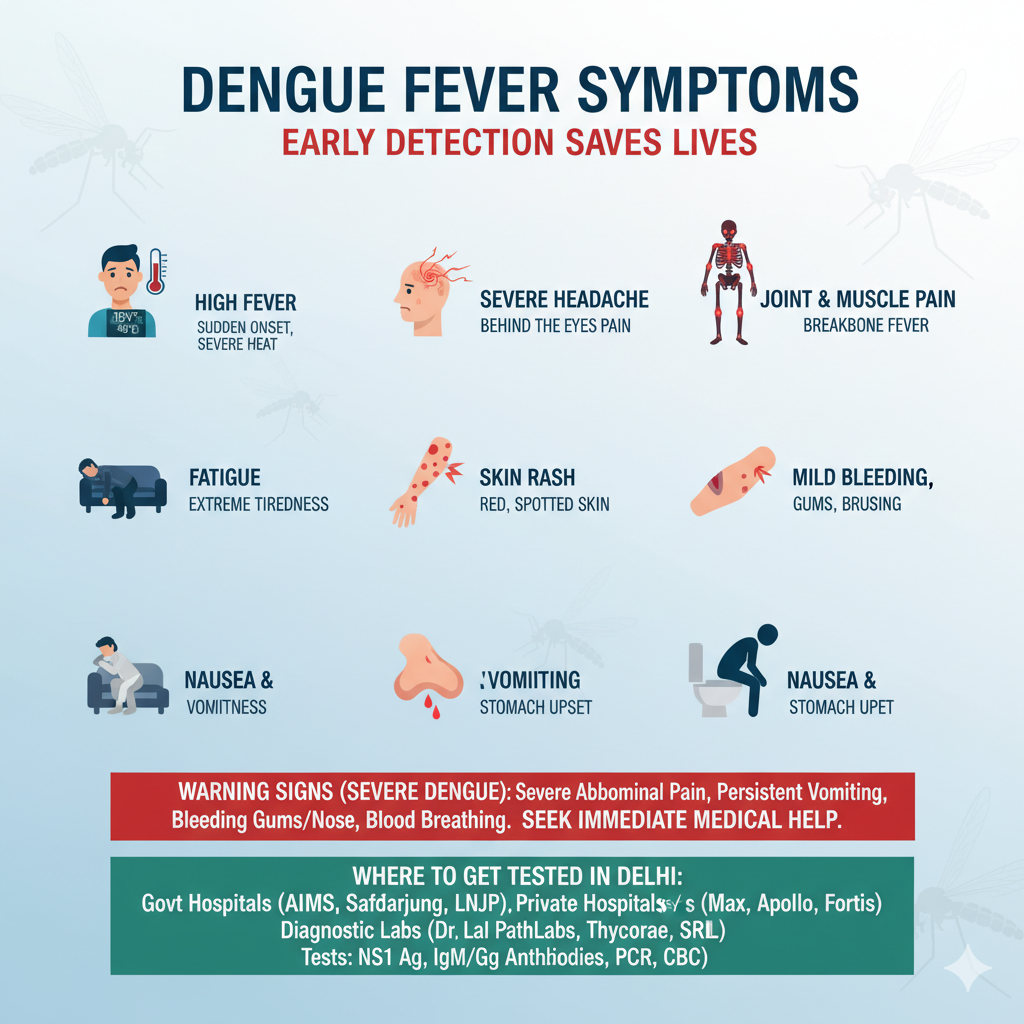
Understanding how to identify dengue fever symptoms early and knowing where to get tested in Delhi can make a life-saving difference. Many people ignore the initial signs, mistaking them for seasonal flu or viral fever. However, recognizing dengue’s distinctive symptoms, such as high fever, joint pain, rash, and a sudden drop in platelet count, is crucial for timely diagnosis and treatment.
Delhi’s medical infrastructure, both public and private, offers several facilities for dengue testing. However, not everyone knows when and where to go for these tests or what kind of test to request. This article will walk you through everything you need to know—from identifying early and severe dengue symptoms to understanding where and when to get tested in Delhi—so you can act quickly and protect yourself and your family.
What is Dengue Fever?
Dengue fever is a viral infection caused by the dengue virus (DENV), which has four different serotypes—DENV-1, DENV-2, DENV-3, and DENV-4. The infection is transmitted to humans through the bite of an infected Aedes mosquito, primarily Aedes aegypti and Aedes albopictus. These mosquitoes are most active during the day, especially in the early morning and late afternoon.
The virus enters the bloodstream and multiplies, triggering the immune system’s response. This leads to fever, body aches, rashes, and other characteristic symptoms. In some cases, the infection can escalate into severe dengue, also known as dengue hemorrhagic fever or dengue shock syndrome, which can be fatal if not treated promptly.
Unlike malaria, dengue doesn’t spread from person to person. The transmission occurs only through mosquito bites. This makes controlling the mosquito population critical in preventing outbreaks—especially in cities like Delhi, where open drains, stored water, and humid conditions create perfect breeding grounds for mosquitoes.
How Dengue Spreads in Urban Areas like Delhi
Dengue spreads rapidly in cities like Delhi due to the high population density and poor water management systems. The Aedes mosquito breeds in clean, stagnant water—something commonly found in flower pots, coolers, water tanks, discarded bottles, and construction sites.
In urban areas, even a small quantity of standing water can become a breeding hub. The mosquitoes thrive in warm temperatures and bite primarily during the day. Since Delhi experiences high humidity and fluctuating rainfall, especially between June and October, it becomes a hotspot for mosquito proliferation.
Moreover, with people living in close quarters and frequent human movement, the virus can easily spread from one locality to another. Public awareness about preventive measures, regular cleaning, and early medical consultation are vital in breaking this chain of transmission.
Why Dengue Fever Cases Are Common in Delhi
Dengue cases in Delhi surge every year due to a combination of environmental, social, and infrastructural factors. The monsoon season plays a major role, as rainwater accumulates in open containers and potholes, creating breeding sites for mosquitoes.
Additionally, Delhi’s rapid urbanization has led to areas with poor drainage and improper waste disposal. Construction sites, in particular, are breeding hotspots. The city’s warm climate also supports the life cycle of Aedes mosquitoes, making the virus active for most months of the year.
Lack of public awareness and negligence in using preventive measures like mosquito repellents, nets, and full-sleeve clothing further contribute to the rise in cases. The city’s healthcare systems are well-equipped to manage dengue cases, but prevention through cleanliness and early testing remains the best line of defense.
Early Signs of Dengue Fever: What to Watch Out For
The early symptoms of dengue fever usually appear four to ten days after being bitten by an infected mosquito. In the beginning, they might seem like regular viral fever, which is why many people ignore them.
Common early signs include:
- Sudden high fever (often reaching up to 104°F or 40°C)
- Severe headache, especially behind the eyes
- Intense muscle and joint pain (often referred to as “breakbone fever”)
- Fatigue and weakness
- Nausea and vomiting
- Mild skin rash
These symptoms typically last for 2–7 days. The fever may subside after a few days, but that doesn’t always mean recovery—sometimes, it transitions into the critical stage.
Patients should not self-medicate with painkillers like ibuprofen or aspirin, as these can worsen bleeding risks if the condition progresses. The best step is to consult a doctor and get a dengue test done at the earliest sign of persistent fever, especially during monsoon months.
Severe Dengue Symptoms You Should Never Ignore
When dengue fever advances beyond its mild form, it can quickly become dangerous. Severe dengue, also known as dengue hemorrhagic fever (DHF) or dengue shock syndrome (DSS), requires immediate medical attention. This phase typically begins once the initial fever subsides and may be mistaken as a sign of recovery—but in reality, it’s often the most critical period.
Warning signs of severe dengue include:
- Persistent vomiting and severe abdominal pain
- Bleeding gums or nosebleeds
- Blood in vomit or stool
- Sudden drop in platelet count
- Difficulty breathing or shortness of breath
- Restlessness or irritability
- Cold, clammy skin and fatigue
These symptoms occur because the dengue virus affects blood vessels, causing them to leak fluid. This leakage can lead to organ failure or shock if untreated.
Many patients make the mistake of delaying medical help, thinking the fever has “broken.” However, it’s precisely during this transition that complications arise. If anyone in your family shows these signs, rush to the nearest hospital or healthcare center for immediate evaluation. Intravenous fluids, platelet monitoring, and proper hospital care can save lives during severe dengue infection.
Dengue Fever Symptoms in Adults vs Children
While dengue fever affects both adults and children, the symptoms may vary in intensity and presentation. Adults often experience severe body aches, headaches, and joint pain. The pain is sometimes so intense that dengue is nicknamed “breakbone fever.”
Children, however, may not show these typical signs. Instead, they might present with irritability, drowsiness, poor appetite, and mild rashes. In infants and young kids, dengue can escalate faster into severe forms because their immune systems are still developing.
Adults tend to report more fatigue and muscle pain, while children may display vomiting, mild bleeding, or a faint rash. In severe pediatric cases, symptoms like a distended abdomen, liver enlargement, or continuous vomiting may appear.
It’s essential for parents to monitor their children’s temperature and hydration closely. If a child’s fever persists for more than two days, or if there are signs like bleeding gums or a rash, a dengue test should be done immediately. Early testing and supportive care can prevent serious complications.
Stages of Dengue Fever Progression
Dengue fever progresses in three distinct stages, each with its own set of symptoms and risks. Understanding these stages helps identify when to seek medical attention.
- Febrile Stage (Day 1–3):
This is the onset phase where the fever spikes suddenly. Symptoms include high fever, headache, muscle and joint pain, nausea, and mild rash. The body’s immune response is in full swing, and dehydration can occur if fluids aren’t maintained. - Critical Stage (Day 4–6):
This is the most dangerous phase, typically when the fever starts to drop. The patient may appear better, but fluid leakage from blood vessels can cause a sudden decline in health. Platelet count drops drastically, leading to internal bleeding, organ impairment, and shock. - Recovery Stage (Day 7–10):
During this stage, fluids reabsorb into the bloodstream, and the patient’s health improves gradually. Energy levels return, appetite comes back, and rashes may appear again briefly. Medical monitoring is still essential to ensure platelets stabilize and no complications remain.
Recognizing these stages ensures that patients don’t mistake the “critical” stage for recovery and delay seeking urgent medical care.
How to Differentiate Dengue from Other Viral Fevers
In Delhi, many people confuse dengue with other viral infections like malaria, chikungunya, or typhoid, as all of them cause fever and body aches. However, dengue has some distinct characteristics.
Key differences include:
| Condition | Common Symptoms | Unique Indicators |
| Dengue Fever | High fever, headache, joint pain, rash | Sudden platelet drop, retro-orbital pain (pain behind eyes) |
| Malaria | Fever with chills, sweating | Enlarged spleen, detected through blood parasite test |
| Chikungunya | Joint stiffness, mild rash | Severe joint pain lasting weeks or months |
| Typhoid | Fever, abdominal pain, fatigue | Associated with contaminated food/water, slow onset |
A dengue rash, which appears like small red dots or patches, is one of the telltale signs. Also, the rapid drop in platelet count is a distinct symptom not commonly seen in other fevers. Therefore, only a proper blood test can confirm whether it’s dengue or another viral illness.
Why Early Diagnosis of Dengue Fever Matters
Early detection of dengue fever is crucial not only for recovery but also for controlling the spread of the disease. Once dengue is diagnosed, doctors can guide patients on proper fluid intake, rest, and symptom monitoring, preventing the infection from progressing to severe stages.
Timely testing also helps public health officials identify outbreak zones and initiate mosquito control measures in those areas. Without early diagnosis, patients might unknowingly spread the infection to mosquitoes, which then transmit it to others.
Moreover, early diagnosis allows doctors to manage platelet count and hydration levels effectively, reducing hospitalizations and complications. In Delhi, where dengue peaks during monsoon, getting tested after two or three days of fever is always advisable. Waiting too long can lead to severe dehydration, shock, or even death in extreme cases.
Where to Get Dengue Fever Testing in Delhi
Delhi has a wide network of authorized testing facilities, both government-run and private. Residents can visit local healthcare centers, hospitals, and municipal health offices for dengue screening.
Government hospitals across Delhi provide affordable dengue testing services, especially during outbreaks. These centers are usually equipped to handle emergency cases and conduct confirmatory tests like NS1 antigen and antibody testing.
Private hospitals and diagnostic centers also offer comprehensive testing options. The advantage of private testing facilities is faster result turnaround and additional convenience, such as home sample collection.
Regardless of where you go, it’s essential to ensure the testing center is authorized and uses standard testing kits as per health regulations. Remember to carry an ID proof and doctor’s prescription when visiting a lab for dengue testing in Delhi.
Different Types of Dengue Tests Available in Delhi
Several types of diagnostic tests are available in Delhi for dengue detection, depending on the infection stage and doctor’s recommendation:
- NS1 Antigen Test:
Detects the presence of the dengue virus antigen in the blood. It’s most effective within the first five days of infection and gives early confirmation. - IgM and IgG Antibody Tests:
These tests detect antibodies produced by the body in response to the dengue virus. IgM antibodies appear early (around day 5), while IgG antibodies indicate past infection or late-stage illness. - PCR (Polymerase Chain Reaction) Test:
A highly sensitive molecular test that detects the genetic material of the dengue virus. It helps identify the specific dengue strain and confirm active infection.
Doctors may recommend one or more of these tests based on symptoms, fever duration, and clinical examination. Early testing can prevent complications and help in timely treatment.
When Should You Get Tested for Dengue Fever?
The timing of dengue testing is crucial for accurate results. Getting tested too early might not detect the virus, while waiting too long could miss the most treatable window.
Generally, doctors recommend testing if:
- You have had a fever for 2–5 days that doesn’t subside.
- You experience body ache, headache, rash, or vomiting.
- You live in or recently visited an area with a dengue outbreak.
The NS1 Antigen Test is ideal for the first five days of fever. After that, the IgM and IgG antibody tests are more reliable.
Delhi’s health authorities often run awareness drives advising citizens to get tested early during monsoon. Following this advice helps prevent late-stage complications and assists in city-wide dengue control.
What to Do After Getting Tested for Dengue in Delhi
Once you’ve undergone dengue testing, the next steps depend entirely on your results and the severity of your symptoms. If the test comes back positive, it’s essential to stay calm and follow your doctor’s guidance strictly. Dengue is manageable with early detection, rest, and proper care.
If your test is positive but symptoms are mild, you may be treated at home under medical supervision. Focus on:
- Staying hydrated (drink water, coconut water, and electrolyte solutions)
- Taking paracetamol for fever relief (avoid ibuprofen or aspirin)
- Eating light, nutritious meals (papaya leaves, soups, and fruits may help)
- Monitoring temperature and platelet count regularly
If symptoms worsen—such as persistent vomiting, abdominal pain, bleeding gums, or extreme weakness—you must get admitted to a hospital immediately. Medical professionals will monitor platelet levels, provide intravenous fluids, and manage other complications.
If your test result is negative but fever persists, your doctor may recommend a repeat test or check for other infections like malaria or chikungunya. Sometimes, early-stage dengue doesn’t show up on tests, so it’s important not to ignore symptoms even if the first result is negative.
After recovery, continue taking precautions against mosquito bites for at least a week. The virus can still be in your bloodstream during that time, and mosquitoes biting you can spread dengue to others.
Preventing Dengue Fever in Delhi: Practical Tips
Prevention is the most powerful weapon against dengue, especially in a city like Delhi where the mosquito population thrives during the rainy season. By following a few practical habits, you can reduce your risk of infection significantly.
- Eliminate Stagnant Water:
Mosquitoes breed in clean, standing water. Regularly empty, clean, or cover water containers like flower pots, bird baths, buckets, and air cooler tanks. Even small amounts of stagnant water can serve as breeding spots. - Use Mosquito Repellents and Nets:
Apply mosquito repellent creams or sprays on exposed skin during the day. Sleeping under a mosquito net and installing mesh on windows also helps keep mosquitoes out. - Wear Protective Clothing:
Long-sleeved shirts, pants, and socks minimize skin exposure, especially during early mornings and evenings when mosquitoes are most active. - Keep Your Surroundings Clean:
Dispose of garbage properly, avoid water accumulation near homes, and encourage neighbors to maintain hygiene. A single unattended container can create a mosquito breeding hub for the entire block. - Participate in Community Clean-Up Drives:
Dengue prevention is not an individual effort—it’s a collective one. Participate in local awareness and cleanliness campaigns organized by resident welfare associations (RWAs) or municipal bodies.
Taking these preventive steps may seem simple, but they are highly effective. Remember, controlling mosquito breeding is the only way to stop dengue at its source.
Community Role in Fighting Dengue in Delhi
Delhi’s fight against dengue is not just about hospitals and government efforts—it’s about community participation. Every neighborhood, school, and office plays a vital role in curbing the mosquito menace.
Community groups and RWAs can organize cleanliness drives to remove stagnant water sources and educate residents about mosquito control. Schools can include dengue awareness sessions, teaching students to recognize symptoms and maintain hygiene.
The government often launches large-scale campaigns like door-to-door checks, fumigation drives, and awareness programs during monsoon. However, their success depends on citizens cooperating—allowing inspections, covering water tanks, and avoiding negligence.
Simple actions like turning over unused buckets, keeping roof tanks covered, and cleaning terrace gardens can make a huge difference. Remember, one mosquito can infect multiple people, so each household’s effort counts in preventing community outbreaks.
By working together, Delhi can significantly reduce dengue cases and protect thousands of lives each year.
Stay Alert, Stay Safe from Dengue Fever
Dengue fever is preventable, treatable, and controllable—but only if detected early. Knowing how to identify its symptoms and where to get tested in Delhi can mean the difference between a mild illness and a severe medical emergency.
Understanding early signs like high fever, eye pain, and joint aches is critical, as is watching for severe symptoms such as bleeding or sudden fatigue. Prompt testing—especially through NS1 antigen or antibody tests—ensures timely medical care.
In a city like Delhi, where climate and population density favor mosquito breeding, prevention must become part of daily life. From keeping homes clean to spreading awareness in communities, everyone can play a role in keeping dengue at bay.
So, stay alert during monsoon, protect yourself and your family, and act swiftly if symptoms appear. Early action can save lives—maybe even yours.
FAQs about Dengue Fever Testing and Symptoms in Delhi
- How soon after a mosquito bite can dengue symptoms appear?
Dengue symptoms usually appear between 4 to 10 days after being bitten by an infected mosquito. If you experience fever and body aches within this period, get tested immediately. - What is the most reliable test for dengue detection?
The NS1 Antigen test is most effective during the early phase of infection (first 5 days). For later stages, IgM and IgG antibody tests provide more accurate results. - Can dengue spread directly from person to person?
No, dengue cannot spread directly between people. It spreads only through mosquito bites from infected Aedes aegypti mosquitoes. - What are the main preventive measures against dengue in Delhi?
Eliminate stagnant water, use mosquito repellents, wear full-sleeve clothes, and participate in community cleanliness drives to control mosquito breeding.
5. When should I go to the hospital for dengue treatment?
If you notice warning signs such as severe abdominal pain, bleeding gums, continuous vomiting, or sudden weakness, go to the hospital immediately for evaluation and treatment.
Leave a Reply