
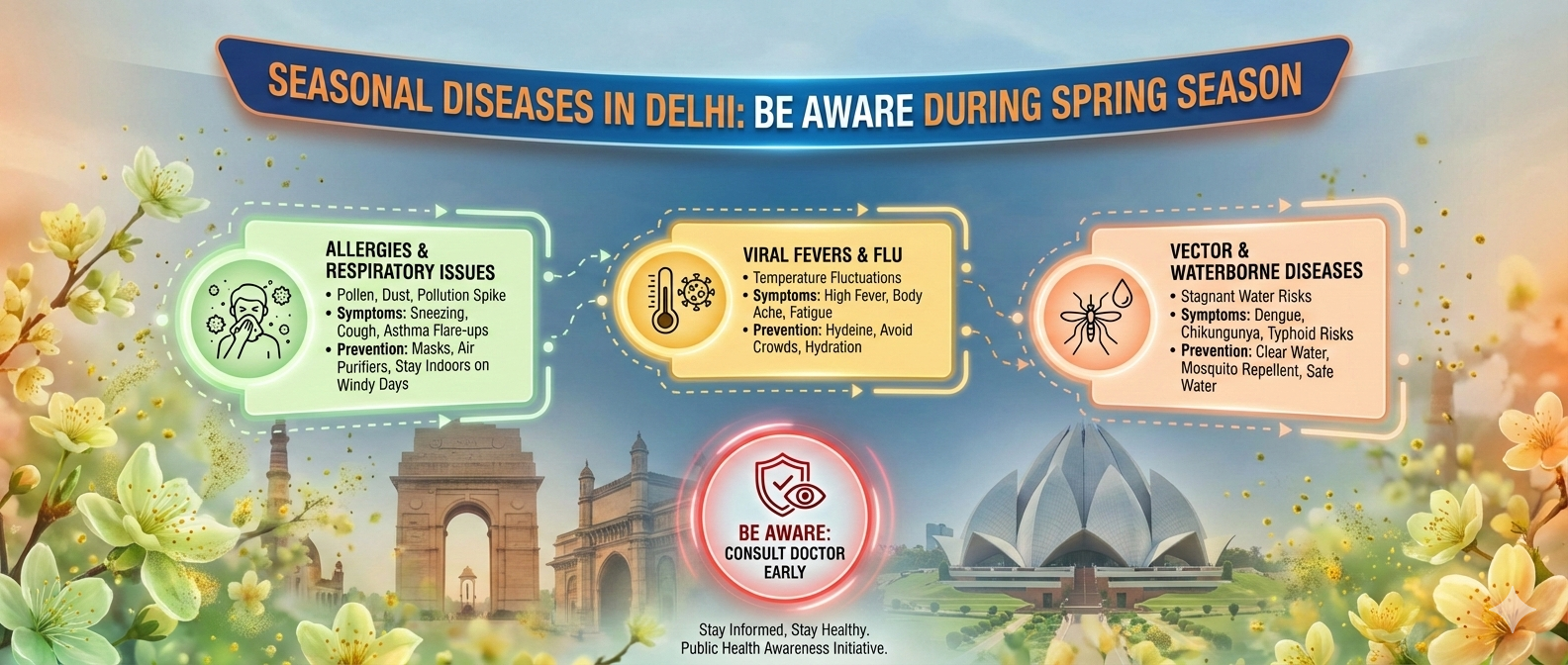

Spring in Delhi feels like a breath of fresh air after the biting cold of winter. The flowers bloom, the days become longer, and there’s a certain energy in the air. But here’s the catch—this beautiful transition period also brings a silent wave of seasonal diseases in Delhi. And if you’re not careful, you could be the next one sneezing, coughing, or lying in bed with a fever.
The spring season in Delhi usually arrives between February and April. During this time, temperatures fluctuate dramatically—cool mornings, warm afternoons, and sometimes chilly evenings. This sudden shift confuses our body’s immune system. Add to that Delhi’s pollution levels and rising pollen count, and you’ve got the perfect recipe for infections and allergies.
Being aware is not optional—it’s essential. Many people ignore early symptoms, assuming it’s “just a cold.” But what starts as a minor irritation can quickly escalate into something more serious. Seasonal diseases in Delhi during spring season can affect anyone—children, adults, and the elderly. And without timely doctor consultation, complications can arise.
Think of your immune system as a security guard. When the weather changes abruptly, it gets distracted. Viruses, bacteria, and allergens sneak in easily. That’s why spring season demands extra care. Staying informed and seeking doctor consultation at the right time can make all the difference between a mild discomfort and a serious health issue.
So, let’s dive deeper and understand why seasonal diseases in Delhi spike during spring and what you must do to stay safe.
Why Spring Season In Delhi Triggers Seasonal Diseases

Spring season in Delhi is like a roller coaster ride for your body. One day you feel warm enough to wear cotton clothes, and the next morning you’re reaching for a light jacket. These unpredictable temperature shifts weaken the immune system, making you more vulnerable to seasonal diseases in Delhi.
Climate Shift and Temperature Fluctuations
The human body loves stability. But spring season doesn’t offer that luxury. When temperatures fluctuate frequently, your body struggles to adjust. The immune response slows down, giving viruses and bacteria an opportunity to attack.
For example, stepping out in the warm afternoon sun and then returning to a cooler indoor environment can shock your system. Sweating followed by exposure to cooler air often leads to sore throat, cough, and viral infections. Many people underestimate this simple temperature mismatch.
Humidity levels also change during spring. Dry air can irritate nasal passages, making them more sensitive to infections. You may notice increased sneezing, itchy throat, or watery eyes. These are early signs that your body is reacting to environmental changes.
Pollution, Pollen, and Allergens
Delhi’s air quality is already a concern. During spring season, pollen from blooming plants mixes with pollutants, creating a hazardous cocktail. This combination significantly increases seasonal diseases in Delhi, especially respiratory problems.
Pollen particles are microscopic, yet powerful. When inhaled, they trigger allergic reactions in many individuals. If you already have asthma or sinus issues, spring can be particularly challenging.
Being aware of these triggers is the first step. But awareness alone isn’t enough. Doctor consultation becomes necessary when symptoms persist or worsen. Ignoring repeated sneezing or breathlessness can lead to serious complications.
Spring may look beautiful outside, but inside your body, a silent battle could be brewing.
Common Seasonal Diseases In Delhi During Spring Season
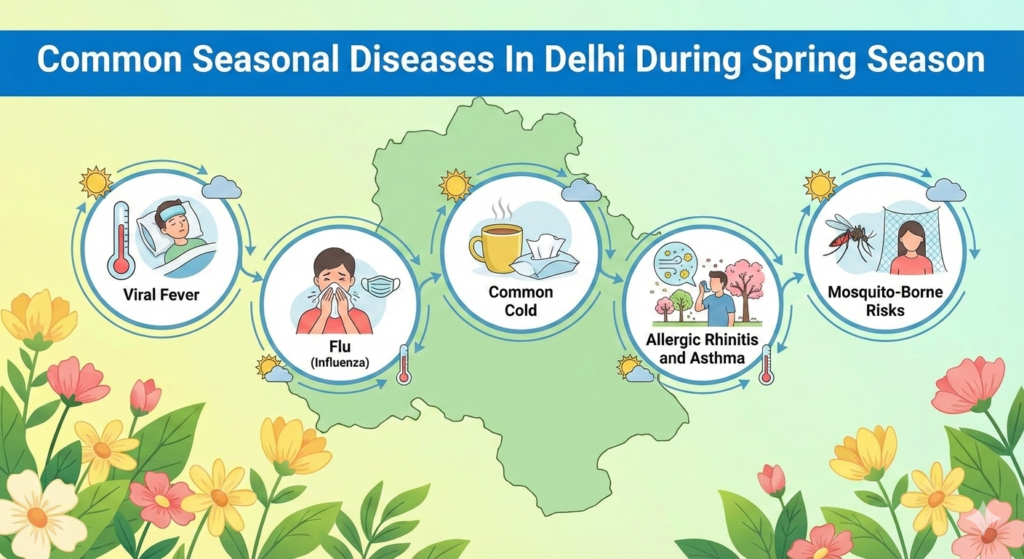
When we talk about seasonal diseases in Delhi during spring season, we’re not discussing rare conditions. These are common illnesses that affect thousands of residents every year. The problem? People often ignore them until they become severe.
Let’s break down the most common ones.
Viral Fever
Viral fever is perhaps the most widespread seasonal disease in Delhi. It spreads rapidly due to close contact, crowded spaces, and fluctuating weather. Symptoms usually include:
- High temperature
- Body aches
- Headache
- Fatigue
- Mild cough
Many assume viral fever will disappear on its own. Sometimes it does. But if the fever lasts more than three days, doctor consultation is a must. Delayed treatment can lead to dehydration or secondary infections.
Flu (Influenza)
Influenza is more intense than a regular cold. It spreads easily in offices, schools, and public transport. Spring season provides ideal conditions for the flu virus to thrive.
Unlike common cold, flu can cause:
- Severe muscle pain
- High fever
- Chills
- Persistent cough
- Weakness
If left untreated, flu can turn into pneumonia, especially in elderly people. That’s why being aware and seeking doctor consultation at the earliest sign is crucial.
Common Cold
It sounds harmless, right? But repeated colds weaken the immune system. In Delhi’s polluted environment, a simple cold can quickly trigger sinusitis or bronchitis.
Allergic Rhinitis and Asthma
Spring season is peak time for allergies. Sneezing fits, blocked nose, itchy eyes—these symptoms might look minor, but they can severely affect daily life. Asthma patients often experience flare-ups due to pollen and pollution.
Mosquito-Borne Risks
Though more common during monsoon, early mosquito breeding can begin in spring. Dengue cases have been reported during transitional seasons as well.
The key takeaway? Don’t ignore symptoms. Seasonal diseases in Delhi can escalate quickly without proper doctor consultation.
Allergies in Spring Season: Why Delhi Residents Must Be Aware

If you live in Delhi and find yourself sneezing endlessly every spring, you’re not alone. Allergies are among the most common seasonal diseases in Delhi during spring season. And they’re more than just a minor inconvenience—they can seriously disrupt your life.
Imagine waking up with a blocked nose, watery eyes, and an itchy throat. You step outside, and within minutes, your symptoms worsen. That’s pollen at work. Trees like neem, eucalyptus, and grasses release pollen into the air. When combined with dust and pollution, it creates a powerful allergen mix.
Symptoms of spring allergies include:
- Continuous sneezing
- Runny or blocked nose
- Red, itchy eyes
- Skin rashes
- Breathing difficulty
Many people rely on over-the-counter medications without proper doctor consultation. While antihistamines may provide temporary relief, they don’t address the root cause. In some cases, allergies can develop into chronic sinusitis or trigger asthma attacks.
Children are especially vulnerable. Their immune systems are still developing, making them more sensitive to environmental allergens. Elderly individuals with respiratory conditions also face higher risks.
Being aware means identifying triggers early. Keep windows closed during high pollen hours. Wear masks outdoors. Maintain indoor cleanliness. But most importantly, if symptoms persist beyond a few days or interfere with sleep and work, seek doctor consultation immediately.
Spring should be about enjoying pleasant evenings, not struggling to breathe. Taking allergies seriously can protect your long-term health.
Air Pollution and Seasonal Diseases In Delhi: A Dangerous Combination During Spring Season
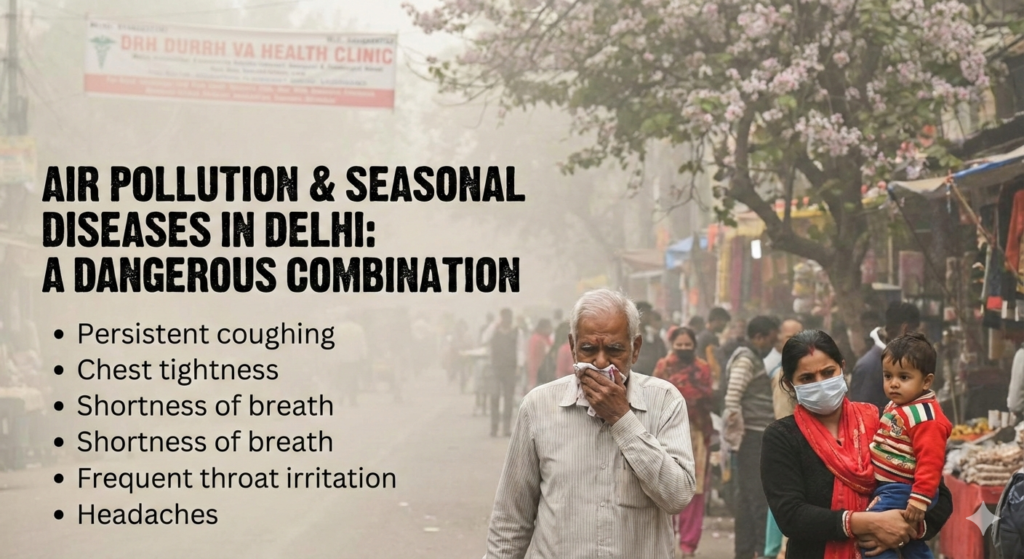
If spring season had a hidden villain in Delhi, it would be air pollution. You might think pollution is a winter problem, but here’s the truth—seasonal diseases in Delhi during spring season are often intensified because of lingering pollutants mixed with fresh pollen. It’s like adding fuel to the fire.
Delhi’s air contains particulate matter (PM2.5 and PM10), nitrogen dioxide, sulfur dioxide, and other toxic particles. When spring arrives, flowering plants release pollen into the air. Now imagine inhaling a mixture of microscopic dust particles and pollen grains every time you breathe. Sounds scary? It is.
This toxic blend irritates your respiratory tract. The lining of your nose, throat, and lungs becomes inflamed. As a result, even healthy individuals may experience:
- Persistent coughing
- Chest tightness
- Shortness of breath
- Frequent throat irritation
- Headaches
For people already dealing with asthma, bronchitis, or sinus problems, the situation becomes worse. Pollution weakens the natural defense mechanism of your respiratory system. Once the protective lining is damaged, viruses and bacteria find it easier to enter the body. That’s why seasonal diseases in Delhi spike during this time.
Being aware is your first defense. Check daily AQI (Air Quality Index) levels before stepping out. On high-pollution days, limit outdoor activities, especially during early morning and late evening when pollutant levels are higher.
But let’s be honest—prevention can only go so far. If you notice prolonged breathing issues, wheezing, or unexplained fatigue, doctor consultation is not optional. It is essential. Respiratory infections can quickly escalate into pneumonia or severe asthma attacks if left untreated.
Think of your lungs like a sponge. The more toxins they absorb, the harder they have to work. Don’t let spring season quietly damage your respiratory health. Be proactive, stay informed, and seek doctor consultation when symptoms persist.
Children and Seasonal Diseases In Delhi: Why Doctor Consultation Is Crucial in Spring Season

Children love spring. School sports, outdoor play, evening cycling—it’s their favorite time of year. But here’s something many parents overlook: children are the most vulnerable to seasonal diseases in Delhi during spring season.
Why? Because their immune systems are still developing. They are more exposed to outdoor allergens, dust, and infections. Plus, kids often share food, water bottles, and toys, making viral transmission easier.
Common seasonal diseases in Delhi affecting children include:
- Viral fever
- Flu
- Tonsillitis
- Allergic rhinitis
- Asthma flare-ups
- Stomach infections
You might notice your child becoming unusually tired, losing appetite, or complaining of headaches and body aches. Sometimes, symptoms appear mild at first—a slight cough or low-grade fever. But within days, it can escalate.
Many parents try home remedies initially. While warm fluids and rest help, they are not substitutes for professional care. Delaying doctor consultation can lead to complications like dehydration, chest infections, or sinus infections.
Spring allergies in children often appear as:
- Continuous sneezing
- Mouth breathing
- Disturbed sleep
- Dark circles under eyes
Ignoring these signs can affect school performance and overall growth.
Here’s a simple rule: if fever lasts more than 48–72 hours, breathing becomes difficult, or your child appears unusually lethargic, consult a doctor immediately.
Children cannot always explain what they feel. As parents, being aware and acting quickly is the best protection. Spring season should be about playground fun—not hospital visits caused by neglect.
Seasonal Diseases In Delhi Affecting Elderly People During Spring Season

If children are vulnerable, the elderly are equally—if not more—at risk during spring season. Seasonal diseases in Delhi can hit seniors harder because their immune systems are naturally weaker.
As we age, our body’s defense mechanism slows down. Recovery time increases. A simple cold that lasts three days in a young adult might take two weeks in an elderly person.
Common issues faced by seniors during spring season include:
- Severe flu
- Pneumonia
- Bronchitis
- Asthma complications
- High blood pressure fluctuations due to weather changes
Temperature fluctuations can also affect joint pain and arthritis. Mornings may feel cold, while afternoons are warm. This constant adjustment stresses the body.
Respiratory conditions are particularly concerning. If an elderly person develops persistent cough, breathlessness, or chest pain, immediate doctor consultation is necessary. Delaying medical care can lead to life-threatening complications.
Spring allergies can also worsen existing heart conditions. Difficulty in breathing puts additional strain on the heart.
Family members must be extra vigilant. Ensure proper hydration, balanced meals, and regular medication schedules. Avoid exposure to high-pollution areas. Keep living spaces clean and well-ventilated.
Being aware of early warning signs—like confusion, extreme fatigue, or persistent fever—can prevent serious outcomes.
Spring season may look pleasant, but for elderly residents of Delhi, it demands careful attention and timely doctor consultation. Prevention and quick action save lives.
Symptoms You Should Never Ignore – Be Aware and Seek Doctor Consultation for Seasonal Diseases In Delhi

Let’s be honest—how often do we ignore symptoms thinking, “It’s nothing, I’ll be fine tomorrow”? That casual approach is one of the biggest reasons seasonal diseases in Delhi become severe during spring season.
Some symptoms may appear small but signal bigger problems underneath.
Here are warning signs you should never ignore:
- Fever above 101°F lasting more than three days
- Severe body aches
- Continuous vomiting or diarrhea
- Difficulty breathing
- Chest pain
- Persistent cough with mucus
- Unusual drowsiness or confusion
- Skin rashes spreading rapidly
Spring allergies may also mimic infection symptoms. But if antihistamines don’t provide relief, it’s time for doctor consultation.
Shortness of breath is particularly serious. In Delhi’s polluted environment, respiratory distress can escalate quickly. If you feel tightness in your chest or wheezing, don’t wait.
Another red flag is dehydration. Viral infections often reduce appetite and fluid intake. Dry mouth, dizziness, and dark urine are signs that your body needs medical attention.
Think of symptoms as warning lights on your car dashboard. You wouldn’t ignore an engine warning light, right? Your body works the same way.
Being aware means listening to your body. Early doctor consultation can shorten illness duration and prevent complications.
Spring season doesn’t forgive negligence. Act early, act smart.
When to Take Doctor Consultation for Seasonal Diseases In Delhi During Spring Season

This is the question most people struggle with—when exactly should you see a doctor?
For seasonal diseases in Delhi, timing matters. Waiting too long can complicate recovery.
Seek doctor consultation immediately if:
- Fever persists beyond three days.
- Breathing becomes difficult.
- Symptoms worsen instead of improving.
- You have existing conditions like diabetes, asthma, or heart disease.
- A child or elderly person shows unusual fatigue.
Spring season infections may initially look mild. But viruses spread quickly. Early medical advice ensures proper diagnosis—viral, bacterial, or allergic.
Doctors may recommend blood tests, chest X-rays, or allergy testing if needed. Self-medication without diagnosis can mask symptoms and delay recovery.
Teleconsultation options are also widely available in Delhi. If stepping out feels difficult, online doctor consultation can provide quick guidance.
Remember, consulting a doctor doesn’t mean your condition is severe. It simply means you’re being responsible.
Health is not something to gamble with—especially during spring season when seasonal diseases in Delhi are at their peak.
Home Remedies vs Doctor Consultation for Seasonal Diseases In Delhi During Spring Season

Let’s be real—most of us grew up with home remedies. Ginger tea for a sore throat. Turmeric milk for a cough. Steam inhalation for blocked sinuses. And honestly, some of these remedies do help. But when it comes to seasonal diseases in Delhi during spring season, relying only on home treatments can sometimes be risky.
Home remedies are supportive, not curative. They can reduce discomfort, soothe irritation, and help the body recover faster. For example:
- Warm saltwater gargles can ease throat pain.
- Steam inhalation may relieve nasal congestion.
- Honey and ginger can calm mild cough.
- Staying hydrated supports recovery from viral fever.
Sounds helpful, right? Yes—but here’s the catch.
Spring season infections in Delhi are often complicated by pollution and allergens. What seems like a mild cold might actually be influenza or an allergy-triggered asthma attack. In such cases, delaying doctor consultation while trying multiple home remedies can make things worse.
There’s also the danger of self-medication. Many people take antibiotics without proper diagnosis. But antibiotics don’t work against viral infections. Overuse can weaken immunity and create resistance.
So where do we draw the line?
If symptoms are mild and improve within 48 hours, home remedies may be sufficient. But if fever persists, breathing becomes uncomfortable, or fatigue worsens, doctor consultation becomes necessary.
Think of home remedies as first aid. They’re helpful at the start. But if the problem continues, you need professional guidance. Seasonal diseases in Delhi can escalate quickly during spring season, and medical advice ensures safe and targeted treatment.
Balance is key—use traditional remedies wisely, but never skip proper doctor consultation when symptoms demand attention.
Preventive Measures to Avoid Seasonal Diseases In Delhi During Spring Season

Prevention is always better than cure. You’ve heard it a thousand times—but during spring season in Delhi, it couldn’t be more accurate. Seasonal diseases in Delhi are common, but many of them are preventable with simple daily habits.
Let’s break it down.
1. Maintain Personal Hygiene
Viruses spread through touch. Washing hands frequently with soap for at least 20 seconds can dramatically reduce infection risk. Carry a sanitizer when stepping out.
2. Wear a Mask in High-Pollution Areas
Masks aren’t just for pandemics. In spring season, they help filter pollen and dust particles. Especially if you’re prone to allergies, a mask can be your best friend.
3. Stay Hydrated
Water helps flush toxins and keeps your throat moist. Dehydration weakens immunity and makes infections more likely.
4. Avoid Sudden Temperature Exposure
Don’t switch from intense sun to strong air conditioning abruptly. Keep your body temperature stable to prevent immune stress.
5. Keep Indoor Air Clean
Use air purifiers if possible. Clean fans, curtains, and bedsheets regularly to reduce dust accumulation.
6. Strengthen Immunity
A strong immune system is your shield against seasonal diseases in Delhi. Include fruits rich in Vitamin C, green vegetables, and protein in your meals.
Being aware of these preventive measures can significantly lower your risk. But remember—prevention reduces risk, it doesn’t eliminate it entirely. If symptoms appear, timely doctor consultation is still crucial.
Spring season doesn’t have to mean sickness. With consistent habits and smart choices, you can enjoy the pleasant weather without falling ill.
Diet Tips to Stay Safe From Seasonal Diseases In Delhi During Spring Season

Ever noticed how your body craves lighter food during spring? That’s not random. Your digestive system also adjusts to seasonal changes. Eating the right food can help protect you from seasonal diseases in Delhi.
Food is fuel. And during spring season, your body needs immune-supporting nutrients.
Include These in Your Diet:
- Citrus fruits (oranges, lemons) for Vitamin C
- Leafy greens for antioxidants
- Yogurt for gut health
- Nuts and seeds for healthy fats
- Turmeric and garlic for anti-inflammatory benefits
Hydration is equally important. Coconut water, fresh juices, and herbal teas can help maintain electrolyte balance.
Avoid These:
- Excessively fried foods
- Sugary beverages
- Cold drinks immediately after being in the sun
- Street food exposed to dust and pollution
In Delhi’s spring environment, digestive infections can also increase. Eating contaminated or unhygienic food can lead to stomach flu or food poisoning.
Your gut health directly impacts immunity. A balanced diet strengthens your internal defense against viruses and allergens.
But diet alone isn’t a cure-all. If symptoms like persistent diarrhea, high fever, or vomiting occur, doctor consultation should not be delayed.
Think of food as building bricks for your immune system. Strong bricks, strong defense. Weak bricks, easy damage.
Role of Immunity in Fighting Seasonal Diseases In Delhi

Immunity is like your body’s internal army. When strong, it fights off invaders quickly. When weak, even minor viruses can overpower it. During spring season, immunity plays a critical role in protecting against seasonal diseases in Delhi.
Weather fluctuations stress the immune system. Add pollution, allergens, and lifestyle stress, and the immune response slows down.
Signs of weak immunity include:
- Frequent infections
- Slow recovery
- Constant fatigue
- Repeated allergies
Improving immunity isn’t about magic supplements. It’s about consistent habits:
- 7–8 hours of sleep
- Regular exercise
- Balanced diet
- Stress management
- Adequate hydration
Mental health also matters. Chronic stress releases cortisol, which suppresses immune response. Simple breathing exercises or evening walks can make a difference.
However, even strong immunity doesn’t make you invincible. Some viruses are aggressive. That’s why being aware and seeking doctor consultation when needed is essential.
Spring season tests your immune system. Treat it like an investment—what you do daily determines how well your body fights seasonal diseases in Delhi.
Importance of Vaccination Against Seasonal Diseases In Delhi During Spring Season
Vaccination is often associated with children, but adults need protection too. During spring season, vaccines can reduce the severity of certain seasonal diseases in Delhi, especially influenza.
Flu vaccines are updated yearly to match circulating strains. Getting vaccinated before peak infection season can significantly lower hospitalization risk.
For elderly individuals and those with chronic illnesses, vaccines are especially important. Pneumococcal vaccines can prevent severe respiratory complications.
Many people skip vaccination thinking they are healthy. But viruses don’t discriminate. Even strong individuals can fall sick.
Doctor consultation can guide you on recommended vaccines based on age, medical history, and lifestyle.
Vaccination doesn’t guarantee you won’t get sick—but it reduces severity and recovery time.
In a city like Delhi, where seasonal diseases spread quickly due to population density, vaccination acts as community protection.
Spring season preparedness isn’t complete without considering immunization.
How Lifestyle Changes Can Reduce Seasonal Diseases In Delhi
Sometimes, the solution isn’t complicated. Small lifestyle adjustments can significantly reduce your chances of catching seasonal diseases in Delhi during spring season.
Prioritize Sleep
Sleep repairs the body. Without adequate rest, immunity drops.
Exercise Regularly
Even 30 minutes of brisk walking improves lung capacity and blood circulation.
Manage Stress
Yoga, meditation, or simply spending time with family reduces stress hormones.
Avoid Smoking
Smoking damages lung lining, making respiratory infections more likely.
Regular Health Check-Ups
Routine doctor consultation helps detect early signs before they worsen.
Lifestyle is like the foundation of a house. If strong, the structure stands firm even during storms. If weak, even minor pressure causes cracks.
Spring season may bring unpredictable weather—but your habits can remain consistent.
Be Aware, Stay Safe, and Must Take Doctor Consultation for Seasonal Diseases In Delhi During Spring Season
Spring in Delhi is beautiful—but it comes with health challenges. Seasonal diseases in Delhi during spring season are common due to fluctuating temperatures, pollution, and allergens.
Being aware is your first line of defense. Recognizing symptoms early, maintaining hygiene, eating well, and protecting your immunity can reduce risks significantly.
But the most important step? Never hesitate to take doctor consultation. Whether it’s persistent fever, breathing difficulty, or severe allergies—professional guidance ensures proper diagnosis and treatment.
Your health is not something to postpone. Spring should be about enjoying blooming flowers and pleasant evenings—not hospital visits caused by negligence.
Stay informed. Stay prepared. Stay healthy.
FAQs About Seasonal Diseases In Delhi During Spring Season
1. Why do seasonal diseases in Delhi increase during spring season?
Spring brings temperature fluctuations, high pollen levels, and pollution, which weaken immunity and trigger infections and allergies.
2. When should I take doctor consultation for spring allergies?
If symptoms persist beyond a few days, interfere with sleep, or cause breathing issues, consult a doctor immediately.
3. Are children more vulnerable to seasonal diseases in Delhi?
Yes, children have developing immune systems and are more exposed to infections during outdoor activities.
4. Can home remedies cure seasonal diseases in Delhi?
Home remedies can relieve mild symptoms but are not substitutes for doctor consultation in moderate or severe cases.
5. How can I strengthen immunity during spring season?
Maintain a balanced diet, stay hydrated, exercise regularly, sleep adequately, and seek timely doctor consultation when needed.
Leave a Reply