
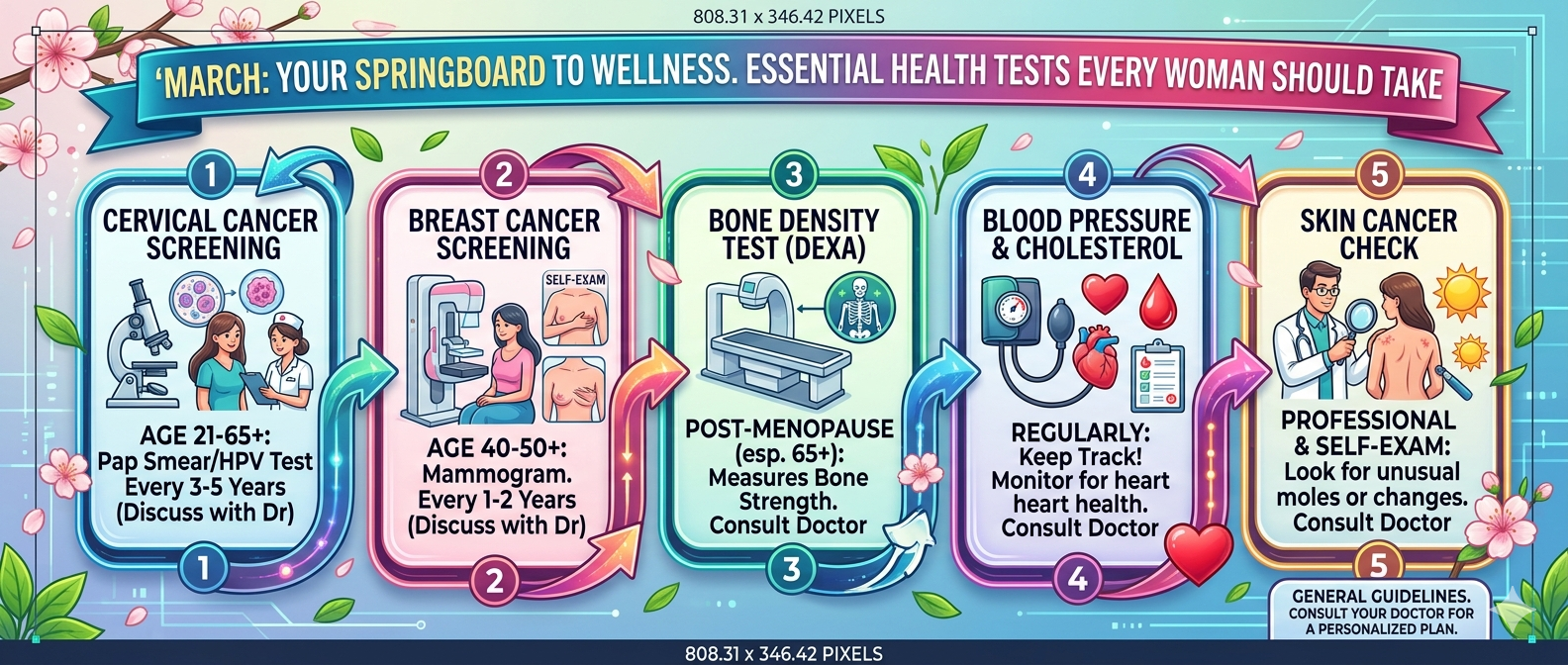
Why March Is the Perfect Time for Women’s Health Checkups


Seasonal Changes and Hormonal Impact
March sits at a fascinating crossroads—winter is fading, spring is quietly stepping in, and your body is trying to recalibrate itself after months of cold, limited sunlight, and often less-than-ideal eating habits. This seasonal shift doesn’t just affect your mood; it can significantly influence your hormonal balance, energy levels, and overall well-being. Many women notice subtle changes during this time—maybe you feel unusually tired, your skin behaves differently, or your menstrual cycle shifts slightly. These aren’t random occurrences; they are often your body signaling that it needs attention.
Hormones are incredibly sensitive to environmental changes. Reduced sunlight during winter months can disrupt melatonin and serotonin levels, which in turn influence reproductive hormones like estrogen and progesterone. As March brings longer days, your body attempts to reset—but if there’s an underlying imbalance, this transition can actually make symptoms more noticeable. This is exactly why scheduling essential health tests every woman should take in March becomes so important.
Think of it like rebooting your system after a long season of stress. You wouldn’t ignore warning lights on your car dashboard, right? Similarly, your body gives signals—fatigue, mood swings, irregular periods—that shouldn’t be brushed aside. March provides the perfect opportunity to catch these issues early through targeted testing like thyroid profiles, iron levels, and hormone panels.
Another overlooked factor is lifestyle drift. During winter, physical activity often decreases while comfort eating increases. By March, these habits may have quietly impacted your metabolism and nutrient levels. A simple blood test can reveal what your body is missing and help you course-correct before small imbalances turn into bigger health problems.

Preventive Health Mindset Before Mid-Year
There’s something psychologically powerful about March—it feels like a second chance at your New Year’s resolutions. If January was about setting goals, March is about evaluating whether your body is actually supporting those goals. Are you energized enough to stay active? Is your metabolism functioning optimally? Are your hormones working with you or against you? These are critical questions that only proper health screening can answer.
Adopting a preventive health mindset means not waiting for symptoms to become severe. Many conditions like thyroid disorders, anemia, and hormonal imbalances develop gradually. By the time obvious symptoms appear, the issue may already be affecting multiple systems in your body. Early testing allows you to take control before things escalate.
Another reason March is ideal is timing. It’s early enough in the year to implement changes that can improve your health trajectory for the rest of the year. If your tests reveal low iron levels, you can adjust your diet and supplementation well before it leads to chronic fatigue. If your thyroid levels are off, early intervention can prevent weight fluctuations, mood disorders, and metabolic issues.
Women, in particular, tend to prioritize everyone else’s health before their own. Between work, family, and social responsibilities, personal health often takes a backseat. But here’s the truth—your well-being is the foundation for everything else. Taking time in March to undergo essential health tests every woman should take in March isn’t indulgent; it’s necessary.
It’s also worth noting that many hormonal conditions are interconnected. A thyroid imbalance can influence menstrual cycles, while iron deficiency can worsen fatigue and mood swings. Testing early helps identify these connections and address them holistically rather than in isolation.
Understanding Hormonal Imbalance in Women
Common Signs of Hormonal Imbalance
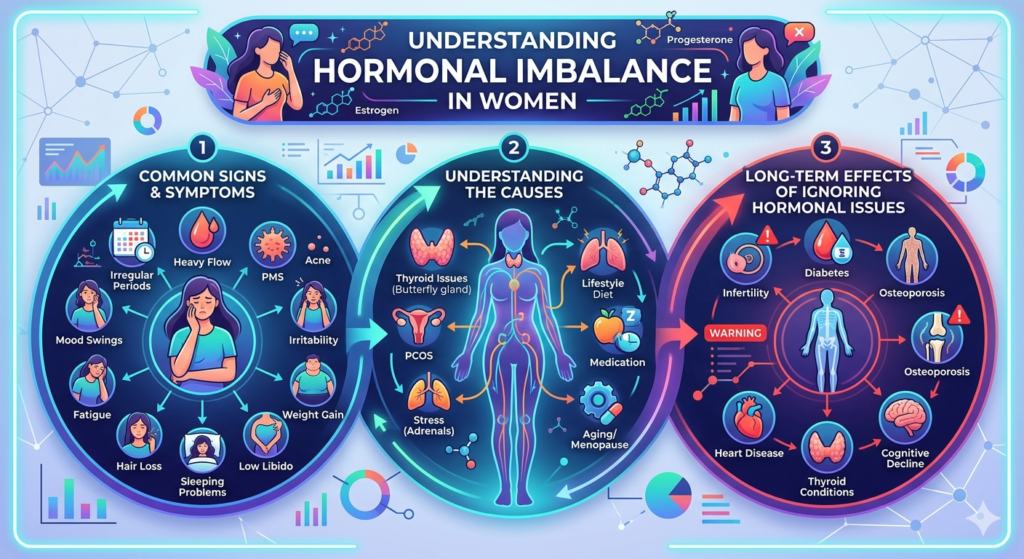
Hormonal imbalance doesn’t usually announce itself loudly at first. Instead, it creeps in quietly, disguised as everyday issues that are easy to ignore. You might blame your constant fatigue on a busy schedule or chalk up mood swings to stress. But when these symptoms persist, they often point to deeper hormonal disruptions that shouldn’t be overlooked.
One of the most common signs is irregular periods. If your cycle suddenly becomes unpredictable—arriving too early, too late, or skipping altogether—it’s often a sign that estrogen and progesterone levels are out of sync. Similarly, unexplained weight gain or difficulty losing weight can be linked to hormonal imbalances, particularly involving thyroid hormones or insulin.
Skin changes are another clue. Persistent acne, dryness, or unusual sensitivity can signal fluctuations in hormones like androgens or estrogen. Hair thinning or excessive hair growth in unexpected areas can also indicate imbalance. Then there’s the emotional aspect—frequent mood swings, anxiety, or even mild depression can often be traced back to hormonal shifts.
Fatigue is perhaps the most overlooked symptom. Not just the kind that disappears after a good night’s sleep, but a deep, lingering exhaustion that makes even simple tasks feel overwhelming. This type of fatigue is commonly associated with thyroid issues or iron deficiency, both of which are among the essential health tests every woman should take in March.
Sleep disturbances also deserve attention. Difficulty falling asleep or staying asleep can be linked to cortisol and melatonin imbalances. Over time, poor sleep further disrupts other hormones, creating a vicious cycle that impacts your overall health.
The tricky part is that these symptoms often overlap with other conditions. That’s why relying on guesswork isn’t enough. Proper testing provides clarity and helps pinpoint the exact cause, allowing for targeted treatment instead of trial and error.
Long-Term Effects of Ignoring Hormonal Issues
Ignoring hormonal imbalance is a bit like ignoring a small leak in your roof—it might seem manageable at first, but over time, it can lead to significant damage. What starts as mild fatigue or occasional irregular periods can evolve into more serious health concerns if left untreated.
One major risk is the development of chronic conditions. For example, untreated thyroid disorders can lead to complications such as heart problems, infertility, and metabolic issues. Similarly, prolonged estrogen imbalance can increase the risk of conditions like polycystic ovary syndrome (PCOS) or even osteoporosis later in life.
Reproductive health is particularly sensitive to hormonal fluctuations. Women who ignore persistent irregular periods may face challenges when trying to conceive. Hormonal imbalances can interfere with ovulation, making pregnancy more difficult and sometimes requiring medical intervention.
Mental health is another area that often suffers. Hormones play a crucial role in regulating mood and cognitive function. Chronic imbalance can contribute to anxiety disorders, depression, and even brain fog, affecting both personal and professional life.
Energy levels and productivity also take a hit. Imagine trying to function at your best when your body feels constantly drained. Over time, this can impact your career, relationships, and overall quality of life. What’s worse is that many women normalize this fatigue, assuming it’s just part of being busy, when in reality, it’s a sign that something is off internally.
The good news? Most hormonal issues are manageable when detected early. That’s why prioritizing essential health tests every woman should take in March, such as hormone panels, thyroid tests, and iron levels, is so important. These tests act as an early warning system, allowing you to take corrective action before problems escalate.
Taking charge of your hormonal health isn’t just about avoiding illness—it’s about optimizing how you feel every day. When your hormones are balanced, everything from your energy levels to your mood and metabolism works more smoothly, helping you live a healthier, more vibrant life.
Thyroid Profile Test – A Must-Have Health Check
What Does a Thyroid Profile Include?
If there’s one test that quietly carries enormous importance in a woman’s health journey, it’s the thyroid profile test. The thyroid gland may be small—shaped like a butterfly and sitting at the base of your neck—but it plays a massive role in regulating your metabolism, energy levels, and even mood. When it goes out of balance, the ripple effects can be felt throughout your entire body.
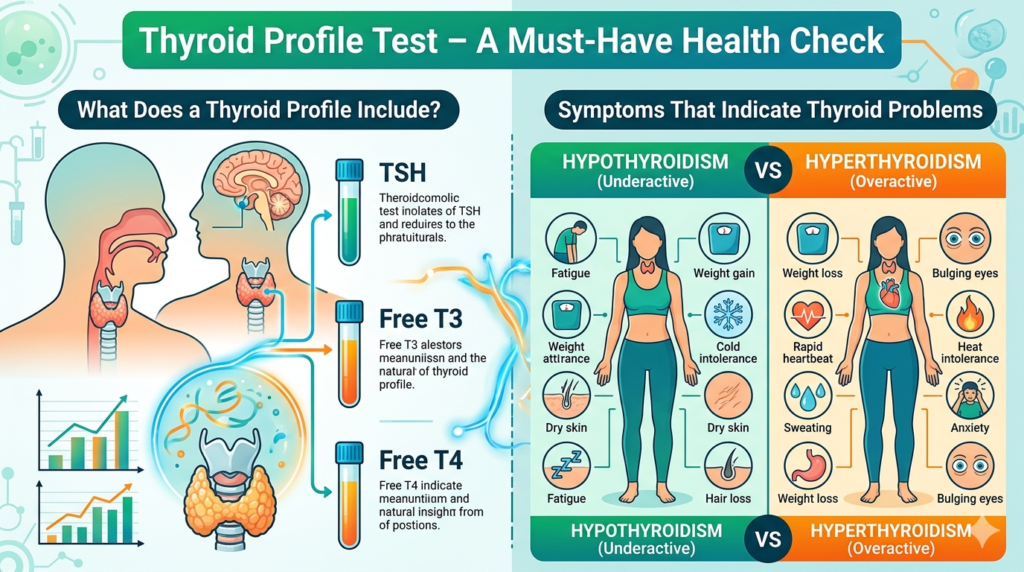
A standard thyroid profile test typically includes three key markers: TSH (Thyroid Stimulating Hormone), T3 (Triiodothyronine), and T4 (Thyroxine). Each of these hormones provides a piece of the puzzle. TSH is often the first indicator doctors look at—it tells you how hard your body is working to regulate thyroid function. If TSH is too high or too low, it usually signals an imbalance. T3 and T4, on the other hand, reveal how effectively your thyroid is actually performing its job.
What makes this test especially relevant in the list of essential health tests every woman should take in March is how easily thyroid issues can go unnoticed. Many symptoms overlap with everyday complaints—fatigue, weight gain, hair thinning, or even feeling unusually cold or anxious. It’s easy to dismiss these signs, assuming they’re due to stress or lifestyle, when in reality, your thyroid might be struggling.
There are two main types of thyroid disorders: hypothyroidism (underactive thyroid) and hyperthyroidism (overactive thyroid). Hypothyroidism is more common in women and often leads to sluggish metabolism, weight gain, and fatigue. Hyperthyroidism, while less common, can cause rapid heartbeat, weight loss, and anxiety.
What’s fascinating is how interconnected the thyroid is with other systems. It influences menstrual cycles, fertility, and even mental clarity. A slight imbalance can disrupt your daily rhythm, making you feel like you’re constantly playing catch-up with your own body.
Getting a thyroid profile done in March acts like a reset button. After months of winter-induced sluggishness, it helps you understand whether your energy dips are seasonal or something deeper. With early detection, most thyroid conditions can be effectively managed through lifestyle changes and medical guidance, allowing you to regain control over your health.
Symptoms That Indicate Thyroid Problems
Recognizing the symptoms of thyroid imbalance can feel like solving a puzzle where the pieces don’t seem to fit at first. The signs are often subtle, varied, and easy to misinterpret. But once you know what to look for, the picture becomes clearer—and it becomes obvious why this test is among the essential health tests every woman should take in March.
One of the most common symptoms is persistent fatigue. Not the kind you feel after a long day, but a deep exhaustion that doesn’t improve with rest. This is especially common in hypothyroidism, where the body’s metabolism slows down, leaving you feeling drained and sluggish.
Weight changes are another red flag. Unexplained weight gain, despite maintaining your usual diet and activity level, can indicate an underactive thyroid. On the flip side, sudden weight loss without effort may point to an overactive thyroid. These changes often occur gradually, making them easy to overlook until they become significant.
Hair and skin changes also provide clues. Dry, brittle hair, excessive hair fall, or thinning eyebrows are often linked to thyroid issues. Skin may become dry, rough, or pale. These symptoms might seem cosmetic at first, but they often reflect deeper hormonal imbalances.
Then there’s the emotional impact. Anxiety, irritability, or even depression can be tied to thyroid dysfunction. Many women are surprised to learn that their mood swings aren’t just psychological—they’re biochemical.
Menstrual irregularities are another key indicator. A disrupted thyroid can lead to heavier, lighter, or missed periods, affecting reproductive health. This is particularly important for women trying to conceive, as thyroid balance plays a crucial role in fertility.
Temperature sensitivity is a lesser-known symptom. Feeling unusually cold or excessively warm compared to others around you can be a sign that your thyroid isn’t regulating your body temperature properly.
These symptoms rarely appear all at once, which is why they’re often ignored. But when you connect the dots, they form a clear pattern. A simple thyroid profile test can confirm whether these signs are linked to an imbalance, allowing you to take action before the condition worsens.
Iron Test – Detecting Anemia Early
Why Women Are More Prone to Iron Deficiency
Iron deficiency is one of those silent health issues that affects millions of women worldwide, yet it often goes undiagnosed until it starts interfering with daily life. The iron test, which measures your body’s iron levels and hemoglobin, is a crucial part of the essential health tests every woman should take in March, especially after months of potential nutritional imbalance.
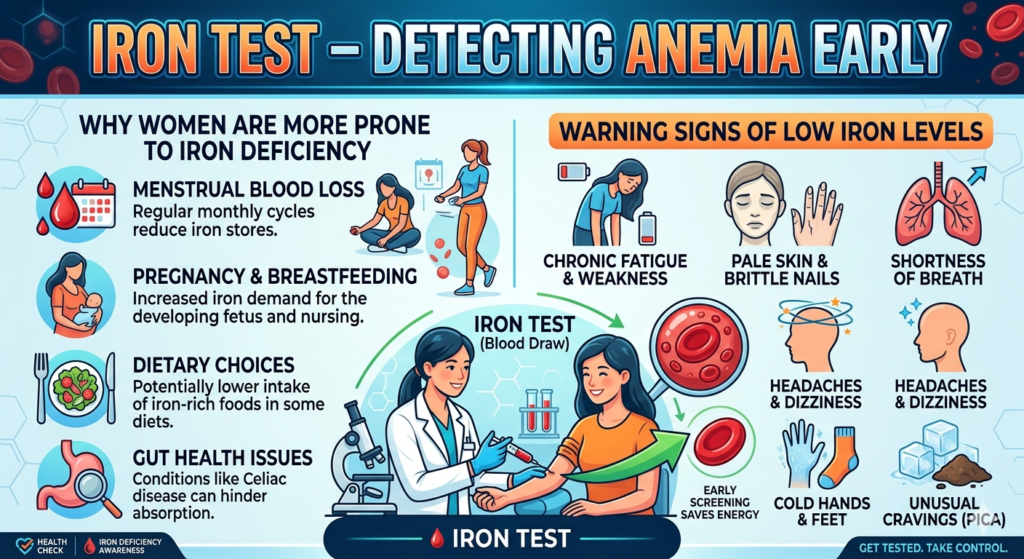
Women are naturally more vulnerable to iron deficiency due to biological factors. Menstruation is the primary reason—every month, blood loss leads to a reduction in iron levels. For some women, especially those with heavy periods, this loss can be significant enough to cause anemia over time.
Pregnancy further increases the demand for iron. The body needs extra iron to support the growing baby and increased blood volume. Even after pregnancy, it can take time for iron levels to return to normal, making regular testing essential.
Diet also plays a major role. Many women, consciously or unconsciously, consume less iron than required. Vegetarian or vegan diets, while healthy in many ways, may lack sufficient heme iron—the type that’s most easily absorbed by the body. Combined with lifestyle factors like skipping meals or relying on processed foods, this can lead to a gradual decline in iron levels.
What makes iron deficiency tricky is how it develops slowly. You might not notice it at first, but over time, it starts affecting your energy, concentration, and overall vitality. By the time symptoms become obvious, your body may already be significantly depleted.
March is an ideal time to check iron levels because it follows a season where diets are often less balanced. Comfort foods, reduced physical activity, and limited sunlight can all contribute to fatigue, masking the underlying issue of low iron.
Testing early allows you to make dietary adjustments—like increasing intake of iron-rich foods such as leafy greens, lentils, and lean meats—or consider supplementation if needed. It’s a simple step that can make a dramatic difference in how you feel every day.
Warning Signs of Low Iron Levels
Low iron levels don’t always scream for attention—they whisper. And if you’re not listening closely, it’s easy to miss the signs until they become disruptive. Understanding these symptoms is key to recognizing why the iron test is among the essential health tests every woman should take in March.
The most common symptom is fatigue, but this isn’t your typical tiredness. It’s a persistent lack of energy that makes even routine tasks feel exhausting. You might find yourself needing more rest than usual or struggling to stay focused throughout the day.
Pale skin is another indicator. When hemoglobin levels drop, the blood loses its rich red color, leading to a noticeable paleness, especially in the face, lips, and inner eyelids. It’s subtle, but once you notice it, it’s hard to ignore.
Shortness of breath can also occur, particularly during physical activity. When your body lacks sufficient iron, it struggles to carry oxygen efficiently, leaving you feeling winded even after mild exertion.
Other symptoms include dizziness, headaches, and cold hands and feet. Some women experience brittle nails or unusual cravings for non-food items like ice or clay—a condition known as pica, which is strongly associated with iron deficiency.
Hair fall is another common complaint. While many factors can cause hair loss, low iron levels are a frequent culprit. If you’ve noticed increased shedding without an obvious reason, it’s worth investigating.
Cognitive function can also be affected. Difficulty concentrating, memory lapses, and a general sense of mental fog are often linked to low iron levels. This can impact productivity and overall quality of life.
The challenge is that these symptoms often overlap with other conditions, particularly hormonal imbalances and thyroid issues. That’s why comprehensive testing is so important—it helps differentiate between potential causes and ensures you’re addressing the root problem.
A simple iron test can provide clarity and set you on the path to recovery. With proper treatment, many women experience a significant boost in energy and well-being, often realizing just how much their low iron levels were holding them back.
Hormone Tests Every Woman Should Consider
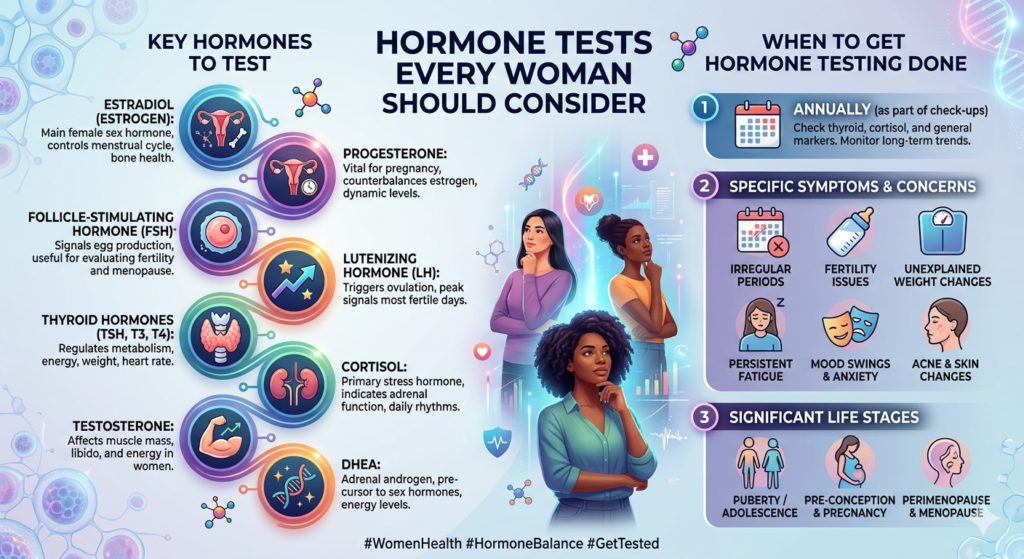
Key Hormones to Test
When it comes to understanding your body, hormone tests are like decoding a complex but fascinating language. Every hormone plays a role, and even a slight imbalance can create a chain reaction that affects your mood, metabolism, reproductive health, and overall energy. That’s exactly why hormone testing is a core part of the essential health tests every woman should take in March—it gives you a clear snapshot of what’s happening beneath the surface.
Some of the most important hormones to test include estrogen, progesterone, testosterone, cortisol, and insulin. Estrogen and progesterone are the primary female reproductive hormones, and they regulate your menstrual cycle. If these are out of balance, you may experience irregular periods, PMS, or even fertility challenges. Testosterone, although often associated with men, is also crucial for women in small amounts—it influences energy, libido, and muscle strength.
Cortisol, known as the stress hormone, is another key player. In today’s fast-paced world, chronic stress can keep cortisol levels elevated, which in turn disrupts other hormones. High cortisol can lead to weight gain (especially around the abdomen), sleep disturbances, and even anxiety. Insulin, on the other hand, regulates blood sugar levels. Imbalances here can increase the risk of conditions like insulin resistance or polycystic ovary syndrome (PCOS).
What makes hormone testing particularly valuable is its ability to explain symptoms that otherwise seem unrelated. For instance, unexplained weight gain, mood swings, acne, and fatigue might all trace back to a single hormonal imbalance. Without testing, you’re essentially guessing—but with it, you gain clarity.
Timing also matters when it comes to hormone tests. Certain hormones fluctuate throughout your menstrual cycle, so testing at the right time ensures accurate results. This is why consulting a healthcare professional alongside testing is important—they can guide you on when and how to test for the most reliable insights.
March is an excellent time to evaluate your hormonal health because it allows you to address imbalances early in the year. With the right information, you can make targeted lifestyle changes—whether it’s adjusting your diet, improving sleep, or managing stress more effectively.
Ultimately, hormone tests empower you. They shift you from reacting to symptoms to proactively managing your health. Instead of wondering why you feel off, you’ll have concrete answers—and a clear path forward.
When to Get Hormone Testing Done
Knowing which hormone tests to take is only half the equation—understanding when to take them is just as important. Timing can significantly influence the accuracy of your results, especially for hormones that fluctuate throughout your cycle. This makes timing a crucial factor in the essential health tests every woman should take in March.
For women with regular menstrual cycles, hormone testing is often recommended at specific phases. For example, estrogen levels are typically measured early in the cycle (around day 2–5), while progesterone is best tested during the mid-luteal phase (around day 21 in a 28-day cycle). These timings provide a clearer picture of how your hormones are functioning in relation to ovulation and overall reproductive health.
But what if your cycles are irregular? That’s actually one of the strongest reasons to get tested. Irregular periods often indicate underlying hormonal imbalances, and testing can help identify the root cause. In such cases, doctors may recommend testing at multiple points or using additional markers to get a comprehensive view.
Beyond menstrual concerns, there are other situations where hormone testing becomes essential. If you’re experiencing persistent fatigue, unexplained weight changes, severe PMS, acne, or mood swings, it’s a good time to consider testing. These symptoms are your body’s way of signaling that something might be off.
Stress is another major trigger. If you’ve been under prolonged stress, your cortisol levels may be elevated, disrupting other hormones in the process. Testing can help confirm whether stress is impacting your hormonal balance and guide you toward effective management strategies.
Age also plays a role. As women approach their late 30s and 40s, hormonal fluctuations become more common due to perimenopause. Regular testing during this phase can help manage symptoms and maintain quality of life.
March serves as a strategic checkpoint. It’s early enough in the year to detect imbalances and implement changes that can improve your health over the coming months. Think of it as a mid-course correction—catching issues before they become more complex.
Ultimately, the best time for hormone testing is when your body is giving you signals. Ignoring those signals only delays solutions. By acting early and incorporating hormone tests into your routine, you take a proactive step toward better health and well-being.
When to Consult a Doctor
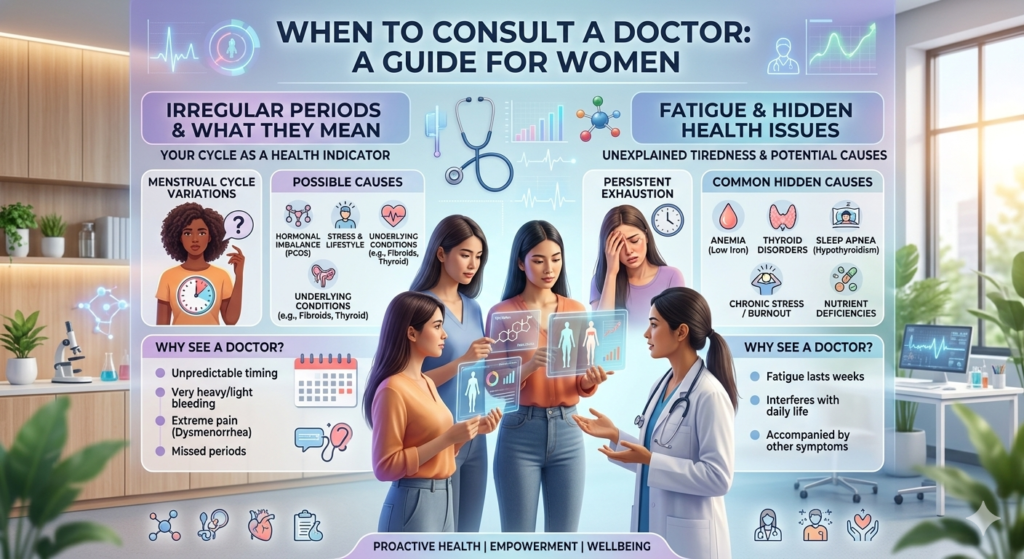
Irregular Periods and What They Mean
Irregular periods are often brushed off as a minor inconvenience, but in reality, they can be one of the most important indicators of your overall health. Your menstrual cycle is like a monthly report card—it reflects how well your hormones are functioning. When it becomes unpredictable, it’s your body’s way of saying something isn’t quite right. This is why understanding irregular periods is crucial when considering the essential health tests every woman should take in March.
A “normal” cycle typically ranges from 21 to 35 days, but consistency is key. If your cycle suddenly becomes shorter, longer, or skips altogether, it may point to hormonal imbalances involving estrogen, progesterone, or even thyroid hormones. Conditions like PCOS, thyroid disorders, or high stress levels can all disrupt your cycle.
Heavy or unusually light bleeding can also signal underlying issues. Heavy periods may lead to iron deficiency anemia, while very light periods might indicate low estrogen levels. Both scenarios warrant further investigation through appropriate testing.
Lifestyle factors can contribute as well. Sudden weight loss or gain, excessive exercise, poor diet, and lack of sleep can all impact your cycle. However, even if lifestyle plays a role, it’s still important to rule out medical causes through proper testing.
Ignoring irregular periods can have long-term consequences, especially for reproductive health. If left unaddressed, hormonal imbalances can interfere with ovulation, making it more difficult to conceive in the future. Early detection through tests like hormone panels and thyroid profiles can help prevent these complications.
Doctor consultation doesn’t mean something is seriously wrong—it simply means you’re taking control of your health. A healthcare professional can interpret your test results, identify patterns, and recommend appropriate treatments or lifestyle changes.
March is an ideal time to act because it allows you to start the year with clarity. Instead of guessing or hoping things will normalize on their own, you can take informed steps toward better health.
Fatigue and Hidden Health Issues
Fatigue is one of the most common complaints among women, yet it’s also one of the most misunderstood. It’s easy to blame a busy schedule, poor sleep, or stress, but when fatigue becomes persistent, it often points to deeper health issues. This makes it a critical factor in deciding when to undergo the essential health tests every woman should take in March.
Chronic fatigue can be linked to several underlying conditions, including iron deficiency, thyroid disorders, and hormonal imbalances. These conditions often overlap, making it difficult to pinpoint the exact cause without proper testing. For instance, both low iron levels and hypothyroidism can cause extreme tiredness, but the treatments are entirely different.
One way to distinguish normal tiredness from a potential health issue is to look at how you feel after rest. If a good night’s sleep doesn’t improve your energy levels, it’s a sign that something else might be at play. Similarly, if fatigue is accompanied by other symptoms—like hair loss, weight changes, or mood swings—it’s worth investigating further.
Mental fatigue is another aspect to consider. Difficulty concentrating, forgetfulness, and a general sense of brain fog can all be linked to hormonal or nutritional deficiencies. These symptoms can impact your productivity and overall quality of life.
Stress also plays a significant role. Chronic stress can elevate cortisol levels, which in turn disrupts other hormones and drains your energy. Over time, this can lead to burnout, making it even more important to identify and address the root cause.
Consulting a doctor allows for a comprehensive evaluation. Instead of treating symptoms in isolation, a healthcare professional can recommend a combination of tests—such as thyroid profiles, iron tests, and hormone panels—to get a complete picture of your health.
Taking action in March ensures that you don’t carry unresolved fatigue into the rest of the year. With the right diagnosis and treatment, you can restore your energy levels and feel more like yourself again.
Benefits of Regular Health Screening

Regular health screening isn’t just about detecting diseases—it’s about understanding your body on a deeper level and staying one step ahead of potential issues. When you prioritize the essential health tests every woman should take in March, you’re not just reacting to symptoms; you’re actively shaping your future health.
One of the biggest advantages of regular screening is early detection. Conditions like anemia, thyroid disorders, and hormonal imbalances often develop silently. By the time symptoms become severe, the condition may already be affecting multiple aspects of your health. Early detection allows for simpler, more effective treatment.
Another benefit is personalized health management. No two bodies are the same, and what works for one person may not work for another. Testing provides data that helps tailor your diet, exercise, and lifestyle choices to your specific needs. It removes the guesswork and replaces it with informed decisions.
Regular screening also improves long-term outcomes. Studies have shown that early intervention can significantly reduce the risk of complications associated with chronic conditions. For example, managing thyroid levels early can prevent metabolic and cardiovascular issues, while maintaining healthy iron levels can improve energy and cognitive function.
There’s also a psychological benefit. Knowing your health status provides peace of mind. Instead of worrying about unexplained symptoms, you have clarity and a plan of action. This sense of control can reduce stress and improve overall well-being.
Incorporating health tests into your routine doesn’t have to be overwhelming. Start with the basics—thyroid profile, iron test, and hormone panel—and build from there based on your needs. March serves as a natural starting point, setting the tone for a healthier year ahead.
Conclusion
Taking charge of your health doesn’t require drastic changes—it starts with awareness and small, consistent actions. The essential health tests every woman should take in March—including thyroid profiles, iron tests, and hormone panels—offer a powerful way to understand what your body needs and address issues before they escalate.
Your body communicates constantly through subtle signals—fatigue, irregular periods, mood changes—and these tests help translate those signals into actionable insights. Instead of guessing, you gain clarity. Instead of reacting, you take control.
Health isn’t something to postpone. March provides the perfect opportunity to reset, reassess, and realign your well-being for the months ahead. A simple test today can prevent complex problems tomorrow.
FAQs
1. Why are health tests in March particularly important for women?
March marks a seasonal transition that can impact hormones, metabolism, and energy levels. It’s an ideal time to detect imbalances early and prepare your body for the rest of the year.
2. How often should women take thyroid and hormone tests?
It depends on your symptoms and medical history, but generally once a year is recommended. More frequent testing may be needed if you have existing conditions.
3. Can iron deficiency be treated easily?
Yes, in most cases it can be managed through diet and supplements once diagnosed early through an iron test.
4. What are the most common symptoms of hormonal imbalance?
Irregular periods, fatigue, mood swings, weight changes, and skin issues are some of the most common signs.
5. When should I consult a doctor for these tests?
If you experience persistent fatigue, irregular periods, or noticeable changes in your health, it’s best to consult a doctor and get tested promptly.
Leave a Reply