
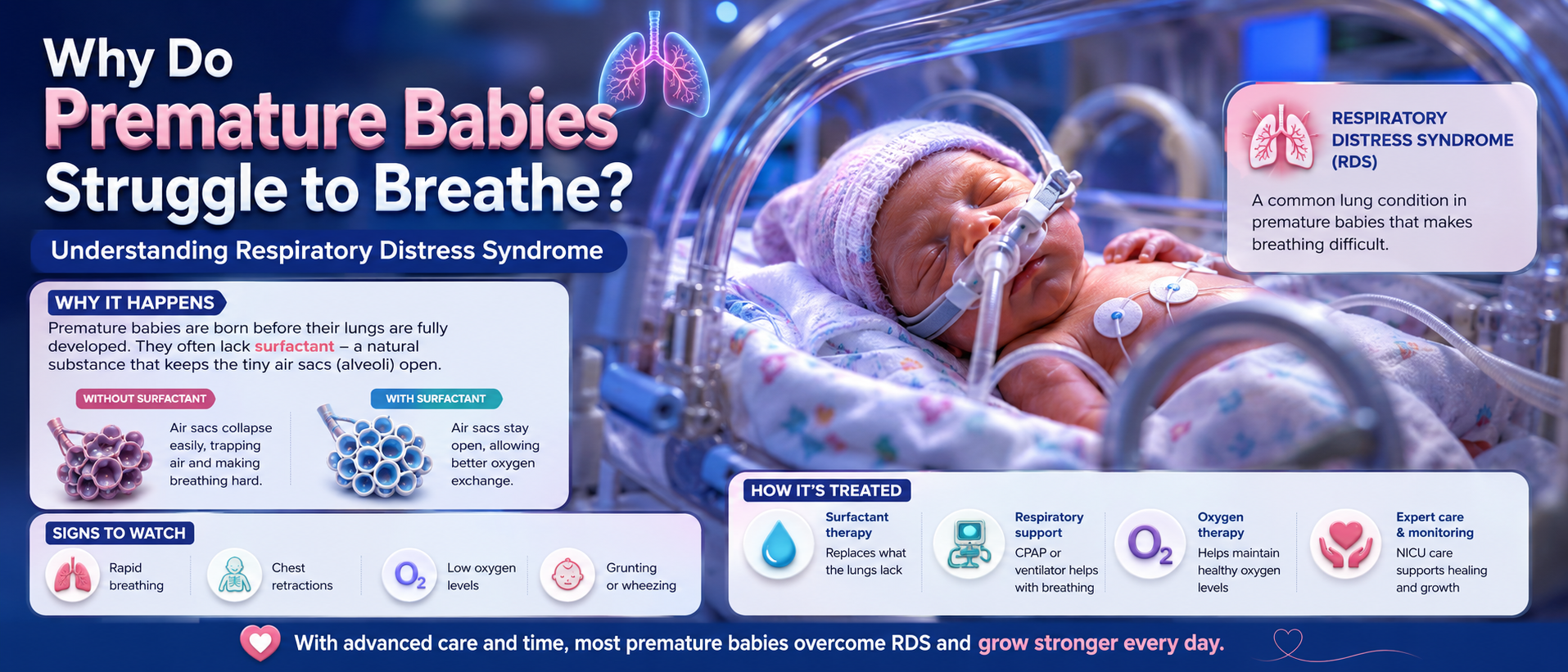
Premature babies enter the world before their bodies are fully developed, and one of the most critical challenges they face is breathing. Among the most common and serious complications is Respiratory Distress Syndrome (RDS), a condition that affects thousands of preterm infants every year. Understanding why premature babies struggle to breathe requires a closer look at lung development, surfactant production, and the specialized care required to support these vulnerable newborns.
This article explores the causes, symptoms, and treatment options associated with Respiratory Distress Syndrome, while also highlighting the importance of neonatal respiratory care and long-term premature baby lung health.
Premature Babies and Preterm Infant Breathing Problems
Premature babies, also known as preterm infants, are born before 37 weeks of pregnancy. The earlier a baby is born, the higher the risk of developing complications, especially related to breathing. This is because the lungs are among the last organs to fully mature in the womb.
Preterm infant breathing problems occur due to underdeveloped lungs that are not yet ready to function independently. In full-term babies, the lungs are prepared to expand and exchange oxygen effectively at birth. However, in premature babies, this process is often incomplete, making breathing difficult and sometimes life-threatening.
These newborn breathing difficulties are most commonly linked to Respiratory Distress Syndrome, which is primarily caused by surfactant deficiency and immature lung development.
Respiratory Distress Syndrome in Premature Babies
Respiratory Distress Syndrome (RDS) is a condition that affects the lungs of premature babies, making it hard for them to breathe. It occurs when the lungs lack a sufficient amount of surfactant—a substance that helps keep the air sacs (alveoli) open.
Without surfactant, the air sacs collapse after each breath, forcing the baby to work much harder to breathe. This leads to reduced oxygen levels in the blood and increased carbon dioxide, which can quickly become dangerous if not treated promptly.
RDS is most common in babies born before 32 weeks of gestation, but it can also affect slightly older premature babies depending on their lung maturity.
Causes of Respiratory Distress Syndrome
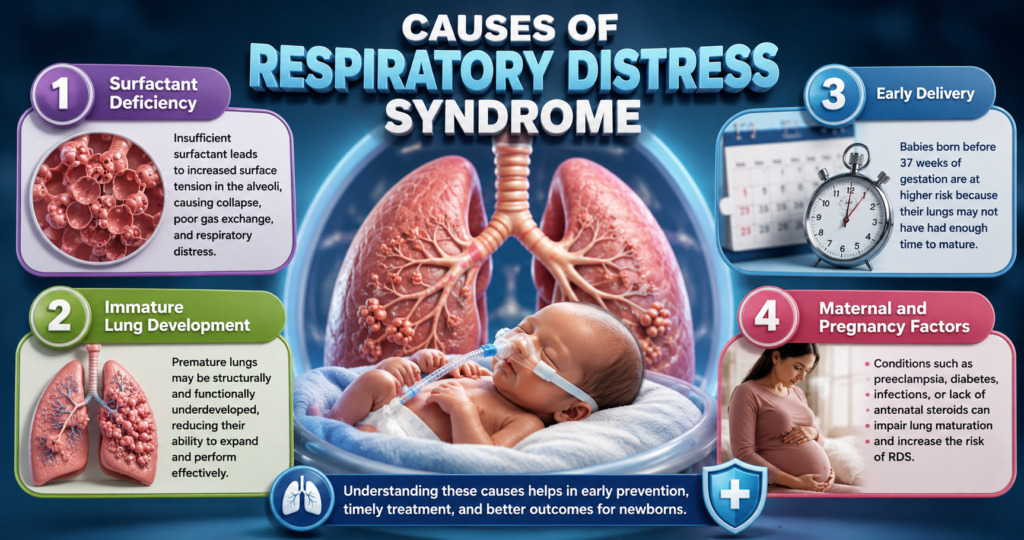
The primary causes of Respiratory Distress Syndrome are directly related to premature birth and the developmental stage of the lungs.
1. Surfactant Deficiency
Surfactant deficiency is the leading cause of RDS. Surfactant is a fatty substance produced in the lungs during the later stages of pregnancy. It reduces surface tension and prevents the collapse of alveoli. In premature babies, surfactant production is either insufficient or completely absent.
2. Immature Lung Development
Immature lung development means that the structural and functional components of the lungs are not fully formed. This includes underdeveloped alveoli, weak respiratory muscles, and incomplete blood vessel networks.
3. Early Delivery
Babies born prematurely miss out on critical weeks of lung maturation. The earlier the delivery, the higher the risk of severe Respiratory Distress Syndrome.
4. Maternal and Pregnancy Factors
Certain maternal conditions such as diabetes, infections, or complications during pregnancy can increase the risk of RDS in premature babies.
Surfactant Deficiency and Its Role in Newborn Breathing Difficulties
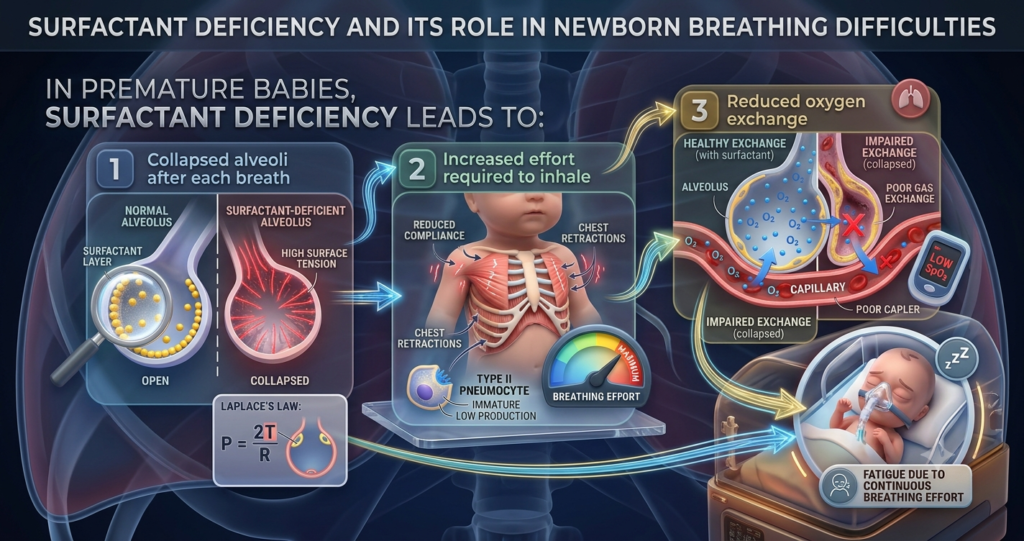
Surfactant plays a crucial role in maintaining proper lung function. It acts like a lubricant that allows the lungs to expand easily during inhalation and prevents collapse during exhalation.
In premature babies, surfactant deficiency leads to:
- Collapsed alveoli after each breath
- Increased effort required to inhale
- Reduced oxygen exchange
- Fatigue due to continuous breathing effort
This is why newborn breathing difficulties in preterm infants can escalate rapidly without medical intervention.
Immature Lung Development in Premature Babies
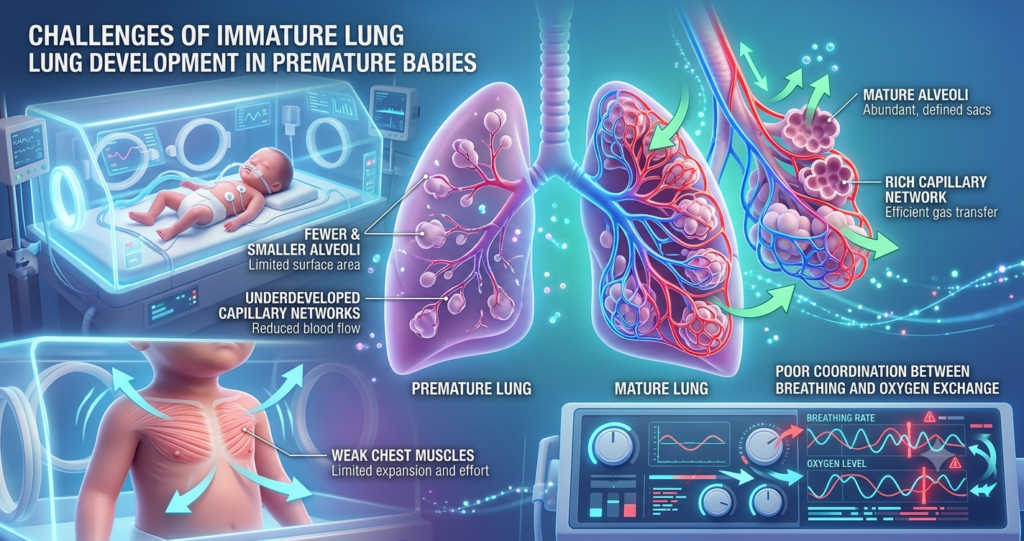
Immature lung development is another critical factor contributing to Respiratory Distress Syndrome. The lungs of a premature baby are not structurally ready to handle independent breathing.
Key issues include:
- Fewer and smaller alveoli
- Underdeveloped capillary networks
- Weak chest muscles
- Poor coordination between breathing and oxygen exchange
These limitations significantly impact premature baby lung health and make immediate neonatal respiratory care essential after birth.
Signs of Respiratory Distress Syndrome
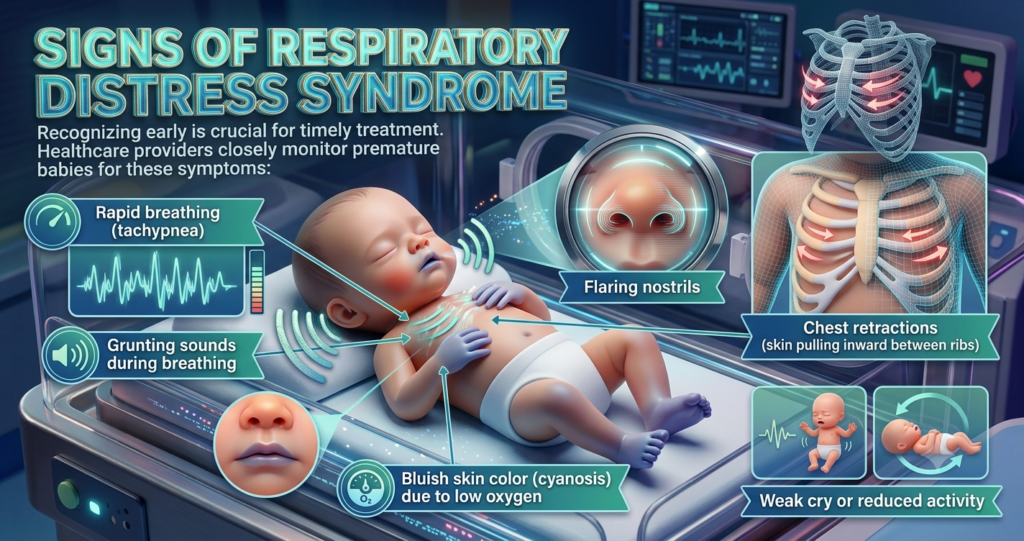
Recognizing the signs of Respiratory Distress Syndrome early is crucial for timely treatment. Healthcare providers closely monitor premature babies for the following symptoms:
- Rapid breathing (tachypnea)
- Grunting sounds during breathing
- Flaring nostrils
- Chest retractions (skin pulling inward between ribs)
- Bluish skin color (cyanosis) due to low oxygen
- Weak cry or reduced activity
These signs of Respiratory Distress Syndrome usually appear within minutes to hours after birth and require urgent medical attention.
Neonatal Respiratory Care for Premature Babies
Neonatal respiratory care is a specialized field focused on supporting the breathing needs of newborns, especially premature babies. This care is typically provided in a Neonatal Intensive Care Unit (NICU).
NICU care for premature babies includes:
- Continuous monitoring of oxygen levels
- Temperature regulation
- Nutritional support
- Infection prevention
- Advanced respiratory support systems
The goal of neonatal respiratory care is to stabilize the baby’s breathing, improve oxygen levels, and support lung development until the baby can breathe independently.
NICU Care for Premature Babies with Respiratory Distress Syndrome
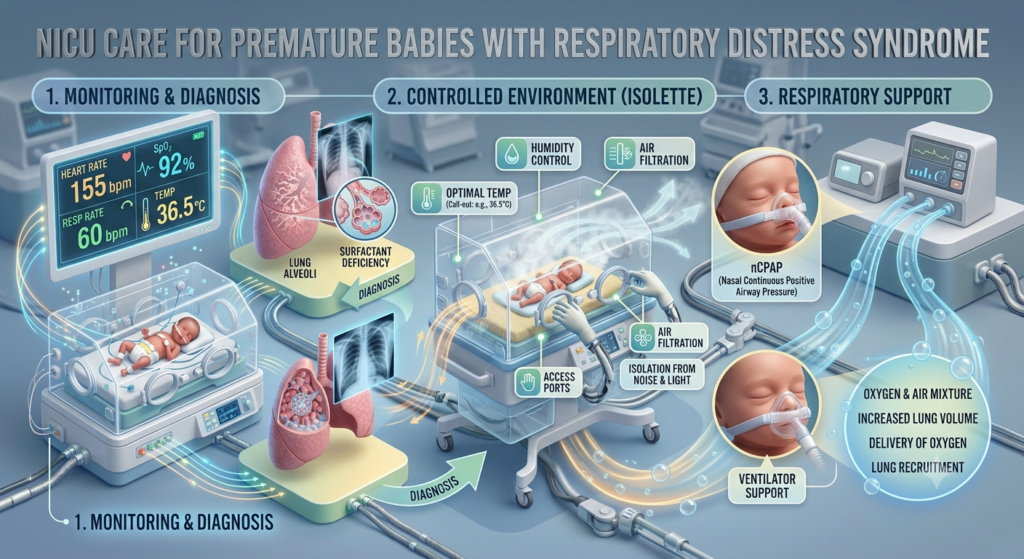
NICU care for premature babies with RDS is highly structured and involves a team of neonatologists, nurses, and respiratory therapists.
Key components include:
1. Monitoring and Diagnosis
Doctors use chest X-rays and blood tests to confirm Respiratory Distress Syndrome and assess its severity.
2. Controlled Environment
Premature babies are placed in incubators to maintain body temperature and reduce energy expenditure.
3. Respiratory Support
Depending on the severity, different levels of respiratory support are provided, including oxygen therapy, CPAP, or ventilator support.
Treatment for Respiratory Distress Syndrome
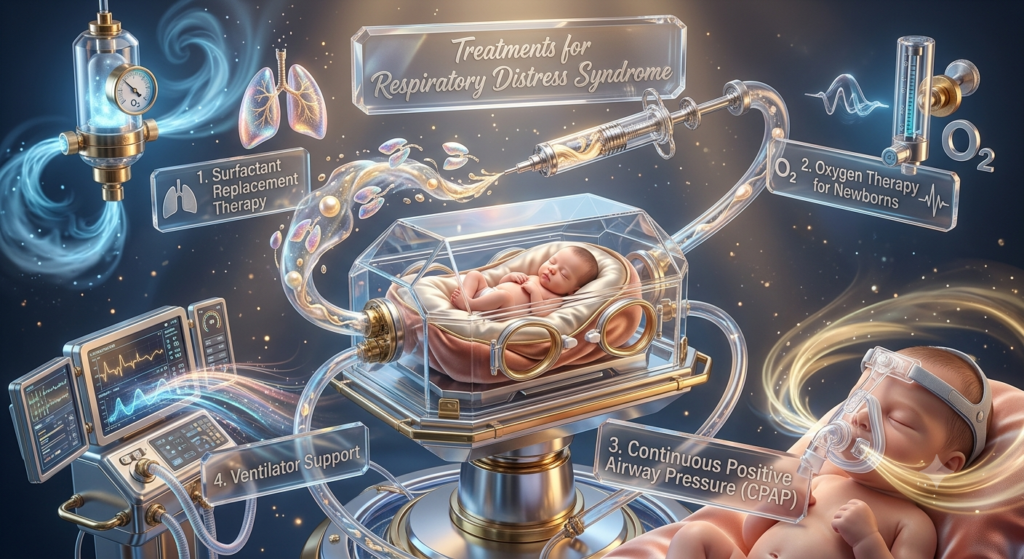
The treatment for Respiratory Distress Syndrome focuses on improving breathing and ensuring adequate oxygen supply.
1. Surfactant Replacement Therapy
Doctors administer artificial surfactant directly into the baby’s lungs through a breathing tube. This significantly improves lung function and reduces the severity of RDS.
2. Oxygen Therapy for Newborns
Oxygen therapy for newborns is one of the most common treatments. It helps maintain adequate oxygen levels in the blood and reduces stress on the baby’s body.
3. Continuous Positive Airway Pressure (CPAP)
CPAP for premature infants delivers a steady stream of air into the lungs to keep airways open and prevent collapse.
4. Ventilator Support
In severe cases, ventilator support for preterm babies is required. A machine takes over the breathing process, ensuring consistent oxygen delivery.
Oxygen Therapy for Newborns and Its Importance
Oxygen therapy for newborns is a lifesaving intervention for babies suffering from Respiratory Distress Syndrome. It ensures that vital organs receive enough oxygen to function properly.
However, oxygen levels must be carefully controlled. Too little oxygen can damage organs, while too much can affect eye development and lead to complications such as retinopathy of prematurity.
CPAP for Premature Infants: A Non-Invasive Solution
CPAP for premature infants is often the first line of respiratory support. It is a non-invasive method that helps keep the airways open without the need for a breathing tube.
Benefits of CPAP include:
- Reduced need for mechanical ventilation
- Lower risk of lung injury
- Improved oxygen levels
- Better long-term outcomes
This method plays a significant role in improving premature baby lung health.
Ventilator Support for Preterm Babies in Severe Cases
When CPAP is not sufficient, ventilator support for preterm babies becomes necessary. This involves inserting a tube into the baby’s airway and connecting it to a machine that controls breathing.
While effective, ventilator use must be carefully managed to avoid complications such as lung injury or infection. Advances in neonatal care have made ventilators safer and more efficient over time.
Premature Baby Lung Health and Long-Term Outcomes
Premature baby lung health depends heavily on early intervention and proper neonatal respiratory care. With modern medical advancements, many babies with Respiratory Distress Syndrome go on to lead healthy lives.
However, some may experience long-term respiratory issues such as:
- Chronic lung disease (bronchopulmonary dysplasia)
- Increased susceptibility to infections
- Asthma-like symptoms
Regular follow-ups and proper medical care can help manage these conditions effectively.
Preventing Respiratory Distress Syndrome in Premature Babies
While not all cases can be prevented, certain measures can reduce the risk of Respiratory Distress Syndrome:
- Proper prenatal care
- Avoiding premature delivery when possible
- Administering corticosteroids to mothers at risk of preterm birth
- Managing maternal health conditions
These preventive strategies can significantly improve outcomes for premature babies.
Supporting Premature Babies Through Respiratory Challenges
Premature babies face unique challenges, and breathing difficulties are among the most critical. Respiratory Distress Syndrome remains a leading cause of complications in preterm infants, primarily due to surfactant deficiency and immature lung development.
With advancements in neonatal respiratory care, including oxygen therapy for newborns, CPAP for premature infants, and ventilator support for preterm babies, survival rates have improved dramatically. Early recognition of the signs of Respiratory Distress Syndrome and timely intervention in NICU care for premature babies play a crucial role in ensuring better outcomes.
Understanding these challenges not only helps healthcare professionals but also empowers parents to make informed decisions and provide the best possible support for their newborns. With the right care and medical attention, even the most vulnerable premature babies can grow stronger and healthier over time.
Leave a Reply