

Ramadan 2026 is not just a spiritual journey—it can also be a powerful opportunity to reset your body, shed stubborn fat, and rebuild healthier eating habits. If you’ve been struggling with weight loss all year, this sacred month can act like a metabolic reboot button. But here’s the catch: many people actually gain weight during Ramadan. Why? Because they treat Iftar like a feast and Suhoor like a last-minute carb overload.
This comprehensive Ramadan Diet Plan For Fast Weight Loss in 2026 – Get Free Doctor Consultation is designed to help you lose weight safely, efficiently, and sustainably. You’ll discover how to structure your meals, what foods to prioritize, what to avoid, and how to support your metabolism during fasting hours. Most importantly, you’ll learn how professional guidance through a free doctor consultation in 2026 can help personalize your results.
Think of Ramadan as a structured intermittent fasting program—but with spiritual depth. When done correctly, fasting shifts your body into fat-burning mode, improves insulin sensitivity, and reduces inflammation. However, success depends entirely on strategy. Without a proper plan, your body may cling to fat instead of burning it.
Ready to transform your Ramadan into a weight-loss breakthrough? Let’s dive in.
Why Ramadan 2026 Is the Perfect Time to Start a Weight Loss Journey

There’s something different about Ramadan. The discipline, the routine, the mindfulness—it all creates the ideal environment for positive change. Unlike typical diet plans that rely on willpower alone, Ramadan naturally enforces structured eating windows. You’re not grazing all day. You’re not mindlessly snacking. You’re operating within defined hours.
In 2026, fasting hours may range between 13–15 hours depending on your location. That’s long enough to trigger fat metabolism. When your body exhausts stored glucose, it turns to fat as its primary fuel source. This metabolic shift is where real weight loss begins.
Ramadan also strengthens mental resilience. When you can abstain from food and water for hours, saying no to fried samosas or sugary desserts becomes easier. The spiritual aspect reduces emotional eating and increases mindfulness around food choices.
Another advantage? Social support. Families fast together. Communities share Iftar. You’re not dieting alone—you’re transforming together. That collective motivation can be powerful.
When combined with a scientifically structured Ramadan Diet Plan For Fast Weight Loss in 2026 – Get Free Doctor Consultation, this month becomes more than spiritual purification—it becomes physical transformation.
How Fasting Affects Your Body During Ramadan

Metabolism Changes During Long Fasting Hours
When you stop eating for extended hours, your body enters a completely different metabolic state. Initially, it uses glycogen (stored glucose) for energy. Once that’s depleted—usually after 8–12 hours—it begins tapping into fat stores. This process is known as lipolysis.
Your insulin levels drop significantly during fasting. Low insulin is the key to fat burning. High insulin locks fat in storage. So when you fast, you’re essentially unlocking your body’s fat reserves.
However, overeating at Iftar can spike insulin again and cancel out these benefits. That’s why strategic meal planning is crucial.
Hormonal Shifts That Support Fat Burning
Fasting increases human growth hormone (HGH), which helps preserve muscle mass while burning fat. Cortisol levels may fluctuate, but with proper sleep and hydration, these can be balanced.
Ramadan fasting also improves leptin sensitivity, helping regulate hunger signals. Ever notice how your appetite adjusts after a few days? That’s your hormones recalibrating.
Understanding these internal changes makes it easier to follow a structured Ramadan Diet Plan For Fast Weight Loss in 2026 – Get Free Doctor Consultation without frustration.
Ramadan Diet Plan For Fast Weight Loss in 2026 – Get Free Doctor Consultation: Core Principles

Let’s simplify things. Weight loss during Ramadan depends on five pillars:
- Calorie control without starvation
- High protein intake
- Fiber-rich carbohydrates
- Healthy fats in moderation
- Proper hydration
Your goal isn’t to eat less food overall—it’s to eat smarter. Protein keeps you full longer. Fiber slows digestion. Healthy fats stabilize blood sugar. Water prevents fatigue and overeating.
Portion control matters. Even healthy foods can cause weight gain if consumed in excess. Imagine your plate divided like this:
- 40% vegetables
- 30% lean protein
- 20% complex carbs
- 10% healthy fats
Consistency beats intensity. A balanced plan repeated daily yields better results than extreme restriction followed by binge eating.
Professional guidance through a free doctor consultation in 2026 can tailor this framework to your age, gender, medical conditions, and activity level.
Pre-Suhoor Strategy: What to Eat Before Fajr for Maximum Fat Loss

Suhoor sets the tone for your entire fasting day. Skip it, and you risk fatigue, muscle loss, and overeating at Iftar. Overload it with sugary foods, and you’ll crash mid-morning.
High-Protein Suhoor Ideas
Protein is your best friend at Suhoor. It digests slowly and keeps hunger stable. Excellent options include:
- Boiled eggs
- Greek yogurt
- Cottage cheese
- Protein smoothies
- Lentils
Protein prevents muscle breakdown during long fasting hours. Muscle is metabolically active tissue—it burns calories even at rest. Protect it at all costs.
Complex Carbohydrates for Sustained Energy

Choose oats, whole wheat bread, quinoa, or brown rice instead of white bread or sugary cereals. Complex carbs release energy gradually.
Add chia seeds or flaxseeds for fiber. Include a handful of nuts for healthy fats.
A powerful Suhoor example:
- Oatmeal with chia seeds
- 2 boiled eggs
- Greek yogurt
- 2 glasses of water
That’s fuel, not fluff.
Iftar Meal Plan for Rapid and Safe Weight Loss

Breaking Fast the Right Way
Start with 1–2 dates and water. Avoid deep-fried starters. After Maghrib prayer, return to a balanced plate.
Balanced Iftar Plate Formula
Your Iftar should include:
- Grilled chicken/fish
- Steamed vegetables
- Small portion of brown rice or whole wheat roti
- Salad with olive oil
Avoid heavy cream-based curries and sugary drinks. Eat slowly. It takes 20 minutes for your brain to register fullness.
A mindful Iftar supports the goals of the Ramadan Diet Plan For Fast Weight Loss in 2026 – Get Free Doctor Consultation without leaving you sluggish.
Healthy Snacks Between Iftar and Suhoor

If you get hungry later, choose smart snacks:
- A handful of almonds
- Fruit with peanut butter
- Protein shake
- Carrot sticks with hummus
Avoid chips, sweets, and sugary tea.
Snacking isn’t the enemy. Uncontrolled snacking is.
Hydration Plan for Ramadan 2026

Dehydration slows metabolism and increases cravings. Aim for 8–10 glasses of water between Iftar and Suhoor.
Follow the 2-4-2 rule:
- 2 glasses at Iftar
- 4 glasses between meals
- 2 glasses at Suhoor
Avoid excessive caffeine—it dehydrates you.
Ramadan Diet Plan For Fast Weight Loss in 2026 – Get Free Doctor Consultation: Weekly Meal Table
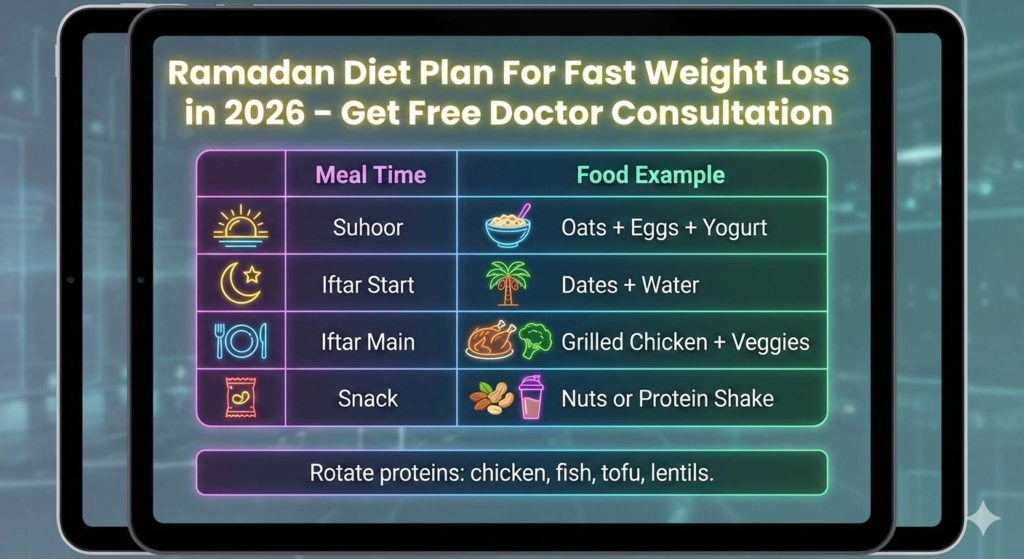
| Meal Time | Food Example |
| Suhoor | Oats + Eggs + Yogurt |
| Iftar Start | Dates + Water |
| Iftar Main | Grilled Chicken + Veggies |
| Snack | Nuts or Protein Shake |
Rotate proteins: chicken, fish, tofu, lentils.
Foods to Avoid for Faster Results

- Fried samosas
- Pakoras
- Sugary drinks
- White bread
- Excess sweets
These spike insulin and store fat.
Best Exercises During Ramadan for Fat Burning

Best times:
- 30 minutes before Iftar (light cardio)
- 1–2 hours after Iftar (strength training)
Focus on:
- Walking
- Bodyweight exercises
- Light weights
Don’t overtrain. Recovery matters.
Sleep and Stress Management During Ramadan

Aim for 6–8 hours combined sleep. Poor sleep increases hunger hormones.
Take short naps if needed. Manage stress through prayer, breathing exercises, and reflection.
Common Mistakes That Slow Down Weight Loss in Ramadan
- Skipping Suhoor
- Overeating at Iftar
- Drinking sugary beverages
- Not drinking enough water
- Zero physical activity
Avoid these, and you’re ahead of 80% of people.
Get Free Doctor Consultation in 2026 – Why Professional Guidance Matters
Every body is different. Medical conditions like diabetes, thyroid disorders, or PCOS require specialized planning. A free doctor consultation in 2026 can:
- Assess your health
- Customize calorie targets
- Adjust medication timing
- Monitor progress
Professional guidance ensures safe and sustainable results.
Sample 7-Day Ramadan Diet Plan For Fast Weight Loss in 2026 – Get Free Doctor Consultation
Rotate lean proteins, vegetables, and whole grains daily. Keep portions controlled. Stay hydrated. Stay consistent.
Conclusion
Ramadan 2026 can be your breakthrough moment. With the right Ramadan Diet Plan For Fast Weight Loss in 2026 – Get Free Doctor Consultation, you can burn fat, protect muscle, and build lifelong habits. It’s not about starvation. It’s about strategy. Eat smart. Hydrate well. Move daily. Seek professional guidance. Stay consistent.
Transformation isn’t accidental. It’s intentional.
FAQs
- Can I lose 5 kg during Ramadan 2026?
Yes, with a calorie-controlled diet, hydration, and exercise. - Is it safe to exercise while fasting?
Yes, light to moderate exercise is safe. - Should I avoid carbs completely?
No. Choose complex carbs in moderation. - How important is Suhoor?
Very important for metabolism and energy. - Do I really need a doctor consultation?
If you have medical conditions, absolutely.
Leave a Reply