
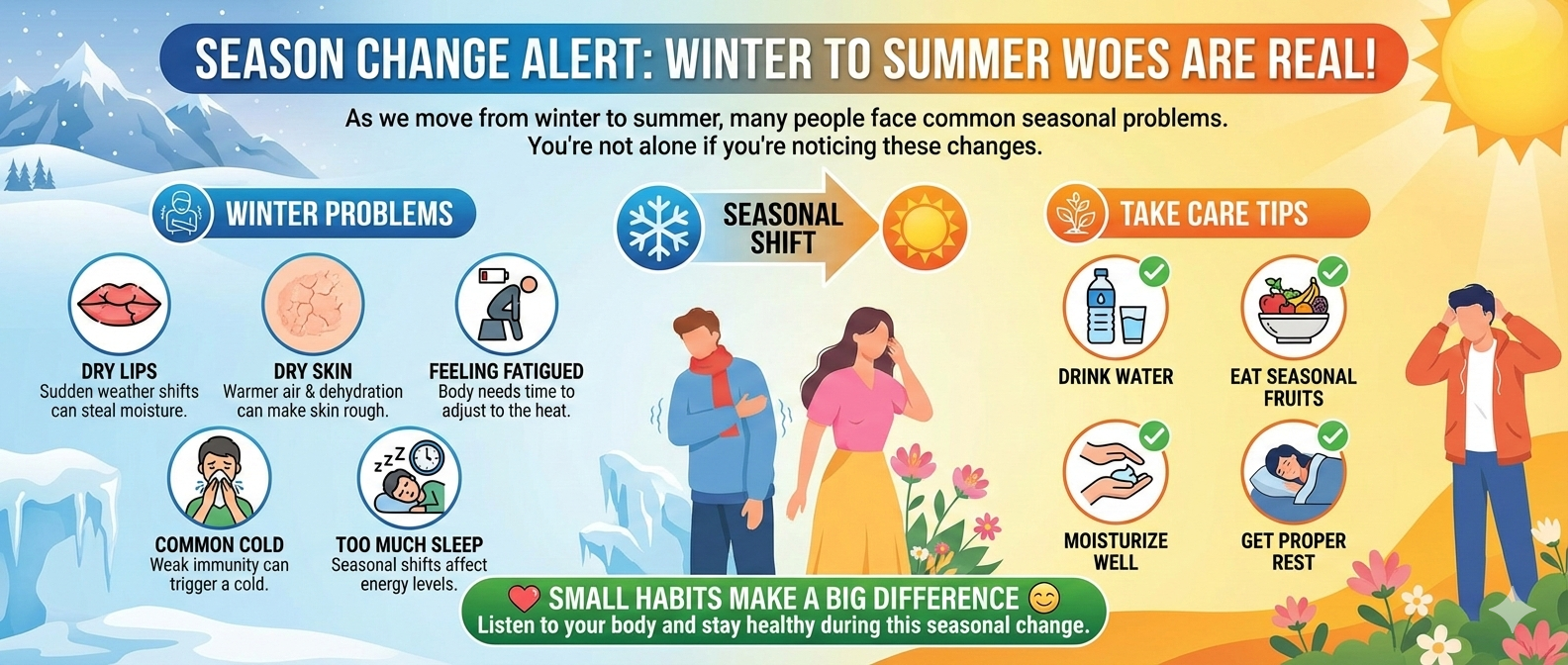

Season change alert this isn’t just a catchy phrase, it’s a real-life experience most of us silently struggle with. As we move from winter to summer, the body goes through a quiet battle of adjustment. One day you’re wrapped in layers enjoying warm drinks, and the next day you’re sweating, feeling drained, and wondering why your lips are cracked or your skin feels tight. Sounds familiar? You’re not alone.
The transition from winter to summer brings more than sunshine and longer days. It often invites dry lips, dry skin, fatigue, common cold, and even an unusual urge to sleep more than usual. These winter to summer woes are real, and they affect people of all ages. The body doesn’t instantly adapt to temperature changes, humidity shifts, and altered routines. Instead, it needs time—and during that time, discomfort shows up in small but annoying ways.
What makes season change tricky is that most people ignore the signs. We brush off fatigue as laziness, dry skin as normal, and frequent sneezing as “just weather.” But these are your body’s way of saying, “Hey, slow down. I need support.” Think of your body like a smartphone—when the environment changes suddenly, it needs a software update to function smoothly again.
This season change alert is your reminder to listen closely. Small habits like drinking more water, eating seasonal fruits, moisturizing well, and getting proper rest can make a big difference. Let’s break down each common winter to summer problem, understand why it happens, and learn simple ways to stay healthy, balanced, and energized during this seasonal shift.
Why Season Change From Winter to Summer Affects Health
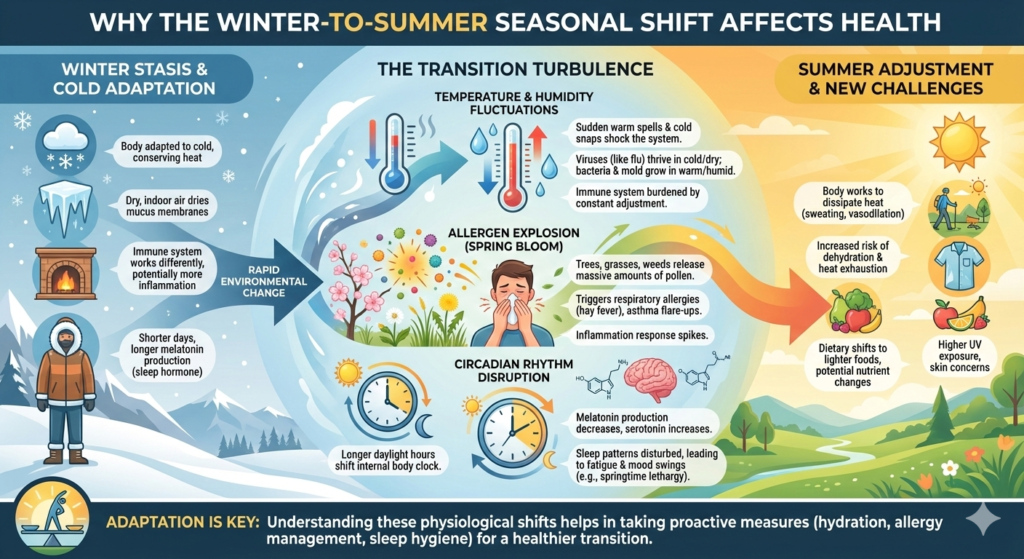
The season change from winter to summer affects health because the human body thrives on balance and routine. When temperatures rise suddenly, humidity changes, and daylight hours increase, the body’s internal systems need time to recalibrate. Unfortunately, nature doesn’t wait for our comfort. One week it’s cool and cozy, the next week it’s hot and exhausting. This sudden shift puts stress on multiple systems at once.
During winter, the body conserves energy. Metabolism slows slightly, water intake often decreases, and physical activity may drop. As summer approaches, the body suddenly needs to cool itself, regulate sweat, manage hydration, and adapt to higher temperatures. This quick switch can overwhelm the system, leading to fatigue, dehydration, and weakened immunity.
Another major factor is fluid loss. In summer, the body loses more water through sweat—even if you don’t feel drenched. If you don’t increase water intake, dehydration creeps in quietly. Dehydration affects skin, lips, digestion, energy levels, and even brain function. That’s why you may feel sluggish, irritable, or unfocused during seasonal transitions.
Hormonal changes also play a role. Melatonin and cortisol levels adjust with changing daylight hours, impacting sleep patterns and energy levels. This explains why some people feel sleepy all day while others struggle to sleep at night during season change.
In short, the winter to summer season change affects health because it challenges the body’s ability to maintain internal stability. The good news? With awareness and small lifestyle adjustments, you can help your body adapt smoothly and avoid most seasonal problems.
Dry Lips During Season Change: Causes, Symptoms, and Solutions
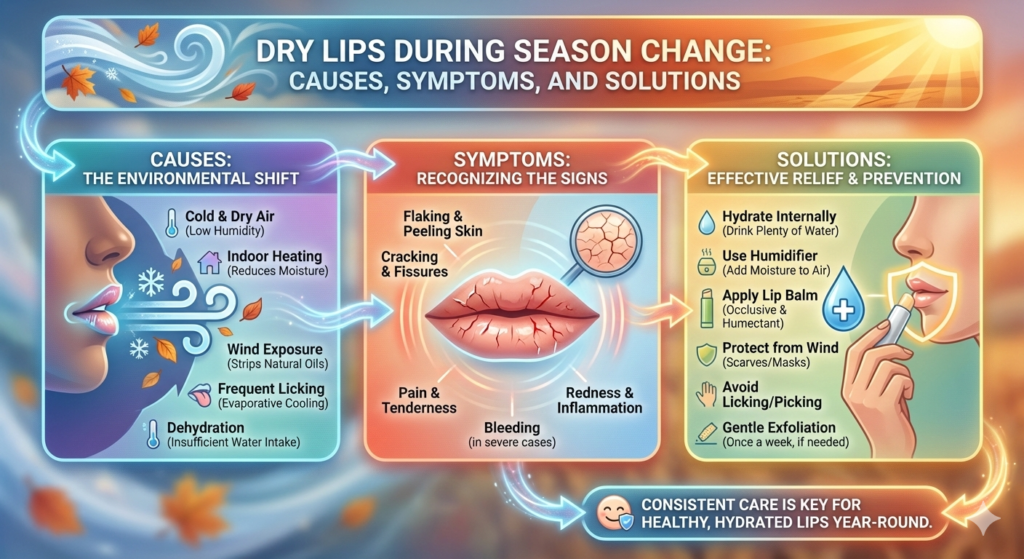
Dry lips during season change are one of the first signs your body is struggling to adapt. Lips don’t have oil glands like the rest of your skin, which makes them extremely vulnerable to moisture loss. When winter dryness meets rising summer heat, lips crack, peel, and feel uncomfortable almost overnight.
One major cause of dry lips during winter to summer transition is dehydration. As temperatures rise, your body loses more water through sweat. If you’re still drinking water like it’s winter, your lips pay the price. Another culprit is increased sun exposure. UV rays damage the thin skin on lips, leading to dryness and pigmentation.
People often make dry lips worse by licking them frequently. It feels soothing for a second, but saliva evaporates quickly, taking moisture with it. Add air-conditioned rooms, fans, and dusty winds to the mix, and your lips are under constant attack.
Symptoms of dry lips include tightness, flaking, redness, burning sensation, and in severe cases, painful cracks. Ignoring these signs can lead to infections or long-term sensitivity.
The solution starts with hydration. Drinking enough water throughout the day is non-negotiable. Use a nourishing lip balm with natural oils like coconut oil, shea butter, or beeswax. Avoid flavored or alcohol-based lip products, as they worsen dryness. Applying lip balm before stepping out in the sun and before bed helps lock in moisture.
Dry lips are not just a cosmetic issue—they’re a clear season change alert from your body. Treat them gently, hydrate consistently, and they’ll recover faster than you expect.
Dry Skin Problems in Season Change: Winter to Summer Effects
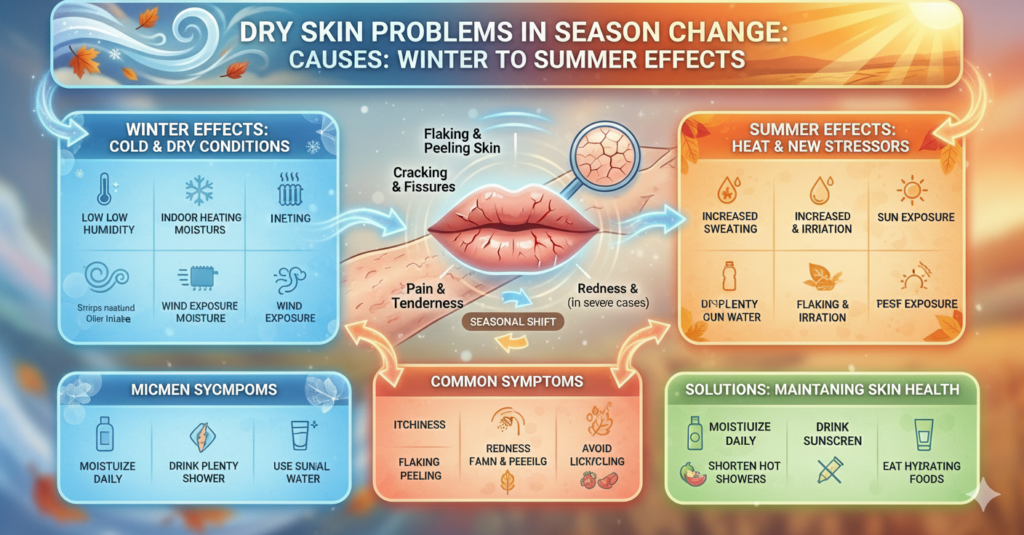
Dry skin problems during season change can feel confusing. You’d expect summer to bring oily skin, right? But the winter to summer transition often leaves skin feeling rough, tight, and itchy. The reason lies in moisture imbalance and sudden environmental changes.
During winter, skin gets used to cold air and lower humidity. As summer approaches, warmer air increases sweating, which strips the skin of natural oils. At the same time, people often shower more frequently to feel fresh, unknowingly washing away protective oils that keep skin hydrated.
Dehydration is another silent contributor to dry skin during season change. When the body lacks water, the skin is one of the first places to show it. Fine lines, dullness, and flakiness become more noticeable. Air conditioning further worsens the issue by pulling moisture out of the skin.
Common symptoms include rough patches, itching, redness, and a stretched feeling after washing your face or hands. Many people ignore these signs until irritation becomes severe.
The fix lies in both internal and external care. Start by drinking enough water and including water-rich foods like cucumber, watermelon, and oranges in your diet. Switch to a gentle, sulfate-free cleanser and avoid hot showers. Moisturize immediately after bathing to lock in moisture.
Choose lightweight, non-greasy moisturizers with ingredients like aloe vera, glycerin, or hyaluronic acid. Natural oils such as almond or coconut oil also work wonders when used sparingly.
Dry skin during season change isn’t something to “just live with.” It’s your skin asking for balance. Treat it kindly, and it will reward you with a healthy glow all summer long.
Feeling Fatigued During Season Change: Is It Normal?
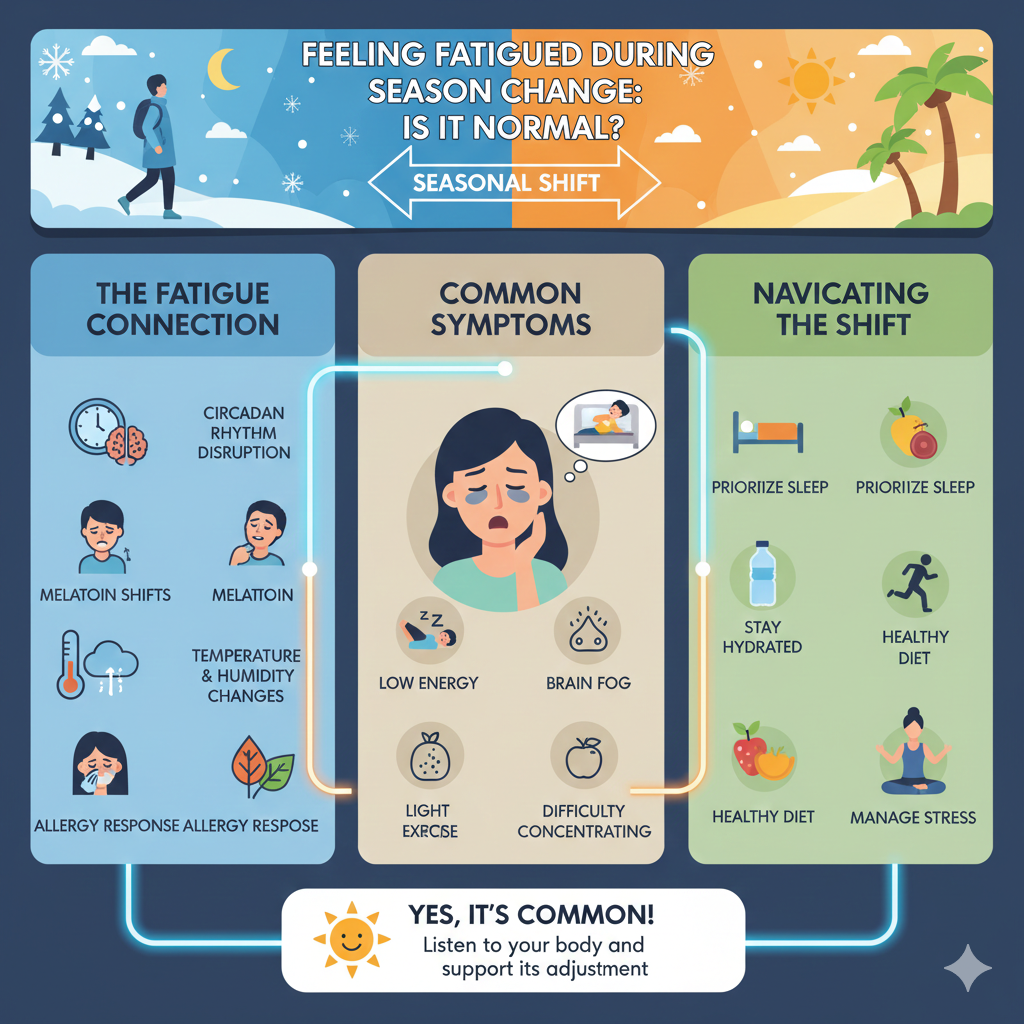
Feeling fatigued during season change is incredibly common, yet rarely talked about. If you’re wondering why you feel tired even after a full night’s sleep, the winter to summer transition might be the reason. Yes, it’s normal—but it’s also manageable.
As temperatures rise, the body works harder to regulate internal temperature. Blood vessels expand to release heat, sweating increases, and metabolism adjusts. All of this requires energy, leaving you feeling drained without doing anything extra. Add dehydration to the mix, and fatigue becomes unavoidable.
Another reason for season change fatigue is disrupted sleep patterns. Longer daylight hours affect melatonin production, making it harder to fall asleep at night. Poor sleep quality directly impacts energy levels, mood, and focus during the day.
Diet also plays a role. Heavy winter foods may feel comforting but become harder to digest in summer heat. Digestive strain uses energy, contributing to that sluggish feeling.
Symptoms of seasonal fatigue include low motivation, body aches, mental fog, and irritability. Many people mistake this for laziness, but it’s simply the body adjusting to new conditions.
To combat fatigue, prioritize hydration, eat lighter meals, and maintain a consistent sleep schedule. Include seasonal fruits and vegetables that provide natural energy. Short breaks, light exercise, and exposure to morning sunlight also help reset your internal clock.
Feeling fatigued during season change is your body asking for patience and care. Give it what it needs, and your energy will gradually return stronger than before.
Common Cold in Season Change: Weak Immunity Warning

A common cold during season change is one of the most frustrating winter to summer woes. You expect colds in winter, not when the sun starts shining brighter. Yet, this transition period is when many people suddenly experience sneezing, sore throat, runny nose, or mild fever. The reason? A temporary dip in immunity caused by sudden environmental changes.
When seasons shift, the immune system has to work overtime to protect the body from new bacteria, viruses, and allergens. Temperature fluctuations—cool mornings and hot afternoons confuse the body’s defense mechanism. One moment you’re sweating, the next you’re exposed to cold air from fans or air conditioners. This constant adjustment weakens immunity, making it easier for viruses to attack.
Dehydration also plays a major role. Dry nasal passages and throat reduce the body’s ability to trap germs. Add dust, pollen, and pollution common during seasonal transitions, and you have the perfect recipe for catching a cold. People who already have weak immunity, irregular sleep, or poor diet are even more vulnerable.
Symptoms of a season change cold often include nasal congestion, throat irritation, headaches, mild body aches, and fatigue. These symptoms may feel “light” at first but can linger longer if ignored.
Prevention starts with strengthening immunity. Drink plenty of water, include vitamin C-rich fruits like oranges and strawberries, and avoid sudden exposure to extreme temperatures. Cover your nose and mouth in dusty environments and wash hands frequently. Adequate rest allows the immune system to repair and respond effectively.
A common cold during season change isn’t a coincidence—it’s a warning sign. Support your immune system now, and you’ll save yourself days of discomfort later.
Too Much Sleep (ZZZ) During Season Change Explained
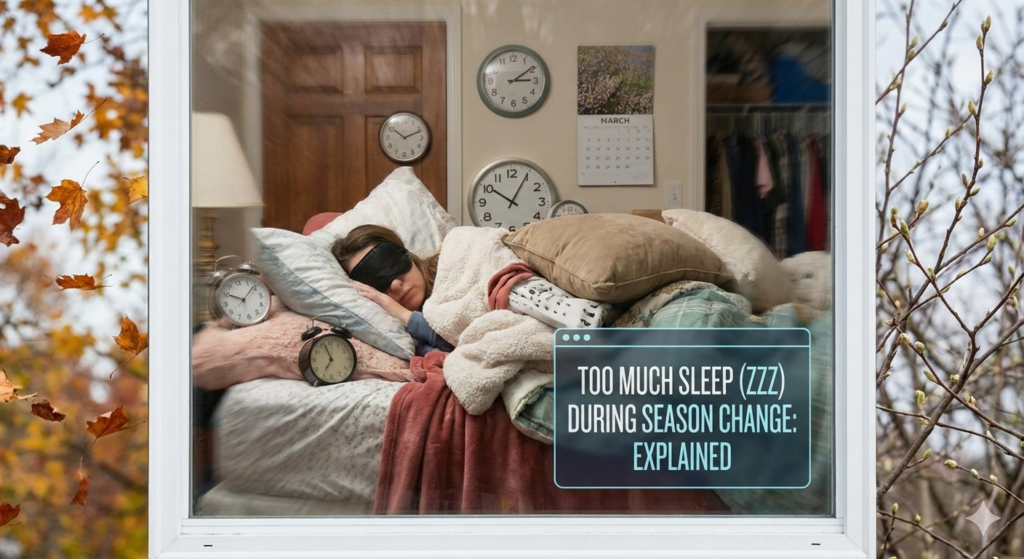
Too much sleep during season change can feel strange and even worrying. You’re not doing extra work, yet you feel sleepy all day. Afternoon naps become tempting, and waking up in the morning feels harder than usual. This excessive sleepiness, often called seasonal lethargy, is a real effect of the winter to summer transition.
One major reason is hormonal imbalance. Changes in daylight hours affect melatonin, the hormone responsible for sleep. As days get longer, the body takes time to adjust its internal clock. During this adjustment phase, melatonin production may remain high, making you feel drowsy throughout the day.
Heat also plays a role. High temperatures slow down physical activity and metabolism as the body tries to conserve energy. This natural response can increase the urge to rest or sleep more. Dehydration further worsens the issue, as even mild fluid loss can cause fatigue and sleepiness.
Another overlooked factor is poor sleep quality at night. Warm nights can disrupt deep sleep, even if you spend more hours in bed. As a result, the body craves more rest during the day to compensate.
While occasional extra sleep is normal, excessive sleep combined with fatigue, low motivation, or mood changes may signal the need for lifestyle adjustments. Focus on hydration, maintain a consistent sleep schedule, and expose yourself to natural morning sunlight. Light physical activity can also help reset energy levels.
Too much sleep during season change isn’t laziness—it’s your body recalibrating. Support the process, and your natural rhythm will return.
Season Change Alert for Mental and Emotional Health

A season change alert isn’t just about physical symptoms; mental and emotional health are equally affected. As winter fades into summer, many people experience mood swings, irritability, anxiety, or a general feeling of being “off.” These emotional shifts often go unnoticed or are dismissed as stress.
Changes in sunlight exposure directly influence serotonin levels—the “feel-good” hormone. While increased sunlight eventually boosts mood, the transition period can temporarily disrupt emotional balance. Add physical fatigue, poor sleep, and dehydration, and emotional resilience takes a hit.
People may feel overwhelmed more easily, lose patience, or struggle with focus. Social expectations also rise in summer—more activities, outings, and productivity—which can feel exhausting when the body is still adjusting.
Mental fatigue often shows up as lack of motivation, procrastination, or emotional sensitivity. These are signals, not weaknesses. Just like the body, the mind needs time to adapt.
Supporting mental health during season change starts with slowing down. Practice mindfulness, limit screen time before bed, and create small moments of rest during the day. Staying hydrated and eating balanced meals directly impacts brain function and mood stability.
Acknowledging emotional changes during season transition is powerful. When you listen to your mind as carefully as your body, the adjustment becomes smoother and far less stressful.
Take Care Tips During Season Change: Small Habits, Big Difference
Taking care during season change doesn’t require dramatic lifestyle changes. In fact, small habits make a big difference when practiced consistently. The body loves routine, especially during times of transition.
Seasonal care starts with awareness. Pay attention to early signs like dry lips, low energy, frequent sneezing, or unusual sleep patterns. These signals appear before major issues develop. Responding early prevents discomfort later.
Daily habits such as drinking water on schedule, eating lighter meals, and resting when needed help the body adapt naturally. Avoid overexertion, especially during peak heat hours. Choose breathable clothing and protect yourself from direct sunlight.
Consistency is key. One healthy day won’t undo weeks of neglect, but small daily efforts compound over time. Think of seasonal care like maintaining a car—you don’t wait for it to break down before checking the engine.
Listening to your body during season change builds long-term resilience. The more you respond to its needs, the stronger and more balanced you feel—not just now, but throughout the year.
Drink Water: The Most Important Season Change Tip
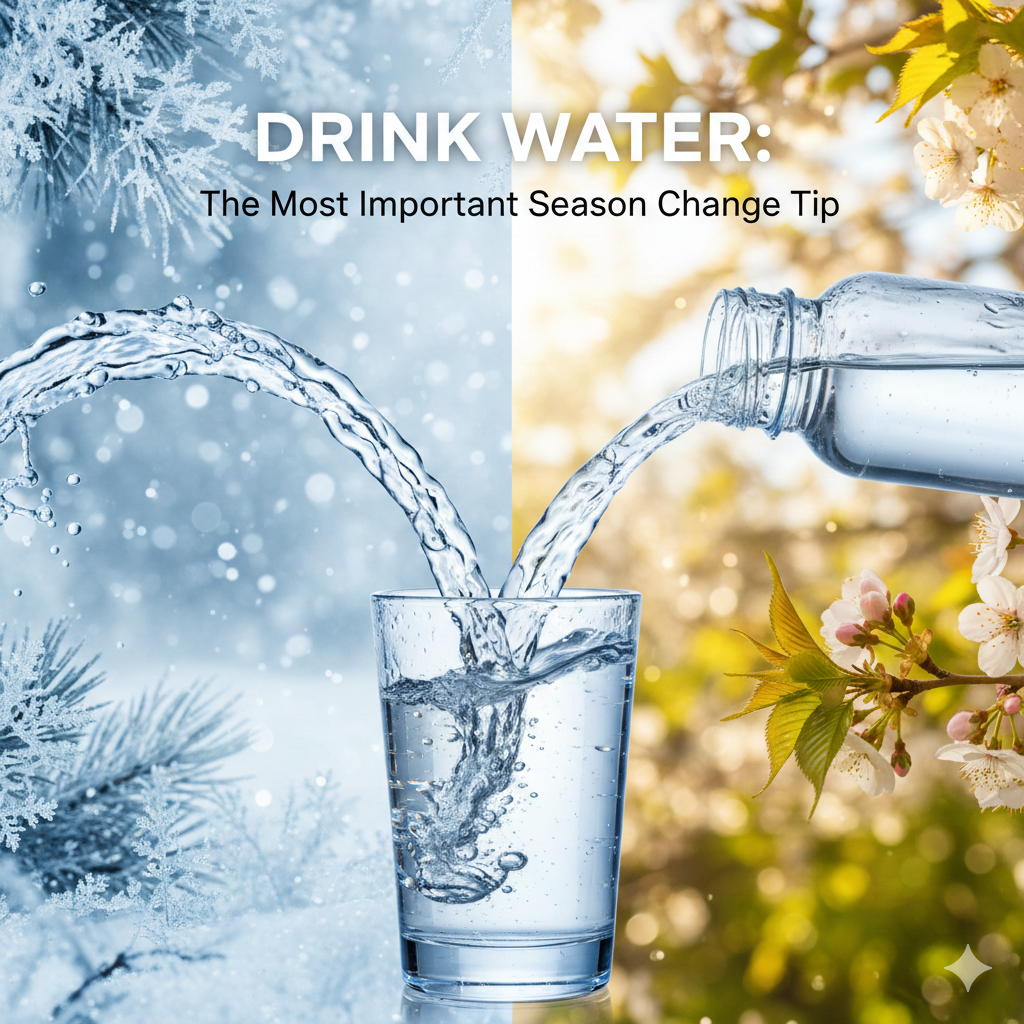
Drinking water is the single most powerful habit during season change. As winter transitions into summer, the body’s water requirement increases significantly, yet most people forget to adjust their intake. This mismatch leads to dehydration, even if you don’t feel thirsty.
Water supports nearly every function in the body—temperature regulation, digestion, circulation, skin health, and brain function. During warmer weather, sweating increases, causing fluid loss that must be replaced consistently.
Signs of dehydration include dry lips, dry skin, fatigue, headaches, dizziness, and dark urine. These symptoms often appear gradually, making them easy to ignore until discomfort becomes severe.
To stay hydrated, sip water throughout the day instead of drinking large amounts at once. Start your morning with water, carry a bottle, and increase intake during physical activity or heat exposure. Herbal drinks, coconut water, and water-rich fruits also contribute to hydration.
Avoid excessive caffeine and sugary drinks, as they can increase fluid loss. Listen to your body—thirst is a late signal of dehydration.
When it comes to season change care, water isn’t optional—it’s essential. Hydration alone can prevent most winter to summer problems before they begin.
Eat Seasonal Fruits for Season Change Health

Eating seasonal fruits during season change is one of nature’s smartest solutions. Fruits that grow naturally in summer are designed to cool the body, boost hydration, and strengthen immunity during warmer months.
Watermelon, mangoes, oranges, berries, and papaya are packed with water, vitamins, and antioxidants. These nutrients help fight fatigue, improve digestion, and protect the skin from dryness and sun damage. Vitamin C-rich fruits strengthen immunity, reducing the risk of common cold during season change.
Seasonal fruits are easier to digest and align with the body’s natural needs. They provide quick energy without heaviness, making them ideal during hot weather. Replacing heavy winter desserts with fresh fruits reduces digestive strain and boosts overall vitality.
Make fruits a daily habit add them to breakfast, snacks, or smoothies. Fresh, whole fruits are always better than packaged juices loaded with sugar.
When you eat with the season, your body adapts faster. Seasonal fruits are simple, delicious, and incredibly effective for staying healthy during the winter to summer transition.
Moisturize Well to Prevent Dry Skin and Dry Lips
Moisturizing well during season change is not a luxury—it’s a necessity. As the environment shifts, the skin barrier weakens, allowing moisture to escape more easily. This leads to dry skin, dry lips, and irritation.
Choosing the right moisturizer is crucial. Lightweight, hydrating formulas work best during summer transition. Look for ingredients like aloe vera, glycerin, hyaluronic acid, or natural oils. These help attract and retain moisture without clogging pores.
Apply moisturizer immediately after bathing, when the skin is slightly damp. This locks in hydration and strengthens the skin barrier. Don’t forget areas like hands, feet, elbows, and lips—they lose moisture fastest.
For lips, use a nourishing balm multiple times a day and before bed. Avoid products with strong fragrances or alcohol, as they increase dryness.
Consistent moisturizing protects the skin from environmental stress and keeps it healthy, soft, and comfortable throughout the season change.
Get Proper Rest to Beat Season Change Fatigue
Getting proper rest during season change is about quality, not just quantity. While your body may crave more sleep, disrupted patterns often lead to poor rest rather than true recovery.
Warm nights can interfere with deep sleep, making you wake up feeling tired. Creating a comfortable sleep environment—cool, dark, and quiet—improves sleep quality. Stick to a regular bedtime, even on weekends, to help your internal clock adjust.
Limit screen time before bed, as blue light disrupts melatonin production. Gentle stretching or reading can help signal your body that it’s time to rest.
Daytime rest matters too. Short breaks, relaxation, and mindful pauses prevent burnout. However, avoid long daytime naps that interfere with nighttime sleep.
Proper rest allows the body to repair, recharge, and adapt smoothly to seasonal changes. When you sleep well, everything else feels easier.
Lifestyle Adjustments for a Healthy Season Change
Lifestyle adjustments during season change don’t have to be complicated. Small tweaks in daily routines can significantly reduce winter to summer discomfort.
Wear breathable fabrics like cotton to help regulate body temperature. Avoid stepping directly from hot outdoor environments into cold air-conditioned rooms. Gradual temperature changes reduce stress on the body.
Eat lighter meals, stay active with gentle exercise, and avoid peak heat hours for strenuous activities. Maintain hygiene to protect against seasonal infections.
Consistency in routine—sleep, meals, hydration—creates stability during external change. These adjustments help the body adapt naturally and comfortably.
Season Change Alert for Kids and Elderly
Kids and elderly individuals are more sensitive to season change. Their bodies adapt slower, making them vulnerable to dehydration, fatigue, and infections.
Ensure they drink enough water, eat seasonal fruits, and get adequate rest. Protect them from extreme temperatures and sudden environmental changes.
Extra care during season change prevents complications and promotes overall well-being for vulnerable age groups.
When to See a Doctor During Season Change
Most season change issues resolve with proper care, but some signs shouldn’t be ignored. Persistent fatigue, severe dryness, recurring infections, or unexplained symptoms require medical attention.
Early doctor consultation prevents complications and ensures a smooth seasonal transition.
Listen to Your Body During Season Change
Season change from winter to summer is a powerful reminder that the body needs care, patience, and balance. Dry lips, dry skin, fatigue, common cold, and excessive sleep are not random problems—they’re signals. Small habits like drinking water, eating seasonal fruits, moisturizing well, and getting proper rest truly make a big difference.
Listen to your body. Respect its signals. When you support it through change, it rewards you with strength, energy, and health all summer long.
FAQs
- Why do I feel tired during season change?
The body uses extra energy to adapt to temperature and daylight changes, leading to fatigue. - How much water should I drink during summer transition?
Drink consistently throughout the day; increase intake if sweating or exposed to heat. - Can season change cause dry skin even in summer?
Yes, dehydration and moisture loss often increase during seasonal transitions. - Is catching a cold during season change common?
Yes, immunity temporarily weakens during environmental shifts. - What is the best way to stay healthy during season change?
Hydration, seasonal diet, proper rest, and listening to your body are key.
Leave a Reply