

Why Winter Health Matters More Than Ever
Winter may look magical with its crisp air, cozy mornings, and calm atmosphere—but behind the beauty lies a season filled with health challenges that need your full attention. The sudden drop in temperature, dry air, and reduced sunlight all contribute to a weakening immune system. This means your body becomes more vulnerable to viral infections, seasonal flu, throat irritation, skin dryness, and even mood disruptions. That’s why winter calls for a little extra care, a little more awareness, and a whole lot of smart habits that help you stay healthy and active throughout the season.

When we talk about winter safety, it’s not just about wearing warm clothes or avoiding cold environments. It’s a holistic approach—hygiene, immunity, hydration, warmth, and outdoor safety all play equal roles. It’s about maintaining daily routines that protect your body from health threats lurking everywhere, especially in chilly months when bacteria and viruses spread more easily. Winter should not stop you from enjoying life—it should inspire you to prioritize your health in ways that make you feel stronger and more energetic.
As the season brings in holidays, family gatherings, and celebrations, the risk of infections multiplies due to close interactions and shared spaces. Keeping yourself healthy ensures you enjoy winter without interruptions. From the air you breathe to the food you eat, everything impacts your winter wellness. So, adopting gentle yet powerful habits creates a protective shield around you and your loved ones.
Think of this article as your winter survival guide—simple, practical, and effective. It walks you through hygiene practices that keep infections away, warmth strategies that prevent cold-related issues, immunity-boosting tips to strengthen your defense system, and safety measures to help you navigate ice-covered outdoor spaces. Implement these habits consistently, and you will glide smoothly through winter—healthy, glowing, and energetic.
Practice Good Hygiene

Good hygiene is your strongest shield against winter infections, and the cold season makes this more important than ever. When temperatures drop, people spend more time indoors, often in closed environments where viruses spread much faster. That’s why practicing proper hygiene is not just a habit—it’s a necessity for protecting yourself and those around you. Winter illnesses like cold, flu, sore throat, sinus infections, and viral fever are more common because pathogens thrive in cool, dry air. The cleaner your hands, the safer your health. Maintaining hygiene may sound basic, but its impact is incredibly powerful when done consistently.
Winter is also the season when people tend to touch their faces more often due to dryness and itching. This increases the chances of transferring germs from your hands to your eyes, nose, and mouth—three major gateways for infections. That’s why frequent handwashing, using tissues properly, and avoiding shared items is essential. Something as ordinary as turning a doorknob or handling money can expose you to germs. Good hygiene is like your personal armor: invisible but extremely effective.
Practicing good hygiene goes beyond washing hands. It includes being mindful of coughs and sneezes, keeping your surroundings clean, and ensuring personal items like towels, phones, and frequently touched surfaces are sanitized. When you follow hygienic habits, you’re not only protecting yourself—you’re contributing to the health of your family, friends, and community. It’s a simple yet powerful act of responsibility in a season where illness spreads like wildfire.
Winter hygiene also means paying attention to your nose and throat, which tend to dry out more in cold weather. Dry mucous membranes are less effective at trapping germs, making you more vulnerable to infections. So, whether it’s gargling, using saline spray, or humidifying your room, every small step goes a long way. By staying consistent, you’re building a safer winter environment for yourself and everyone around you.
The Silent Power of Handwashing

Handwashing might seem like a routine task, but in winter, it turns into a lifesaving habit. When the temperature drops, viruses like the flu and common cold survive longer on surfaces. They cling to everything—public transportation rails, shopping carts, doorknobs, your phone, and even clothes. Because your hands are the main tools you use every day, they end up touching more surfaces than you can imagine. Washing them regularly with warm water and soap removes invisible threats before they get a chance to invade your body.
Handwashing becomes even more important because winter is peak flu season. Every time you touch your face, especially your nose, mouth, or eyes, you give germs direct access to your system. Many people underestimate how often this happens—it can be dozens of times a day without even realizing it! By keeping your hands clean, you break the chain of infection, not just for yourself but for everyone around you. In fact, studies show that proper handwashing reduces respiratory illnesses significantly.
To make this habit effective, wash your hands for at least 20 seconds—enough time to hum a short tune. Focus on areas that are often missed: between your fingers, under your nails, and the back of your hands. When soap and water aren’t available, using an alcohol-based sanitizer is your next best option. Keep a small bottle in your bag or pocket, especially during winter outings or errands.
Handwashing is like a reset button for your health. It’s inexpensive, takes only a moment, and works better than many medicines when it comes to stopping infections before they start. By practicing good hand hygiene consistently, you’re giving yourself a powerful layer of protection in a season full of germs. It may be silent, but its impact is loud and clear—clean hands keep you healthy, strong, and winter-safe.
Cover Coughs and Sneezes the Right Way

Covering coughs and sneezes may seem like common sense, but during winter, it becomes an essential health practice that can stop infections from spreading rapidly. When you cough or sneeze, tiny droplets filled with viruses and bacteria shoot into the air at high speed. These droplets can land on surfaces, linger in the air, and travel to others standing several feet away. Winter’s dry air allows these droplets to survive even longer, increasing the risk of flu, colds, and respiratory illnesses. That’s why learning to cover coughs and sneezes correctly protects both you and the people around you.
The right way to cover is using your elbow—not your hands. Many people still use their hands instinctively, but that only increases the chances of transferring germs to objects you touch afterward. Whether you’re handling your phone, opening a door, or shaking someone’s hand, you unknowingly spread infectious droplets. That’s why health experts recommend using your elbow or a tissue. If you use a tissue, dispose of it immediately and wash your hands to eliminate lingering germs.
Teaching children proper coughing and sneezing etiquette is equally important because winter infections spread quickly in schools, playgrounds, and indoor gatherings. The simple act of covering a sneeze can prevent multiple infections in crowded places. Think of it as a protective barrier—one quick action that stops a chain reaction of illnesses before it even begins. And with so many people gathering indoors during the winter season, maintaining this habit becomes even more crucial.
Apart from technique, awareness plays a big role. If you feel a sneeze or cough coming, turn away from people and cover your face. Wear a mask if you’re sick or around someone unwell, especially in crowded places like buses and malls. Even if it feels like a minor cold, your body may still shed viral particles that affect others. Covering coughs and sneezes isn’t just good hygiene—it’s a sign of respect and responsibility toward your community. This small winter habit creates a cleaner, safer environment for everyone.
Warm Saltwater Gargling for Throat Relief

Gargling with warm saltwater is one of the oldest and most effective home remedies for winter throat problems. When the cold season sets in, dry air irritates your throat, making it easier for infections to develop. Viruses flourish in winter, and the first place they often strike is the throat. Gargling helps soothe irritation, reduces swelling, and flushes away bacteria or mucus lodged in the throat. What’s more impressive is that this simple remedy requires only two ingredients—salt and warm water—yet provides powerful relief.
Warm saltwater works like a natural antiseptic. When you gargle, the saline solution reduces inflammation and draws out irritants through osmosis. This helps relieve pain from sore throats, tonsillitis, postnasal drip, and even mild coughs. It can also help clear mucus that builds up during winter infections. You may feel instant relief, but consistency is key—gargling two to three times a day can significantly speed up recovery.
Another reason warm saltwater gargling is effective in winter is because it keeps your throat moist. Cold air tends to dry out your throat, leaving it scratchy, painful, and vulnerable to germs. Gargling adds hydration back to your throat, soothing the tissue and reducing discomfort. Many people underestimate the power of this simple ritual, but it works better than many commercial sprays or lozenges.
It’s also completely safe for most individuals and can be used regularly without side effects. Parents can guide older children to gargle properly, especially if they frequently experience sore throats during winter. It’s gentle, natural, and incredibly effective—no chemicals involved, just pure, warm comfort.
If your throat feels irritated after being outdoors or talking for long periods in cold weather, a warm saltwater gargle can bring immediate relief. If performed consistently, it helps prevent infections from worsening. In a season filled with throat issues, this simple practice becomes your go-to winter wellness ritual—warm, soothing, and highly protective.
Keeping Nasal Passages Moist: Steam & Saline Spray Benefits

Keeping your nasal passages moist during winter is one of the most underrated yet powerful ways to stay healthy. As soon as temperatures drop, the humidity in the air decreases drastically, leaving your nose dry and irritated. When your nasal passages dry out, the natural protective barrier inside your nose becomes weaker. This thin layer of moisture is important—it traps dust, viruses, and bacteria before they enter your body. When this barrier dries up, you become more vulnerable to colds, sinus infections, sore throats, and breathing discomfort. That’s why using steam or saline spray regularly can help keep your nasal system strong and infection-resistant throughout the winter season.
Steam inhalation works like magic because it adds warm, soothing moisture back into your respiratory passages. Whether you inhale steam from a bowl, a humidifier, or a hot shower, the warm vapor loosens mucus, reduces inflammation, and helps you breathe more freely. If you struggle with blocked sinuses or a stuffy nose every winter, steaming can become your best friend. It helps open up your airways naturally, without any harsh chemicals or side effects. Many people even add eucalyptus or menthol to enhance the experience—though plain steam alone is incredibly effective.
Saline spray, on the other hand, is convenient, portable, and gentle enough to use several times a day. It keeps the inside of your nose moist and cleanses out dust, pollen, and germs. Since saline sprays mimic the salt content of your natural mucus, they’re safe for daily use and suitable for all ages, including children. Regular use prevents dryness, reduces irritation, and can significantly lower the chances of winter infections taking hold. It’s especially helpful for people who live in extremely dry climates or use indoor heaters often.
This simple habit of keeping your nasal passages moist can transform your winter experience. Instead of battling frequent colds, headaches, sinus pressure, or difficulty breathing, your airways stay clear, comfortable, and hydrated. Combined with good hygiene and warmth, moist nasal passages help you stay winter-strong and protected from seasonal illnesses.
Dress in Layers: Winter’s Smart Fashion Strategy

Dressing in layers isn’t just a winter fashion trend—it’s one of the smartest and most effective ways to stay warm, comfortable, and protected during cold weather. Winter temperatures often fluctuate throughout the day, especially when you move between outdoor cold and indoor heating. Wearing multiple layers allows you to adjust your clothing easily, helping you maintain the perfect body temperature without feeling too hot or too cold. This flexibility keeps your body comfortable and reduces your risk of catching chills, which can weaken your immune system and make you more vulnerable to infections.
The first layer, often called the base layer, should be soft and breathable. Its job is to keep moisture away from your skin because sweat trapped against cold air can drop your body temperature quickly. The second layer provides insulation—think sweaters, hoodies, or fleece jackets. These fabrics trap body heat, creating a warm buffer against the cold. The outer layer, your final shield, should protect you from wind, rain, or snow, especially if you’re spending time outdoors. This three-layer system is one of the oldest but most reliable techniques for staying winter-safe.
Layers also help prevent winter-related health issues like hypothermia and frostbite. Extreme cold can impact your body faster than you think, especially in windy conditions. By layering up, you give your body the insulation it needs to maintain warmth even when temperatures drop suddenly. Plus, layering reduces the need for bulky clothing—several light layers often work better than one thick jacket because they trap warm air more effectively.
It’s also important to choose winter-friendly fabrics. Wool, fleece, and thermal materials work incredibly well because they retain heat even when slightly damp. Cotton, on the other hand, can absorb moisture and make you feel colder, so it’s better as an inner layer than an outer one. Winter dressing is all about strategy—comfortable fabrics, adjustable layers, and protective outerwear. When done right, your clothing becomes your personal winter fortress, keeping you warm, dry, and ready to face the cold with confidence.
Protecting Head, Ears & Hands From the Cold
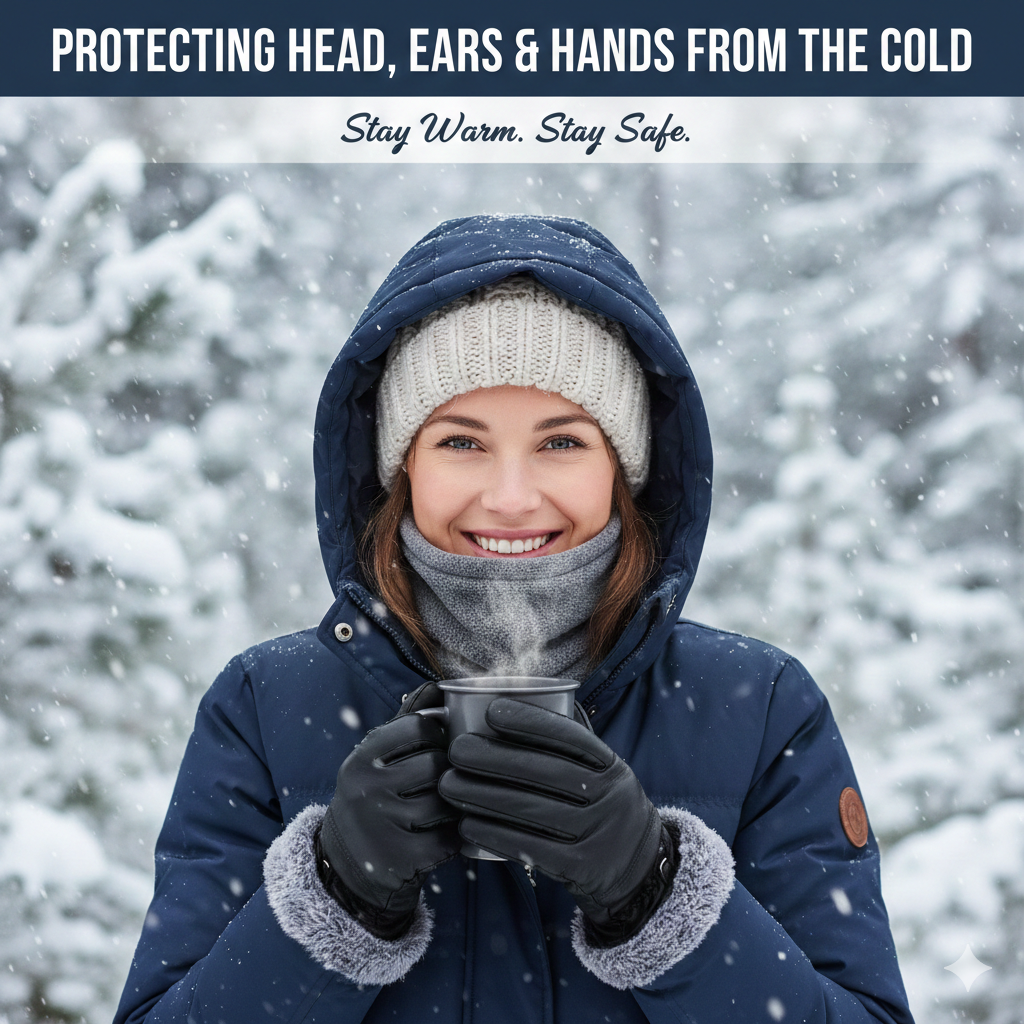
Protecting your head, ears, and hands during winter isn’t just about comfort—it’s a critical part of staying healthy and preventing cold-related illnesses. Many people don’t realize that a significant amount of body heat escapes through the head. When your head is exposed to cold air, your body works harder to stay warm, draining energy and weakening your immune response. That’s why wearing a warm cap, beanie, or hood is essential whenever you step outside. Your brain regulates your body temperature, and keeping it insulated helps your whole system stay balanced and protected.
Your ears are especially vulnerable to the cold because they have very thin skin and limited blood flow. Cold wind can cause intense discomfort, ear pain, and even trigger infections if the inner ear becomes inflamed. Long-term exposure can also lead to frostbite on the ear tips in extreme conditions. A warm hat that covers your ears or a pair of insulated ear muffs can make a huge difference—it keeps the sensitive ear tissues warm and prevents cold air from entering the ear canal.
Hands are another part of the body that suffers during winter. The skin on your hands is thinner than most other areas, and the cold air strips away natural moisture, making them prone to dryness, cracking, and irritation. These cracks aren’t just uncomfortable—they can become entry points for bacteria and viruses. Wearing insulated gloves keeps your hands warm, prevents dryness, and reduces the risk of frostbite in extremely cold climates. For added protection, moisturizing your hands before putting on gloves helps lock in hydration and keep your skin healthy throughout the day.
Cold exposure also affects your body’s circulation. When you’re outside in low temperatures, your body naturally reduces blood flow to extremities like your ears, fingers, and toes to conserve heat for vital organs. This makes these areas more sensitive to cold injuries. By covering your head, ears, and hands, you’re not only staying warm—you’re supporting proper circulation and protecting yourself from painful winter conditions.
Making this small habit part of your daily winter routine helps prevent colds, ear infections, and skin problems. It’s a simple, practical way to stay winter-safe, healthy, and comfortable no matter how low the temperature drops.
Limit Exposure to Extreme Winter Temperatures
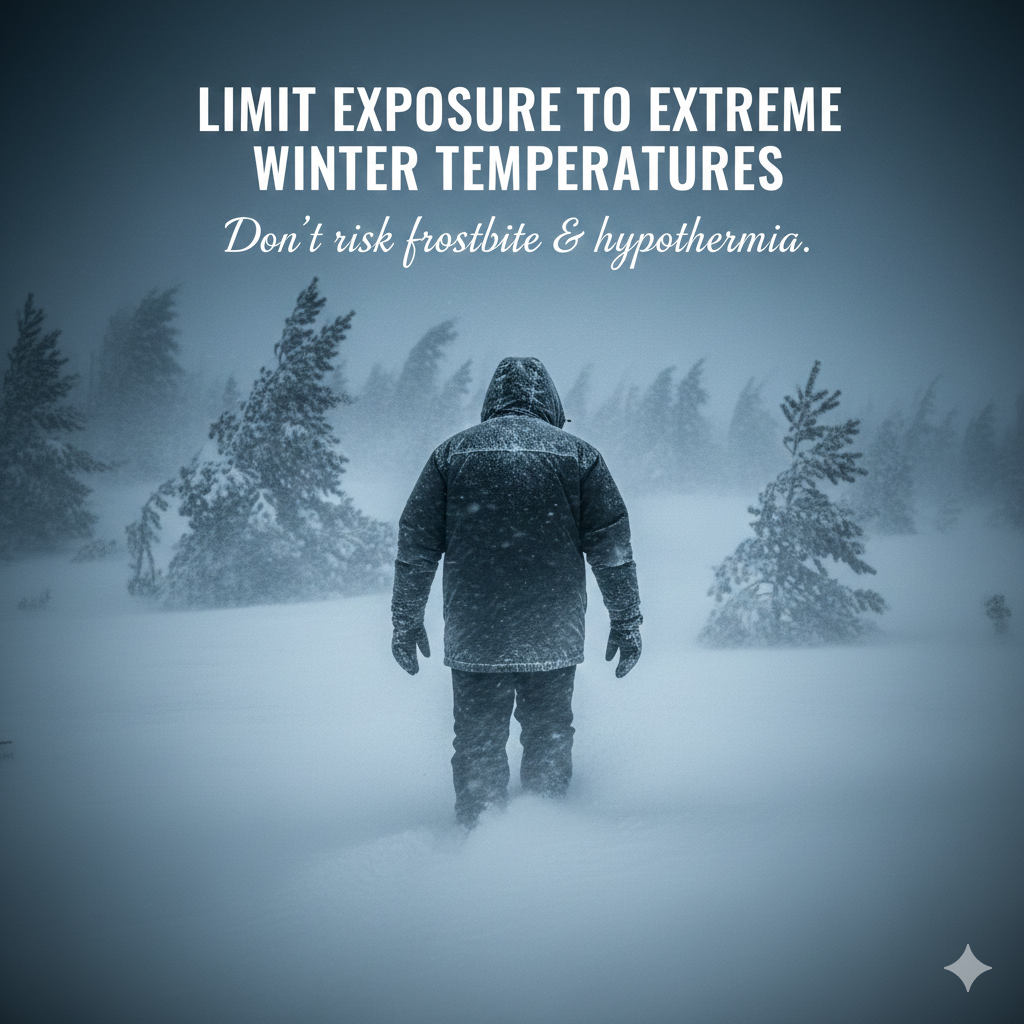
Limiting exposure to extreme winter temperatures is crucial for maintaining your health and preventing cold-related conditions like frostbite, hypothermia, and respiratory issues. Winter may feel refreshing at first, but prolonged exposure to harsh cold puts significant stress on your body. When temperatures drop drastically, your body works overtime to generate enough heat to keep your core warm. If you stay out too long without proper protection, your system becomes overwhelmed, leading to energy loss, weakened immunity, and increased vulnerability to illnesses like colds and infections.
Hypothermia is one of the biggest risks of extended cold exposure. It occurs when your body temperature falls below the normal range, and even mild hypothermia can cause issues like confusion, fatigue, slowed breathing, and uncontrollable shivering. If not addressed quickly, it can be life-threatening. Frostbite is another danger, especially when cold winds are strong. It affects exposed skin areas like your nose, ears, face, fingers, and toes, and in severe cases, can lead to permanent tissue damage. These conditions don’t just happen in snowy regions—they can occur in any cold climate if you’re outdoors without proper protection.
It’s also important to remember that children, older adults, and people with chronic medical conditions are more vulnerable to cold-related risks. Their bodies take longer to adjust to temperature changes, making it necessary to limit time spent outdoors. Even healthy adults can be affected by sudden temperature drops, so being mindful of weather forecasts and windchill warnings is essential. If the weather is extremely harsh, it’s better to stay indoors unless absolutely necessary.
If you must go outside, take breaks to warm up indoors and avoid standing still for long periods in the cold. Wear insulated clothing, cover exposed skin, and layer your clothes properly. After coming inside, allow your body to warm gradually and drink something warm like soup or herbal tea to help regulate your internal temperature. By respecting your body’s limits and limiting exposure to extreme cold, you protect yourself from serious health dangers and maintain your overall winter wellness.
Why Skin Moisturization Is Non-Negotiable in Winter

Winter may feel cool and refreshing, but for your skin, it can be one of the harshest seasons. The cold air outside combined with the dry, heated indoor environment strips your skin of its natural oils. This leads to dryness, cracking, flaking, irritation, and in some cases even painful skin conditions like eczema. That’s why winter skin moisturization isn’t just part of a beauty routine—it’s a necessary step to protect your skin’s barrier and maintain your overall health. When your skin becomes dry, its protective layer weakens, allowing bacteria, viruses, and irritants to enter more easily. Moisturizing regularly helps strengthen this barrier, keeping your skin smooth, hydrated, and healthy.
During winter, your skin loses moisture faster than in any other season. Every time you step into cold air and then move indoors to heating, your skin experiences a quick temperature shift that accelerates moisture loss. Regular moisturizing replenishes this lost hydration and prevents long-term damage. Using the right moisturizer also matters—creams and ointments are usually better in winter than lotions because they contain more oil and create a stronger protective layer. Ingredients like shea butter, hyaluronic acid, glycerin, ceramides, and natural oils work wonders in restoring moisture.
Moisturization also helps reduce irritation caused by winter clothing, especially wool or synthetic fabrics that can rub against dry skin and cause redness. Applying moisturizer after bathing is especially effective because your skin absorbs hydration better when it’s slightly damp. This creates a healthy moisture seal that lasts throughout the day. For people with sensitive skin, moisturizing becomes even more essential because winter dryness can trigger flare-ups and discomfort if not managed properly.
Your face isn’t the only area that needs care—your hands, feet, elbows, and lips require extra attention during winter. These areas contain fewer oil glands and dry out faster, leading to cracking and soreness. Applying a thicker cream to these spots can prevent winter skin problems before they start. Moisturizing also helps maintain your skin’s elasticity, giving it a healthy glow even when the weather turns harsh. When you keep your skin hydrated and protected, you’re not just improving its appearance—you’re safeguarding your overall health and comfort throughout the season.
Staying Hydrated Even in Cold Weather
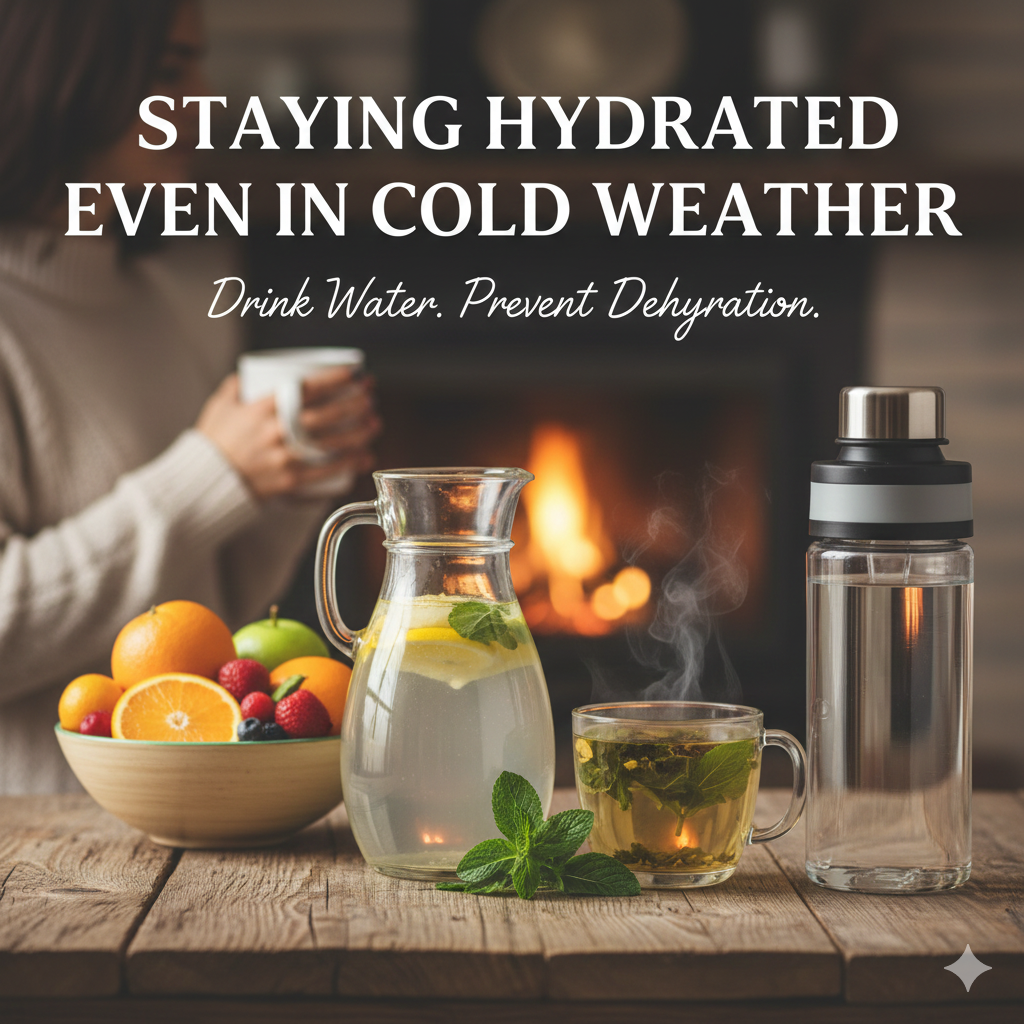
Many people assume that hydration is only important during hot summer days, but winter dehydration is surprisingly common. Because the cold reduces your sense of thirst, you naturally feel less inclined to drink water. However, your body continues to lose fluids through breathing, sweating under layers, and indoor heating systems. Staying hydrated in winter is just as essential as in summer because dehydration can weaken your immune system, dry out your skin, cause fatigue, and even increase your risk of respiratory infections.
Cold air is naturally drier than warm air, and every breath you take in winter releases moisture from your lungs. This is why you often see your breath as a white vapor—it’s actually water leaving your body. Over time, this constant loss adds up, making hydration crucial. Drinking adequate water keeps your body functioning smoothly, supports digestion, maintains joint lubrication, and regulates your temperature. It also helps your skin stay supple and prevents the winter dryness that many people struggle with.
Staying hydrated during winter doesn’t just mean drinking cold water. Warm beverages like herbal teas, soups, and infused hot water are great alternatives. They keep you warm while replenishing hydration. Drinks with ginger, lemon, cinnamon, or honey offer extra health benefits, boosting immunity and soothing your throat. However, be cautious with caffeinated drinks like coffee or black tea, as they can dehydrate you if consumed excessively.
You can also stay hydrated by eating water-rich foods. Winter fruits like oranges, strawberries, grapes, kiwis, and pomegranates are perfect because they contain both hydration and essential vitamins that help your immune system. Vegetables like cucumber, lettuce, tomatoes, and celery also contribute to your daily fluid intake. Hydration is a full-body benefit—it keeps your organs functioning, your energy levels high, and your mind clear.
If you often forget to drink water during winter, set reminders or keep a bottle nearby. Small sipping throughout the day works better than drinking large amounts at once. Staying hydrated in winter is like fueling your internal system—keeping it running smoothly and efficiently even in the coldest months.
Eat a Balanced, Vitamin-Rich Diet

A balanced, vitamin-rich diet is the backbone of winter immunity. When temperatures drop, your body requires more nutrients to keep your immune system strong, your energy levels steady, and your metabolism functioning smoothly. Winter is a season when viruses spread more easily, and your body naturally becomes more vulnerable. This makes proper nutrition not just a health choice, but a protective shield that determines how well you fight off infections. Eating a wide variety of nutrient-packed foods ensures you get the vitamins, minerals, antioxidants, and natural compounds your body needs to stay strong and resilient.
Vitamin C is one of the most important nutrients for winter health. It boosts your immune system, speeds up healing, and helps protect your cells from damage. Citrus fruits like oranges, lemons, grapefruit, and seasonal favorites like strawberries and kiwis are excellent sources. Vegetables like bell peppers, broccoli, and tomatoes also pack a powerful vitamin C punch. Vitamin D is another winter essential because sunlight exposure decreases drastically during colder months. Low vitamin D levels weaken your immunity and energy. Foods like fortified cereals, fatty fish, mushrooms, and eggs help bridge the gap.
Protein is critical, too, because it helps build antibodies that fight infections. Include lean meats, beans, lentils, nuts, seeds, and dairy in your winter meals. These foods also keep you full longer, preventing cravings for sugary snacks that can weaken immunity. Whole grains like oats, brown rice, and whole wheat provide steady energy without spikes in blood sugar, which keeps your mood stable and prevents winter fatigue.
Healthy fats are especially beneficial in winter. They help maintain skin moisture, support brain health, and fight inflammation. Nuts, avocados, olive oil, and fatty fish like salmon are excellent additions to your cold-weather diet. Seasonal vegetables like carrots, spinach, sweet potatoes, and beets provide essential fiber and antioxidants that boost your overall wellness.
To make your winter diet enjoyable and diverse, prepare warm soups, stews, roasted vegetables, and herbal teas. These foods comfort your body, keep you warm, and provide the nutrition necessary to glide through winter with strength and vitality. Eating well isn’t just about satisfying hunger—it’s about nurturing your body from the inside out.
Stay Active With Light Winter Exercises

Staying active in winter is one of the best ways to keep your body strong, your mood lifted, and your immune system functioning at its peak. While the cold weather may tempt you to stay indoors and curl up under a blanket, choosing inactivity can weaken your muscles, slow your metabolism, and increase the risk of seasonal weight gain. Light winter exercises help maintain your physical health while also boosting your mental well-being, especially when winter blues or seasonal depression begin to creep in.
You don’t need intense workouts during winter—light to moderate exercises are sufficient to keep your body flexible, warm, and energized. Indoor activities such as yoga, stretching, Pilates, or basic home workouts improve blood circulation, strengthen joints, and warm up your body naturally. Even 20–30 minutes of daily movement can make a huge difference. Walking indoors—whether at home, in shopping malls, or at community centers—is a simple yet effective way to keep your body active without exposure to outdoor chill.
If you enjoy outdoor activities, choose safe times when temperatures are reasonable. Walking, jogging, or hiking in winter sunshine can boost your vitamin D levels, lift your mood, and improve cardiovascular health. Make sure to warm up thoroughly before going outside to prevent muscle stiffness or cold-induced injuries. Wear proper winter workout gear, including layers, gloves, and moisture-wicking fabrics that keep sweat from cooling on your skin.
Winter exercises also boost immunity by increasing blood circulation, which helps immune cells move throughout your body more efficiently. Regular physical activity reduces stress hormones, releases endorphins, and keeps your mind fresh during a season that often feels heavy and slow. Even simple movements like dancing, stair climbing, or indoor cycling can help maintain your fitness levels.
The key is consistency, not intensity. Instead of long workouts, focus on small, enjoyable routines you can maintain daily. Staying active in winter keeps your body strong, your mind positive, and your immunity ready to fight off seasonal illnesses.
The Importance of Sleeping 7–8 Hours

Getting 7–8 hours of quality sleep becomes even more important during winter because your body is working harder to stay warm, fight infections, and maintain overall balance. Sleep is the time when your system repairs, restores, and recharges itself. When you sleep well, your immune cells become stronger, your body produces more protective proteins called cytokines, and your energy levels rise naturally. During winter, when cold weather challenges your immunity, proper sleep becomes a powerful tool for keeping illnesses like colds, flu, and throat infections at bay.
The longer nights and shorter days in winter affect your body’s internal clock. With reduced sunlight, your body produces more melatonin—the hormone that makes you feel sleepy. This can make you feel more tired than usual. Instead of fighting this natural rhythm, embracing a proper sleep schedule helps your body stay synchronized. Going to bed and waking up at the same time daily improves sleep quality and keeps your brain functioning at its best.
Lack of sleep not only weakens your immune system but also affects your mood. Winter is already known for seasonal mood swings and even Seasonal Affective Disorder (SAD). When you don’t sleep enough, stress levels increase, your mind becomes foggy, and your concentration drops. Simple tasks may feel overwhelming, and fatigue becomes a constant companion. Getting enough sleep helps stabilize your mood, increases mental clarity, and gives you the emotional strength to enjoy winter instead of struggling through it.
To improve your sleep during winter, create a warm, cozy environment. Lower the lights before bedtime, avoid screens, and enjoy calming activities like reading or listening to soft music. Using thicker blankets and adjusting your room temperature can help your body relax. Drinking warm herbal tea, such as chamomile or peppermint, can also prepare your mind for restful sleep.
Good sleep is not optional—it’s essential for winter wellness. When your body is well-rested, you feel stronger, happier, and more resistant to seasonal infections. Treat sleep as part of your winter health routine, just like eating well or dressing warmly.
Managing Stress Through Meditation & Deep Breathing

Winter often brings a mix of joy and stress. While the holidays and cozy moments are enjoyable, the season can also create emotional heaviness due to reduced sunlight, indoor isolation, and colder temperatures. This combination affects your mental well-being and increases stress levels. Managing stress through meditation and deep breathing becomes a simple yet powerful tool to maintain both emotional and physical health during the winter months. When your mind is calm, your body responds with stronger immunity, better energy, and improved emotional balance.
Meditation helps quiet your thoughts, reduces anxiety, and helps your brain focus on the present moment. Even 10 minutes a day can lower stress hormones like cortisol, which weaken your immunity when elevated. Winter stress often shows up as irritability, fatigue, trouble sleeping, or lack of motivation. Meditation helps reset your mind and restore inner calm. You don’t need advanced techniques—just sit comfortably, close your eyes, and focus on your breathing or a calming sound.
Deep breathing exercises are equally effective. When you breathe slowly and deeply, your lungs expand fully, delivering more oxygen to your body. This improves circulation, relaxes tense muscles, and reduces mental pressure. Techniques like belly breathing, 4-7-8 breathing, or box breathing can help you feel centered and grounded. These exercises are especially helpful when winter triggers anxiety or restlessness.
Winter is also a time when people spend more time indoors with limited physical activity, which can increase mental stress. Adding meditation to your daily routine helps keep your mind clear, reduces emotional clutter, and enhances your resilience. It also supports better sleep, which further boosts immunity and mental health.
To make meditation enjoyable, create a warm corner in your home with soft lighting, blankets, or soothing music. Make it your “calm space.” Practicing just a few minutes a day can transform your winter experience, helping you stay emotionally peaceful and mentally strong despite the cold weather challenges.
Stay Updated on Winter-Season Vaccinations

Staying updated on winter-season vaccinations is one of the smartest and most effective steps you can take to protect your health during the cold months. Winter is the peak time for viral infections because people spend more time indoors, where germs spread more easily. Vaccinations help your immune system recognize harmful viruses, respond faster, and prevent severe illnesses. They work like a protective shield, reducing your chances of getting sick and lowering the severity of symptoms if you do catch something. This becomes especially important in winter when infections like the flu, pneumonia, and respiratory viruses are at their highest.
One of the most important winter vaccines is the flu shot. Influenza viruses change every year, which is why the flu vaccine is updated annually to match the latest strains. Getting your flu shot protects not only you but also your family, especially young children, elderly individuals, and anyone with chronic conditions. The flu can be more dangerous in winter because cold, dry air makes the respiratory system more vulnerable. A simple vaccine can drastically reduce your chances of hospitalization or severe complications.
Another essential vaccine during winter is the pneumonia vaccine, especially for older adults or anyone with weakened immunity. Pneumonia can be triggered by cold weather as your lungs become more sensitive and infections spread easily. Staying vaccinated ensures your lungs stay protected during the harshest months of the year. Many doctors also recommend vaccines against certain respiratory viruses that peak during cold seasons.
If you have children, staying on top of their vaccination schedule is even more important. Schools and playgrounds become hotspots for winter illnesses, and vaccines help protect young immune systems that are still developing. For adults with diabetes, asthma, heart issues, or weakened immunity, winter vaccinations can be life-saving. They reduce risks, strengthen defenses, and offer peace of mind during a season filled with unpredictable infections.
Before winter begins, schedule a checkup with your healthcare provider to ensure you’re up-to-date on all recommended vaccines. Staying vaccinated doesn’t just protect you—it helps reduce community spread and keeps hospitals from becoming overwhelmed during peak winter illness season. A few minutes at the clinic can save weeks of discomfort, illness, and downtime.
Beware of Slippery & Icy Surfaces
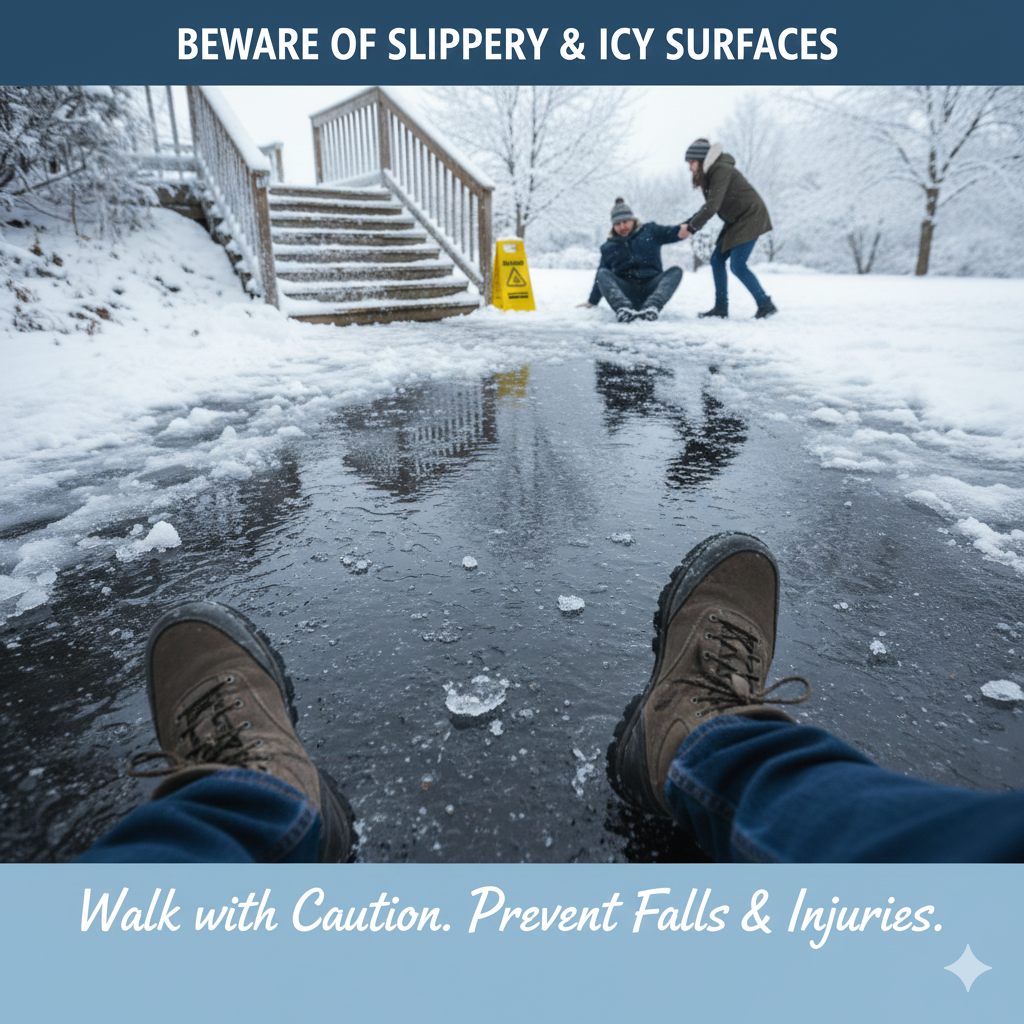
Winter’s beauty often hides a dangerous side—slippery and icy surfaces that can cause sudden falls, injuries, and fractures. Whether you’re walking to work, stepping outside your home, or navigating frozen sidewalks, icy surfaces require extra caution. Ice can be nearly invisible, especially “black ice,” a thin, transparent layer that blends with pavement. One wrong step can result in sprains, bruises, broken bones, or even serious head injuries. That’s why being aware of your surroundings and practicing careful movement is essential for winter outdoor safety.
The first step is choosing the right footwear. Shoes with good grip, non-slip soles, and proper insulation provide stability and reduce the risk of slipping. Avoid smooth-soled shoes or heels—they offer little traction on icy ground. If you live in an area with heavy snowfall, consider winter boots with deep treads designed specifically for slippery surfaces. These provide better balance and protect your feet from freezing temperatures.
When walking on icy ground, slow and steady wins the race. Take smaller steps, keep your feet pointed outward slightly, and distribute your weight evenly. Try to keep your hands out of your pockets to maintain balance—your arms help stabilize your body if you slip. If you need extra support, use handrails when available, especially on stairs or ramps that ice over quickly. Carrying heavy bags also increases your risk of falling, so try to use a backpack to keep your hands free.
Salted surfaces, sanded pathways, or areas treated with ice melt are generally safer to walk on, but still require caution. Even after treatment, patches of ice may remain. In the early morning and late evening, temperatures drop further, making surfaces more slippery. Avoid rushing, especially when getting out of vehicles or stepping onto unfamiliar ground.
Being mindful of icy surfaces helps prevent winter injuries that can disrupt your entire season. A little caution goes a long way—protecting your safety, mobility, and overall well-being during winter’s most slippery moments.
Wear Proper Safety Gear for Winter Sports
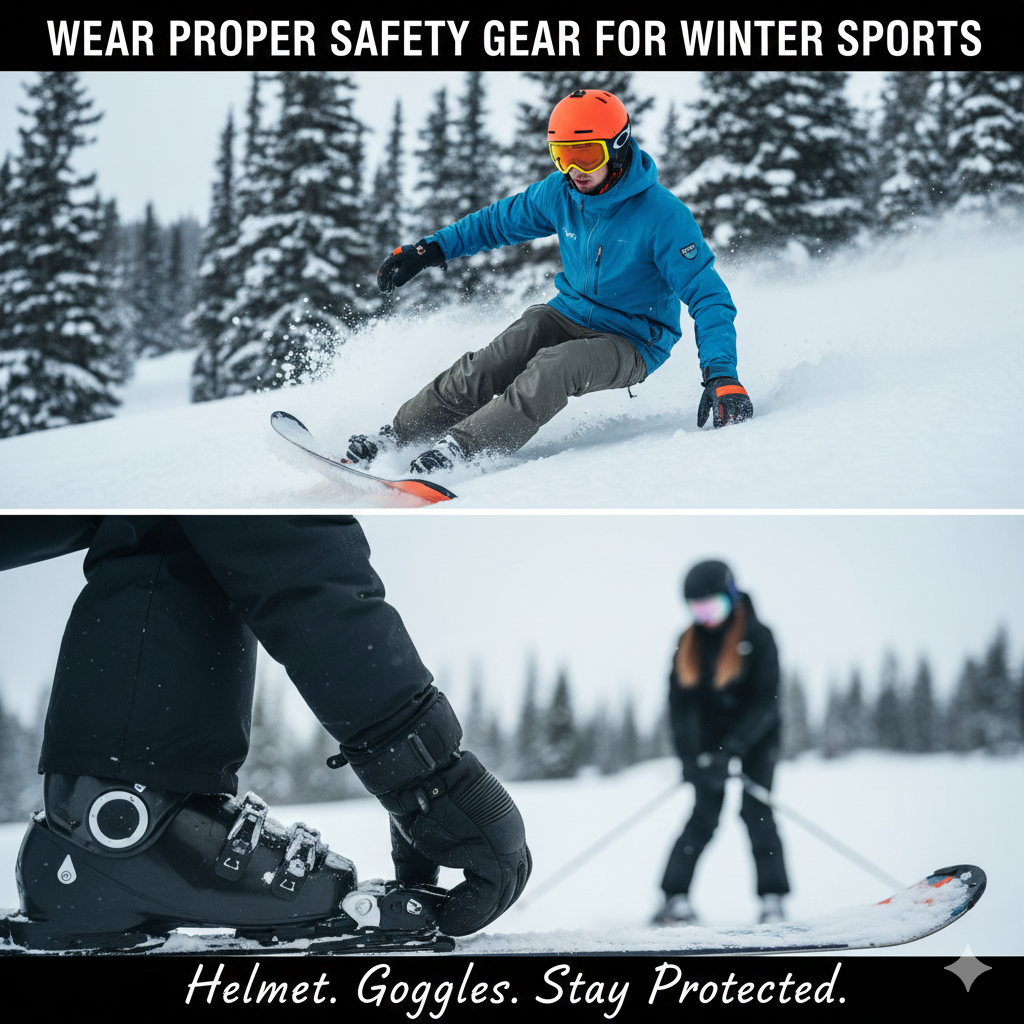
Winter sports are exciting, refreshing, and a great way to stay active—but they also come with increased risks if you’re not properly protected. Whether you enjoy skiing, snowboarding, ice skating, sledding, or snow trekking, wearing proper safety gear is essential to prevent accidents and injuries. Winter terrain can be unpredictable. Ice, hidden rocks, uneven snow layers, and slippery slopes can make even the most experienced athlete vulnerable. That’s why safety gear is your best defense—it shields your body, supports your joints, and reduces the severity of potential falls.
The most important piece of safety gear is a helmet. Head injuries can be extremely serious, and icy surfaces make falls harder and more dangerous. A properly fitted helmet designed for winter sports protects your skull from impact and absorbs shocks during sudden slips. For children, helmets are non-negotiable because they’re more prone to losing balance. Goggles are equally important. They protect your eyes from snow glare, harsh wind, UV rays, and flying ice particles. Without proper eyewear, your vision may blur, increasing your risk of accidents.
Gloves and wrist guards are essential for sports that involve frequent hand contact with the ground, such as snowboarding or skating. Wrist injuries are very common in winter sports because people instinctively use their hands to break a fall. Protective gloves cushion the impact and reduce the chances of sprains or fractures. Knee pads, elbow guards, and shin protectors are especially helpful for beginners or anyone learning a new sport.
Footwear plays a major role in safety too. Boots with strong ankle support, proper insulation, and anti-slip grip help you maintain balance and prevent frostbite. If you’re skiing or snowboarding, ensure your bindings are professionally adjusted so your boots fit securely.
Proper clothing also counts as safety gear. Wearing thermal layers, waterproof jackets, and insulated pants protects your body from cold-related injuries such as hypothermia and frostbite. Staying warm helps you stay focused, react quickly, and maintain control during outdoor activities.
Most winter sports accidents happen when people underestimate the weather or overestimate their skill level. Wearing the right gear gives you the confidence to enjoy winter activities safely while reducing risks significantly. Winter adventures should leave you energized—not injured.
Why Sunscreen & Lip Balm Are Crucial in Winter
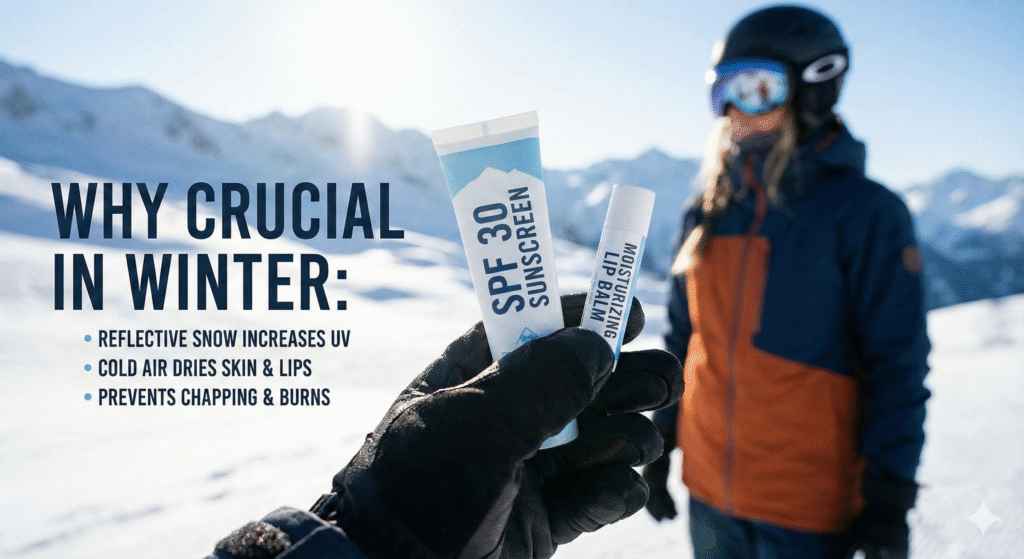
Many people believe sunscreen is only for summer, but winter sun exposure can be just as harmful—sometimes even more. The sun’s UV rays are present year-round, and during winter, snow and ice reflect up to 80% of those rays directly onto your skin. This means you receive double exposure: from above and below. Without proper protection, your skin becomes vulnerable to sunburn, moisture loss, premature aging, and pigment damage. That’s why sunscreen isn’t a seasonal product—it’s an all-weather necessity, especially in winter.
Cold weather also weakens your skin’s natural barrier, making it more sensitive to UV radiation. Even on cloudy or foggy days, UV rays penetrate through, and prolonged exposure can damage your skin without you realizing it. Applying a broad-spectrum sunscreen with at least SPF 30 helps protect your skin from both UVA and UVB rays. Use it on your face, neck, ears, and any other exposed areas. If you’re participating in winter sports or spending long hours outdoors, reapply every two hours for consistent protection.
Lip balm, especially those with SPF, is just as important. Winter air is extremely dry, and the skin on your lips is thinner and more delicate than anywhere else on your body. Without protection, lips can crack, peel, and even bleed. Dry, chapped lips are not only painful—they’re also more likely to get infected. Using a moisturizing lip balm with sun protection shields your lips from harsh winds, freezing temperatures, and harmful UV rays. Ingredients like shea butter, beeswax, vitamin E, and coconut oil offer deep hydration and long-lasting relief.
If you frequently breathe through your mouth due to nasal congestion in winter, your lips lose moisture even faster. Regular use of lip balm forms a protective layer that keeps your lips soft, smooth, and healthy. In snowy regions or high altitudes, skipping lip protection can lead to severe sunburn on the lips, which is extremely uncomfortable.
Sunscreen and lip balm may seem like small additions to your routine, but they play a huge role in winter skin health. With consistent use, you protect yourself from winter dryness, UV damage, and long-term skin issues. Healthy skin isn’t seasonal—it’s a year-round responsibility.
Conclusion
Winter is a beautiful season filled with warm drinks, cozy blankets, and festive celebrations—but it also brings cold winds, dry air, and increased infections. Staying healthy, hygienic, and winter-safe requires small but powerful habits that work together to protect your body and mind. From practicing good hygiene and keeping your nasal passages moist to boosting your immunity with nutritious foods and staying active, every step contributes to your overall well-being. Dressing in layers, protecting your extremities, and staying hydrated help your body stay strong against winter’s challenges. And when outdoors, being mindful of icy surfaces and wearing proper safety gear keeps you safe from avoidable injuries.
Winter doesn’t have to be a season of discomfort or illness. With informed choices, consistent habits, and thoughtful precautions, you can enjoy every moment—healthy, warm, and energized. Embrace these winter wellness practices, and let the season bring you joy, comfort, and strength.
FAQs
- Why do we get sick more often in winter?
Cold weather weakens the immune system, and people spend more time indoors where germs spread easily, increasing infection risks. - How often should I moisturize my skin in winter?
At least twice a day—once after bathing and once before bed—to maintain hydration and prevent dryness. - Are warm beverages better than cold ones for winter hydration?
Yes, warm drinks like herbal tea hydrate you while helping maintain body warmth and improving circulation. - Do children need sunscreen in winter?
Absolutely. Snow reflects sunlight, increasing UV exposure, making sunscreen necessary for kids and adults. - How can I boost my immunity naturally during winter?
Eat vitamin-rich foods, stay active, sleep well, stay hydrated, and manage stress through breathing exercises or meditation.
Leave a Reply