
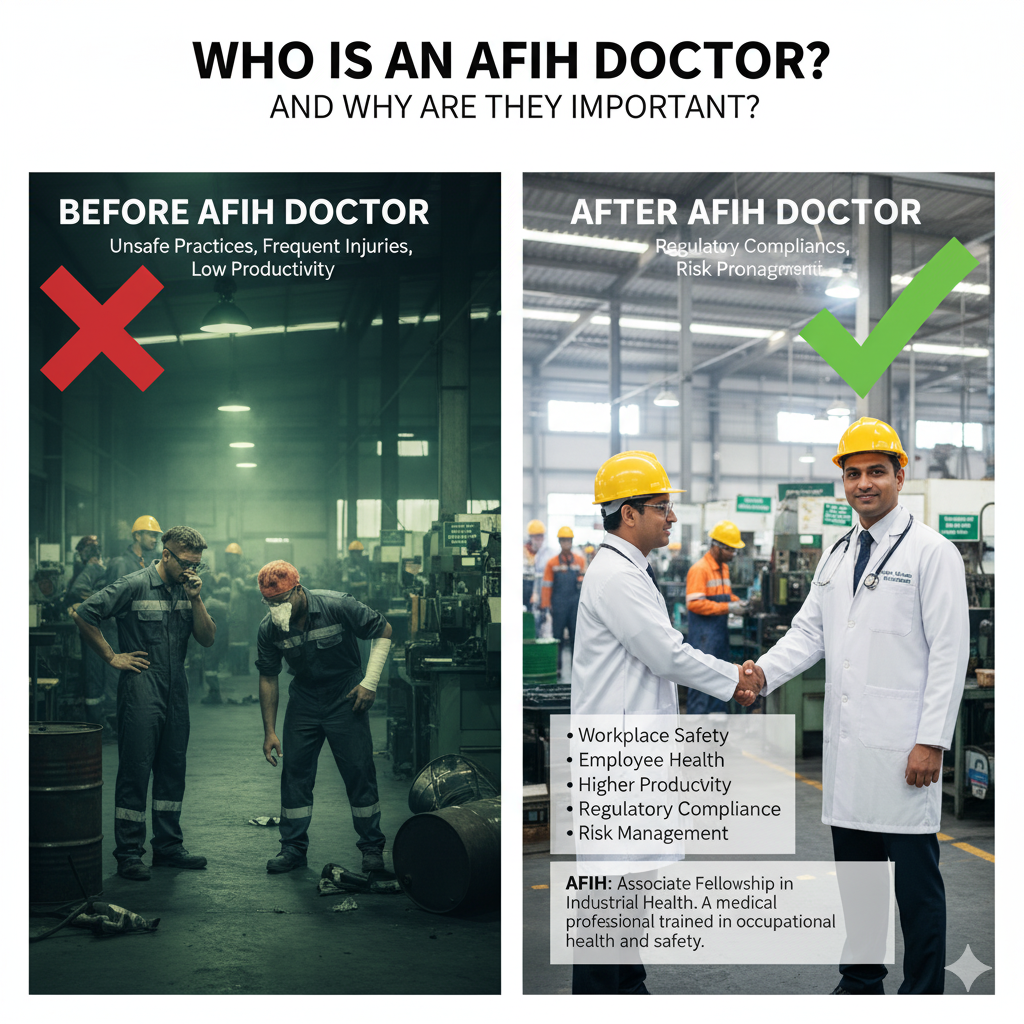
In the modern industrial world, maintaining employee health and safety is essential. That’s where an AFIH Doctor plays a vital role. Trained in Occupational Health and Industrial Hygiene, these doctors ensure that employees work in safe, hygienic, and risk-free environments. Their expertise protects both the workforce and the organization’s productivity.
This detailed blog explains everything about an AFIH Doctor—from their training and duties to their growing importance in industries and workplaces.
What Does AFIH Stand For?
AFIH stands for Associate Fellow of Industrial Health. It’s a certified course approved by the Directorate General Factory Advice Service & Labour Institutes (DGFASLI) under the Ministry of Labour and Employment, Government of India.
The AFIH certification trains doctors to identify, manage, and prevent occupational health hazards in factories, corporate offices, and industrial environments. It bridges the gap between clinical medicine and industrial safety management, making it an essential qualification for doctors working in industrial sectors.
Who Can Become an AFIH Doctor?
An AFIH Doctor is a qualified medical practitioner with specialized training in Industrial Health. To enroll in the course, a candidate must:
- Hold an MBBS degree recognized by the National Medical Commission (NMC).
- Have completed a one-year compulsory internship.
- Be registered with a State Medical Council or NMC.
After completing the AFIH training program, the doctor becomes eligible to work as a Factory Medical Officer or Occupational Health Consultant.
AFIH Course Structure and Duration
The AFIH course is an intensive three-month full-time program that combines theoretical learning with practical field experience.
1. Theoretical Modules
Doctors study:
- Occupational diseases and prevention methods
- Industrial hygiene and workplace safety
- Toxicology and exposure to chemicals
- Ergonomics and workplace design
- Legal frameworks under the Factories Act, 1948
2. Practical Training
Hands-on sessions include:
- Factory and industrial site visits
- Exposure to monitoring equipment for noise, dust, and gases
- Case studies on occupational diseases and workplace incidents
3. Evaluation
After training, participants undergo written exams, practical assessments, and submit a project report. Successful candidates receive the AFIH certification, officially qualifying them as AFIH Doctors.
Core Responsibilities of an AFIH Doctor
The AFIH Doctor plays a crucial role in ensuring the physical and mental well-being of employees in industrial setups. Their responsibilities include:
1. Workplace Health Surveillance
They conduct periodic medical examinations, identifying early signs of occupational diseases like hearing loss, skin allergies, or respiratory problems.
2. Risk Assessment and Hazard Management
An AFIH Doctor evaluates workplace hazards, identifies unsafe conditions, and suggests preventive measures to control risks effectively.
3. Health Education and Training
They organize health awareness programs, safety training, and counseling sessions to educate employees about workplace hygiene and safety standards.
4. Emergency Preparedness
In case of industrial accidents or chemical exposure, the AFIH Doctor handles first aid, triage, and emergency medical response to ensure minimal harm.
5. Legal Compliance
They maintain medical records, report occupational diseases, and ensure the company adheres to Occupational Health and Safety regulations under the Factories Act.
Importance of Occupational Health in Industries
Occupational Health is a cornerstone of any industrial organization. It focuses on promoting and maintaining the well-being of workers, preventing work-related illnesses, and ensuring a safe environment.
1. Protecting Employee Health
Continuous monitoring helps identify potential health issues early, preventing chronic occupational diseases.
2. Boosting Productivity
Healthy employees are more efficient, focused, and motivated. Effective Occupational Health programs directly contribute to better performance.
3. Reducing Legal Risks
Industries must comply with safety and health regulations. Having an AFIH Doctor ensures adherence to laws and minimizes the risk of legal penalties.
4. Improving Company Reputation
Organizations that prioritize worker health and safety are respected by employees, partners, and society.
Difference Between General Physicians and AFIH Doctors
Although both are medical professionals, their areas of expertise differ greatly.
| Aspect | General Physician | AFIH Doctor |
| Specialization | General health and diseases | Occupational and Industrial Health |
| Workplace | Hospitals, clinics | Factories, industrial units, corporates |
| Focus | Treatment and diagnosis | Prevention and workplace safety |
| Key Role | Patient care | Worker health management and compliance |
An AFIH Doctor not only treats illnesses but also prevents them by improving working conditions.
Industries That Employ AFIH Doctors
AFIH Doctors are in high demand across various sectors, including:
- Manufacturing and Engineering
- Construction and Real Estate
- Petrochemical and Chemical Plants
- Mining and Metallurgical Units
- Pharmaceutical and Biotechnology Industries
- IT and Corporate Offices
- Power, Energy, and Infrastructure
Each sector faces unique occupational challenges, and an AFIH Doctor ensures that these are effectively managed.
AFIH Doctor’s Role Under the Factories Act, 1948
The Factories Act, 1948 mandates that factories employing a certain number of workers must appoint a Factory Medical Officer, ideally with AFIH certification.
Key Legal Duties Include:
- Conducting pre-employment and periodic health examinations.
- Maintaining medical and health records of all employees.
- Reporting notifiable occupational diseases.
- Advising management on industrial hygiene and safety improvements.
This makes the AFIH Doctor a legally essential part of industrial operations.
How AFIH Doctors Promote Workplace Wellness
1. Ergonomic Improvements
They recommend ergonomic designs for workstations to reduce muscle strain, fatigue, and repetitive stress injuries.
2. Environmental Monitoring
AFIH Doctors assess air quality, lighting, and noise levels to ensure compliance with safety standards.
3. Chemical and Biological Safety
They identify potential risks from toxic substances and ensure proper use of personal protective equipment (PPE).
4. Mental Health Support
Modern workplaces face rising mental health issues. AFIH Doctors promote mental well-being through counseling and stress management initiatives.
Continuing Education and Professional Growth
To stay updated, AFIHDoctors participate in Continuing Medical Education (CME) programs covering:
- Advances in Industrial Hygiene
- Updates in occupational safety laws
- New diagnostic tools for workplace diseases
- Global standards in Occupational Health
Ongoing training ensures they remain competent in modern workplace safety practices.
AFIH Certification Validity and Renewal
The AFIHcertification has a validity period after which doctors must undertake refresher training or renewal programs.
Renewal maintains the doctor’s eligibility to serve as a Factory Medical Officer and ensures they are updated on new regulations and technologies.
Career Opportunities for AFIH Doctors
An AFIH Doctor enjoys diverse and rewarding career paths:
1. Factory Medical Officer
Responsible for workers’ medical fitness, periodic health assessments, and emergency care in industries.
2. Occupational Health Consultant
Advises companies on improving health standards, ergonomics, and environmental safety.
3. Corporate Health Manager
Implements employee wellness and preventive health programs in corporate setups.
4. Government and Research Roles
Collaborates with agencies to frame policies on Occupational Health and Safety.
5. Academic and Training Expert
Teaches and trains new medical professionals in Industrial Health and Safety Management.
Challenges Faced by AFIH Doctors
Even though the profession is respected, AFIH Doctors face several challenges:
- Limited awareness about Occupational Health among employers
- Balancing medical, administrative, and legal duties
- Managing stress and large workforce responsibilities
- Keeping up with evolving industrial environments
Despite these challenges, their contribution is indispensable for creating safer workplaces.
How AFIH Doctors Support Public Health
Beyond factories and offices, AFIHDoctors indirectly strengthen public health systems by reducing occupational diseases that can affect communities.
They promote:
- Safe waste disposal and pollution control
- Health awareness campaigns
- Vaccination drives and hygiene initiatives
- Sustainable, eco-friendly industrial practices
Their preventive approach aligns with India’s National Policy on Safety, Health, and Environment at Workplaces.
Why Every Organization Needs an AFIH Doctor
Employing an AFIH Doctor is not just a legal requirement — it’s a strategic advantage.
- Cost-Effective Prevention: Preventing diseases and accidents is cheaper than treatment or compensation.
- Compliance Assurance: Helps companies meet occupational safety laws.
- Employee Confidence: Workers feel safer and more valued when a health professional monitors their well-being.
- Sustainability and CSR: Contributes to sustainable business and responsible corporate citizenship.
The Future of AFIH Doctors in India
With India’s rapid industrialization and growing focus on Occupational Health, the demand for AFIH Doctors is set to rise.
Future trends include:
- Integration of AI and Data Analytics for workplace health monitoring
- Increased emphasis on mental wellness programs
- Global recognition of Industrial Hygiene practices
- Expansion of corporate wellness initiatives
In short, AFIH Doctors will continue to shape the health and safety landscape of industrial India.
Conclusion: The Unseen Guardians of Workplace Health
In conclusion, an AFIHDoctor is not just a medical professional but a guardian of workplace health.
They combine medical expertise with industrial insight to create safe, efficient, and compliant work environments.
Through their deep understanding of Occupational Health, Industrial Hygiene, and Factory Safety, they protect employees and support business growth simultaneously.
At H.R. Diagnostic, we acknowledge the critical role these professionals play in modern workplaces — ensuring every employee remains healthy, protected, and productive.
Leave a Reply