
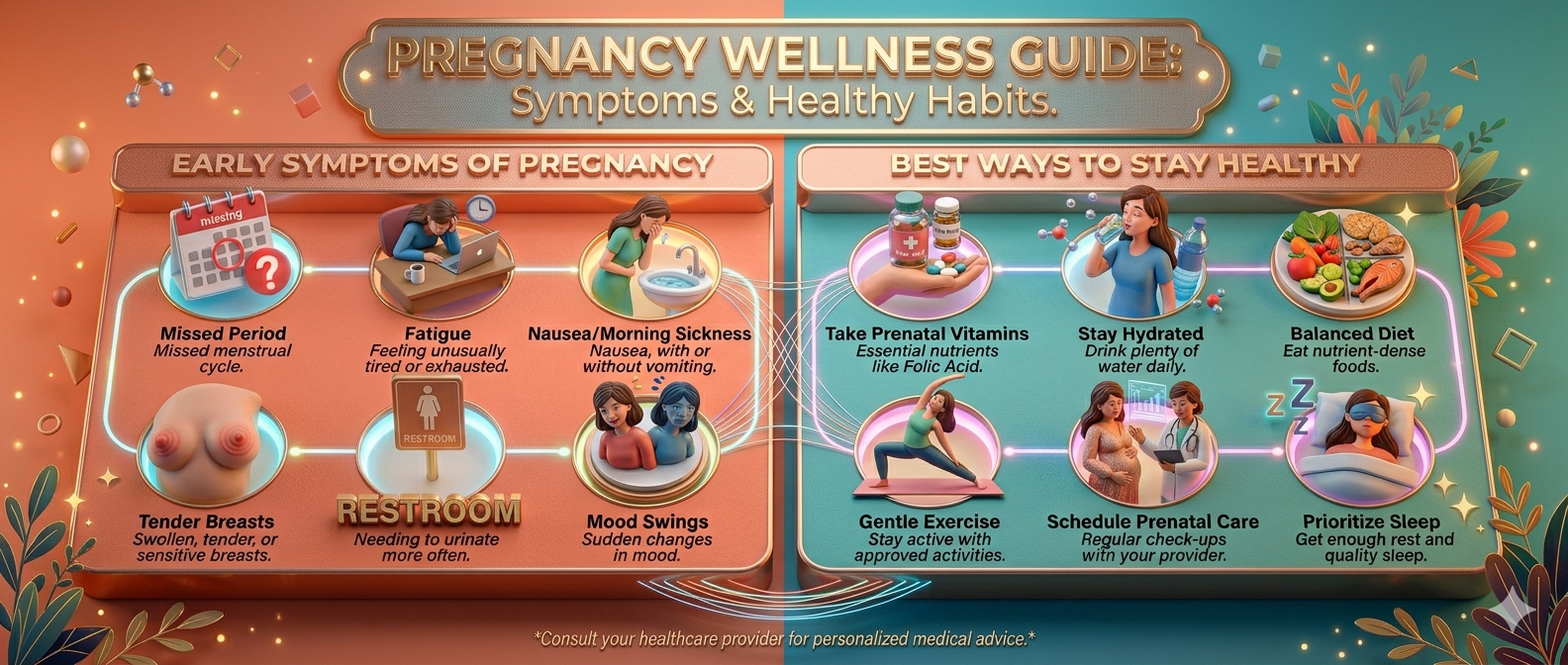

Pregnancy is one of the most important and life-changing journeys in a woman’s life. Understanding the Early pregnancy symptoms can help women recognize pregnancy sooner and begin taking the right steps for a healthy future. Many women experience subtle physical and emotional changes in the early weeks, while others may notice stronger symptoms immediately. Knowing the Signs of pregnancy and following the right Pregnancy health tips can make the experience safer and more comfortable.
This detailed Pregnancy wellness guide explains the most common symptoms, healthy habits, nutrition advice, warning signs, and the Prenatal care importance every woman should understand.
Early Pregnancy Symptoms Every Woman Should Notice
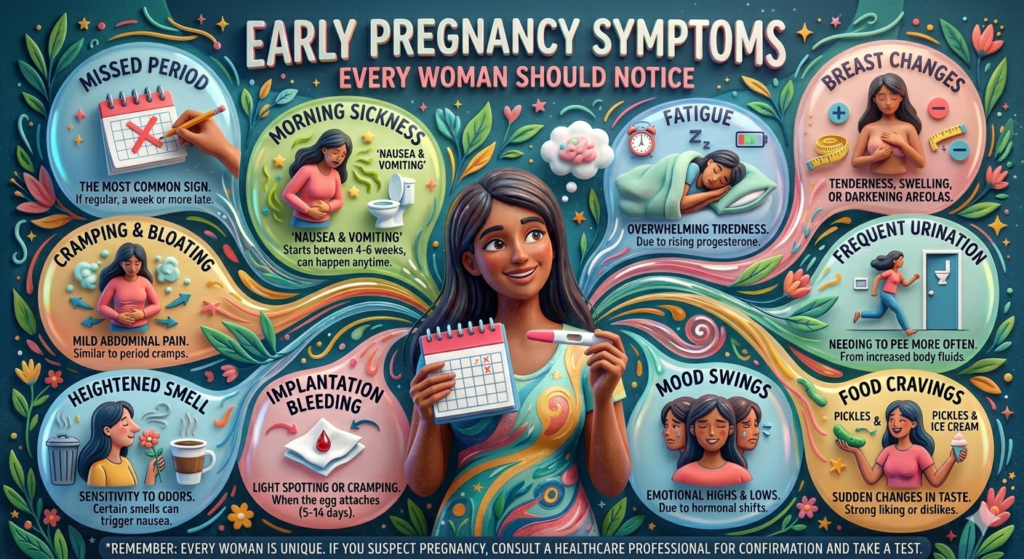
The body starts changing soon after conception. These changes may appear even before a pregnancy test confirms pregnancy. Recognizing Early pregnancy symptoms can help women take early medical advice and begin proper care.
Some symptoms are mild, while others can feel more intense depending on hormonal changes, lifestyle, and overall health.
Missed Period Signs: The Most Common Sign of Pregnancy
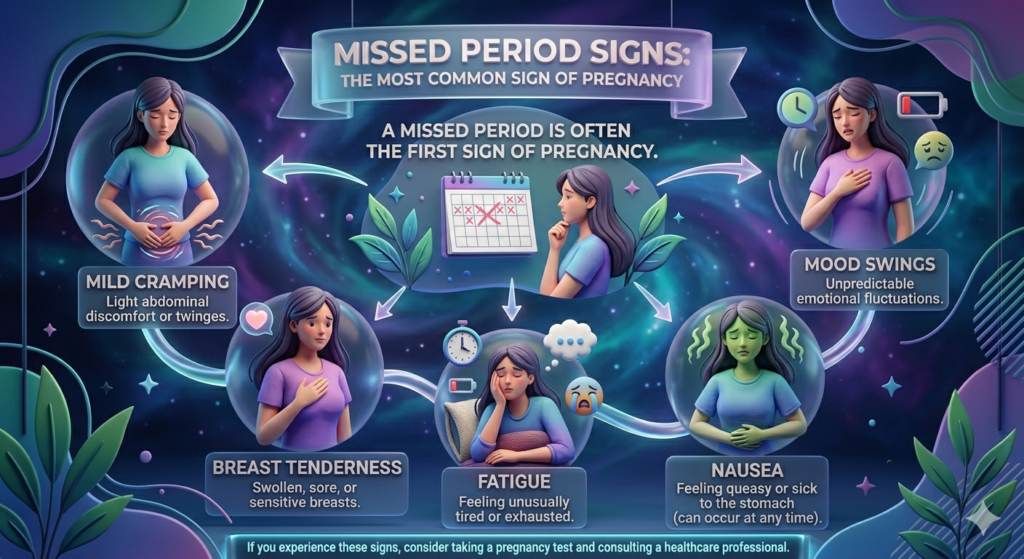
One of the earliest and most recognized Signs of pregnancy is a missed menstrual period. Women with regular cycles usually notice this symptom quickly.
A missed period happens because the body starts producing pregnancy hormones after fertilization. However, stress, hormonal imbalance, excessive exercise, or certain medical conditions can also delay periods. That is why women should confirm pregnancy using a home pregnancy test or consult a doctor.
Common symptoms along with missed periods include:
- Mild cramping
- Breast tenderness
- Fatigue
- Mood swings
- Nausea
If your period is late and you experience other First trimester symptoms, it may indicate pregnancy.
Morning Sickness Symptoms During Early Pregnancy
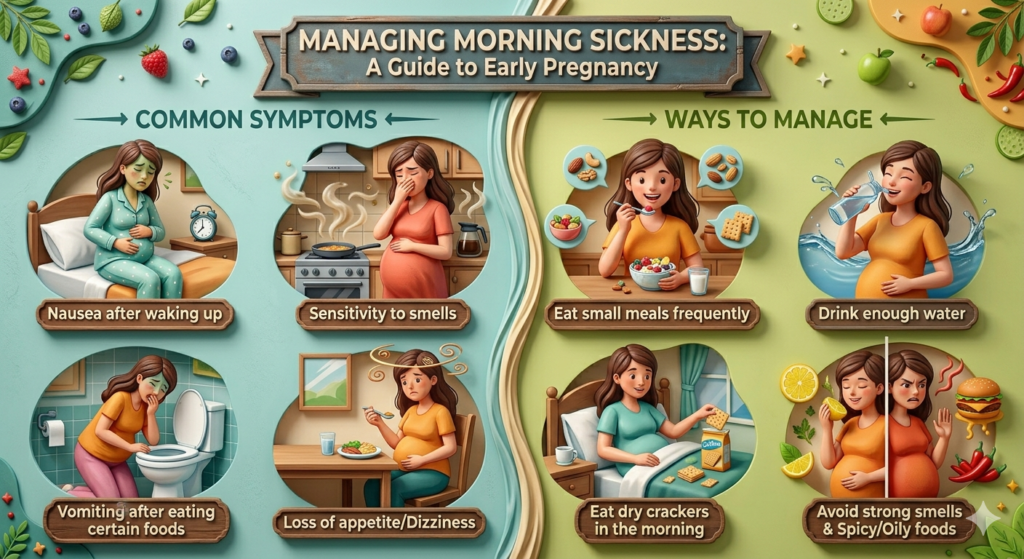
One of the most common Early pregnancy symptoms is nausea or vomiting, commonly called morning sickness.
Despite its name, morning sickness can happen at any time of the day. It usually starts around the sixth week of pregnancy and may continue during the first trimester.
Common Morning sickness symptoms include:
- Nausea after waking up
- Vomiting after eating certain foods
- Sensitivity to smells
- Loss of appetite
- Dizziness
Hormonal changes, especially increased hCG levels, are mainly responsible for these symptoms.
Ways to manage morning sickness:
- Eat small meals frequently
- Avoid spicy and oily foods
- Drink enough water
- Eat dry crackers in the morning
- Avoid strong smells
Severe vomiting and dehydration should never be ignored. Women should understand When to consult a gynecologist if symptoms become serious.
Fatigue During Pregnancy: Why Women Feel Extremely Tired
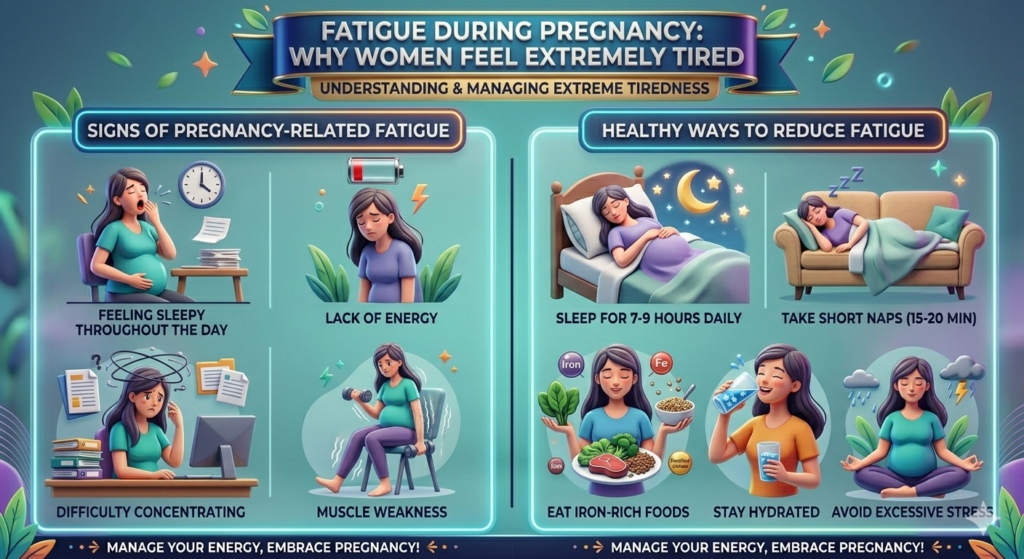
Another common First trimester symptoms is extreme tiredness. Many women feel unusually exhausted even after proper rest.
Fatigue during pregnancy occurs because the body works harder to support the growing baby. Hormonal changes, increased blood production, and emotional stress also contribute to tiredness.
Signs of pregnancy-related fatigue:
- Feeling sleepy throughout the day
- Lack of energy
- Difficulty concentrating
- Muscle weakness
Healthy ways to reduce fatigue:
- Sleep for 7–9 hours daily
- Take short naps
- Eat iron-rich foods
- Stay hydrated
- Avoid excessive stress
Proper rest is a major part of Healthy pregnancy care.
Breast Changes as Early Signs of Pregnancy
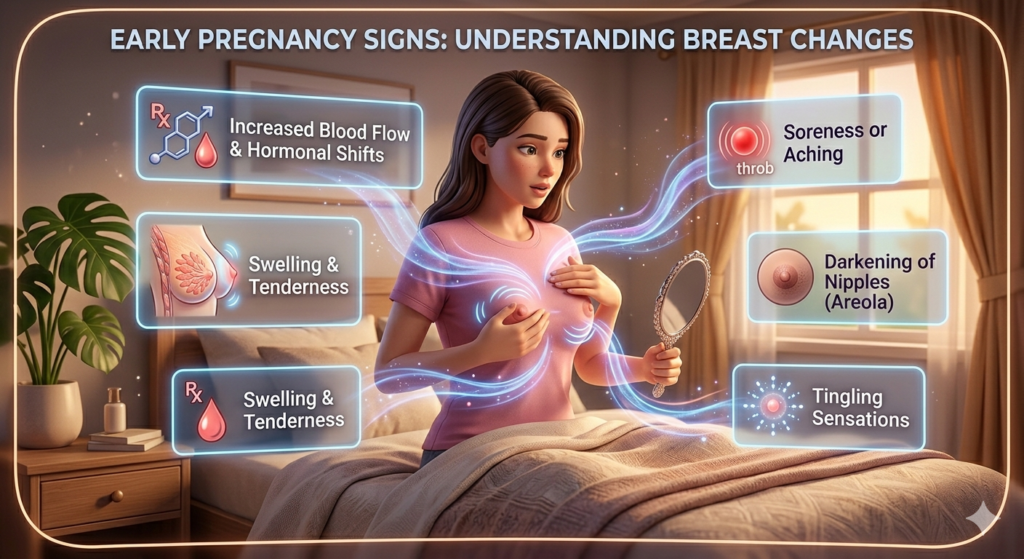
Breast tenderness is often one of the earliest Signs of pregnancy.
Hormonal changes increase blood flow to breast tissues, causing:
- Swelling
- Soreness
- Darkening of nipples
- Tingling sensation
These changes prepare the body for breastfeeding.
Women may notice these symptoms within one or two weeks after conception.
Frequent Urination in Early Pregnancy
Frequent urination is another common symptom that appears during early pregnancy.
Hormonal changes increase blood flow to the kidneys, causing the bladder to fill more quickly.
Tips to manage frequent urination:
- Drink water regularly
- Avoid caffeine
- Empty the bladder completely
- Avoid holding urine for long periods
Though frequent urination is common, pain or burning may indicate infection and should be checked immediately.
Mood Swings and Emotional Changes During Pregnancy
Hormonal changes can strongly affect emotions during pregnancy.
Many women experience:
- Anxiety
- Irritability
- Sudden crying
- Emotional sensitivity
Emotional fluctuations are normal during the first trimester. However, severe sadness or depression should be discussed with a healthcare provider.
Mental wellness is equally important in every Pregnancy wellness guide.
Food Cravings and Food Aversions in Pregnancy
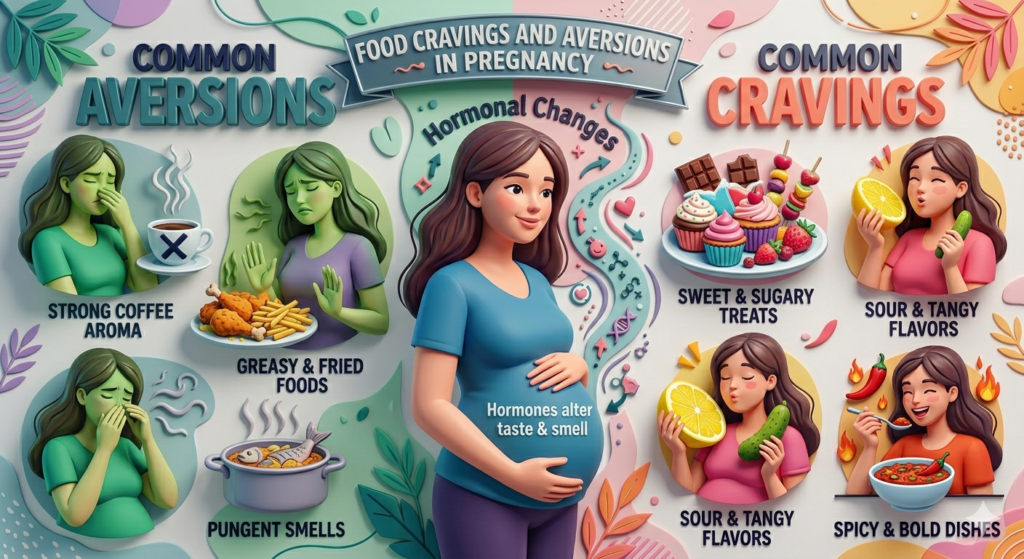
Changes in hormones can alter taste and smell preferences.
Common cravings:
- Sweet foods
- Sour foods
- Spicy foods
Common aversions:
- Coffee
- Fried foods
- Strong-smelling meals
Balanced eating is essential despite cravings. Women should follow healthy Pregnancy nutrition tips to support the baby’s growth.
Light Spotting and Mild Cramping During Early Pregnancy
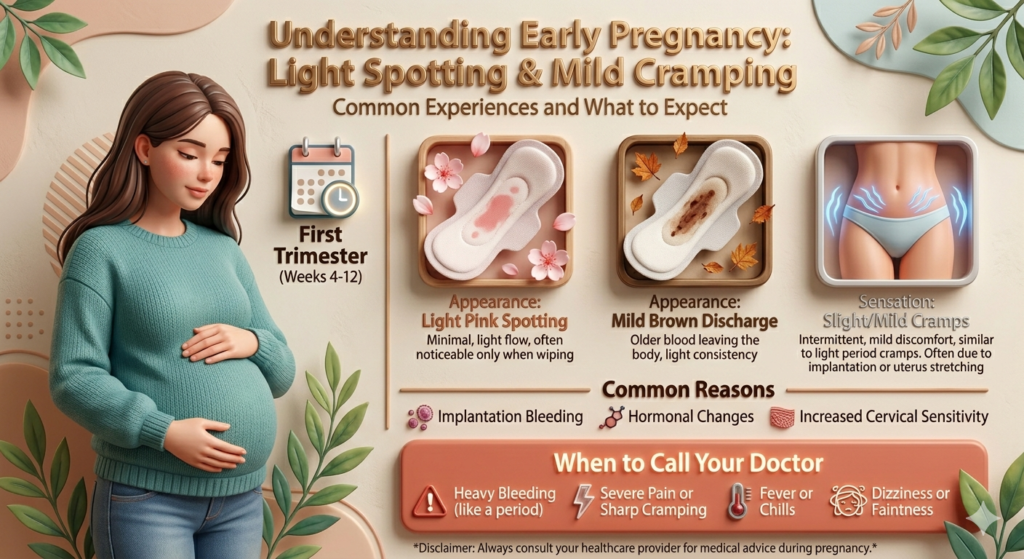
Some women experience implantation bleeding when the fertilized egg attaches to the uterus lining.
This may appear as:
- Light pink spotting
- Mild brown discharge
- Slight cramps
Implantation bleeding is usually lighter than a normal period and lasts only a short time.
Heavy bleeding should be treated as one of the Common pregnancy warning signs and checked immediately.
Understanding First Trimester Symptoms
The first trimester covers the first 12 weeks of pregnancy and is the most sensitive stage for fetal development.
Common First trimester symptoms include:
- Nausea
- Fatigue
- Breast tenderness
- Mood swings
- Food cravings
- Frequent urination
- Mild headaches
Proper medical care during this period is extremely important.
Prenatal Care Importance for a Healthy Pregnancy
Understanding the Prenatal care importance can protect both mother and baby.
Prenatal care includes:
- Regular medical checkups
- Blood tests
- Ultrasounds
- Nutritional guidance
- Monitoring fetal development
Early prenatal visits help detect complications sooner and improve pregnancy outcomes.
Benefits of prenatal care:
- Reduces pregnancy risks
- Monitors baby’s growth
- Prevents complications
- Supports maternal health
- Provides vaccination guidance
Women should schedule their first appointment as soon as pregnancy is confirmed.
Pregnancy Nutrition Tips for Mother and Baby
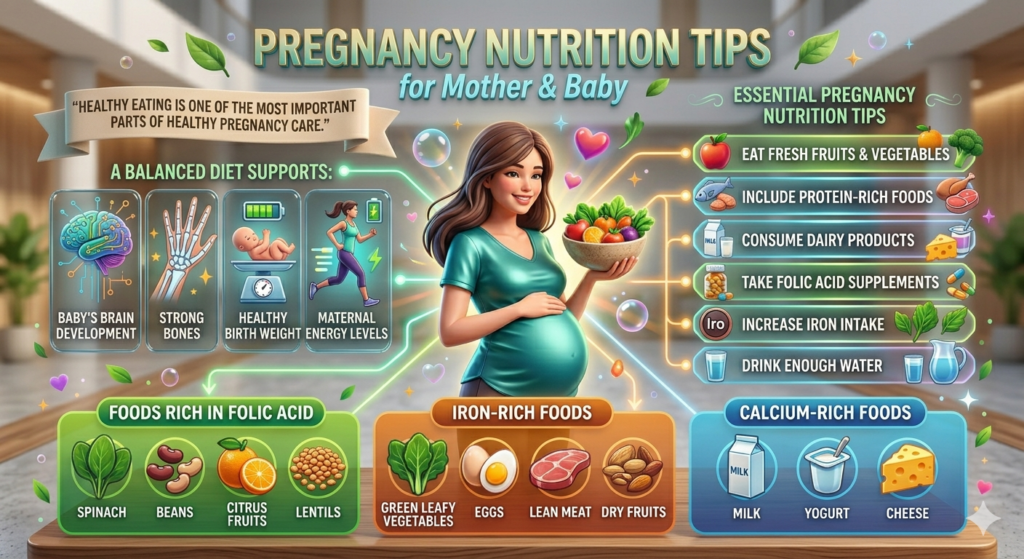
Healthy eating is one of the most important parts of Healthy pregnancy care.
A balanced diet supports:
- Baby’s brain development
- Strong bones
- Healthy birth weight
- Maternal energy levels
Essential Pregnancy nutrition tips:
- Eat fresh fruits and vegetables
- Include protein-rich foods
- Consume dairy products
- Take folic acid supplements
- Increase iron intake
- Drink enough water
Foods rich in folic acid:
- Spinach
- Beans
- Citrus fruits
- Lentils
Iron-rich foods:
- Green leafy vegetables
- Eggs
- Lean meat
- Dry fruits
Calcium-rich foods:
- Milk
- Yogurt
- Cheese
Women should avoid excessive junk food and sugary drinks.
Safe Pregnancy Habits Every Woman Should Follow
Developing Safe pregnancy habits helps ensure a healthy pregnancy journey.
Important safe habits include:
- Avoid smoking
- Avoid alcohol
- Limit caffeine
- Exercise moderately
- Sleep adequately
- Manage stress
Regular walking and prenatal yoga may improve circulation and reduce stress.
Women should always consult doctors before starting any exercise routine during pregnancy.
Healthy Pregnancy Care for Every Trimester
Each stage of pregnancy requires special attention.
First trimester care:
- Take folic acid
- Manage nausea
- Attend prenatal visits
Second trimester care:
- Monitor weight gain
- Stay physically active
- Continue balanced nutrition
Third trimester care:
- Monitor baby movements
- Prepare for delivery
- Attend regular medical checkups
Consistent Healthy pregnancy care improves both maternal and fetal health.
Common Pregnancy Warning Signs Women Should Never Ignore
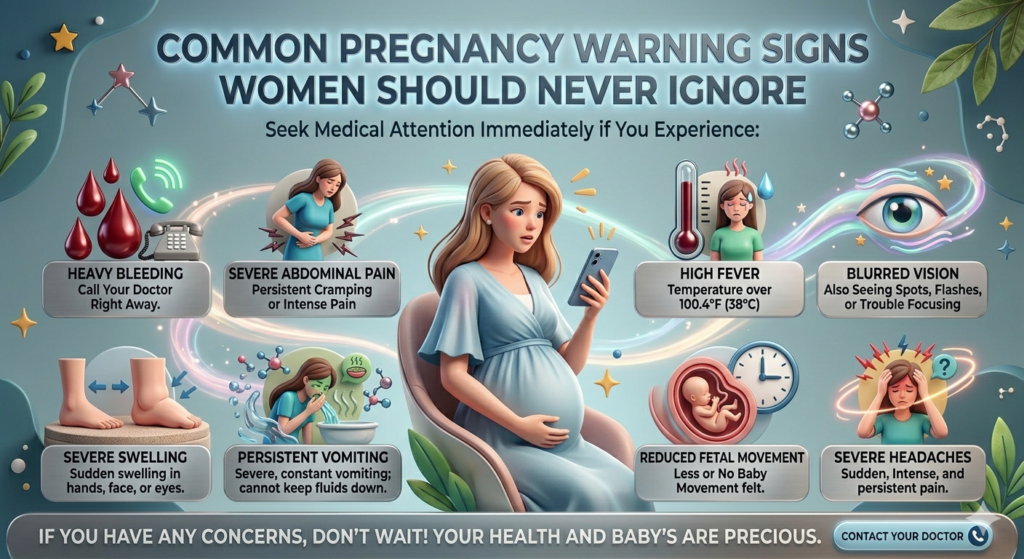
While many pregnancy symptoms are normal, some signs require immediate medical attention.
Common pregnancy warning signs include:
- Heavy bleeding
- Severe abdominal pain
- High fever
- Blurred vision
- Severe swelling
- Persistent vomiting
- Reduced fetal movement
- Severe headaches
Ignoring these symptoms can lead to serious complications.
When to Consult a Gynecologist During Pregnancy
Knowing When to consult a gynecologist is essential for maternal safety.
Women should consult a doctor if they experience:
- Severe vomiting
- Heavy bleeding
- Severe cramps
- Fever
- Extreme dizziness
- High blood pressure symptoms
Regular gynecologist visits help monitor the pregnancy properly.
Women with diabetes, thyroid disorders, or high blood pressure require extra monitoring during pregnancy.
Exercise and Physical Activity During Pregnancy
Safe physical activity improves overall health during pregnancy.
Benefits of exercise:
- Reduces stress
- Improves sleep
- Controls weight gain
- Reduces back pain
- Boosts energy
Safe exercises include:
- Walking
- Prenatal yoga
- Swimming
- Stretching
Heavy lifting and high-risk sports should be avoided.
Importance of Mental Health During Pregnancy
Pregnancy affects emotional health as much as physical health.
Stress and anxiety can affect both mother and baby.
Tips for emotional wellness:
- Practice meditation
- Spend time with supportive people
- Sleep properly
- Discuss fears openly
- Seek counseling if needed
Mental wellness should always be included in every Pregnancy wellness guide.
Sleep Problems During Pregnancy and Their Solutions
Many women experience sleep disturbances during pregnancy.
Causes include:
- Hormonal changes
- Frequent urination
- Anxiety
- Physical discomfort
Tips for better sleep:
- Sleep on the left side
- Use supportive pillows
- Avoid large meals before bedtime
- Reduce screen time at night
Good sleep improves overall health and reduces Fatigue during pregnancy.
Hydration and Water Intake During Pregnancy
Water is essential for a healthy pregnancy.
Proper hydration:
- Prevents constipation
- Supports amniotic fluid levels
- Reduces swelling
- Prevents dehydration
Women should drink enough fluids daily, especially during hot weather.
Weight Gain and Healthy Pregnancy Management
Healthy weight gain supports baby development.
Excessive or inadequate weight gain can increase complications.
Healthy ways to manage weight:
- Eat balanced meals
- Avoid processed foods
- Exercise regularly
- Follow doctor recommendations
Crash diets should never be followed during pregnancy.
Pregnancy Prevention Tips for Women Planning Their Future
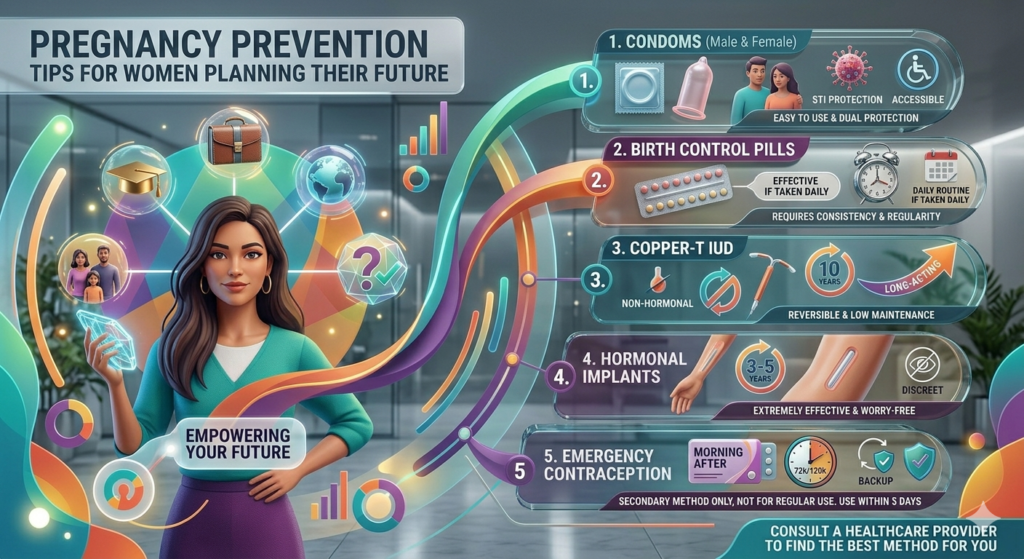
While many women plan pregnancy, others may wish to delay it. Understanding Pregnancy prevention tips is equally important.
Effective pregnancy prevention methods include:
- Condoms
- Birth control pills
- Copper-T
- Hormonal implants
- Emergency contraception
Women should consult healthcare professionals to choose the safest method based on age and health conditions.
Responsible family planning improves reproductive health and future pregnancy outcomes.
The Importance of Regular Health Checkups During Pregnancy
Routine medical checkups help detect complications early.
Doctors may monitor:
- Blood pressure
- Blood sugar levels
- Baby’s heartbeat
- Weight gain
- Fetal growth
Women should never skip prenatal appointments, even if they feel healthy.
Foods and Habits to Avoid During Pregnancy
Some foods and habits can harm the baby.
Avoid:
- Raw meat
- Unpasteurized dairy
- Excess caffeine
- Alcohol
- Smoking
- Certain medications without medical advice
Following safe dietary habits is an important part of Safe pregnancy habits.
Understanding Hormonal Changes During Pregnancy
Pregnancy hormones affect nearly every body system.
Common hormonal effects:
- Mood changes
- Nausea
- Fatigue
- Skin changes
- Increased appetite
These changes are normal but may vary from woman to woman.
Skin and Hair Changes During Pregnancy
Many women notice visible changes in their skin and hair.
Common changes:
- Glowing skin
- Acne
- Stretch marks
- Hair thickening
Proper hydration and nutrition help maintain healthy skin during pregnancy.
Building a Strong Support System During Pregnancy
Support from family and healthcare providers helps reduce emotional stress.
Women should communicate openly with:
- Partners
- Family members
- Doctors
- Counselors
Emotional support improves overall pregnancy wellness.
Importance of Folic Acid in Early Pregnancy
Folic acid plays a major role in preventing neural tube defects in babies.
Doctors usually recommend folic acid before conception and during early pregnancy.
Natural folic acid sources:
- Spinach
- Broccoli
- Lentils
- Oranges
This nutrient is essential in all Pregnancy nutrition tips.
Traveling Safely During Pregnancy
Travel is usually safe during healthy pregnancies with proper precautions.
Safe travel tips:
- Stay hydrated
- Walk during long journeys
- Wear comfortable clothing
- Carry medical records
Women with high-risk pregnancies should consult doctors before traveling.
Managing Work and Daily Activities During Pregnancy
Many women continue working during pregnancy.
Healthy work habits:
- Take regular breaks
- Avoid standing too long
- Maintain good posture
- Manage stress levels
Balancing work and rest is essential for Healthy pregnancy care.
How Partners Can Support Pregnant Women
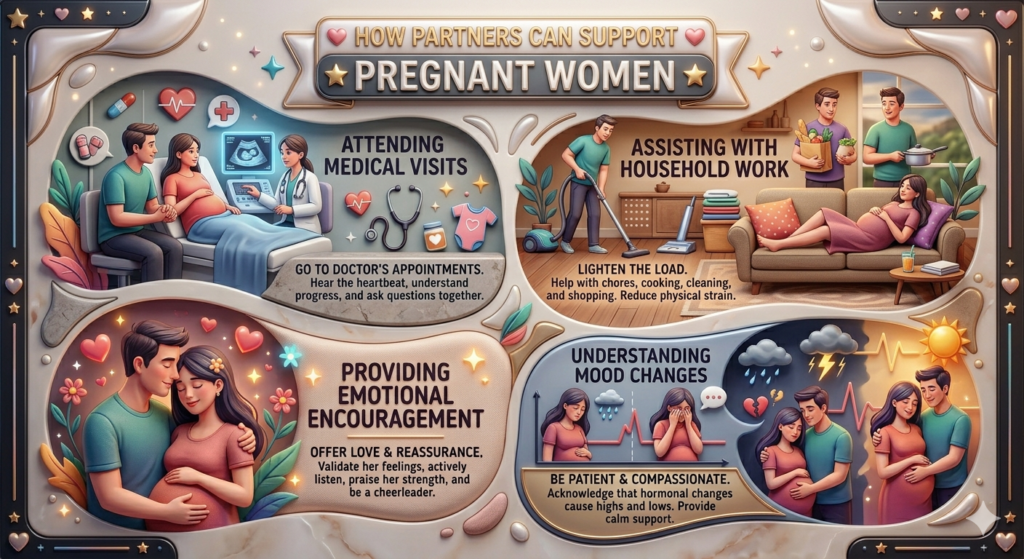
Partner support improves emotional well-being.
Helpful support includes:
- Attending medical visits
- Assisting with household work
- Providing emotional encouragement
- Understanding mood changes
Pregnancy becomes easier when women feel emotionally supported.
Common Myths About Pregnancy Symptoms
Many myths can create confusion during pregnancy.
Common myths:
- Morning sickness only occurs in the morning
- Every pregnant woman gains excessive weight
- Cravings determine the baby’s gender
Medical advice should always be trusted over myths or misinformation.
Preparing for a Healthy Pregnancy Journey
Women planning pregnancy should prepare physically and emotionally.
Pre-pregnancy preparation tips:
- Eat healthy foods
- Stop smoking
- Exercise regularly
- Take folic acid
- Get medical checkups
Early preparation improves pregnancy outcomes significantly.
Recognizing Early Pregnancy Symptoms and Staying Healthy
Understanding Early pregnancy symptoms helps women identify pregnancy early and begin proper care immediately. Symptoms such as Missed period signs, Morning sickness symptoms, breast tenderness, and Fatigue during pregnancy are among the most common early indicators.
Following proper Pregnancy health tips, maintaining balanced nutrition, attending regular medical appointments, and understanding the Prenatal care importance all contribute to safer motherhood and healthier babies.
Every woman should also understand the Common pregnancy warning signs and know When to consult a gynecologist for immediate medical attention.
By following healthy lifestyle choices, practicing Safe pregnancy habits, and prioritizing emotional wellness, women can enjoy a smoother and healthier pregnancy journey.
Leave a Reply