

Introduction to World Vitiligo Day

World Vitiligo Day is observed every year on June 25 to raise awareness about vitiligo, a condition that affects millions of people worldwide. This global observance aims to educate communities, reduce stigma, encourage early diagnosis, and promote acceptance of individuals living with vitiligo.
Vitiligo is more than a cosmetic condition. It can significantly impact emotional well-being, self-esteem, and quality of life. Through education, advocacy, and healthcare support, World Vitiligo Day serves as a platform to promote understanding and encourage people to seek appropriate medical care and social support.
As awareness grows, healthcare professionals, patient organizations, and advocacy groups continue to emphasize the importance of supporting skin health and confidence for people affected by vitiligo.
World Vitiligo Day and the Importance of Skin Health Awareness
Skin Health Awareness plays a crucial role in helping people understand various skin conditions, including vitiligo. The skin is the body’s largest organ and serves as a protective barrier against environmental threats.
World Vitiligo Day highlights the need for:
- Greater public understanding of vitiligo
- Early recognition of symptoms
- Access to dermatological care
- Emotional and social support
- Improved research and treatment options
Many misconceptions still surround vitiligo. Some people incorrectly believe it is contagious or caused by poor hygiene. Educational initiatives help dispel these myths and encourage empathy and inclusion.
By promoting skin health awareness, communities can create a more supportive environment for those living with visible skin differences.
Understanding Vitiligo as an Autoimmune Skin Disorder
Vitiligo is classified as an Autoimmune Skin Disorder. In autoimmune conditions, the immune system mistakenly attacks healthy cells in the body.
In vitiligo, immune cells target melanocytes—the cells responsible for producing melanin, the pigment that gives skin, hair, and eyes their color. As melanocytes are destroyed, patches of skin lose their pigmentation, resulting in white or lighter-colored areas.
Researchers continue to study the exact mechanisms behind vitiligo, but evidence suggests that genetic, immune, and environmental factors all contribute to its development.
Understanding vitiligo as an autoimmune condition helps reduce misconceptions and encourages affected individuals to seek professional medical guidance.
Vitiligo Symptoms and Causes: What You Need to Know
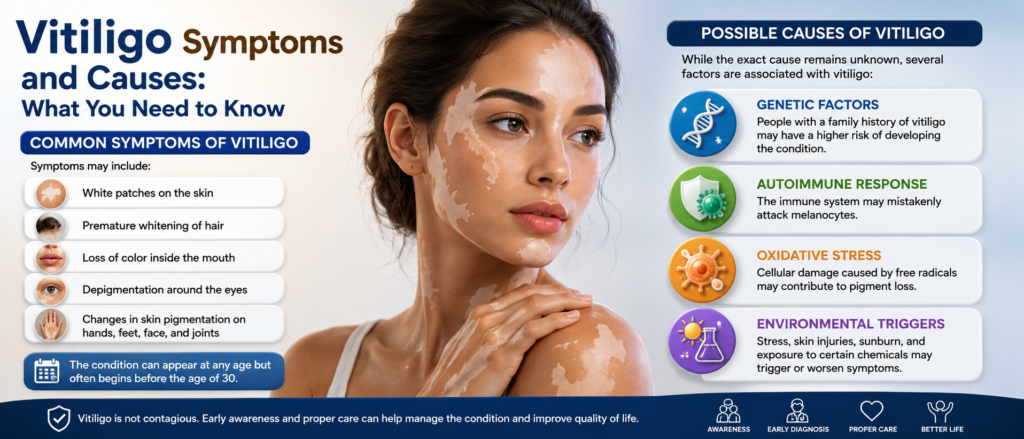
Recognizing Vitiligo Symptoms and Causes is essential for timely diagnosis and management.
Common Symptoms of Vitiligo
Symptoms may include:
- White patches on the skin
- Premature whitening of hair
- Loss of color inside the mouth
- Depigmentation around the eyes
- Changes in skin pigmentation on hands, feet, face, and joints
The condition can appear at any age but often begins before the age of 30.
Possible Causes of Vitiligo
While the exact cause remains unknown, several factors are associated with vitiligo:
Genetic Factors
People with a family history of vitiligo may have a higher risk of developing the condition.
Autoimmune Response
The immune system may mistakenly attack melanocytes.
Oxidative Stress
Cellular damage caused by free radicals may contribute to pigment loss.
Environmental Triggers
Stress, skin injuries, sunburn, and exposure to certain chemicals may trigger or worsen symptoms.
Understanding these factors helps healthcare providers develop personalized treatment and management strategies.
Skin Pigmentation Loss and Its Impact on Daily Life
One of the most noticeable features of vitiligo is Skin Pigmentation Loss. While pigmentation changes are not physically painful, they can affect multiple aspects of a person’s life.
Individuals may experience:
- Increased sensitivity to sunlight
- Greater risk of sunburn
- Emotional distress
- Social anxiety
- Reduced self-confidence
Because skin appearance often influences social interactions, visible pigment changes can lead to unwanted attention or discrimination.
This is why awareness campaigns emphasize that vitiligo is a medical condition and not a reflection of a person’s health, character, or lifestyle.
Early Vitiligo Diagnosis Can Improve Outcomes
The importance of Early Vitiligo Diagnosis cannot be overstated. Detecting the condition in its early stages allows healthcare professionals to begin treatment sooner and potentially slow disease progression.
Benefits of Early Diagnosis
- Earlier intervention
- Better treatment response
- Improved skin preservation
- Reduced emotional stress
- Enhanced long-term management
Dermatologists may use:
- Physical examination
- Medical history review
- Wood’s lamp examination
- Blood tests to assess autoimmune conditions
- Skin biopsy in selected cases
People who notice unexplained white patches on their skin should seek medical evaluation promptly.
Vitiligo Treatment Options Available Today
Advancements in dermatology have expanded the range of Vitiligo Treatment Options available to patients.
Although there is currently no universal cure, many treatments can help restore pigmentation and manage symptoms.
Topical Medications
Doctors may prescribe:
- Corticosteroid creams
- Calcineurin inhibitors
- Immune-modulating medications
These treatments can help slow pigment loss and encourage repigmentation.
Light Therapy
Phototherapy is one of the most widely used treatments for vitiligo.
Benefits include:
- Stimulating melanocyte activity
- Improving skin pigmentation
- Treating widespread vitiligo
Surgical Treatments
For stable vitiligo, surgical procedures such as skin grafting or melanocyte transplantation may be considered.
Depigmentation Therapy
In extensive cases, some patients choose depigmentation of unaffected areas to achieve a more uniform skin appearance.
Emerging Treatments
Researchers continue exploring innovative therapies including:
- JAK inhibitors
- Targeted immune therapies
- Regenerative medicine approaches
These developments offer hope for more effective treatments in the future.
Vitiligo Care and Management for Long-Term Skin Health
Successful Vitiligo Care and Management involves a comprehensive approach that addresses both physical and emotional well-being.
Protecting the Skin
Patients should:
- Use broad-spectrum sunscreen daily
- Wear protective clothing
- Avoid excessive sun exposure
- Keep skin moisturized
Healthy Lifestyle Choices
A balanced lifestyle can support overall health:
- Nutritious diet
- Regular exercise
- Stress management
- Adequate sleep
Regular Dermatology Visits
Routine follow-ups allow dermatologists to monitor progress and adjust treatment plans when necessary.
Long-term management helps individuals maintain healthier skin and better quality of life.
Dermatology Health Awareness and the Role of Specialists
Dermatology Health Awareness is essential for improving diagnosis, treatment, and public understanding of skin conditions.
Dermatologists play a key role in:
- Diagnosing vitiligo
- Recommending treatment plans
- Monitoring disease progression
- Providing education and counseling
- Coordinating care with other specialists
Public awareness campaigns encourage people to consult qualified dermatologists rather than relying on misinformation or unverified treatments.
Increased dermatology health awareness can lead to earlier diagnosis and improved outcomes for many patients.
Mental Health and Vitiligo: Addressing Emotional Challenges
The connection between Mental Health and Vitiligo is an important but often overlooked aspect of care.
People with visible skin changes may experience:
- Anxiety
- Depression
- Social withdrawal
- Low self-esteem
- Body image concerns
Children and adolescents can be particularly vulnerable to bullying and social exclusion.
Importance of Emotional Support
Mental health support may include:
- Counseling
- Therapy
- Support groups
- Stress management techniques
- Family support
Healthcare providers increasingly recognize that emotional well-being is a critical component of comprehensive vitiligo care.
Addressing mental health challenges helps individuals build resilience and improve overall quality of life.
Confidence with Vitiligo: Building Self-Esteem and Acceptance
Developing Confidence with Vitiligo is a journey that involves self-acceptance, education, and support.
Many individuals with vitiligo have become advocates, influencers, models, and public figures who challenge beauty stereotypes and promote inclusivity.
Strategies for building confidence include:
Educating Yourself
Understanding the condition reduces fear and uncertainty.
Connecting with Others
Support communities provide encouragement and shared experiences.
Celebrating Individuality
Every person’s appearance is unique. Embracing differences can foster self-confidence.
Challenging Stigma
Open conversations help break down misconceptions and promote acceptance.
Confidence grows when people feel supported, respected, and valued regardless of their skin appearance.
Vitiligo Patient Support and Community Empowerment
Strong Vitiligo Patient Support networks can make a significant difference in the lives of affected individuals.
Support resources may include:
- Patient advocacy organizations
- Online communities
- Educational programs
- Counseling services
- Awareness events
These resources provide practical information and emotional encouragement.
Patient support groups often help individuals:
- Share personal experiences
- Learn coping strategies
- Stay informed about treatments
- Build meaningful connections
Community empowerment remains a key objective of World Vitiligo Day initiatives worldwide.
Living with Vitiligo: Embracing Life Beyond Skin Differences
Living with Vitiligo involves adapting to physical changes while maintaining emotional well-being and confidence.
Many people with vitiligo lead successful and fulfilling lives. They pursue careers, relationships, education, sports, and personal goals without allowing the condition to define them.
Helpful strategies include:
- Following treatment recommendations
- Practicing self-care
- Seeking emotional support
- Maintaining a positive mindset
- Participating in awareness initiatives
Acceptance does not mean giving up on treatment. Instead, it means recognizing self-worth regardless of appearance.
Living with vitiligo becomes easier when individuals receive support from family, friends, healthcare providers, and society as a whole.
Inclusive Skin Health Education for a More Accepting Society
Inclusive Skin Health Education is essential for reducing stigma and creating a more informed society.
Educational programs should teach:
- Facts about vitiligo
- Causes of pigmentation disorders
- Importance of early diagnosis
- Emotional impact of visible skin conditions
- Respect for diversity in appearance
Schools, workplaces, healthcare institutions, and community organizations all have a role to play in promoting inclusion.
When people understand vitiligo, they are more likely to support those affected and challenge discriminatory attitudes.
Inclusive education fosters empathy, acceptance, and equal opportunities for everyone.
Vitiligo Awareness Campaign: Spreading Knowledge and Hope
A successful Vitiligo Awareness Campaign aims to educate the public, support patients, and encourage medical research.
Awareness campaigns focus on:
- Dispelling myths
- Promoting early diagnosis
- Encouraging treatment access
- Supporting mental health
- Celebrating diversity
Social media, healthcare organizations, patient advocates, and dermatology experts work together to amplify awareness messages.
These campaigns help create a world where people with vitiligo are understood, respected, and empowered.
Supporting Skin Health and Confidence on World Vitiligo Day
World Vitiligo Day serves as an important reminder that skin health, emotional well-being, and social acceptance are interconnected. Through increased Skin Health Awareness, improved understanding of Vitiligo Symptoms and Causes, access to Vitiligo Treatment Options, and stronger Vitiligo Patient Support, individuals can receive the care and encouragement they need.
As an Autoimmune Skin Disorder, vitiligo requires both medical attention and emotional support. Promoting Early Vitiligo Diagnosis, effective Vitiligo Care and Management, and comprehensive Dermatology Health Awareness can improve outcomes and quality of life.
Most importantly, fostering Confidence with Vitiligo, addressing Mental Health and Vitiligo, supporting those Living with Vitiligo, and advancing Inclusive Skin Health Education help build a society where everyone is valued regardless of skin appearance.
On this World Vitiligo Day, let us work together to spread awareness, embrace diversity, and support skin health and confidence for all.
Leave a Reply