
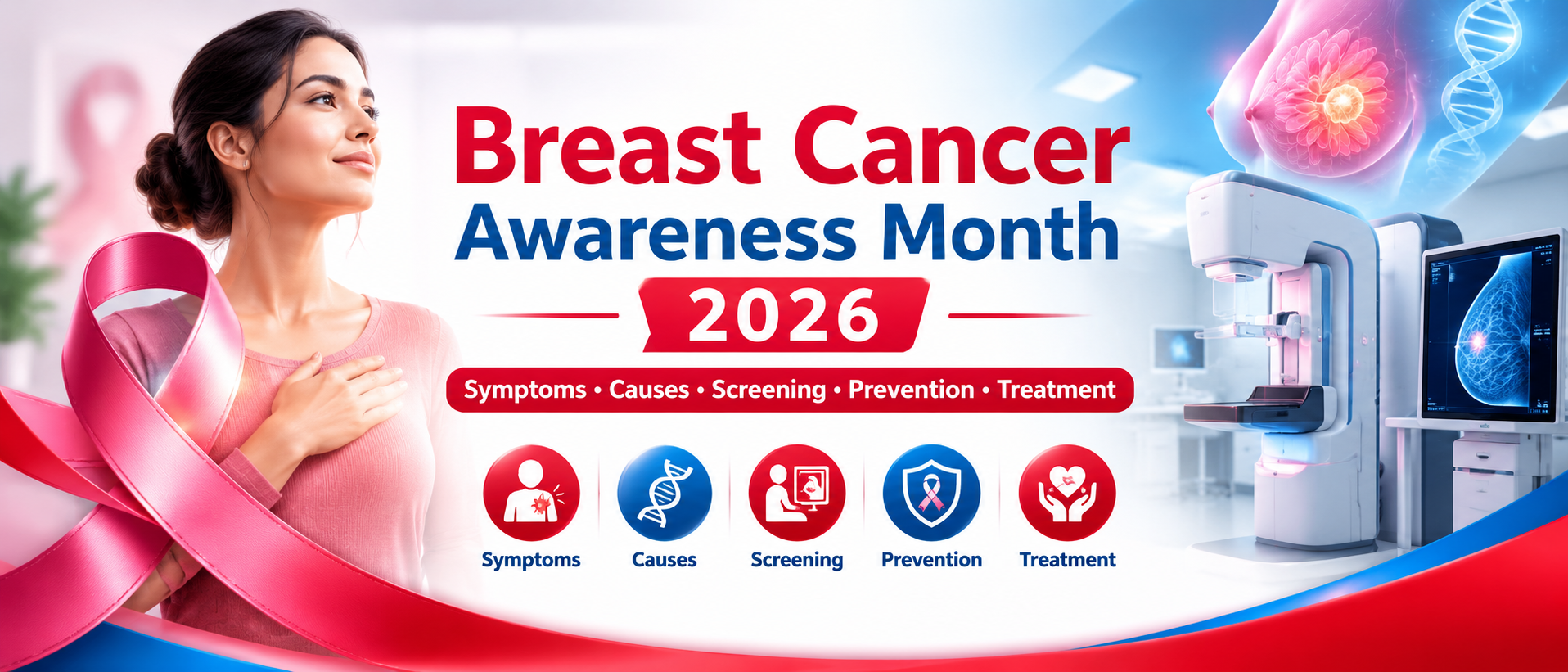


Breast Cancer Awareness Month 2026 is an important opportunity to increase awareness about one of the most commonly diagnosed cancers affecting women worldwide. October is observed as Breast Cancer Awareness Month, encouraging people to learn about breast health, recognize possible warning signs, understand risk factors, and seek appropriate medical care.
Breast cancer can affect people differently. Some individuals may notice a change in their breast or underarm, while others may have no noticeable symptoms during the early stages. This is why awareness, appropriate screening, and timely medical evaluation are important.
Understanding breast cancer symptoms, breast cancer causes, risk factors, screening methods, diagnosis, treatment, and prevention can help people make informed decisions about their health.
This article provides an overview of breast cancer, including early detection of breast cancer, screening, diagnosis, treatment options, and the importance of ongoing breast health awareness.
What Is Breast Cancer?
Breast cancer develops when abnormal cells in breast tissue grow and divide uncontrollably. These cells can form a tumor and, in some cases, spread to surrounding tissues or other parts of the body.
Breast cancer is not one single disease. There are different breast cancer types, and their behavior and treatment can vary depending on factors such as the cells involved, hormone receptor status, HER2 status, tumor characteristics, and whether the cancer has spread.
Breast cancer can occur in both women and men, although it is much more common in women.
Because early disease may not always cause noticeable symptoms, awareness and appropriate medical evaluation are important components of breast health.
Breast Cancer Symptoms: What Signs Should You Know?
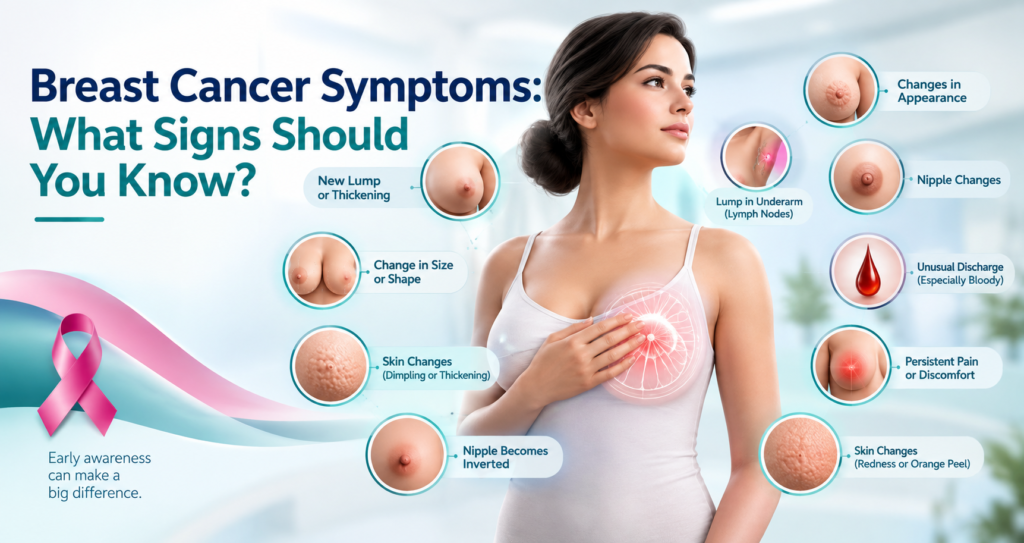
Understanding breast cancer symptoms can help people recognize changes that should be evaluated by a healthcare professional.
Possible symptoms or changes can include:
- A new lump or thickening in the breast or underarm
- A change in breast size or shape
- A change in the appearance of the breast
- Skin changes such as dimpling or unusual thickening
- Nipple changes
- Nipple discharge that is unusual, particularly if it is bloody
- A nipple that becomes newly inverted
- Persistent pain or discomfort in a specific area
- Changes in the skin of the breast, including redness or an appearance resembling an orange peel
It is important to remember that these signs do not automatically mean someone has breast cancer. Many breast changes are caused by non-cancerous conditions.
However, a new or unusual change should not be ignored. A healthcare professional can determine whether further examination or testing is necessary.
Breast Cancer Warning Signs You Should Not Ignore
Some breast cancer warning signs can be subtle, particularly during the early stages.
A new breast lump is one of the commonly recognized warning signs, but breast cancer can also present through changes in breast shape, skin, nipple appearance, or underarm tissue.
People should become familiar with how their breasts normally look and feel. This can make it easier to notice changes.
However, checking your breasts does not replace recommended screening. If you notice a persistent or concerning change, consult a qualified healthcare professional rather than attempting to diagnose the cause yourself.
Breast Cancer Causes: What Leads to Breast Cancer?
The exact breast cancer causes are complex. Breast cancer generally results from genetic changes that cause breast cells to grow abnormally.
Some genetic changes occur during a person’s lifetime, while others may be inherited.
There is not always one identifiable cause of breast cancer. Instead, multiple factors can influence the likelihood of developing the disease.
Researchers continue to study genetic, hormonal, environmental, reproductive, and lifestyle factors associated with breast cancer.
Understanding these factors can help people discuss their individual risk with their healthcare provider.
Breast Cancer Risk Factors

Several breast cancer risk factors have been identified. Having one or more risk factors does not mean a person will definitely develop breast cancer, while people without obvious risk factors can still develop the disease.
Potential risk factors include:
- Increasing age
- Certain inherited genetic mutations
- A family history of breast or ovarian cancer
- Personal history of certain breast conditions
- Previous exposure to radiation involving the chest
- Certain reproductive and hormonal factors
- Being overweight or obese, particularly after menopause
- Physical inactivity
- Alcohol consumption
Some risk factors cannot be changed, such as age or inherited genetic characteristics. Others may be influenced through lifestyle choices.
People with a strong family history or other significant risk factors may benefit from discussing personalized screening and risk-reduction strategies with a healthcare professional.
Breast Cancer Types: Understanding Different Forms
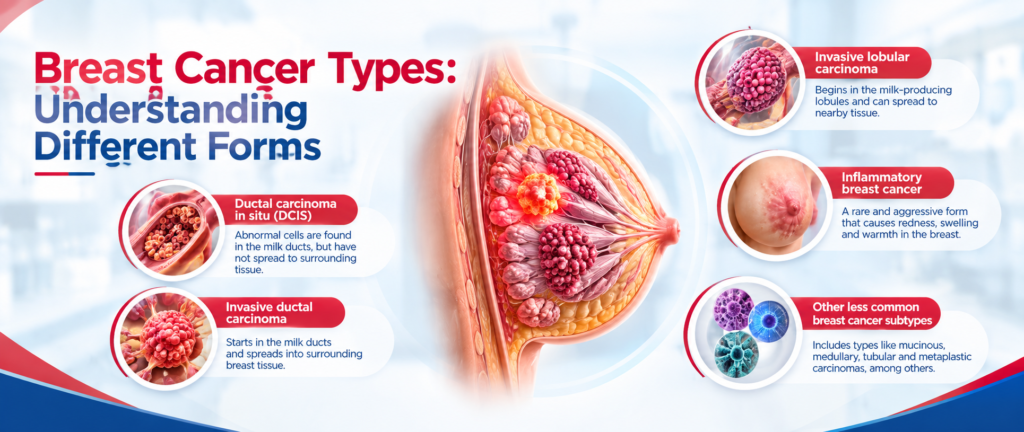
There are several breast cancer types, and classification can help doctors determine the most appropriate treatment approach.
Some breast cancers begin in the milk ducts, while others develop in the milk-producing glands. Cancer can also be described according to whether it remains within its original location or has invaded surrounding breast tissue.
Examples include:
- Ductal carcinoma in situ (DCIS)
- Invasive ductal carcinoma
- Invasive lobular carcinoma
- Inflammatory breast cancer
- Other less common breast cancer subtypes
Breast cancers can also be categorized according to biomarkers such as estrogen receptor, progesterone receptor, and HER2 status.
This information is important because different breast cancers can respond differently to specific treatments.
Breast Cancer Screening: Why Does It Matter?
Breast cancer screening aims to identify breast cancer before symptoms appear.
Screening recommendations vary according to age, individual risk, personal history, and the healthcare system or guidelines being followed.
Mammography is one of the most established breast cancer screening tools. Depending on the individual, doctors may also recommend other imaging or evaluation methods.
The purpose of screening is not to diagnose every breast abnormality as cancer. Instead, it can identify suspicious changes that may require additional evaluation.
People should discuss screening recommendations with their healthcare provider to determine what is appropriate for their individual circumstances.
Breast Cancer Screening Guidelines: When Should You Get Screened?
Breast cancer screening guidelines can vary between organizations and countries. Recommendations may also change as evidence evolves.
For people at average risk, screening decisions are often based on age and personal circumstances. People at higher risk may require earlier or additional screening.
Higher-risk individuals may include those with certain inherited genetic mutations, a strong family history, or particular previous medical conditions.
Because there is no single screening schedule that is appropriate for everyone, it is important to discuss personal risk and screening options with a healthcare professional.
Do not delay medical evaluation simply because you are younger than the usual screening age if you develop a concerning breast change.
Mammogram for Breast Cancer: What Is It?
A mammogram for breast cancer is an X-ray examination of the breast used to identify abnormalities.
Mammography can detect certain breast cancers before they become large enough to be felt. It may also identify other breast changes that require further investigation.
During mammography, the breast is positioned between specialized plates, and images are taken.
Some people may experience temporary discomfort or pressure during the procedure. The examination itself is generally brief.
If a mammogram identifies an abnormality, it does not necessarily mean cancer is present. Additional imaging or a biopsy may be recommended to determine the cause.
Breast Self-Examination: Know Your Normal
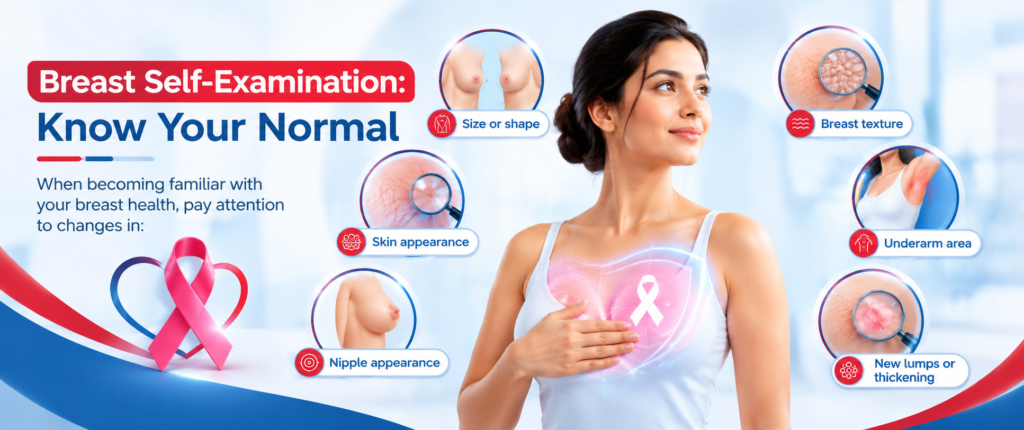
Breast self-examination has traditionally been promoted as a way for people to become familiar with their breasts.
Today, many health professionals emphasize breast awareness—knowing what is normal for you and reporting unusual changes—rather than relying on self-examination as a stand-alone screening test.
When becoming familiar with your breast health, pay attention to changes in:
- Size or shape
- Skin appearance
- Nipple appearance
- Breast texture
- Underarm area
- New lumps or thickening
If you notice a persistent or unusual change, seek medical advice.
Remember that breast awareness does not replace mammography or other recommended screening.
Early Detection of Breast Cancer: Why Timing Matters
Early detection of breast cancer can provide an important advantage because cancer identified before it has spread may be easier to treat.
Early detection can involve recognizing unusual breast changes and participating in recommended screening.
Not every breast cancer causes symptoms in its early stages. This is one reason screening can be important for people who meet recommended criteria.
If a suspicious finding is detected, further testing can determine whether it is cancer and, if so, what type it is.
Breast Cancer Diagnosis: How Is It Confirmed?
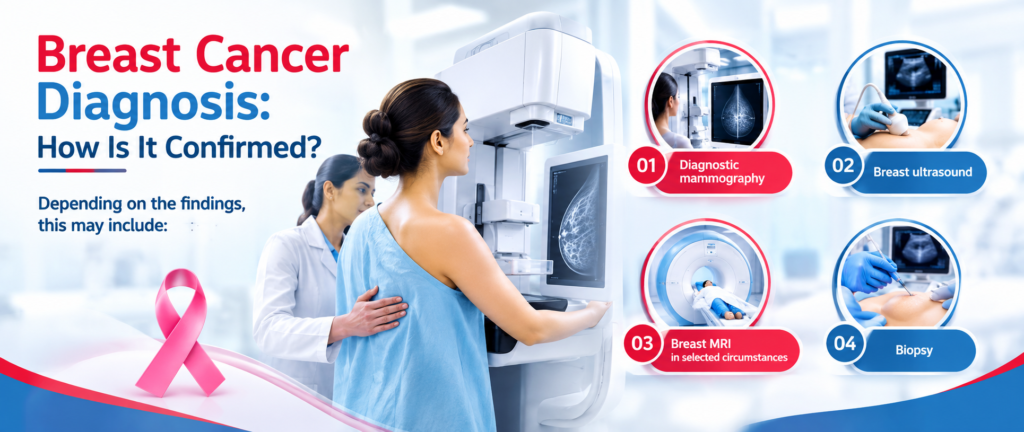
Breast cancer diagnosis usually involves several steps.
If a breast change is identified through symptoms, physical examination, or screening, a healthcare professional may recommend diagnostic imaging.
Depending on the findings, this may include:
- Diagnostic mammography
- Breast ultrasound
- Breast MRI in selected circumstances
- Biopsy
A biopsy involves removing a sample of tissue for examination in a laboratory. It is generally the definitive way to determine whether suspicious tissue contains cancer cells.
If cancer is confirmed, additional laboratory testing can help determine the cancer’s characteristics and guide treatment decisions.
Breast Cancer Stages: Understanding Cancer Progression
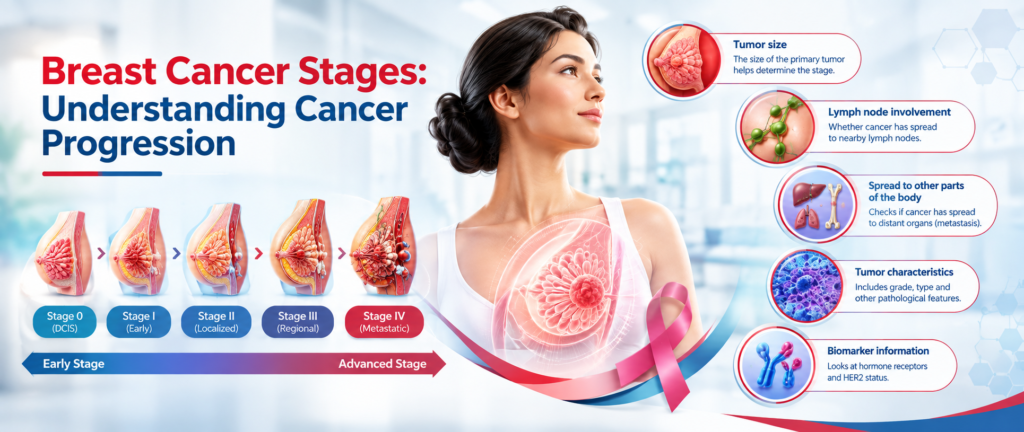
Breast cancer stages describe the extent of cancer in the body.
Staging helps healthcare professionals understand how extensive the disease is and plan treatment.
Breast cancer is commonly described using stages ranging from early-stage disease to advanced or metastatic disease. Staging can consider factors such as:
- Tumor size
- Lymph node involvement
- Spread to other parts of the body
- Tumor characteristics
- Biomarker information
The stage of breast cancer is an important part of treatment planning, but it is not the only factor doctors consider.
Two people with the same stage may receive different treatment depending on tumor biology and individual health circumstances.
Breast Cancer Treatment: What Are the Options?
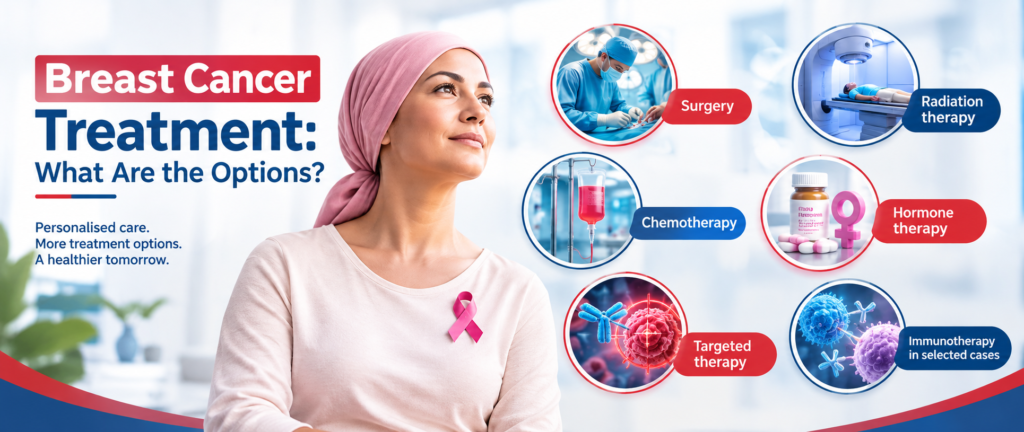
Breast cancer treatment depends on many factors, including the cancer type, stage, biomarker status, overall health, and personal preferences.
Treatment may involve one or more approaches.
Common treatment categories include:
- Surgery
- Radiation therapy
- Chemotherapy
- Hormone therapy
- Targeted therapy
- Immunotherapy in selected cases
Some people may receive treatment before surgery to reduce tumor size, while others may receive additional treatment after surgery to reduce the risk of recurrence.
Treatment plans should always be individualized by a qualified oncology team.
Breast Cancer Treatment Options: From Surgery to Targeted Therapy
The range of breast cancer treatment options has expanded considerably.
Surgery
Surgery may involve removing the tumor while preserving much of the breast or removing the breast, depending on the circumstances.
Lymph nodes may also be evaluated or removed when appropriate.
Radiation Therapy
Radiation uses high-energy radiation to destroy cancer cells in a targeted area. It may be recommended after certain types of breast surgery or in other clinical situations.
Chemotherapy
Chemotherapy uses medicines that destroy or inhibit rapidly dividing cancer cells. It may be recommended depending on the cancer’s characteristics and stage.
Hormone Therapy
Some breast cancers depend on hormones such as estrogen or progesterone to grow. Hormone therapy may be used for hormone receptor-positive cancers.
Targeted Therapy
Targeted therapies focus on specific characteristics of cancer cells. For example, certain treatments target the HER2 protein in HER2-positive breast cancers.
Immunotherapy
Immunotherapy helps the immune system recognize and attack cancer cells. It is appropriate only for selected breast cancer situations.
Your oncology team will determine which treatment or combination of treatments is appropriate.
Breast Cancer Prevention: Can Your Risk Be Reduced?

Breast cancer prevention cannot eliminate the risk completely, particularly when certain genetic or family-related risk factors are present.
However, some lifestyle choices may help reduce risk.
Potential strategies include:
- Maintaining a healthy weight
- Staying physically active
- Limiting alcohol consumption
- Avoiding tobacco
- Following a balanced diet
- Discussing reproductive or hormonal factors with a healthcare professional when relevant
- Following personalized screening recommendations
People at substantially increased genetic risk may have additional options for risk assessment and prevention.
If you have a strong family history of breast or ovarian cancer, speak with a healthcare professional about whether genetic counseling or testing may be appropriate.
Breast Health Awareness: Know Your Body
Breast health awareness is not limited to Breast Cancer Awareness Month.
It is important throughout the year.
Knowing your usual breast appearance and texture can help you identify changes. Regular medical care and age- and risk-appropriate screening also contribute to breast health.
Remember that breast changes can occur for many reasons, including hormonal changes, infections, benign breast conditions, and injuries.
The important message is simple: a new or unusual change deserves appropriate medical attention.
Breast Cancer Survival and Advances in Care
Breast cancer survival varies considerably from person to person.
Factors affecting outcomes include the type and biology of the cancer, stage at diagnosis, treatment response, overall health, and access to appropriate care.
Advances in screening, diagnostic methods, surgery, radiation, chemotherapy, hormone therapy, targeted treatments, and supportive care have improved outcomes for many people.
Early diagnosis remains particularly important because localized breast cancer generally has more treatment options and better outcomes than cancer that has already spread to distant organs.
However, survival statistics describe groups of people and cannot predict exactly what will happen to an individual.
Patients should discuss their personal prognosis with their oncology team.
Breast Cancer Awareness: Why October Matters
Breast cancer awareness campaigns during October encourage individuals, families, healthcare professionals, organizations, and communities to talk about breast health.
Awareness can help address misconceptions and encourage people to seek medical advice when necessary.
Breast Cancer Awareness Month is also an opportunity to recognize people living with breast cancer, cancer survivors, caregivers, researchers, healthcare professionals, and organizations working to improve prevention, diagnosis, treatment, and supportive care.
Awareness should not stop when October ends. Breast health is important throughout the year.
Common Questions About Breast Cancer
Can a breast lump always mean cancer?
No. Many breast lumps are benign. However, a new or persistent lump should be evaluated by a healthcare professional.
Can men develop breast cancer?
Yes. Although breast cancer is much less common in men, it can occur.
Is breast pain always a sign of breast cancer?
No. Breast pain has many possible causes and is not necessarily a sign of cancer. Persistent or concerning symptoms should still be evaluated.
Does having a family history mean I will develop breast cancer?
No. A family history can increase risk, but it does not mean cancer will definitely occur.
Can breast cancer be prevented completely?
No prevention strategy can eliminate the risk completely. However, certain lifestyle measures, risk assessment, and appropriate medical care can help reduce risk or improve early detection.
When Should You See a Doctor?
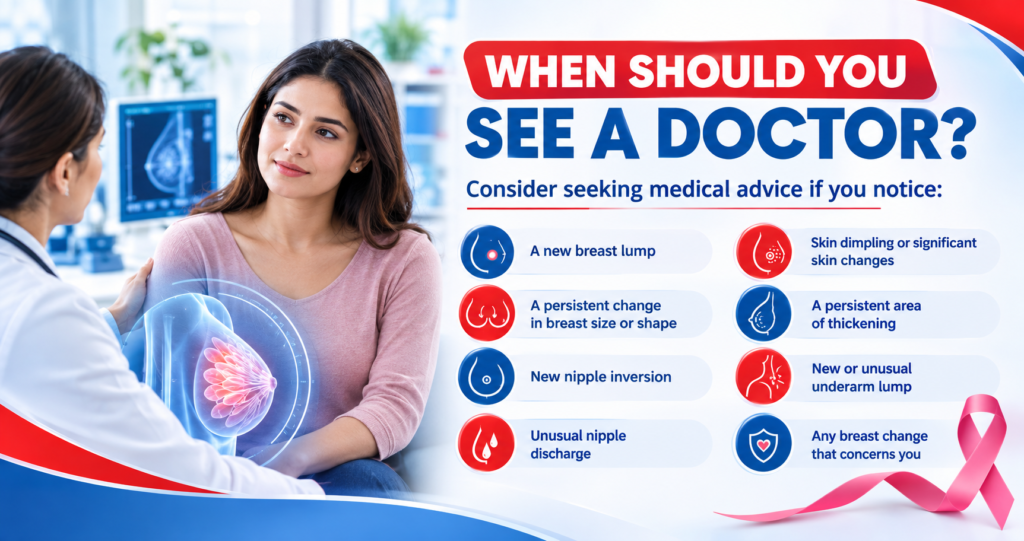
You should consider seeking medical advice if you notice:
- A new breast lump
- A persistent change in breast size or shape
- New nipple inversion
- Unusual nipple discharge
- Skin dimpling or significant skin changes
- A persistent area of thickening
- A new or unusual underarm lump
- Any breast change that concerns you
Do not wait for symptoms to become severe before seeking medical attention.
Make Breast Health a Year-Round Priority
Breast Cancer Awareness Month 2026 is a reminder that awareness, timely medical evaluation, appropriate screening, and access to treatment can all play important roles in the fight against breast cancer.
Understanding breast cancer symptoms, breast cancer causes, breast cancer risk factors, screening methods, diagnosis, stages, and treatment can help individuals make informed health decisions.
The key message of breast cancer early detection is simple: know what is normal for you, understand your personal risk, follow appropriate screening recommendations, and speak with a healthcare professional about any concerning changes.
Whether it is October or any other month of the year, breast health awareness matters.
Early attention to a concerning change can lead to timely evaluation and, when necessary, earlier diagnosis and treatment.
Take care of your breast health, encourage the women in your life to stay informed, and remember that awareness is not just a campaign—it is an ongoing part of taking care of your health.
Leave a Reply