
Why a Simple Indian Diet Chart for Pregnancy Matters

Nutritional Needs During Pregnancy
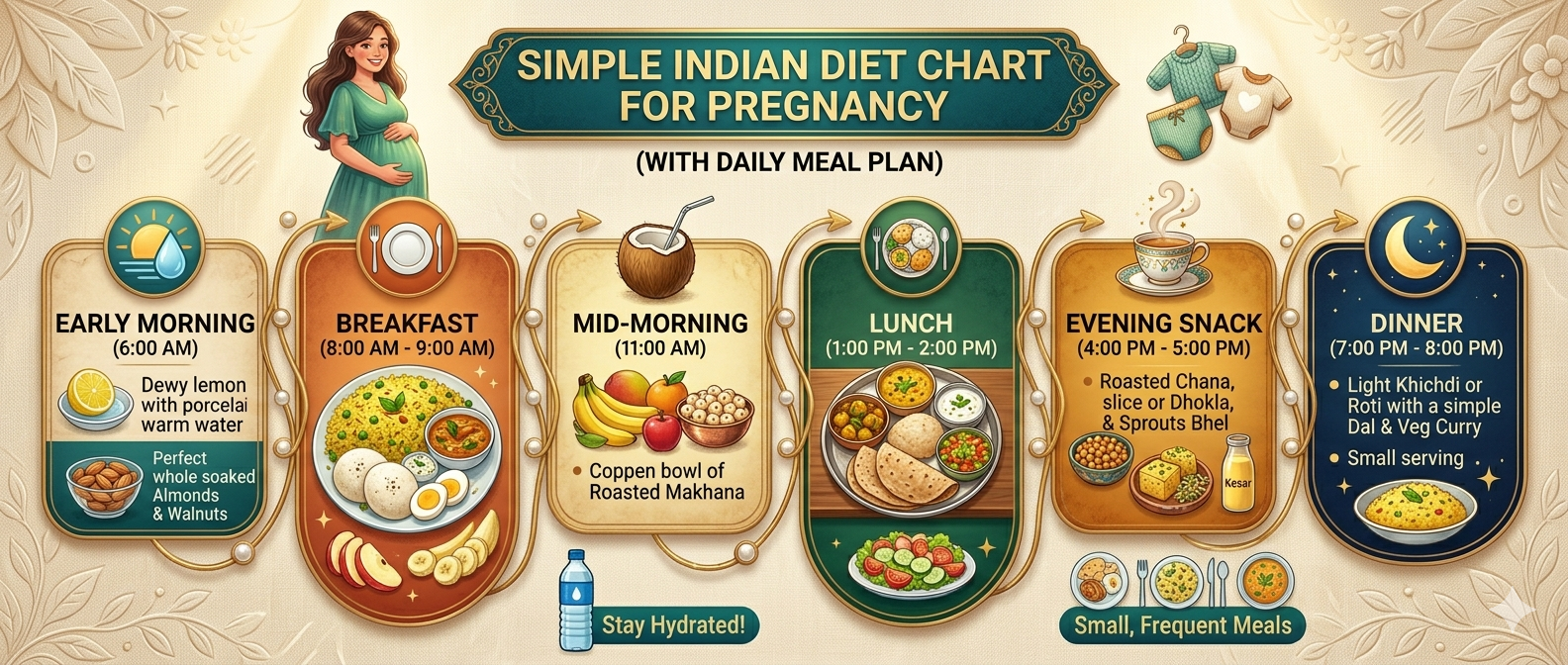
Pregnancy is not just about eating more—it’s about eating right. A simple Indian diet chart for pregnancy focuses on nourishing both the mother and the growing baby with the right balance of nutrients. During these nine months, your body works overtime, building new tissues, supporting hormonal changes, and ensuring the baby develops properly. That’s why your nutritional requirements significantly increase, especially for key nutrients like iron, calcium, protein, and folic acid.
Think of your body as a construction site. The baby is the building under development, and nutrients are the raw materials. Without enough bricks (protein), cement (calcium), and wiring (vitamins), the structure won’t be strong. According to health experts, pregnant women need about 300 extra calories per day, but those calories must come from nutrient-dense foods—not empty junk food.
An Indian diet, when planned properly, naturally includes a variety of wholesome foods like dal, roti, rice, vegetables, fruits, and dairy. These foods can easily meet the increased nutritional demands without requiring expensive or imported ingredients. The beauty of a simple Indian pregnancy diet lies in its diversity—every region offers nutrient-rich recipes that support maternal health.
Skipping meals or relying on processed foods can lead to deficiencies, fatigue, and complications. That’s why following a structured and balanced diet chart becomes essential. It ensures consistency, prevents overeating or undereating, and helps maintain steady energy levels throughout the day.
Importance of Balanced Indian Meals
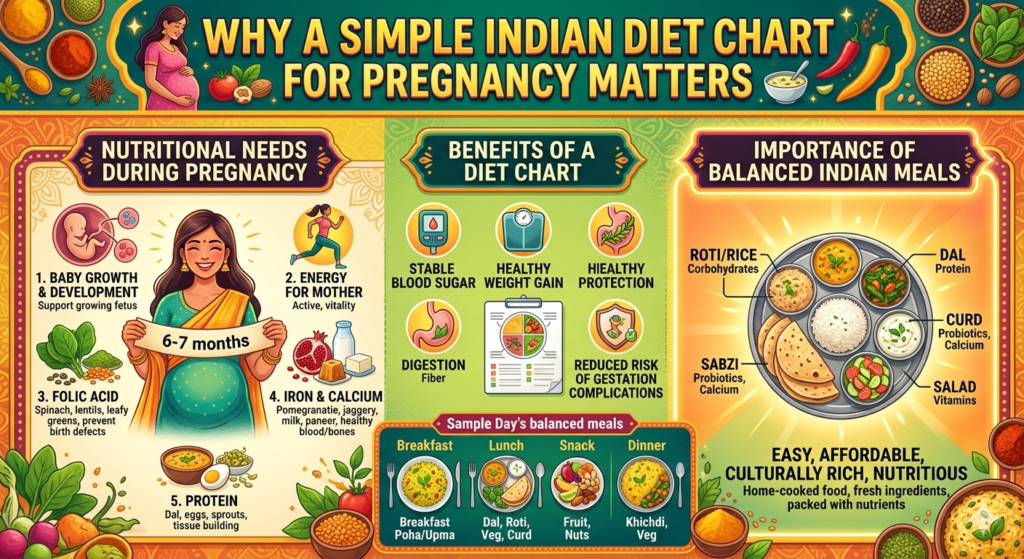
A well-planned simple Indian diet chart for pregnancy isn’t about restriction—it’s about balance. Indian meals are uniquely suited for this phase because they naturally combine carbohydrates, proteins, fats, and fiber in a single plate. Think about a typical meal: roti or rice (carbs), dal (protein), sabzi (fiber and vitamins), and curd (probiotics). This combination provides sustained energy and supports digestion, which is often a concern during pregnancy.
Balance also means variety. Eating the same foods every day can lead to nutrient gaps. Rotating between dals, vegetables, and grains ensures that your body receives a wide spectrum of nutrients. For example, swapping white rice with brown rice or millets like ragi and jowar adds extra fiber and minerals.
Another key aspect is portion control. Eating for two doesn’t mean doubling your plate. Instead, it means making smarter choices. Small, frequent meals—about five to six times a day—help prevent nausea, acidity, and sudden hunger pangs. This approach is especially helpful during the first trimester when morning sickness can make eating difficult.
Hydration also plays a crucial role. Along with solid foods, including coconut water, buttermilk, and fresh juices in your diet can keep you refreshed and prevent dehydration. These traditional Indian beverages are not just refreshing—they’re packed with electrolytes and nutrients.
Ultimately, a balanced Indian meal plan aligns perfectly with pregnancy needs. It’s affordable, accessible, and adaptable to personal preferences, making it one of the most practical ways to maintain a healthy pregnancy.
Key Nutrients in a Simple Indian Diet Chart for Pregnancy
Protein, Iron, Calcium, and Folic Acid
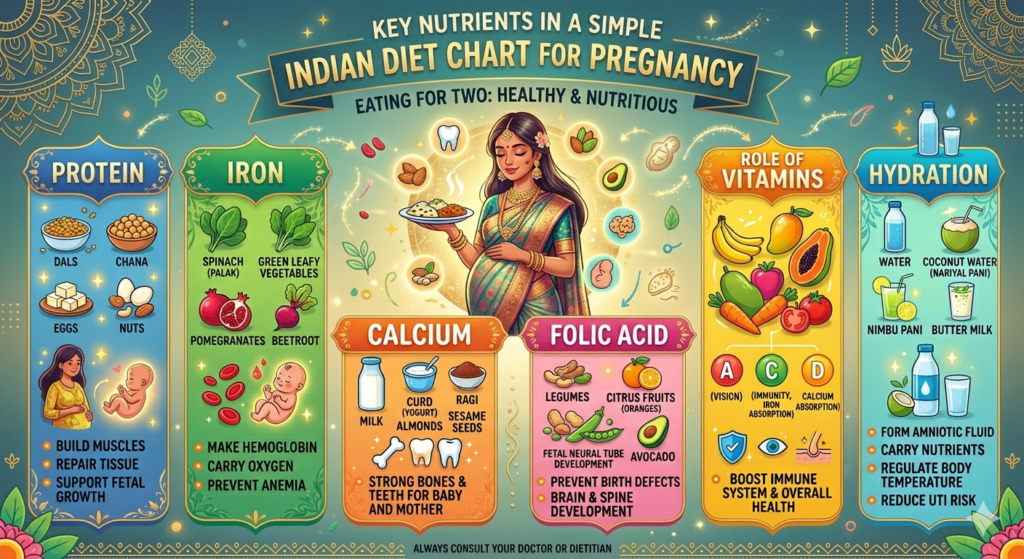
When building a simple Indian diet chart for pregnancy, certain nutrients deserve special attention because they directly impact the baby’s development and the mother’s health. Among these, protein, iron, calcium, and folic acid stand out as the foundation of a healthy pregnancy diet.
Protein is essential for the growth of fetal tissues, including the brain. Indian diets offer plenty of protein-rich options such as lentils (dal), paneer, दूध (milk), curd, chickpeas, and even nuts like almonds. Including a protein source in every meal helps maintain energy levels and supports muscle development.
Iron is another critical nutrient because pregnancy increases blood volume. Without enough iron, anemia can develop, leading to fatigue and complications. Foods like पालक (spinach), beetroot, jaggery, dates, and lentils are excellent sources. Pairing these foods with vitamin C-rich items like lemon or oranges improves iron absorption—a small trick that makes a big difference.
Calcium supports the baby’s bone and teeth development while protecting the mother’s bone density. Dairy products like milk, paneer, and curd are staples in Indian households and provide ample calcium. For those who are lactose intolerant, alternatives like ragi, sesame seeds, and leafy greens can help fill the gap.
Folic acid is crucial in preventing neural tube defects in the baby. Green leafy vegetables, citrus fruits, peanuts, and whole grains are rich in folate. Doctors often recommend supplements, but getting it from food adds an extra layer of nutritional security.
Ignoring these nutrients can lead to complications, but including them doesn’t require drastic changes. A thoughtfully planned Indian diet already contains most of these elements—it just needs a bit of structure and awareness.
Role of Vitamins and Hydration
Beyond the major nutrients, vitamins and hydration quietly play a powerful role in shaping a healthy pregnancy. A simple Indian diet chart for pregnancy must include a variety of colorful fruits and vegetables to ensure a steady supply of essential vitamins like A, C, D, and B-complex.
Vitamin A supports the baby’s vision and immune system, and it can be found in carrots, sweet potatoes, and mangoes. Vitamin C boosts immunity and helps with iron absorption, making fruits like oranges, guava, and amla incredibly valuable. Vitamin D, often called the sunshine vitamin, is crucial for calcium absorption. While sunlight is the best source, fortified milk and certain foods can help meet the requirement.
Vitamin B12, are vital for brain development and red blood cell formation. Dairy products and fortified cereals are common sources in an Indian diet. For vegetarians, ensuring adequate intake of B12 becomes even more important, often requiring medical guidance.
Hydration, though often overlooked, is equally important. Pregnancy increases the body’s need for fluids, and dehydration can lead to headaches, fatigue, and even complications. Drinking 8–10 glasses of water daily, along with traditional drinks like coconut water, lemon water, and buttermilk, helps maintain fluid balance.
Think of hydration as the transport system of your body—it carries nutrients to the baby and flushes out toxins. Without enough fluids, even the best diet won’t work effectively. Including hydrating foods like watermelon, cucumber, and soups can further support fluid intake.
Balancing vitamins and hydration doesn’t require complex planning. It’s about making small, consistent choices that add up over time, ensuring both mother and baby stay healthy throughout the journey.
Foods to Include in a Simple Indian Diet Chart for Pregnancy
Traditional Indian Superfoods for Pregnancy
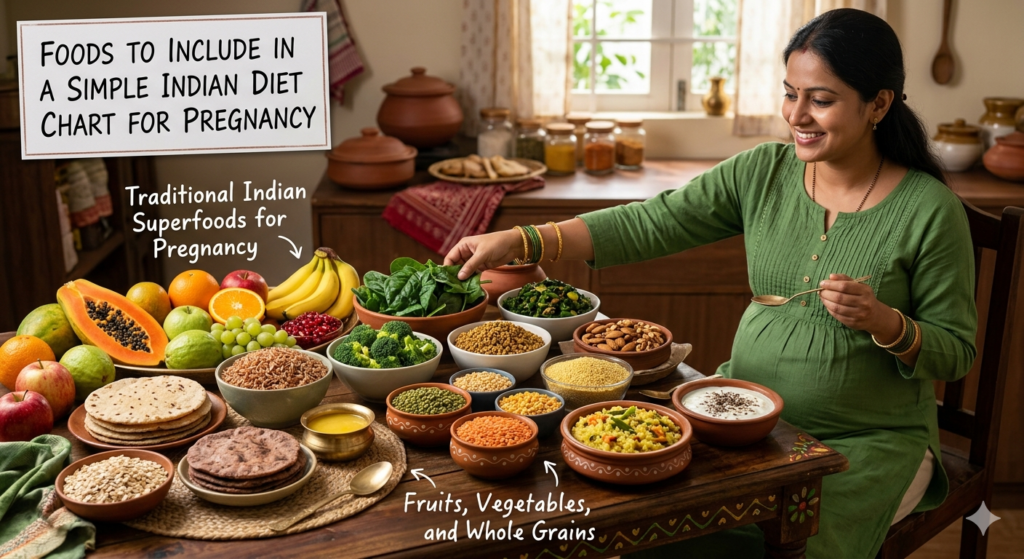
When it comes to building a simple Indian diet chart for pregnancy, you don’t need exotic ingredients or expensive supplements. Many traditional Indian foods—often sitting quietly in your kitchen—are nutritional powerhouses that perfectly support pregnancy needs. These “superfoods” have been part of Indian households for generations, and there’s a reason they’ve stood the test of time.
Take ghee, for example. In moderate amounts, it provides healthy fats that support fetal brain development and help with digestion. Then there’s ragi (finger millet), a calcium-rich grain that’s especially beneficial for bone strength. It’s often consumed as porridge or roti and is a great alternative to refined grains. Moong dal is another gentle yet protein-rich food that’s easy to digest, making it ideal during nausea-prone days.
Coconut water is often underestimated, but it’s one of the best natural hydrators. Packed with electrolytes, it helps maintain fluid balance and prevents dehydration. Similarly, jaggery (gur) is a healthier alternative to refined sugar and provides iron, helping to combat anemia. Including small amounts in sweets or drinks can be both satisfying and beneficial.
Let’s not forget nuts and seeds. Almonds, walnuts, flaxseeds, and sesame seeds are loaded with omega-3 fatty acids, protein, and essential minerals. Just a small handful daily can significantly boost your nutrient intake. Even homemade ladoos, made with ingredients like gond, dry fruits, and jaggery, can be nutritious when consumed in moderation.
These traditional foods are not just nutritious—they’re also comforting and familiar. That emotional connection to food can be incredibly important during pregnancy, when cravings and aversions are common. By incorporating these superfoods into your daily routine, you create a diet that is both nourishing and enjoyable, making it easier to stick to healthy eating habits.
Fruits, Vegetables, and Whole Grains
A simple Indian diet chart for pregnancy becomes truly effective when it includes a colorful variety of fruits, vegetables, and whole grains. These foods are the backbone of a balanced diet, providing essential vitamins, minerals, and fiber that support both maternal health and fetal development.
Fruits are nature’s ready-made snacks. Options like bananas, apples, oranges, guava, and pomegranates are not only delicious but also rich in nutrients. For instance, pomegranate is known to improve hemoglobin levels, while bananas provide quick energy and help with digestion. Including at least two to three servings of fruits daily ensures a steady supply of vitamins and natural sugars.
Vegetables, especially leafy greens like spinach, methi, and bathua, are packed with iron, calcium, and folate. Including a variety of vegetables in your meals—whether in sabzis, soups, or parathas—helps cover multiple nutrient requirements. Brightly colored vegetables like carrots, beetroot, and capsicum add antioxidants that support immunity.
Whole grains are another essential component. Instead of relying solely on refined flour, incorporating grains like brown rice, oats, jowar, and bajra can significantly improve fiber intake. These grains help regulate digestion, prevent constipation, and provide sustained energy throughout the day. They also have a lower glycemic index, which helps maintain stable blood sugar levels.
What makes these foods so powerful is their synergy. When combined in meals, they enhance each other’s nutritional benefits. For example, pairing iron-rich vegetables with vitamin C-rich fruits boosts absorption. This natural harmony is what makes the Indian diet so effective when planned correctly.
Eating a rainbow of foods isn’t just a catchy phrase—it’s a practical approach to ensuring that no nutrient is left behind. By embracing variety, you create a diet that’s both wholesome and satisfying.
Foods to Avoid in a Simple Indian Diet Chart for Pregnancy
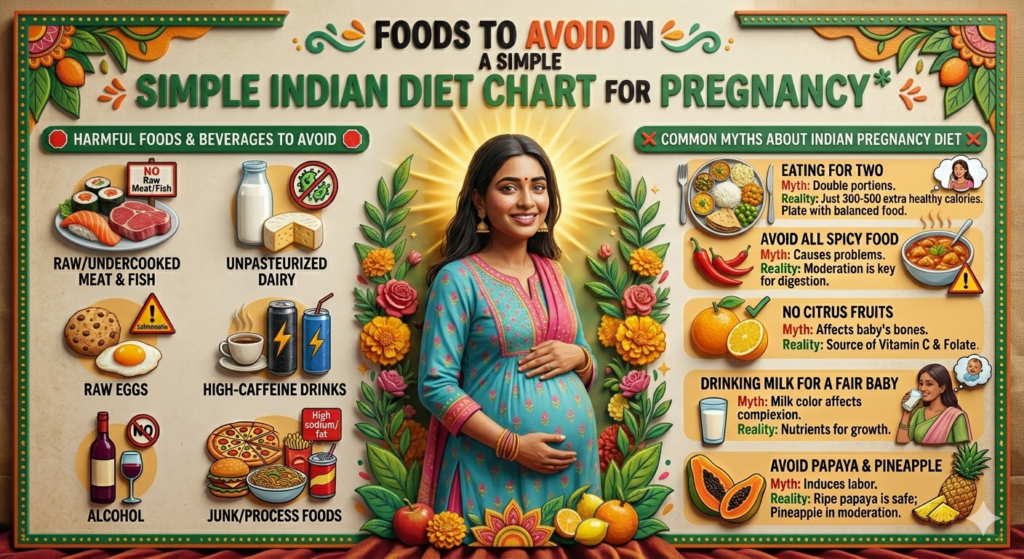
Harmful Foods and Beverages
While building a simple Indian diet chart for pregnancy, knowing what to avoid is just as important as knowing what to include. Certain foods and beverages can pose risks to both the mother and the baby, making it essential to exercise caution and make informed choices.
One of the primary concerns is raw or undercooked food. This includes items like undercooked eggs, meat, or even street food that may not meet hygiene standards. These foods can carry harmful bacteria and increase the risk of infections. Similarly, unpasteurized dairy products should be avoided, as they may contain harmful pathogens.
Caffeine intake also needs to be monitored. While a small cup of tea or coffee is generally considered safe, excessive consumption can lead to complications such as low birth weight. Experts often recommend limiting caffeine to around 200 mg per day, which is roughly one cup of coffee.
Processed and packaged foods are another category to watch out for. These foods are often high in salt, sugar, and unhealthy fats, offering little nutritional value. Regular consumption can lead to unnecessary weight gain and increase the risk of gestational diabetes.
Certain fish with high mercury levels should also be avoided, as mercury can affect the baby’s developing nervous system. Additionally, alcohol and smoking are strictly off-limits during pregnancy, as they can cause severe developmental issues.
Even seemingly harmless habits, like consuming too much sugar or fried food, can have long-term effects. Moderation is key. The goal isn’t to eliminate all indulgences but to make mindful choices that prioritize health and safety.
Common Myths About Indian Pregnancy Diet
Pregnancy often comes with a flood of advice, much of which is rooted in tradition rather than science. A simple Indian diet chart for pregnancy should be based on facts, not myths, to ensure the best outcomes for both mother and baby.
One common myth is the idea of “eating for two.” While it’s true that nutritional needs increase, doubling your food intake can lead to excessive weight gain and complications. What matters more is the quality of food, not just the quantity.
Another widespread belief is that certain foods like papaya and pineapple should be completely avoided. While unripe papaya may pose risks, ripe papaya in moderation is generally safe. Similarly, pineapple can be consumed in small amounts without causing harm. Blanket restrictions often do more harm than good by limiting nutrient intake.
There’s also a misconception that spicy food should be avoided entirely. In reality, moderate spice consumption is usually safe and can even aid digestion. However, if it causes discomfort like acidity, it’s best to adjust accordingly.
Some people believe that consuming saffron will guarantee a fair-skinned baby. This is purely a myth with no scientific backing. Saffron can be included in small amounts for its flavor and potential mood-enhancing properties, but it doesn’t influence the baby’s complexion.
Understanding these myths helps you make more confident and informed decisions. Instead of relying on hearsay, focusing on balanced nutrition and medical advice ensures a healthier and stress-free pregnancy journey.
Simple Indian Diet Chart for Pregnancy (With Daily Meal Plan)
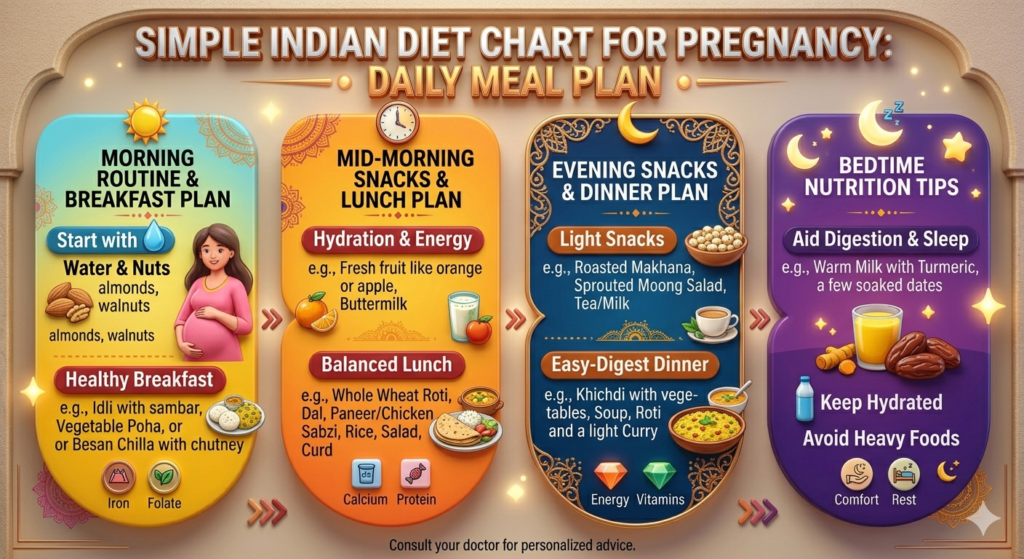
Morning Routine and Breakfast Plan
Starting your day right is crucial when following a simple Indian diet chart for pregnancy. After a long night of fasting, your body needs nourishment to kickstart metabolism and maintain energy levels. A thoughtful morning routine sets the tone for the rest of the day.
Begin with a glass of lukewarm water, possibly with a few drops of lemon. This helps in digestion and hydration. After that, you can include soaked almonds or walnuts, which provide healthy fats and essential nutrients. These small additions may seem simple, but they have a cumulative impact on your overall health.
Breakfast should never be skipped, especially during pregnancy. A balanced Indian breakfast might include options like vegetable upma, poha with peanuts, stuffed paratha with curd, or oats porridge with fruits. These meals combine carbohydrates, protein, and fiber, ensuring sustained energy and satiety.
Adding a glass of milk or a smoothie can further boost calcium and protein intake. If you’re dealing with morning sickness, lighter options like toast with peanut butter or fruit smoothies can be easier to manage.
The key is consistency. Eating at the same time every day helps regulate your body’s internal clock and prevents sudden hunger pangs. A well-planned breakfast doesn’t just fuel your body—it also stabilizes your mood and prepares you for the day ahead.
Mid-Morning Snacks and Lunch Plan
As the day progresses, maintaining energy levels becomes essential. A simple Indian diet chart for pregnancy includes mid-morning snacks to prevent long gaps between meals. This helps in avoiding fatigue and keeps blood sugar levels stable.
Mid-morning snacks can include fruits, coconut water, or a small bowl of sprouts salad. These options are light yet nutrient-dense, providing vitamins and hydration without making you feel heavy.
Lunch should be the most substantial meal of the day. A typical Indian lunch plate might include roti or rice, dal, a vegetable dish, curd, and a salad. This combination ensures a balance of macronutrients and micronutrients.
Including a variety of foods in your lunch prevents monotony and ensures comprehensive nutrition. For example, rotating between different dals and vegetables can help cover a wide range of nutrients.
Portion control is important here. Eating until you’re comfortably full—not overly stuffed—helps with digestion and prevents sluggishness. A short walk after lunch can also aid digestion and improve circulation.
Evening Snacks and Dinner Plan
Evenings often bring cravings, making it important to choose snacks wisely. A simple Indian diet chart for pregnancy includes healthy evening snacks that satisfy hunger without compromising nutrition.
Options like roasted chana, makhana, vegetable sandwiches, or fruit chaat are excellent choices. Pairing these with a cup of herbal tea or milk can make the snack both enjoyable and nourishing.
Dinner should be lighter than lunch but still balanced. Options like khichdi, vegetable pulao, or roti with dal and sabzi work well. Including a bowl of soup can add warmth and hydration, especially during colder months.
Eating dinner at least two to three hours before bedtime helps with digestion and prevents discomfort. Keeping the meal simple and easy to digest ensures a restful night’s sleep.
Bedtime Nutrition Tips
Before heading to bed, a small nutritional boost can make a big difference. A simple Indian diet chart for pregnancy often includes a glass of warm milk at night, sometimes flavored with a pinch of turmeric or cardamom.
This not only provides calcium but also promotes relaxation and better sleep. If you’re feeling slightly hungry, a small snack like a banana or a handful of nuts can help.
Avoid heavy or spicy foods at night, as they can cause acidity and disrupt sleep. Keeping bedtime nutrition light and soothing supports both digestion and overall well-being.
Trimester-Wise Simple Indian Diet Chart for Pregnancy
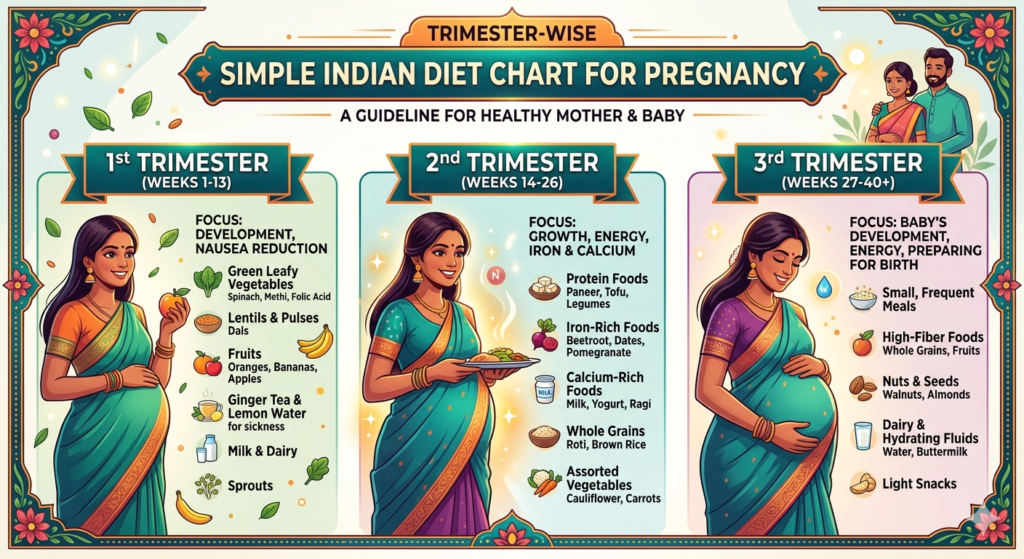
First Trimester Diet Plan
The first trimester is often the most challenging due to nausea and fatigue. A simple Indian diet chart for pregnancy during this phase focuses on light, easily digestible foods that provide essential nutrients without overwhelming the stomach.
Small, frequent meals work best. Including foods like khichdi, curd rice, and fruits can help manage nausea. Ginger tea and lemon water are also known to provide relief.
Folic acid intake is especially important during this stage, making leafy greens and citrus fruits essential. Staying hydrated is equally crucial, even if appetite is low.
Second Trimester Diet Plan
The second trimester is often considered the most comfortable phase. Appetite improves, making it easier to follow a structured simple Indian diet chart for pregnancy.
This is the time to focus on protein and calcium intake. Including paneer, milk, and dals becomes important. Iron-rich foods should also be prioritized to support increased blood volume.
Energy levels are higher, allowing for more variety in meals. Maintaining balance and consistency ensures steady weight gain and healthy development.
Third Trimester Diet Plan
The third trimester demands extra care as the baby grows rapidly. A simple Indian diet chart for pregnancy during this phase emphasizes nutrient-dense foods that support final development stages.
Smaller meals become necessary due to reduced stomach space. Including fiber-rich foods helps prevent constipation, while protein supports tissue growth.
Hydration and calcium intake remain crucial. Preparing the body for delivery through proper nutrition ensures both strength and endurance.
Doctor Consultation for Pregnancy Diet Planning
Why Medical Guidance is Essential
Following a simple Indian diet chart for pregnancy is beneficial, but it should always be complemented with medical guidance. Every pregnancy is unique, and nutritional needs can vary based on individual health conditions, lifestyle, and medical history.
Doctor consultation can help identify deficiencies and recommend appropriate supplements. Regular check-ups ensure that both mother and baby are progressing well.
Ignoring professional advice can lead to complications, even with a well-planned diet. Combining traditional wisdom with medical expertise creates the safest approach.
Customizing Diet Based on Health Conditions
Conditions like gestational diabetes, anemia, or high blood pressure require specific dietary adjustments. A simple Indian diet chart for pregnancy can be tailored to meet these needs with the help of a healthcare professional.
For example, managing blood sugar levels may involve reducing refined carbs and increasing fiber intake. Similarly, anemia may require higher iron consumption along with supplements.
Customization ensures that the diet supports not just general health but also specific medical requirements, making it more effective and safe.
Conclusion
A simple Indian diet chart for pregnancy (with daily meal plan) offers a practical, affordable, and nutritionally rich way to support both mother and baby. By focusing on balance, variety, and consistency, it becomes easier to meet the increased nutritional demands of pregnancy without unnecessary stress. Combining traditional Indian foods with modern medical guidance ensures a safe and healthy journey, making every meal a step toward better well-being.
FAQs
1. What is the best simple Indian diet chart for pregnancy?
A balanced diet including roti, rice, dal, vegetables, fruits, dairy, and nuts spread across 5–6 meals daily is considered ideal.
2. Can I follow a vegetarian Indian diet during pregnancy?
Yes, a vegetarian diet can meet all nutritional needs if it includes a variety of protein sources, dairy, and fortified foods.
3. How much water should a pregnant woman drink daily?
Around 8–10 glasses of water, along with fluids like coconut water and buttermilk, is recommended.
4. Is it safe to eat spicy Indian food during pregnancy?
Moderate spice is generally safe unless it causes discomfort like acidity or heartburn.
5. Should I consult a doctor before following a diet chart?
Yes, always consult a doctor to ensure the diet meets your specific health needs.
Leave a Reply