
Understanding Dehydration Symptoms and Why They Matter

Dehydration symptoms are often brushed aside as minor inconveniences—just a dry mouth or slight fatigue after a long day. But here’s the reality: your body depends on water for nearly every essential function, from regulating temperature to flushing out toxins and keeping your brain sharp. When fluid levels drop, even slightly, the body starts to send signals. Ignoring those signals can lead to serious complications, especially if dehydration progresses without intervention.
Think of your body like a well-tuned engine. Water acts as the oil that keeps everything running smoothly. Without it, friction increases, systems slow down, and eventually, things begin to break down. This is why recognizing dehydration warning signs early can make a huge difference. According to health experts, even mild dehydration can impair concentration, mood, and energy levels. In fact, studies suggest that losing just 1–2% of your body’s water can impact cognitive performance.
The importance of understanding dehydration symptoms becomes even more critical when considering vulnerable groups like children and older adults. Their bodies respond differently, and symptoms can escalate quickly. That’s why awareness isn’t just helpful—it’s essential. By learning how dehydration manifests and progresses, you’re better equipped to respond promptly and prevent complications before they escalate into emergencies.
What Happens to Your Body During Dehydration
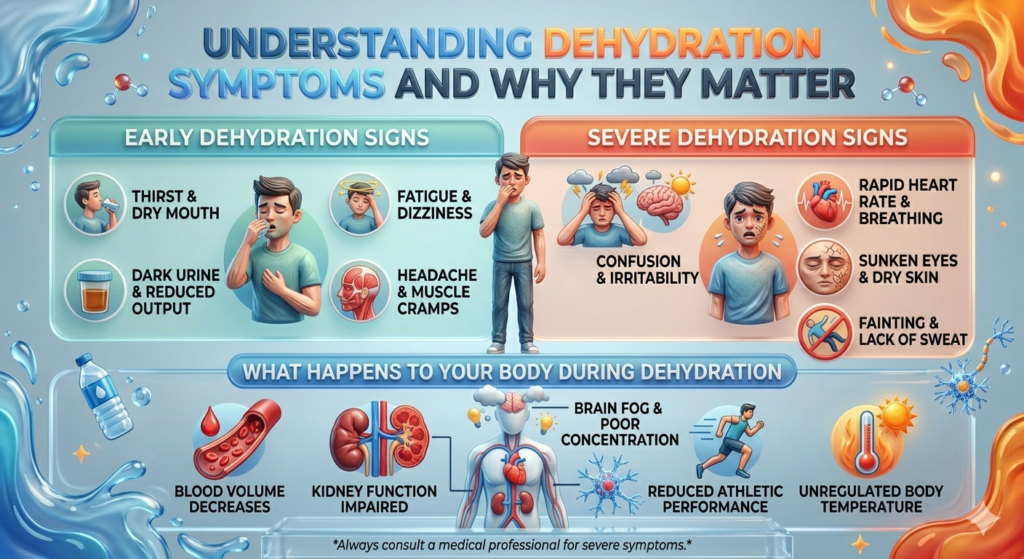
When your body begins losing more fluids than it takes in, a cascade of physiological changes kicks in. At first, the body tries to conserve water by reducing urine output and triggering thirst. But as dehydration worsens, blood volume decreases, making it harder for the heart to pump efficiently. This can lead to dizziness, fatigue, and even fainting in more severe cases.
Internally, cells begin to shrink due to lack of water, which affects organs like the brain. That’s why headaches and confusion are common dehydration symptoms. Electrolytes—like sodium and potassium—also become imbalanced, leading to muscle cramps, irregular heartbeats, and weakness. It’s not just about feeling thirsty; it’s about your entire system struggling to maintain equilibrium.
Early vs Severe Dehydration Signs
Early dehydration warning signs are often subtle. You might notice dry lips, slight fatigue, or darker urine. These are your body’s gentle nudges, asking for more water. However, severe dehydration signs are much harder to ignore. These include rapid heartbeat, low blood pressure, confusion, sunken eyes, and in extreme cases, loss of consciousness.
The difference between early and severe symptoms lies in urgency. Early signs can be reversed quickly with fluid intake, while severe dehydration often requires medical intervention. Recognizing where you stand on this spectrum is crucial. It’s the difference between grabbing a glass of water and needing an emergency room visit.
Common Causes of Dehydration You Shouldn’t Ignore
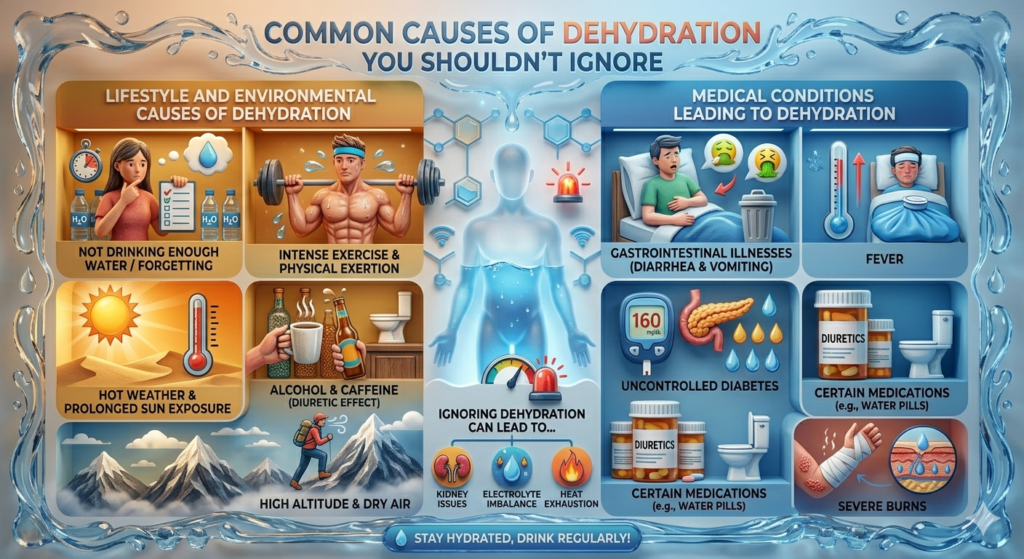
Understanding the causes of dehydration is just as important as recognizing the symptoms. Dehydration doesn’t happen randomly—it’s usually the result of specific lifestyle choices, environmental conditions, or underlying health issues. By identifying these triggers, you can take proactive steps to prevent dehydration before it starts.
One of the most common causes is simply not drinking enough water. In today’s fast-paced world, people often ignore thirst cues or substitute water with caffeinated or sugary beverages, which can actually worsen fluid loss. Add to that factors like hot weather, intense exercise, or illness, and the risk multiplies quickly.
Lifestyle and Environmental Causes of Dehydration
Hot climates and high humidity levels can cause excessive sweating, leading to rapid fluid loss. Athletes and outdoor workers are particularly vulnerable, especially if they don’t replenish fluids adequately. Even air-conditioned environments can contribute by drying out the air and increasing insensible water loss through the skin.
Alcohol and caffeine are also major culprits. Both act as diuretics, increasing urine output and accelerating dehydration. Skipping meals or following restrictive diets can further reduce fluid intake, compounding the problem. It’s not always about dramatic scenarios—sometimes, everyday habits quietly push your body toward dehydration.
Medical Conditions Leading to Dehydration
Certain illnesses significantly increase the risk of dehydration. Conditions like diarrhea, vomiting, and fever cause rapid fluid loss. Chronic illnesses such as diabetes can also contribute, as high blood sugar levels lead to increased urination.
Kidney disorders, infections, and even some medications can disrupt the body’s fluid balance. In these cases, dehydration isn’t just a side effect—it’s a serious complication that requires careful management. Recognizing these medical causes is essential for timely intervention and proper treatment.
Dehydration Warning Signs in Daily Life
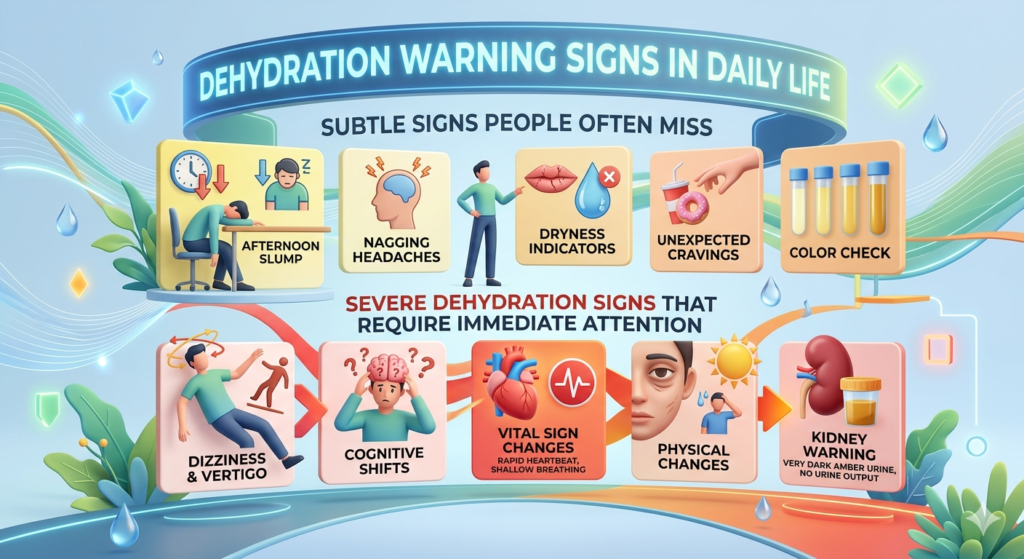
Dehydration warning signs don’t always arrive with dramatic flair. More often, they creep into your day quietly, blending into what you might dismiss as “just being tired” or “having a busy day.” That’s exactly what makes them dangerous. When your body starts running low on fluids, it doesn’t immediately shut down—it sends subtle signals first. The trick is learning how to recognize them before they escalate into severe dehydration signs.
One of the most overlooked dehydration symptoms is fatigue. Not the kind that comes after a long workout, but a lingering sense of low energy that doesn’t quite make sense. Your body uses water to transport nutrients and oxygen to cells, so when hydration levels dip, energy production slows down. You might also notice headaches creeping in, especially in the afternoon. That’s your brain reacting to reduced fluid levels and slight shrinkage of brain tissue due to water loss.
Another common sign is changes in urine. Dark yellow or amber-colored urine is a classic indicator that your body is conserving water. Ideally, urine should be pale yellow. A strong odor can also point toward dehydration. Dry skin, chapped lips, and even bad breath are additional clues. Saliva production decreases when you’re dehydrated, which can lead to that unpleasant, sticky feeling in your mouth.
Subtle Signs People Often Miss
Many dehydration symptoms are easy to overlook because they mimic everyday discomforts. For example, feeling hungry shortly after eating might actually be thirst in disguise. The brain sometimes confuses thirst signals with hunger cues, leading people to eat instead of hydrate. Similarly, difficulty concentrating or experiencing “brain fog” can be linked to dehydration rather than stress or lack of sleep.
Mood changes are another surprising indicator. Irritability, anxiety, or even mild confusion can stem from low fluid levels. A study published in the Journal of Nutrition found that mild dehydration can negatively affect mood and cognitive function, particularly in women. Muscle cramps, especially during or after physical activity, are also tied to dehydration and electrolyte imbalance symptoms.
Severe Dehydration Signs That Require Immediate Attention
When dehydration progresses, the warning signs become much more serious—and harder to ignore. Severe dehydration signs include rapid heartbeat, rapid breathing, sunken eyes, and extreme thirst. The skin may lose elasticity, meaning it doesn’t bounce back quickly when pinched. This is known as poor skin turgor and is a classic clinical sign.
In extreme cases, individuals may experience confusion, fainting, or even unconsciousness. These symptoms indicate that the body is struggling to maintain vital functions. Blood pressure can drop dangerously low, leading to shock. At this stage, dehydration is a medical emergency and requires immediate intervention, often involving intravenous fluids.
Ignoring these severe dehydration signs can have life-threatening consequences. The body can only compensate for fluid loss up to a certain point. Once that threshold is crossed, professional medical care becomes essential. Recognizing these red flags early can be the difference between a quick recovery and a serious health crisis.
Dehydration in Adults Symptoms vs Dehydration in Children Signs
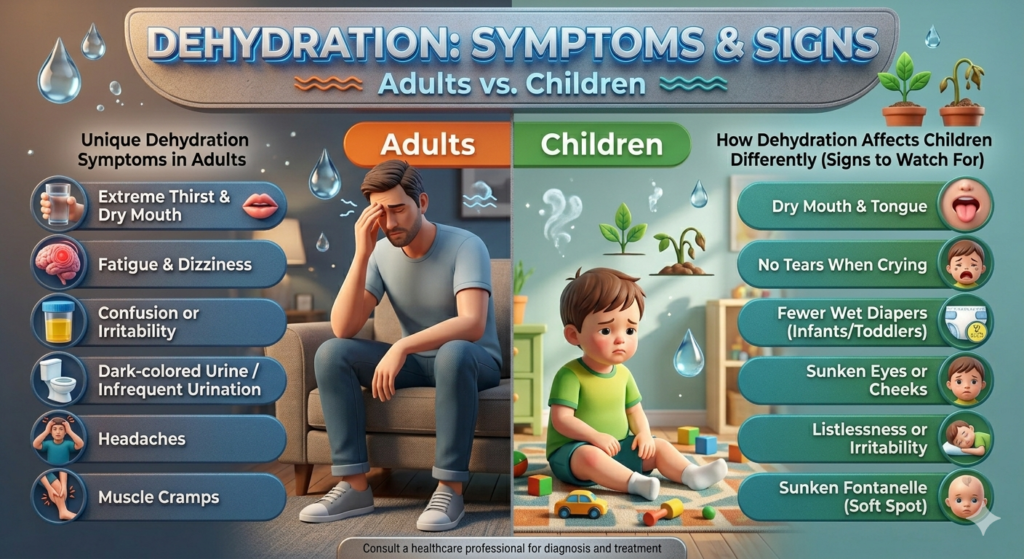
Dehydration doesn’t affect everyone the same way. Age plays a significant role in how symptoms appear and how quickly they escalate. Understanding the differences between dehydration in adults symptoms and dehydration in children signs is crucial for timely and effective intervention.
Adults generally have a better ability to recognize and respond to thirst. However, that doesn’t mean they’re immune to dehydration. Busy schedules, stress, and lifestyle habits often lead adults to ignore early warning signs. Children, on the other hand, may not be able to communicate their needs clearly, making dehydration more difficult to detect.
Unique Dehydration Symptoms in Adults
In adults, dehydration symptoms often start subtly but can quickly escalate if ignored. Common signs include persistent thirst, dry mouth, fatigue, and dizziness. Adults may also experience headaches and reduced urine output. In more advanced stages, symptoms like confusion, irritability, and rapid heartbeat can appear.
Older adults are particularly vulnerable. As people age, their sense of thirst diminishes, and their kidneys become less efficient at conserving water. This makes them more susceptible to dehydration, even in mild conditions. Medications such as diuretics can further increase fluid loss, compounding the risk.
How Dehydration Affects Children Differently
Children are at a higher risk of dehydration because their bodies lose fluids more quickly. Infants and young children, in particular, are vulnerable due to their smaller size and higher metabolic rates. Common dehydration in children signs include dry mouth, lack of tears when crying, fewer wet diapers, and sunken soft spots on the head in infants.
Behavioral changes are also key indicators. A dehydrated child may become unusually irritable, lethargic, or less responsive. Fever, diarrhea, and vomiting can rapidly deplete fluids, making dehydration a serious concern. Parents and caregivers need to be especially vigilant, as dehydration in children can escalate much faster than in adults.
Electrolyte Imbalance Symptoms Linked to Dehydration
When people think about dehydration, they often focus solely on water loss. But there’s another critical piece of the puzzle: electrolytes. These minerals—such as sodium, potassium, calcium, and magnesium—play a vital role in maintaining fluid balance, nerve function, and muscle contractions. When dehydration occurs, electrolyte levels can become imbalanced, leading to a range of symptoms that go beyond simple thirst.
Electrolyte imbalance symptoms can manifest in surprising ways. Muscle cramps are one of the most common signs, especially during physical activity or in hot weather. These cramps occur because electrolytes are essential for muscle function. Without the right balance, muscles can contract involuntarily, causing pain and discomfort.
Fatigue and weakness are also closely linked to electrolyte imbalances. When sodium and potassium levels drop, the body struggles to maintain proper cellular function. This can leave you feeling drained, even if you’ve had enough rest. In more severe cases, individuals may experience irregular heartbeats, which can be dangerous if not addressed promptly.
Key Electrolytes and Their Role in Hydration
Each electrolyte has a specific role in the body. Sodium helps regulate fluid balance and blood pressure, while potassium supports muscle and nerve function. Calcium is essential for muscle contractions and bone health, and magnesium plays a role in over 300 biochemical reactions in the body.
When dehydration disrupts these electrolytes, the effects can ripple throughout the entire system. For example, low sodium levels (hyponatremia) can cause confusion, seizures, and even coma in extreme cases. High potassium levels (hyperkalemia) can affect heart rhythm, leading to potentially life-threatening complications.
Maintaining a proper balance of electrolytes is just as important as staying hydrated. This is why dehydration treatment options often include electrolyte replacement, especially in cases of severe fluid loss. Sports drinks, oral rehydration solutions, and electrolyte-rich foods can help restore balance and support recovery.
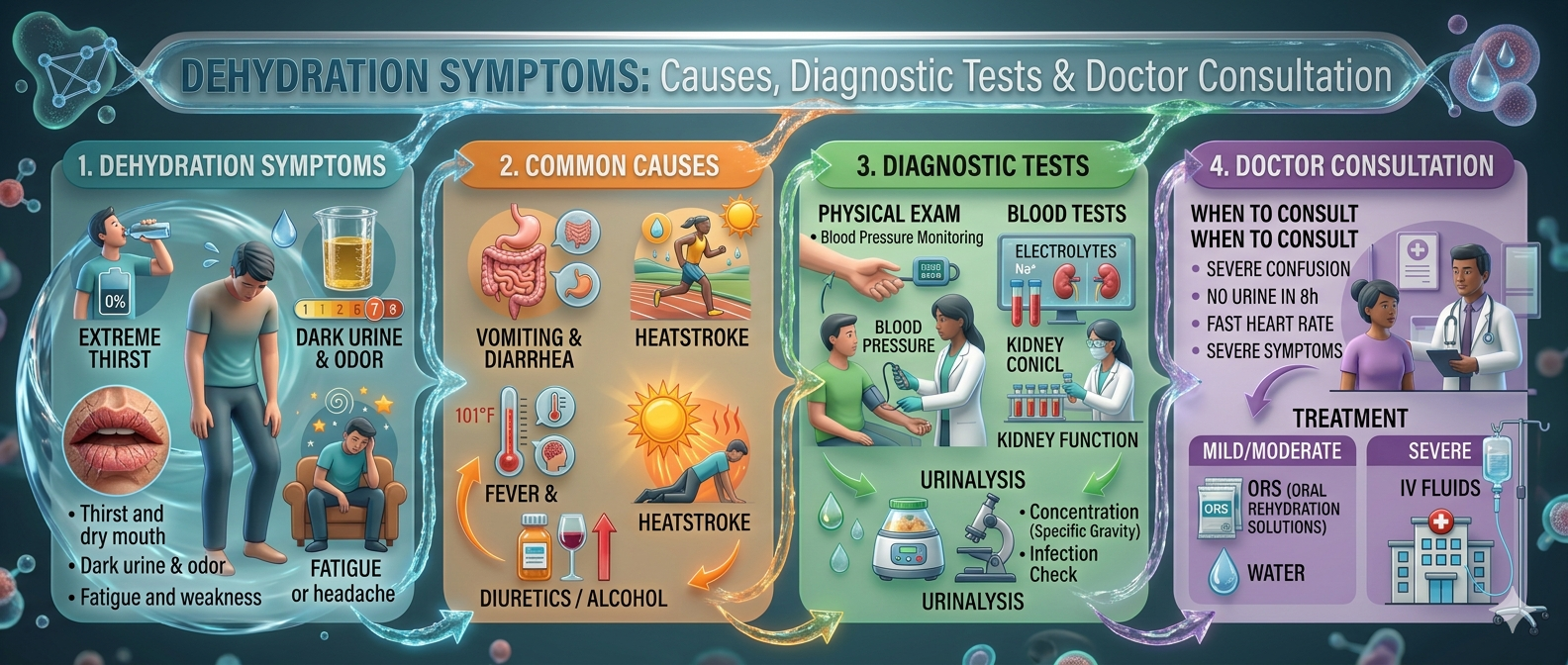
Dehydration Diagnostic Tests: How Doctors Confirm It
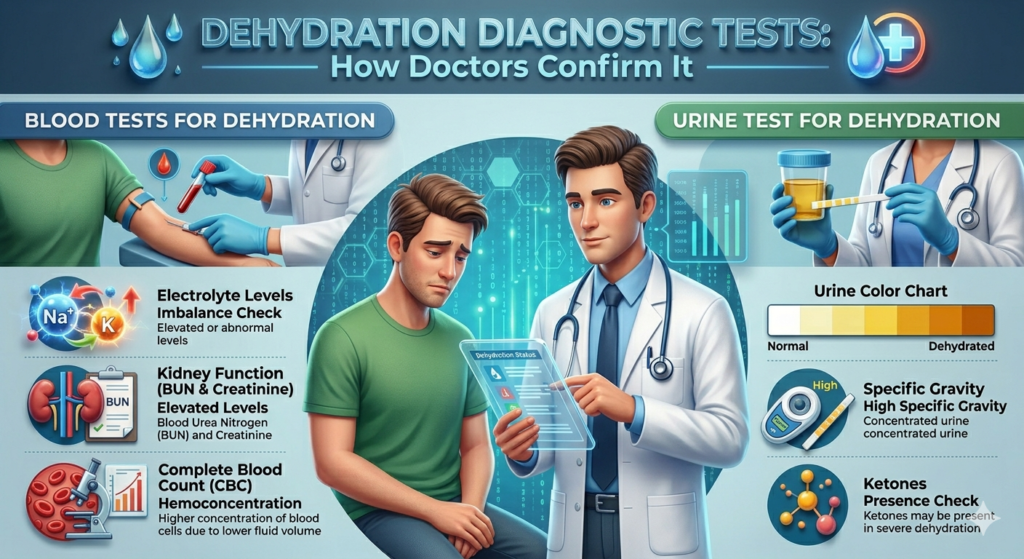
Recognizing dehydration symptoms is one thing, but confirming the condition medically requires proper evaluation. Dehydration diagnostic tests help healthcare providers assess the severity of fluid loss and identify any underlying causes. These tests are especially important when symptoms are severe or when dehydration is linked to other medical conditions.
Doctors typically start with a physical examination, checking for signs like dry skin, low blood pressure, and rapid heart rate. However, physical symptoms alone aren’t always enough. That’s where diagnostic tests come in. They provide objective data that can guide treatment decisions and ensure accurate diagnosis.
Blood Tests for Dehydration
Blood tests for dehydration are commonly used to evaluate fluid and electrolyte levels. These tests can measure concentrations of sodium, potassium, and other electrolytes, as well as kidney function indicators like blood urea nitrogen (BUN) and creatinine. Elevated levels of these markers often indicate dehydration.
A complete blood count (CBC) may also be performed to assess overall health and detect any underlying infections or conditions. Hematocrit levels, which measure the proportion of red blood cells in the blood, can increase when the body is dehydrated due to reduced plasma volume.
Urine Test for Dehydration
A urine test for dehydration is another essential diagnostic tool. It helps determine how well the kidneys are conserving water. Dark, concentrated urine with a strong odor is a clear indicator of dehydration. Laboratory analysis can measure urine specific gravity, which reflects how concentrated the urine is.
High specific gravity levels suggest that the body is retaining water, a common response to dehydration. Urine tests can also detect the presence of ketones or other substances that may indicate underlying health issues. Together, blood and urine tests provide a comprehensive picture of the body’s hydration status.
Hydration Health Checkup: What to Expect
A hydration health checkup is more than just a routine visit—it’s a proactive step toward maintaining overall wellness. During this checkup, healthcare providers assess your hydration status through a combination of physical examination, medical history, and diagnostic tests. They may ask about your daily fluid intake, diet, and lifestyle habits to identify potential risk factors.
The checkup often includes blood tests and urine analysis to evaluate fluid balance and electrolyte levels. Doctors may also monitor vital signs such as blood pressure and heart rate, as these can be affected by dehydration. In some cases, additional tests may be recommended to rule out underlying conditions.
This type of checkup is especially beneficial for individuals with chronic illnesses, athletes, and older adults. It provides valuable insights into your hydration habits and helps you make informed decisions about your health. Think of it as a tune-up for your body—ensuring everything is running smoothly and efficiently.
Dehydration Treatment Options That Actually Work
When dehydration sets in, the body doesn’t need guesswork—it needs the right kind of replenishment, delivered at the right time. The effectiveness of dehydration treatment options depends heavily on how severe the condition is and what caused it in the first place. Mild dehydration can often be corrected with simple lifestyle adjustments, while severe cases may require urgent medical intervention. The key is understanding that not all hydration methods are equal, and sometimes just drinking plain water isn’t enough.
For mild to moderate dehydration, increasing fluid intake is the first line of action. Water remains the gold standard, but oral rehydration solutions (ORS) are often more effective because they contain the right balance of electrolytes and glucose. These solutions help the body absorb fluids more efficiently, especially after fluid loss from diarrhea, vomiting, or excessive sweating. Sports drinks can also help in certain cases, but they often contain added sugars, so they should be consumed mindfully.
Food plays a surprisingly important role in hydration as well. Fruits like watermelon, oranges, and strawberries have high water content and provide essential nutrients. Vegetables such as cucumbers and lettuce can also contribute to fluid intake. Broths and soups are particularly beneficial when recovering from illness, as they provide both hydration and electrolytes in an easily digestible form.
In cases of severe dehydration signs—such as confusion, rapid heartbeat, or fainting—oral intake may not be sufficient. This is where intravenous (IV) fluids come into play. Administered in a medical setting, IV fluids deliver water, electrolytes, and nutrients directly into the bloodstream, ensuring rapid rehydration. This method is often used in hospitals and emergency rooms for patients who cannot drink fluids or are at risk of complications.
Medication may also be part of the treatment plan if dehydration is caused by an underlying condition. For example, anti-nausea or anti-diarrheal medications can help reduce fluid loss. In chronic conditions like diabetes, managing blood sugar levels is crucial to preventing recurring dehydration episodes.
The most effective dehydration treatment options are those tailored to the individual. What works for an athlete in the heat may not be suitable for an elderly person with a medical condition. Listening to your body, recognizing dehydration symptoms early, and choosing the right treatment approach can make all the difference in recovery and overall health.
When to See a Doctor for Dehydration
Knowing when to see a doctor for dehydration can be the line between a manageable condition and a serious health risk. While mild dehydration can often be handled at home, there are clear situations where professional medical attention is necessary. The challenge is that people often underestimate the severity of their symptoms, assuming they’ll resolve on their own. That assumption can sometimes lead to complications that could have been avoided with timely care.
One of the most important indicators is the persistence of symptoms. If dehydration symptoms such as dizziness, fatigue, or dark urine continue despite increased fluid intake, it’s a sign that the body needs more than just water. Similarly, if you’re unable to keep fluids down due to vomiting or nausea, your body is losing fluids faster than it can replace them. This is particularly dangerous and requires immediate medical evaluation.
Severe dehydration signs should never be ignored. These include confusion, rapid or weak pulse, sunken eyes, low blood pressure, and little to no urination. In children, signs like a dry mouth, no tears when crying, and fewer wet diapers are red flags. In older adults, confusion or sudden changes in mental state can be a key indicator. These symptoms suggest that the body’s systems are under significant stress and need urgent intervention.
Certain groups are at higher risk and should seek medical advice sooner rather than later. These include infants, elderly individuals, pregnant women, and people with chronic illnesses. For them, dehydration can escalate quickly and lead to complications such as kidney problems or heat-related illnesses.
Another important factor is the cause of dehydration. If it’s linked to an illness like severe diarrhea, high fever, or uncontrolled diabetes, addressing the underlying issue is just as important as rehydration. A doctor consultation for dehydration in such cases ensures that both the symptoms and the root cause are treated effectively.
Doctor Consultation for Dehydration: What Happens Next
A doctor consultation for dehydration is not just about confirming what you already suspect—it’s about understanding the full picture of your health and preventing future episodes. When you visit a healthcare provider, they begin by gathering detailed information about your symptoms, lifestyle, and medical history. This helps them identify potential causes of dehydration and determine its severity.
The physical examination is often the first step. Doctors check for dehydration warning signs such as dry skin, low blood pressure, rapid heart rate, and poor skin elasticity. They may also assess your mental state, especially if confusion or fatigue is present. These observations provide immediate clues about how the body is coping with fluid loss.
Diagnostic tests play a crucial role in this process. Blood tests for dehydration help evaluate electrolyte levels, kidney function, and overall fluid balance. A urine test for dehydration provides additional insights into how well the kidneys are conserving water. Together, these dehydration diagnostic tests offer a comprehensive understanding of your condition.
Once the diagnosis is confirmed, the doctor will recommend appropriate dehydration treatment options. This could range from oral rehydration and dietary changes to IV fluids in more severe cases. If an underlying condition is identified, such as an infection or metabolic disorder, targeted treatment will be initiated.
Equally important is the guidance provided during the consultation. Doctors often share dehydration prevention tips tailored to your lifestyle. This might include recommendations on daily water intake, dietary adjustments, and strategies to stay hydrated during physical activity or hot weather. For individuals with recurring dehydration, follow-up visits or a hydration health checkup may be advised.
A doctor consultation for dehydration is not just a reactive step—it’s a proactive measure to safeguard your health. It ensures that you’re not just treating symptoms but addressing the root causes and building habits that support long-term well-being.
Dehydration Prevention Tips for Everyday Life
Preventing dehydration isn’t about making drastic changes—it’s about building consistent habits that support your body’s natural balance. The good news is that dehydration prevention tips are simple, practical, and easy to incorporate into daily life. The challenge lies in staying consistent, especially when life gets busy and hydration takes a back seat.
The most obvious tip is also the most effective: drink enough water throughout the day. But what does “enough” really mean? While the classic “8 glasses a day” rule is a helpful guideline, individual needs vary based on factors like age, activity level, climate, and overall health. A more practical approach is to listen to your body. Thirst is an important signal, but it shouldn’t be the only one you rely on. Monitoring urine color—aiming for a light yellow shade—is a simple and effective way to gauge hydration.
Incorporating water-rich foods into your diet can significantly boost your hydration levels. Fruits like watermelon, oranges, and berries, along with vegetables like cucumbers and spinach, provide both fluids and essential nutrients. These foods act like “hydration boosters,” complementing your water intake.
Planning ahead is another key strategy. If you know you’ll be spending time outdoors or engaging in physical activity, increase your fluid intake beforehand. Carry a reusable water bottle as a constant reminder to hydrate. For those who find plain water boring, adding slices of lemon, cucumber, or mint can make it more appealing.
Limiting dehydrating beverages is equally important. Caffeine and alcohol can increase fluid loss, so balancing them with adequate water intake is essential. During illness, when the body loses fluids more rapidly, increasing hydration becomes even more critical. Oral rehydration solutions can be particularly helpful in such situations.
Creating hydration habits doesn’t have to feel like a chore. It can be as simple as drinking a glass of water after waking up, before meals, and before going to bed. Over time, these small actions add up, creating a strong foundation for better health.
Conclusion
Dehydration is one of those conditions that often starts quietly but can escalate quickly if ignored. From subtle dehydration symptoms like fatigue and dry mouth to severe dehydration signs such as confusion and rapid heartbeat, the body provides clear signals when it needs more fluids. Understanding the causes of dehydration, recognizing dehydration warning signs, and knowing when to seek help can make a significant difference in outcomes.
Diagnostic tools like blood tests for dehydration and urine test for dehydration offer valuable insights, while timely doctor consultation for dehydration ensures proper care and treatment. Whether it’s through simple hydration habits or advanced medical interventions, staying ahead of dehydration is entirely within reach.
FAQs
- What are the earliest dehydration symptoms?
Early dehydration symptoms include thirst, dry mouth, fatigue, and dark yellow urine. These signs indicate that your body needs more fluids before the condition worsens. - How do doctors diagnose dehydration?
Doctors use dehydration diagnostic tests such as blood tests for dehydration and urine test for dehydration, along with physical examination and medical history. - What are severe dehydration signs?
Severe dehydration signs include confusion, rapid heartbeat, low blood pressure, sunken eyes, and little to no urination. These require immediate medical attention. - How can I prevent dehydration daily?
Follow dehydration prevention tips like drinking enough water, eating water-rich foods, and monitoring urine color to ensure proper hydration. - When should I seek a doctor consultation for dehydration?
You should seek medical help if symptoms persist, worsen, or include severe dehydration signs such as fainting, confusion, or inability to retain fluids.
Leave a Reply