
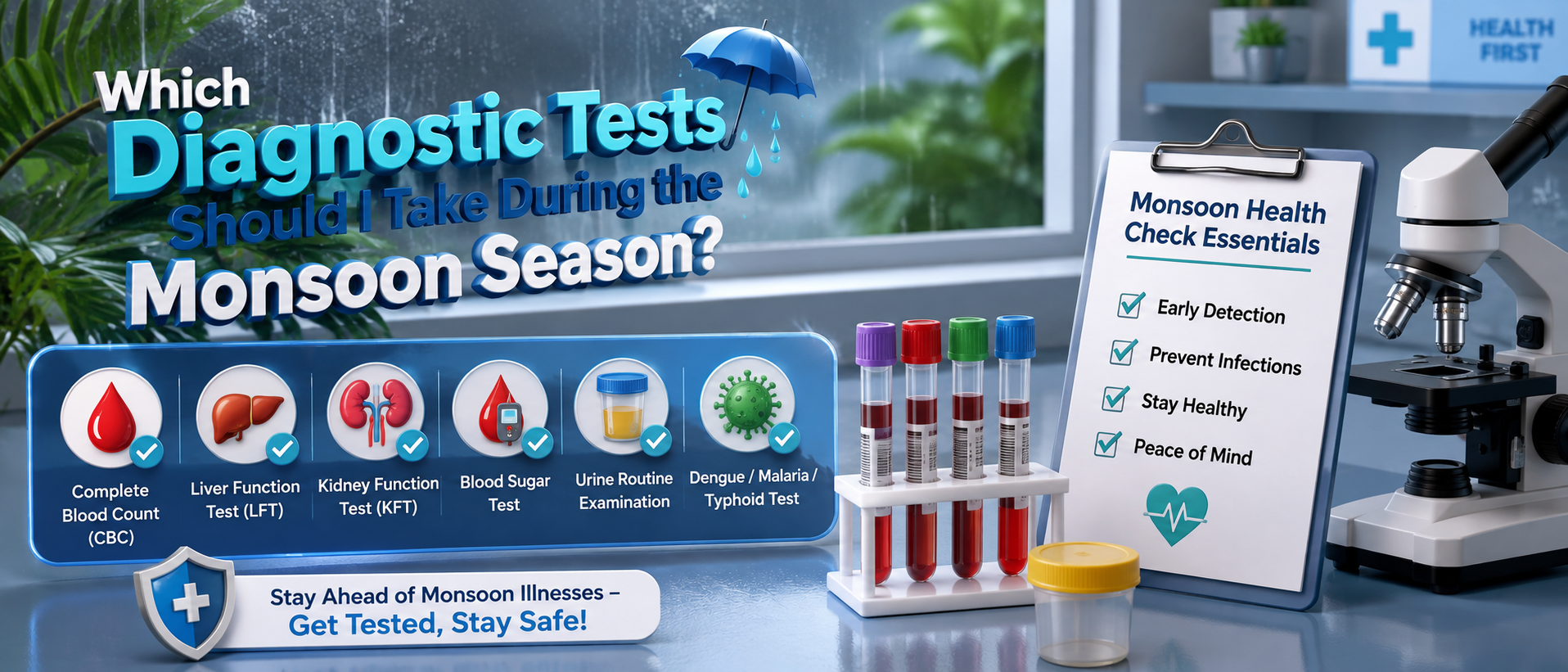


The monsoon season brings cooler weather, greenery, and relief from intense summer heat, but it can also create conditions in which several infections spread more easily. Stagnant water can support mosquito breeding, contaminated food and water can increase the risk of gastrointestinal infections, and sudden changes in temperature and humidity may aggravate existing health problems. This is why monsoon diagnostic tests can be useful when symptoms appear, particularly if you develop persistent fever, chills, unusual fatigue, body aches, stomach problems, vomiting, diarrhoea, headache, or other signs of infection. A monsoon health checkup does not necessarily mean that everyone needs every possible laboratory test. Instead, the right approach is to match testing with your symptoms, medical history, local disease activity, age, and a healthcare professional’s assessment. During the rainy season, infections such as dengue, malaria and typhoid can sometimes produce overlapping symptoms, so guessing the cause from fever alone may not be enough. WHO notes that dengue in its febrile phase can be difficult to distinguish clinically from other vector-borne illnesses, while prompt parasite-based testing is recommended when malaria is suspected.
Why Monsoon Health Checkups Matter
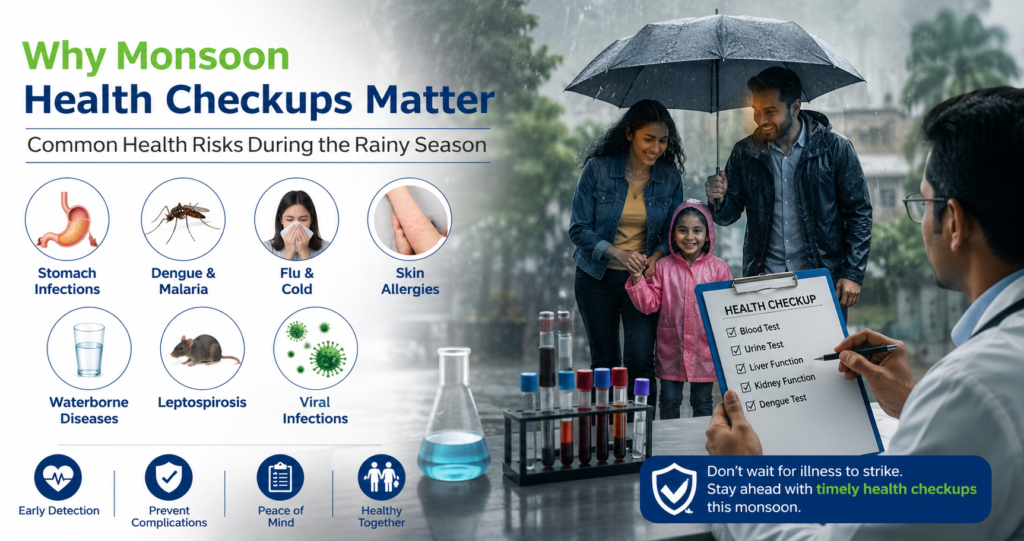
A monsoon health checkup can be thought of as a health snapshot rather than a compulsory seasonal ritual. If you feel completely well, your doctor may not recommend an extensive infection panel simply because it is raining. However, people who develop unexplained fever or have significant exposure to mosquitoes, unsafe water, contaminated food, or areas experiencing infectious disease activity may need targeted testing. The rainy season can make the distinction between different illnesses particularly important because dengue, malaria, typhoid and other infections may initially look similar. Testing can help a doctor move from a broad possibility to a more informed diagnosis and treatment plan. It can also help identify changes in blood counts or organ function when clinically appropriate. The key idea is simple: testing should answer a medical question, rather than creating unnecessary worry through a long list of unrelated investigations.
Common Health Risks During the Rainy Season
Monsoon-related health risks vary by location and individual circumstances. Mosquito-borne illnesses become an important consideration in areas where mosquitoes are prevalent, while food- and water-borne infections can become concerns when sanitation and water quality are compromised. India’s Ministry of Health and Family Welfare has highlighted the importance of surveillance and vector-control measures for diseases including malaria, dengue and chikungunya during the pre-monsoon, monsoon and post-monsoon periods. From a diagnostic perspective, this means that the symptoms you develop and the environment in which you live or have travelled can influence which tests are appropriate. For example, a person with high fever and mosquito exposure may need evaluation for dengue or malaria, whereas someone with prolonged fever accompanied by gastrointestinal symptoms and a relevant exposure history may need assessment for enteric fever. Rather than ordering tests randomly, a doctor can use your symptoms, examination findings and local epidemiological information to decide which rainy season diagnostic tests have the greatest value.
Which Monsoon Diagnostic Tests Are Commonly Recommended?
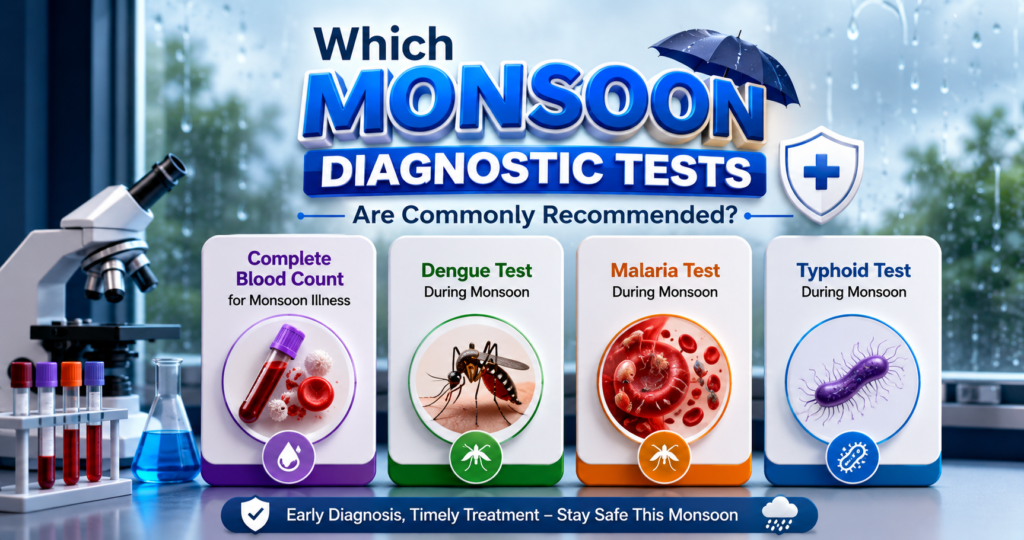
There is no single laboratory test that every person should take during the monsoon. A sensible testing strategy begins with the symptoms and then selects investigations that can confirm or exclude likely causes. A complete blood count (CBC) is frequently considered when someone has fever or suspected infection because it provides information about red blood cells, white blood cells and platelets. Depending on the presentation, a doctor may also recommend tests for dengue, malaria, typhoid, liver function, kidney function, blood glucose, urine abnormalities or other infections. The exact combination matters because different diseases require different diagnostic methods and timing. For example, dengue testing changes depending on how many days have passed since symptoms started, while malaria diagnosis generally relies on detecting parasites through microscopy or appropriate rapid diagnostic testing. WHO recommends prompt malaria diagnosis using microscopy or rapid diagnostic tests for patients suspected of malaria before antimalarial treatment is given.
Complete Blood Count for Monsoon Illness
A CBC is one of the most commonly considered monsoon blood tests when a person presents with fever, weakness or suspected infection. It can measure haemoglobin, red blood cell-related parameters, white blood cell counts and platelet counts, among other components. These results may provide useful supporting information, but a CBC alone generally cannot tell you exactly which infection is responsible for a fever. That distinction is particularly important during the monsoon because several infections can produce similar symptoms. A doctor may therefore use the CBC alongside targeted tests such as dengue, malaria or other investigations. Depending on the clinical situation, repeat blood counts may also be advised to monitor changes over time. In other words, think of a CBC as a dashboard: it can show that something may be happening inside the body, but additional testing may be needed to identify the exact problem.
Dengue Test During Monsoon
A dengue test during monsoon may be considered when symptoms and exposure suggest dengue. Common symptoms can include fever, headache, pain behind the eyes, muscle and joint pain and rash, although these symptoms are not unique to dengue. WHO explains that laboratory confirmation is important because dengue fever can be difficult to distinguish clinically from other vector-borne diseases. The timing of the test is particularly important. Current CDC guidance says that during the first seven days of illness, clinicians can use an NS1 antigen test or a nucleic acid amplification test along with IgM testing, while IgM becomes an increasingly important diagnostic tool after the acute phase. A negative early NS1 or molecular test does not automatically rule out dengue, so the result needs to be interpreted alongside the patient’s symptoms, illness duration and clinical assessment.
Malaria Test During Monsoon
A malaria test during monsoon may be appropriate when fever, chills, sweating, headache, weakness or other symptoms raise suspicion of malaria, particularly in areas where malaria transmission occurs. Malaria is caused by Plasmodium parasites and requires specific diagnostic testing rather than relying on symptoms alone. WHO recommends parasite-based diagnosis through microscopy or a malaria rapid diagnostic test for suspected cases before treatment is administered. Rapid diagnostic tests can detect malaria parasite antigens in blood and may produce results relatively quickly, while microscopy can identify parasites and provide information about species and parasite density. Because malaria can become serious, particularly with certain Plasmodium species, unexplained fever in a potentially exposed person should not simply be treated as an ordinary seasonal viral illness. The appropriate test should be selected by a healthcare professional based on symptoms, exposure, travel history and local malaria risk.
Typhoid Test During Monsoon
A typhoid test during monsoon may be considered when a person has persistent or gradually worsening fever together with symptoms such as headache, weakness, abdominal discomfort, diarrhoea or constipation, particularly when there is a relevant food or water exposure. Typhoid and paratyphoid fever are bacterial illnesses caused by Salmonella Typhi and Salmonella Paratyphi. Because many symptoms overlap with other infections, laboratory testing can be important when enteric fever is suspected. CDC guidance identifies blood culture as the mainstay and preferred method of diagnosis, while noting that multiple cultures may sometimes be required because one culture does not detect every case. The same guidance cautions that antibody-based tests such as Widal testing have limitations and can produce misleading results, so the choice of test should be discussed with a healthcare professional. If typhoid is suspected, testing should not be delayed simply because the fever initially resembles a common viral infection.
Viral Fever Diagnostic Test and Other Infection Screening
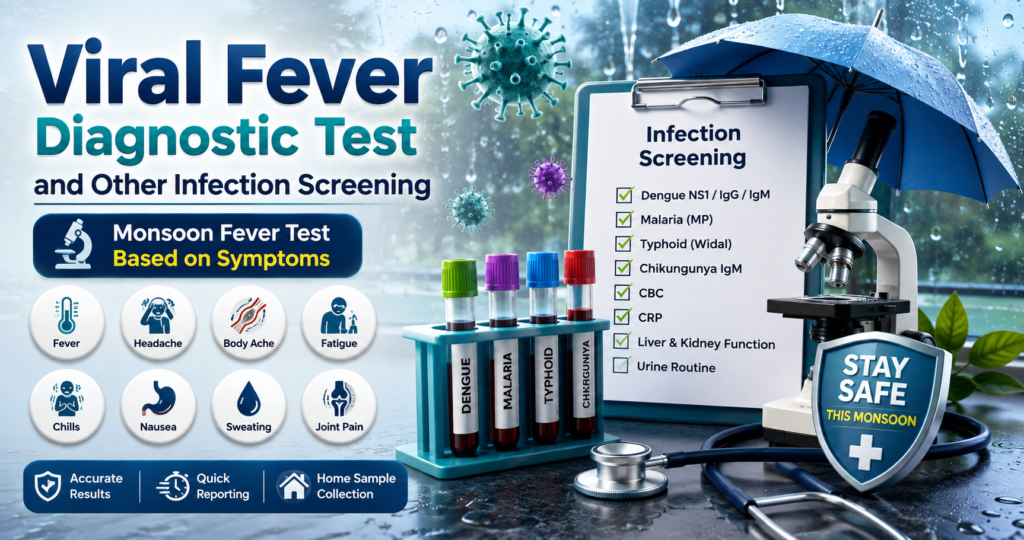
A viral fever diagnostic test is not necessarily one single universal test. The term can refer to different laboratory investigations used to identify specific viruses or to evaluate a patient with a fever that may be viral in origin. Depending on the clinical picture, a doctor may recommend a targeted viral antigen test, antibody test, molecular test, CBC or other investigations. The important point is that fever itself does not tell you whether the cause is viral, bacterial or parasitic. During the monsoon, a patient may have dengue, influenza-like illness, another viral infection, malaria, typhoid or a non-infectious condition with remarkably similar early symptoms. Therefore, choosing the correct monsoon infection tests is more useful than simply ordering a large collection of tests without a clinical reason. A diagnostic laboratory can perform the requested investigations, but interpretation should remain connected to the patient’s symptoms and the advice of a qualified healthcare professional.
Monsoon Fever Test Based on Symptoms
A monsoon fever test should ideally be selected according to how the illness began, how long the fever has lasted, and what other symptoms are present. For example, fever with intense chills may prompt consideration of malaria, while fever with severe body aches and other compatible features may lead a clinician to consider dengue. Persistent fever with gastrointestinal symptoms and relevant food or water exposure may increase suspicion of typhoid. None of these patterns is sufficient by itself to establish a diagnosis, which is why laboratory confirmation can be valuable. The timing of testing is also critical; a test that is useful early in an infection may be less informative later, and vice versa. Current dengue guidance, for example, recommends different testing approaches depending on whether symptoms have been present for seven days or less or for more than seven days.
What Routine Monsoon Blood Tests Should You Consider?
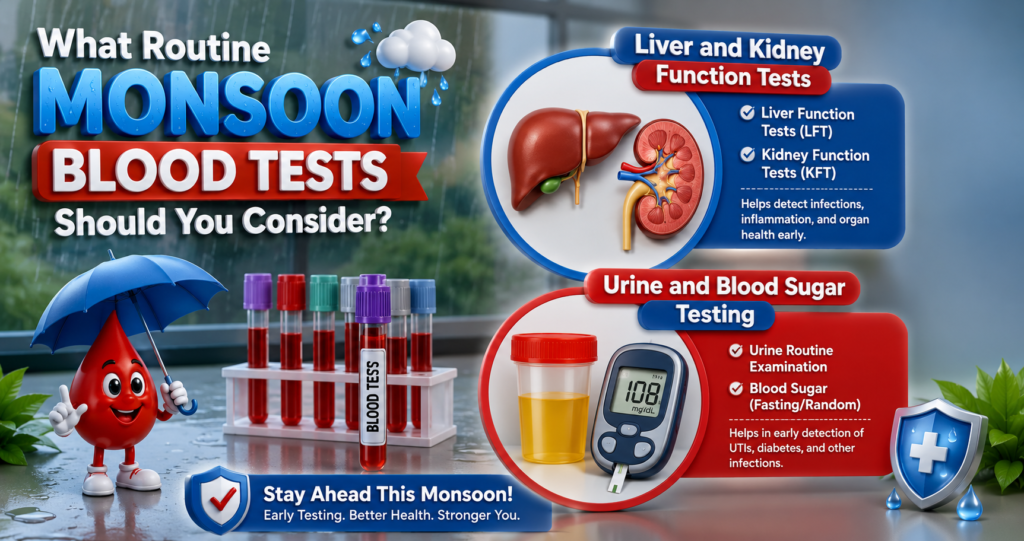
Routine monsoon blood tests can be useful when they are chosen for a specific purpose, especially for people who have symptoms or are due for a regular health assessment. A CBC may help assess blood-cell patterns, while blood glucose testing can provide information about blood sugar levels. Depending on age, medical history and symptoms, a doctor may also recommend lipid testing, thyroid testing or liver and kidney function assessments as part of a broader preventive checkup. These investigations are not necessarily “monsoon tests” in the strict sense; rather, they can be included in a complete health checkup monsoon package because the rainy season may encourage people to pay closer attention to their health. The advantage of a structured package is convenience, but convenience should never replace clinical relevance. If you already have a diagnosed condition or take regular medication, your doctor may recommend a more individualized set of tests.
Liver and Kidney Function Tests
Liver and kidney function tests can become relevant when someone has significant illness, dehydration, persistent fever, medication exposure or symptoms suggesting organ involvement. Liver tests can provide information about enzymes and proteins associated with liver function, while kidney-related testing can assess markers such as creatinine and other measures used to evaluate renal health. These tests do not automatically diagnose dengue, malaria or typhoid, but they may help doctors assess the overall condition of a patient when infection is suspected. In some illnesses, monitoring organ function can become particularly important when symptoms are severe or prolonged. The decision to include these investigations should therefore come from the clinical context rather than from the assumption that everyone needs them during the rainy season. A well-designed monsoon health package may include such tests for broader screening, but patients should still understand what each test is intended to assess.
Urine and Blood Sugar Testing
Urine analysis and blood glucose testing can also be useful components of a broader health assessment. Routine urine testing can provide information about substances and cells in urine and may help identify abnormalities that require further evaluation. Blood glucose testing is especially relevant for people with diabetes, those at risk of diabetes, or individuals whose healthcare provider recommends routine monitoring. During an episode of illness, maintaining appropriate hydration and monitoring health conditions can become more important, particularly in people with existing medical problems. These tests should not be treated as substitutes for infection-specific testing when symptoms suggest dengue, malaria or another infectious disease. Instead, they can complement a wider assessment when clinically appropriate. The best health checkup is therefore not necessarily the one containing the largest number of parameters; it is the one that provides useful information for the person’s actual health needs.
When Should You Book a Complete Health Checkup Monsoon Package?
A complete health checkup monsoon package can be worth considering if you are due for preventive screening, have not had a health assessment for some time, or want a convenient way to review several basic health parameters. However, it is important to distinguish preventive screening from diagnostic evaluation. If you currently have a high or persistent fever, severe weakness, breathing difficulty, repeated vomiting, confusion, bleeding, severe abdominal pain, dehydration or other concerning symptoms, you should seek medical evaluation rather than relying on a routine health package. A package may contain useful baseline investigations, but it may not include every targeted infection test required for your symptoms. For someone who is healthy and asymptomatic, routine screening can focus on general health indicators according to age and risk factors. For someone who is acutely ill, the priority is identifying the cause of the illness and assessing whether immediate treatment or monitoring is required.
How to Choose a Diagnostic Test With Free Doctor Consultation

Choosing a diagnostic test with free doctor consultation can make the testing process easier because you may have an opportunity to discuss symptoms and understand which investigations are relevant. A consultation can help prevent the common mistake of selecting a test simply because its name sounds appropriate for the monsoon. For instance, a person may assume that every fever requires a dengue test, while another may immediately request a typhoid test without considering malaria or other causes. A clinician can evaluate the pattern of symptoms, duration of illness, medical history and potential exposures before recommending appropriate investigations. Once results are available, professional interpretation can also help place abnormal values into context. A laboratory report is a collection of numbers and findings; understanding what those findings mean in relation to your symptoms is often the more important step.
Why Doctor Guidance Matters Before Testing
Medical guidance becomes particularly valuable when several infections have overlapping symptoms. A dengue test may depend on the day of illness, malaria diagnosis requires appropriate parasite-based testing, and suspected typhoid is generally evaluated using culture-based methods rather than relying solely on antibody tests. A doctor can also determine whether additional investigations are necessary if the first test is negative but symptoms continue. This prevents a negative result from creating false reassurance when the timing or test selection may have affected the outcome. It also reduces unnecessary testing, which can increase cost and anxiety without necessarily improving diagnosis. If a laboratory offers a consultation along with a monsoon health package, use that opportunity to discuss symptoms, previous illnesses, medications and the exact purpose of each investigation.
How to Prepare for Rainy Season Diagnostic Tests
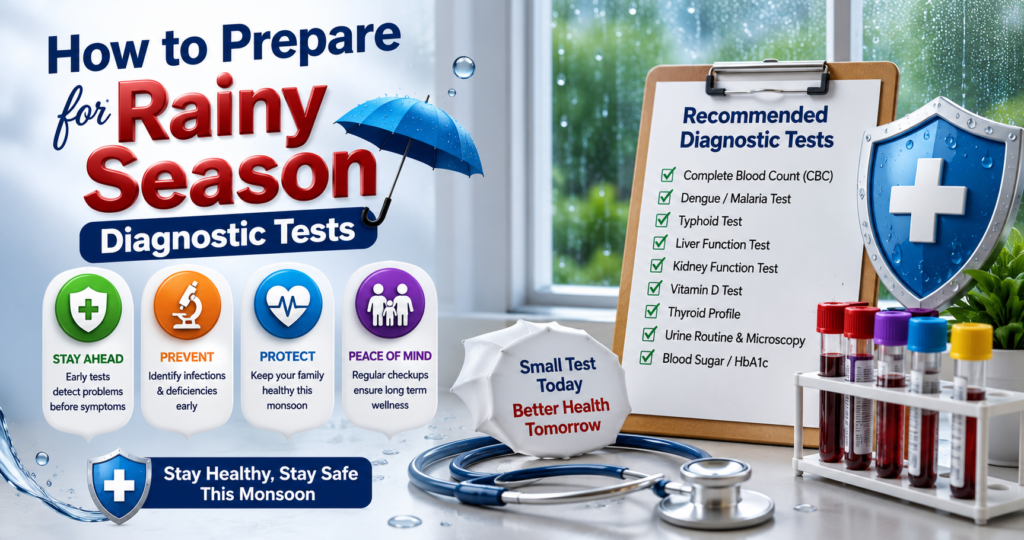
Preparation depends on which tests have been ordered. Some blood tests may require fasting, while many infection-related tests do not necessarily require fasting; therefore, patients should follow the specific instructions given by the laboratory or healthcare professional instead of assuming that every blood test requires an overnight fast. Tell the healthcare professional when your symptoms started because the number of days since fever began can influence the usefulness of certain tests, particularly dengue investigations. Also mention recent travel, mosquito exposure, potentially unsafe food or water exposure, previous infections, medications and any chronic conditions that may affect interpretation. If you are taking medication, do not stop it merely because you are getting a blood test unless your doctor specifically instructs you to do so. Keeping previous reports available can also help the clinician compare current results with your baseline values.
For people experiencing fever during the monsoon, the most important preparation may simply be not delaying appropriate medical evaluation. Dengue, malaria and typhoid are not conditions that should be diagnosed by internet searches alone. Laboratory tests are tools that support clinical decision-making, and their accuracy and interpretation depend on factors such as specimen quality, timing, test characteristics and the patient’s clinical presentation. If symptoms are worsening, seek medical attention promptly rather than waiting for a routine health package appointment. WHO specifically emphasizes prompt diagnosis for suspected malaria, while current dengue guidance stresses that testing strategies should be adapted to the stage of illness and clinical context.
Make Monsoon Health Testing Part of Prevention
The question “Which diagnostic tests should I take during the monsoon season?” does not have one answer for everyone. The right choice depends on whether you are healthy and seeking preventive screening or are currently experiencing symptoms that require diagnostic evaluation. For general screening, a structured monsoon health checkup may include tests such as CBC, blood sugar test, lipid profile, thyroid assessment, liver function test, kidney function test and urine analysis, depending on the package and your healthcare needs. For fever, targeted monsoon infection tests may be more important, with dengue, malaria or typhoid investigations selected according to symptoms, exposure history and the duration of illness. Dengue testing, for example, is strongly influenced by the stage of illness, while WHO recommends prompt parasite-based testing when malaria is suspected.
If you are planning a seasonal health assessment, look for a reliable diagnostic centre that provides clearly explained test parameters, appropriate sample collection, accurate reporting and access to professional guidance. A diagnostic test with free doctor consultation can be particularly convenient because it combines testing with an opportunity to discuss what the results mean. If you develop persistent fever, severe weakness, dehydration, bleeding, breathing difficulty, confusion or other serious symptoms, do not wait for a routine package; seek medical care promptly. The monsoon should be a season for enjoying cooler weather, not a reason to ignore unusual symptoms. Early medical evaluation, appropriate rainy season diagnostic tests, and informed follow-up can help you respond to illness more confidently and responsibly.
FAQs About Monsoon Diagnostic Tests
1. Which monsoon diagnostic tests are most common for fever?
Commonly considered tests may include a CBC and targeted investigations for dengue, malaria or typhoid depending on the patient’s symptoms and exposure history. A doctor should decide which tests are appropriate rather than assuming every fever is caused by one particular infection.
2. When should I take a dengue test during monsoon?
The timing depends on when symptoms began. Current CDC guidance recommends NS1 antigen or molecular testing with IgM during the first seven days, while IgM becomes particularly useful after the acute phase.
3. Is a CBC enough to diagnose monsoon infections?
No. A CBC can provide useful information about blood-cell counts and may support a clinical assessment, but it generally cannot identify the exact cause of fever. Targeted diagnostic testing may be required for dengue, malaria, typhoid or another infection.
4. Is a malaria test necessary for every monsoon fever?
Not necessarily. The need for malaria testing depends on symptoms, exposure, location and clinical assessment. WHO recommends prompt malaria testing when malaria is suspected, using microscopy or an appropriate rapid diagnostic test.
5. Can I book a monsoon health package without symptoms?
Yes, preventive screening may be appropriate depending on your age, health history and healthcare needs. However, a routine monsoon health package should not replace medical evaluation if you currently have persistent or severe symptoms. Discuss the package parameters with a healthcare professional to determine whether they are suitable for you.
Leave a Reply