
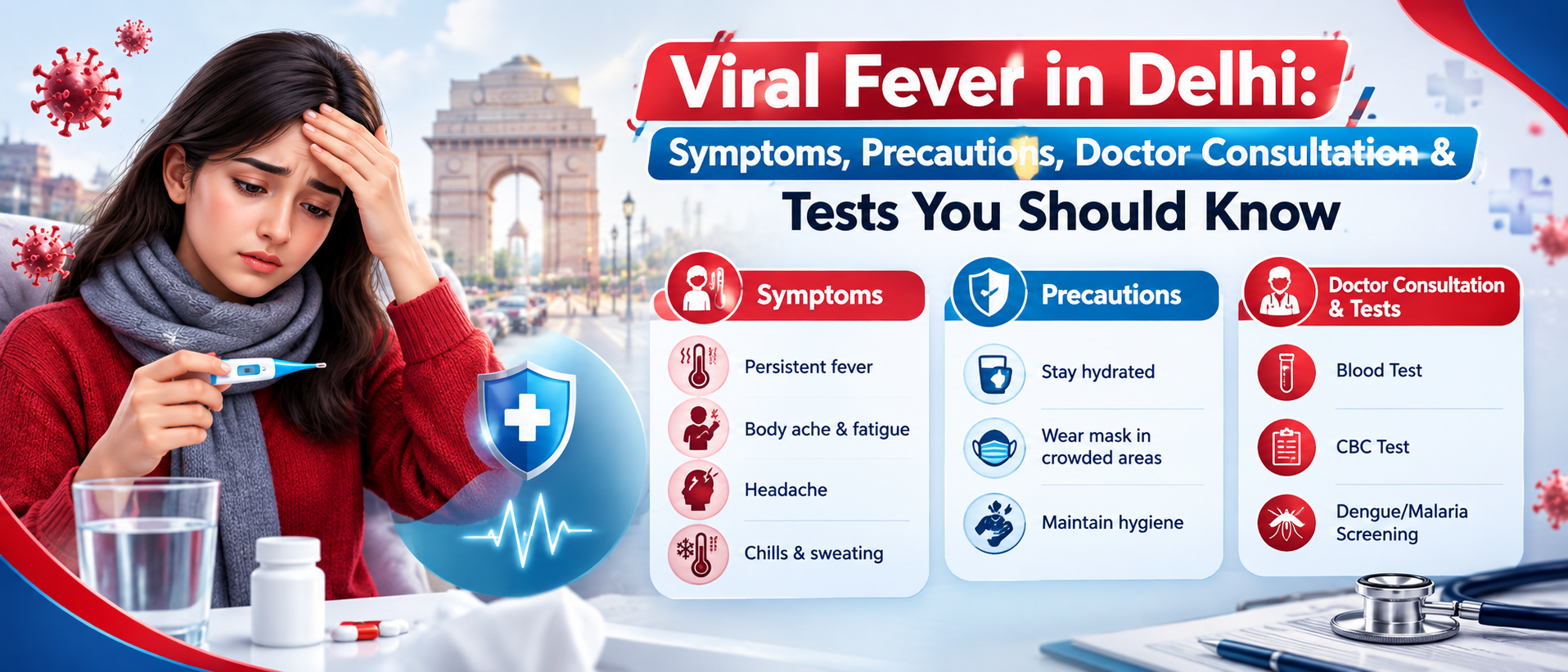


Fever is one of the most common signs of infection, and during seasonal changes in Delhi, many people may experience fever along with weakness, body aches, cough, sore throat, headache or digestive symptoms. However, Viral Fever in Delhi should not automatically be assumed to be caused by one particular virus. Similar symptoms can occur with influenza, dengue and other infections, making proper medical assessment important.
Delhi’s changing weather, humidity, rainfall and mosquito activity can contribute to an environment where different seasonal infections may circulate. Dengue, for example, is transmitted by infected Aedes mosquitoes, while influenza spreads mainly through respiratory droplets and particles.
For anyone experiencing fever, the important steps are to monitor symptoms, maintain hydration, take appropriate precautions, consult a doctor when necessary and undergo fever diagnostic tests when recommended.
Viral Fever in Delhi: Why Seasonal Fever Can Occur
The term “viral fever” is commonly used to describe fever associated with a viral infection. Several viruses can produce similar symptoms, and symptoms alone may not always identify the specific infection.
During seasonal changes, people may encounter respiratory infections such as influenza. Influenza can cause fever or chills, cough, sore throat, headache, fatigue and muscle or body aches. Not everyone with influenza develops a fever.
At the same time, mosquito-borne infections such as dengue can produce fever and symptoms that overlap with flu-like illnesses. WHO lists high fever, headache, pain behind the eyes, muscle and joint pain, nausea, vomiting and rash among common dengue symptoms.
Therefore, persistent or significant fever should be assessed based on the person’s symptoms, medical history and, when indicated, laboratory testing.
Viral Fever Symptoms You Should Know

Common viral fever symptoms can vary depending on the virus and the individual. Possible symptoms include:
- Fever or feeling feverish
- Chills
- Headache
- Body or muscle aches
- Weakness and tiredness
- Sore throat
- Cough
- Runny or blocked nose
- Reduced appetite
- Nausea
- Vomiting or diarrhoea in some infections
- General discomfort
Influenza, for example, often begins suddenly and can cause fever, chills, cough, sore throat, headache, fatigue and significant body aches.
However, these symptoms are not specific to influenza or another particular virus. This is why a healthcare professional may recommend testing when symptoms, duration or risk factors make it appropriate.
Seasonal Fever in Delhi: Viral Infection or Something Else?
Seasonal fever in Delhi can have different causes. A person with fever may have a respiratory viral infection, dengue or another illness. Symptoms can overlap considerably.
Dengue can cause high fever accompanied by headache, pain behind the eyes, nausea, vomiting, muscle or joint pain and sometimes a rash.
Influenza commonly produces respiratory symptoms such as cough, sore throat and nasal symptoms alongside fever, chills, body aches and fatigue.
Consequently, it is better to avoid self-diagnosing based on a single symptom. Fever diagnosis may require clinical evaluation and, depending on the situation, laboratory tests.
Delhi Viral Infections: Symptoms Can Overlap
Delhi viral infections may present with similar early symptoms, including fever, fatigue, headache and body aches. This overlap can make it difficult to determine the cause based only on how a person feels.
For example, influenza symptoms and dengue fever symptoms can both include fever and body aches. However, dengue may additionally involve symptoms such as pain behind the eyes, nausea, vomiting and rash, while influenza commonly causes respiratory symptoms such as cough and sore throat.
This does not mean that the presence or absence of one symptom confirms or excludes a particular infection. A doctor can determine whether testing is appropriate based on the complete clinical picture.
Dengue Fever Symptoms to Watch For
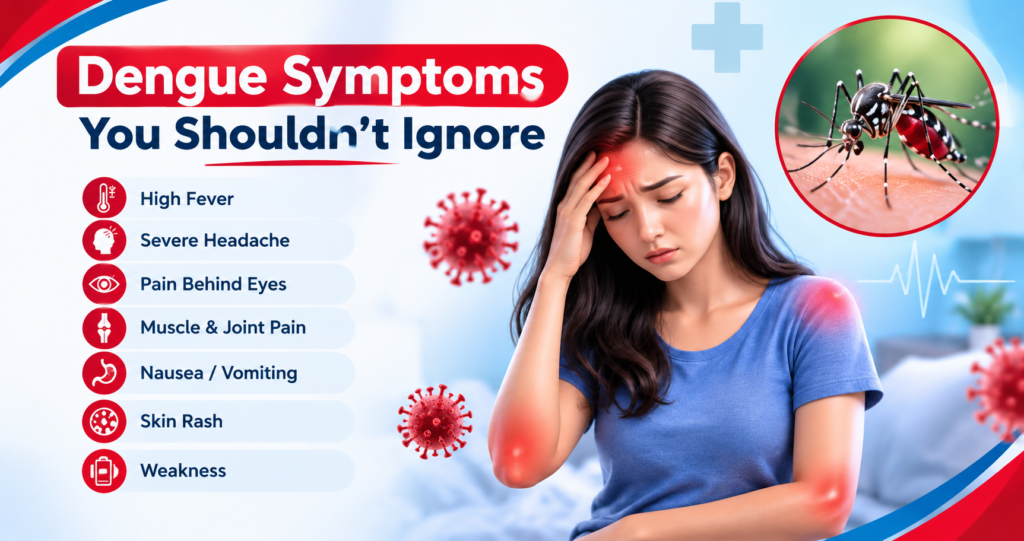
Understanding dengue fever symptoms is particularly important in areas where dengue transmission occurs.
Common symptoms may include:
- High fever
- Severe headache
- Pain behind the eyes
- Muscle and joint pain
- Nausea or vomiting
- Rash
- Weakness
WHO notes that severe dengue can develop and may include severe abdominal pain, persistent vomiting, rapid breathing, bleeding from the gums or nose, blood in vomit or stool, marked weakness, restlessness or pale, cold skin. These symptoms require immediate medical attention.
Importantly, a reduction in fever does not necessarily mean that dengue is resolving. WHO notes that the critical phase can occur around days 3–7 after the illness begins, and warning signs can appear as temperature decreases.
Dengue Test: When Testing May Be Recommended
A dengue test may be recommended by a doctor when symptoms and clinical circumstances suggest possible dengue.
Testing options can include antigen detection, molecular tests and antibody testing. WHO explains that NS1 antigen testing can support early diagnosis during the febrile phase, while antibody testing may become useful later in the course of infection.
The appropriate test depends on factors such as how long symptoms have been present and the clinical situation. Therefore, patients should follow the healthcare professional’s recommendation rather than selecting a test solely based on the name of the test.
Dengue NS1 Test: Understanding Early Testing
The dengue NS1 test detects the NS1 antigen associated with dengue virus infection. It can be useful during the early stage of illness.
WHO states that NS1 antigen tests can provide early diagnosis in febrile patients, particularly during the acute phase of infection.
However, the timing of testing matters. A negative result does not necessarily provide a complete answer in every clinical situation. Depending on the stage of illness, a healthcare professional may consider additional or alternative tests.
This is one reason why people with persistent fever should discuss their symptoms and test timing with a doctor.
Fever Blood Test: What Can It Tell You?
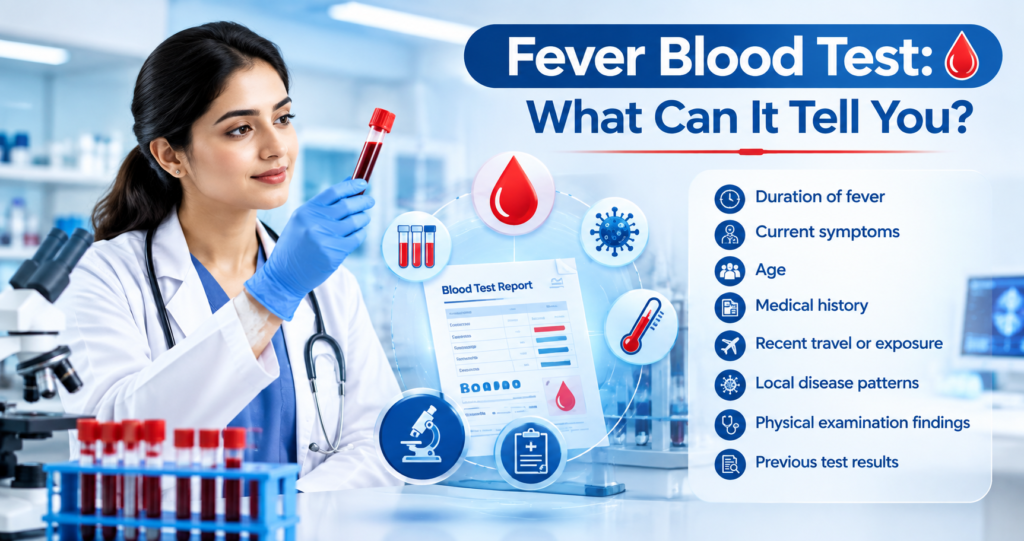
A fever blood test can refer to different laboratory investigations used to evaluate someone with fever.
One commonly requested investigation is a complete blood count, or CBC. A CBC provides information about different blood-cell components and may help doctors assess a person’s condition alongside symptoms and other findings.
A CBC alone, however, does not identify every cause of fever. Depending on the symptoms, a doctor may recommend additional investigations for conditions such as dengue, malaria, influenza or other infections.
The right combination of tests depends on factors including:
- Duration of fever
- Current symptoms
- Age
- Medical history
- Recent travel or exposure
- Local disease patterns
- Physical examination findings
- Previous test results
CBC Blood Test for Fever: Why Doctors May Recommend It
A CBC blood test for fever can provide useful information about blood-cell counts and may form part of a broader evaluation.
Doctors may use CBC results together with symptoms and other investigations rather than relying on one laboratory value.
If dengue is suspected, for example, a clinician may monitor blood counts and recommend dengue-specific testing. WHO emphasizes that laboratory confirmation is important because dengue can be difficult to distinguish clinically from other infections with similar symptoms.
Therefore, patients should avoid interpreting individual CBC values without medical guidance.
Influenza Symptoms and When Testing May Help

Influenza symptoms commonly include:
- Fever or chills
- Cough
- Sore throat
- Runny or stuffy nose
- Headache
- Muscle or body aches
- Fatigue
Some people may also experience vomiting or diarrhoea, particularly children.
Healthcare professionals may diagnose influenza based on symptoms and clinical circumstances, but laboratory tests are available when confirmation is needed. Tests include rapid influenza diagnostic tests and molecular tests.
Rapid tests can provide results quickly, but some rapid antigen tests are less sensitive than molecular tests, meaning a negative rapid result may not always rule out influenza.
Fever Doctor Consultation: When Should You Seek Medical Advice?

A fever doctor consultation can help determine whether you need observation, supportive care, laboratory testing or further medical treatment.
You should consider consulting a doctor if:
- Fever is persistent or worsening
- Symptoms are severe
- You have significant weakness or dehydration
- Fever returns after initially improving
- You develop breathing difficulties
- You have severe abdominal pain
- You experience persistent vomiting
- You notice unusual bleeding
- You have confusion or severe dizziness
- You are pregnant
- You are an older adult
- You have a chronic medical condition
- A young child develops concerning symptoms
People at higher risk of complications from influenza should contact a healthcare provider promptly when they develop flu-like symptoms.
When to See a Doctor for Fever: Warning Signs
Knowing when to see a doctor for fever is important because most mild infections can be managed with appropriate supportive care, while some illnesses require prompt evaluation.
Seek urgent medical attention for serious symptoms such as difficulty breathing, persistent chest or abdominal pain, confusion, severe weakness, seizures, significant dehydration or other rapidly worsening symptoms. CDC lists these among warning signs requiring prompt medical attention in people with influenza.
For suspected dengue, severe abdominal pain, persistent vomiting, bleeding, rapid breathing, extreme weakness or pale/cold skin are warning signs requiring immediate care.
Fever Treatment in Delhi: Why Medical Advice Matters
Fever treatment in Delhi depends on the underlying cause and severity of the illness.
For many uncomplicated viral illnesses, supportive care may include adequate fluids, rest and monitoring symptoms. However, treatment should not be assumed to be the same for every type of infection.
For influenza, prescription antiviral medicines may be appropriate for certain patients, particularly those at higher risk of complications, and they work best when started early.
For dengue, there is no specific antiviral treatment. WHO recommends medical advice, rest and adequate fluids; paracetamol may be used for fever and pain, while aspirin and ibuprofen should be avoided because they can increase bleeding risk.
Do not start antibiotics simply because you have a fever. Antibiotics treat bacterial infections and do not treat influenza viruses.
Viral Fever Precautions for Delhi Residents

Following basic viral fever precautions can reduce the risk of infection and transmission.
1. Maintain Good Hand Hygiene
Wash your hands regularly with soap and water, especially after coughing, sneezing, travelling or touching commonly used surfaces.
2. Cover Coughs and Sneezes
Use a tissue or your elbow to cover your mouth and nose when coughing or sneezing.
3. Avoid Close Contact When Sick
If you have respiratory symptoms, reduce unnecessary close contact with others. CDC recommends staying home when sick except when seeking medical care.
4. Protect Yourself From Mosquito Bites
Use mosquito repellents, wear clothing that reduces exposed skin and use appropriate mosquito-control measures at home.
Because dengue is transmitted by Aedes mosquitoes, preventing mosquito bites is an important part of dengue prevention.
5. Prevent Standing Water
Check containers, coolers, plant pots and other areas around your home where water can collect. Removing potential mosquito breeding sites can help reduce mosquito exposure.
Monsoon Fever Precautions for Families

Monsoon fever precautions become especially relevant when rainfall and humidity create conditions that may support mosquito breeding and the spread of certain infections.
Families can:
- Keep surroundings clean and dry
- Remove stagnant water
- Use mosquito screens where possible
- Use mosquito repellents
- Maintain regular hand hygiene
- Drink safe and clean water
- Avoid sharing personal items when someone is sick
- Keep sick family members away from vulnerable individuals when appropriate
- Seek medical advice for persistent or severe symptoms
These measures are useful as general precautions, but they cannot guarantee prevention of every infection.
Fever Care Tips at Home
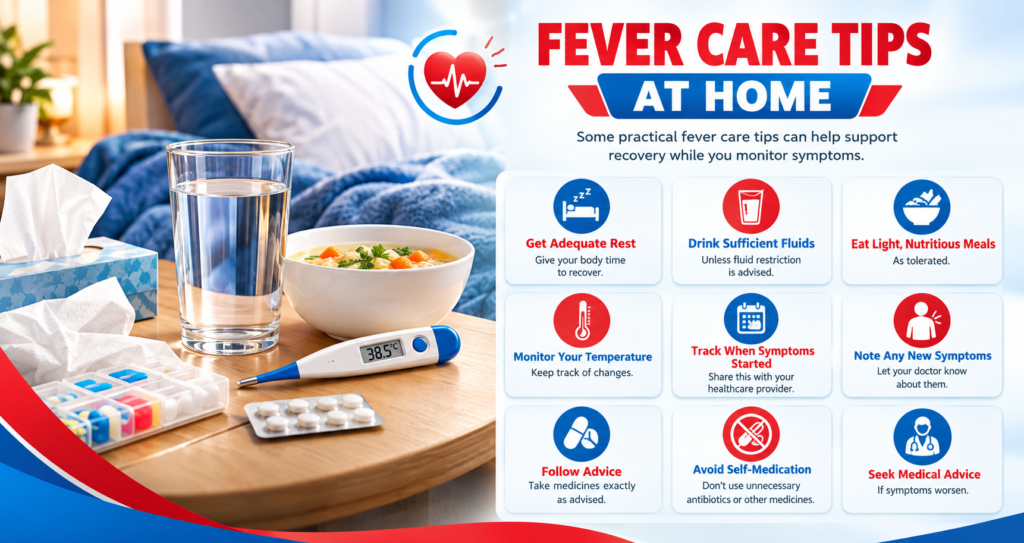
Some practical fever care tips can help support recovery while you monitor symptoms.
- Get adequate rest.
- Drink sufficient fluids unless a doctor has advised fluid restriction.
- Eat light, nutritious meals as tolerated.
- Monitor your temperature.
- Keep track of when symptoms started.
- Note new symptoms that develop.
- Follow medicines exactly as advised by your healthcare provider.
- Avoid unnecessary antibiotics or self-medication.
- Seek medical advice if symptoms worsen.
If dengue is suspected, discuss pain-relief medicines with a healthcare professional because some medicines, including aspirin and ibuprofen, may increase bleeding risk.
Fever Diagnostic Tests: What Tests May Be Recommended?
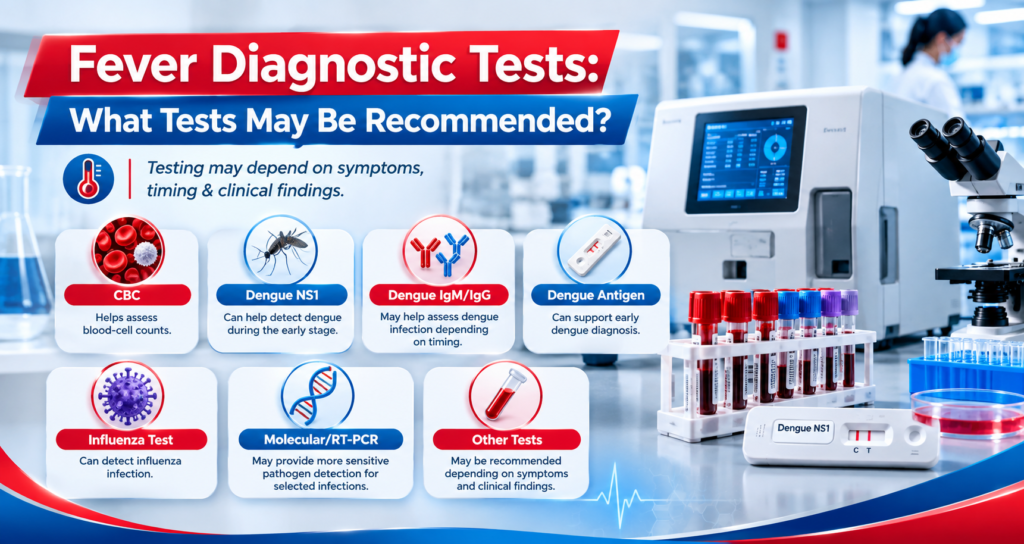
Fever diagnostic tests vary according to symptoms and suspected causes. A doctor may recommend one or more of the following:
| Test | Why It May Be Considered |
| CBC | Helps assess blood-cell counts |
| Dengue NS1 | Can help detect dengue during the early stage |
| Dengue IgM/IgG | May help assess dengue infection depending on timing |
| Dengue antigen testing | Can support early dengue diagnosis |
| Influenza test | Can detect influenza infection |
| Molecular/RT-PCR testing | May provide more sensitive pathogen detection for selected infections |
| Other tests | May be recommended depending on symptoms and clinical findings |
The exact tests should be decided according to the patient’s symptoms and the stage of illness. WHO notes that dengue testing strategies should take factors such as the timing of illness into account.
Fever Diagnosis: Why Timing and Symptoms Matter
Fever diagnosis is not simply about recording body temperature. Doctors may consider the complete clinical picture.
For example, two people can have the same temperature but completely different symptoms and underlying causes. One person may have cough and sore throat suggestive of a respiratory infection, while another may have severe headache, body pain and other symptoms that prompt evaluation for dengue.
Testing can therefore help provide additional information when clinical assessment alone is insufficient.
WHO specifically notes that dengue can be difficult to distinguish clinically from other febrile illnesses, making appropriate laboratory testing important.
Seasonal Illness Prevention: Protect Your Family
Seasonal illness prevention starts with simple daily habits.
Maintain good hygiene, avoid mosquito breeding areas, protect yourself from mosquito bites and stay home when you are sick with a contagious respiratory infection.
People who are at higher risk of complications should be especially cautious. For influenza, higher-risk groups include older adults, young children, pregnant women and people with certain chronic medical conditions.
Keeping vaccinations up to date where recommended by your healthcare provider can also form part of respiratory infection prevention. CDC notes that influenza vaccination reduces the risk of influenza illness and serious complications.
Final Thoughts on Viral Fever in Delhi
Viral Fever in Delhi can involve a range of symptoms and possible causes. Fever, body aches, headache, cough, sore throat and fatigue may occur with several different infections, so assuming the cause without medical assessment can be misleading.
If you develop fever, focus on hydration, rest, hygiene and symptom monitoring. Take precautions to prevent spreading respiratory infections and protect yourself from mosquito bites.
When symptoms are persistent, severe or unusual, consult a healthcare professional. Depending on the clinical situation, fever blood tests, CBC, dengue testing, a dengue NS1 test, influenza testing or other investigations may be recommended.
Most importantly, do not ignore warning signs such as breathing difficulty, severe abdominal pain, persistent vomiting, unusual bleeding, confusion, severe weakness or dehydration. Prompt medical care can be important when a potentially serious infection is suspected.
Leave a Reply