
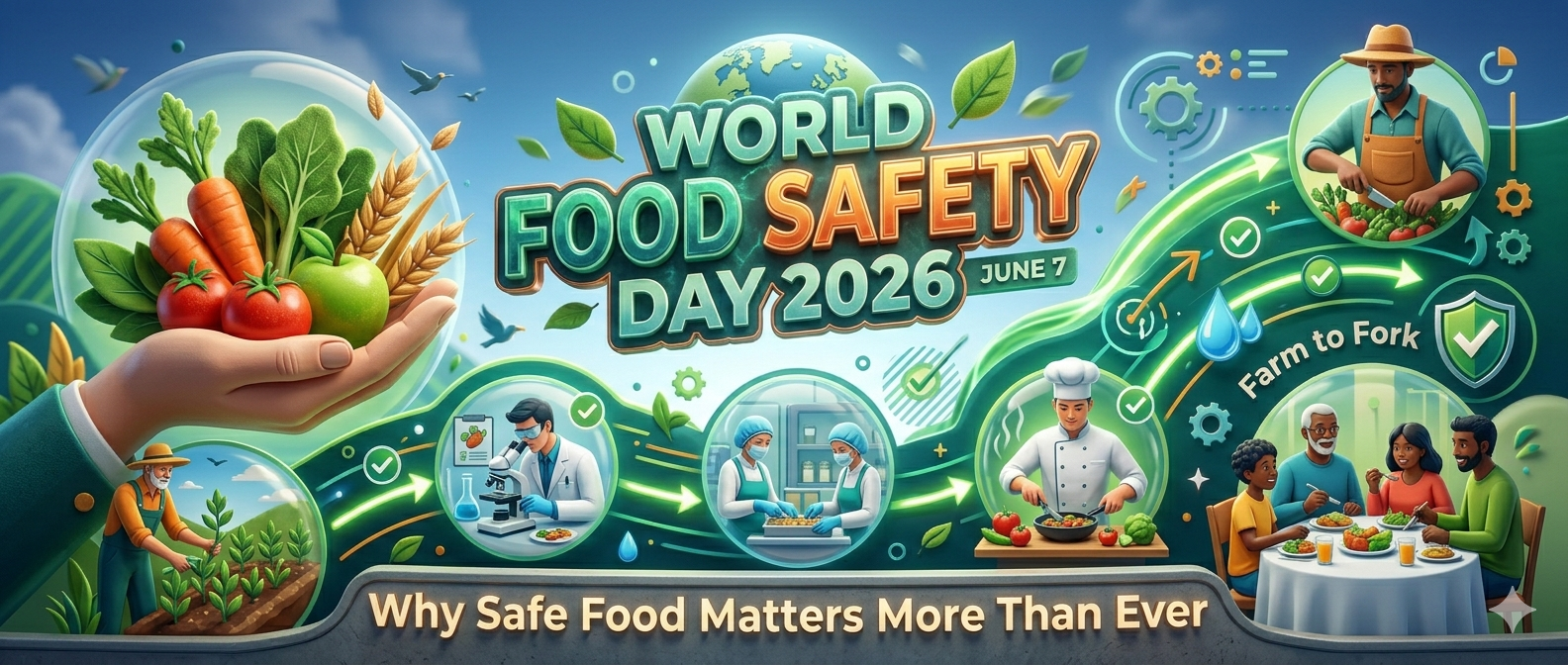
Every year on 7 June, the world comes together to celebrate World Food Safety Day 2026, an international initiative led by the World Health Organization (WHO) and the Food and Agriculture Organization (FAO). The official theme for 2026 is “From burden to solutions – safe food everywhere,” highlighting the urgent need to transform scientific knowledge and food safety data into practical actions that protect lives. According to WHO, unsafe food remains a major global challenge, causing millions of illnesses every year while affecting public health, education, trade, and economic development.
In today’s fast-moving world, food travels thousands of kilometers before reaching our plates. Fresh vegetables may come from one country, grains from another, and packaged foods from entirely different continents. This interconnected supply chain creates incredible opportunities but also increases the risk of contamination if proper standards are not followed. A single mistake during harvesting, transportation, storage, or cooking can lead to severe outbreaks of foodborne illnesses.
The importance of food safety awareness has never been greater. Climate change, rapid urbanization, global trade, and changing eating habits are creating new challenges for governments, food businesses, and consumers alike. Safe food is not just about avoiding stomach infections; it is about protecting families, strengthening economies, and building healthier communities. Whether you are preparing meals at home or managing a restaurant, adopting safe food practices can make a life-saving difference.
Understanding World Food Safety Day 2026
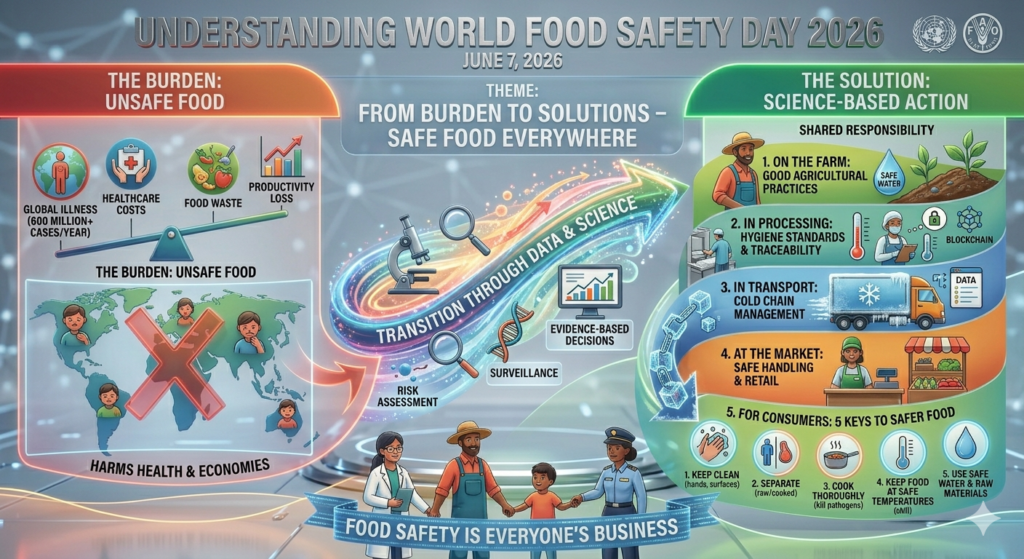
World Food Safety Day was established by the United Nations to promote awareness and inspire action toward preventing food-related risks. The campaign recognizes that food safety is a shared responsibility involving farmers, manufacturers, transporters, retailers, restaurants, governments, and consumers. Every stage of the food chain matters because contamination can happen anywhere between the farm and the dining table. WHO and FAO continue to encourage collaboration between industries and individuals to reduce preventable illnesses caused by unsafe food.
The theme for World Food Safety Day 2026, “From burden to solutions – safe food everywhere,” reflects the growing understanding that reliable scientific data should guide food safety policies and everyday decisions. The campaign emphasizes that while foodborne diseases remain a serious global burden, effective solutions already exist and can be implemented through education, technology, and stronger regulations.
Recent WHO estimates indicate that contaminated food causes an enormous health burden worldwide. Around 600 million people become sick each year after eating unsafe food, while hundreds of thousands lose their lives because of preventable contamination. Updated 2026 estimates presented by international organizations suggest that the impact may be even greater than previously understood, reinforcing the need for stronger global action.
World Food Safety Day serves as a reminder that safe food is a basic human right. It encourages everyone to take simple but effective steps that protect themselves and others from unnecessary health risks.
Why Food Safety Awareness Is Essential Today
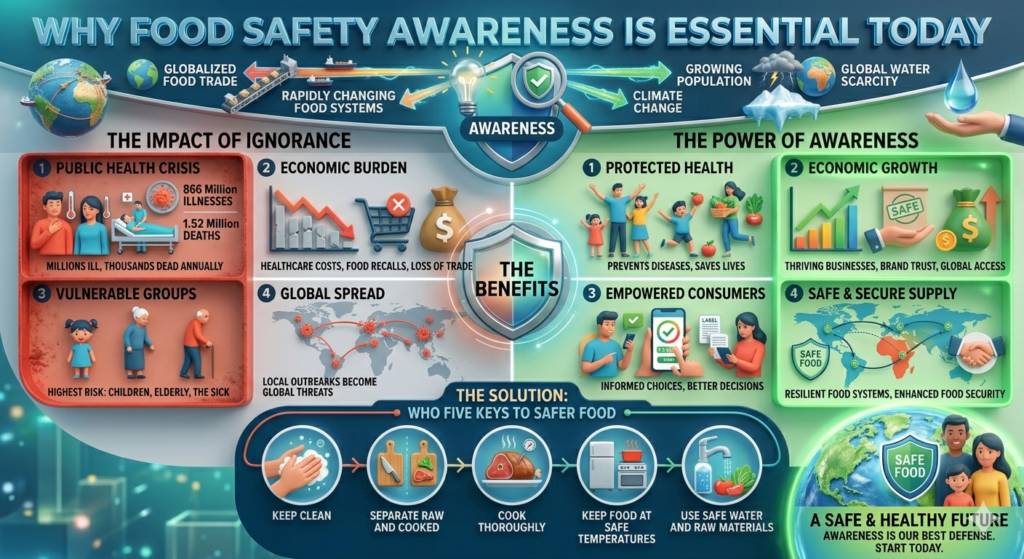
Building strong food safety awareness is one of the most effective ways to reduce illness and improve quality of life. Many people assume that food contamination is only a concern for factories or restaurants, but household kitchens are equally important. Improper storage, undercooking, poor handwashing habits, and cross-contamination between raw and cooked foods remain common causes of foodborne diseases.
The concept of foodborne diseases prevention extends far beyond avoiding temporary stomach discomfort. Foodborne pathogens such as bacteria, viruses, and parasites can lead to severe complications, especially for children, older adults, pregnant women, and individuals with weakened immune systems. According to WHO, unsafe food can cause more than 200 different diseases, ranging from diarrhea to certain forms of cancer.
Unsafe food also has major economic consequences. Illnesses reduce workplace productivity, increase healthcare costs, and disrupt food trade. Restaurants and food manufacturers can suffer severe reputational damage from a single contamination incident. Communities that prioritize food safety often experience stronger public health outcomes and greater consumer confidence.
Modern consumers are becoming more conscious of what they eat, where their food comes from, and how it is prepared. Social media and digital communication spread information quickly, making transparency and accountability more important than ever. Investing time in learning about food safety today helps create healthier generations tomorrow.
Safe Food Practices Every Family Should Follow
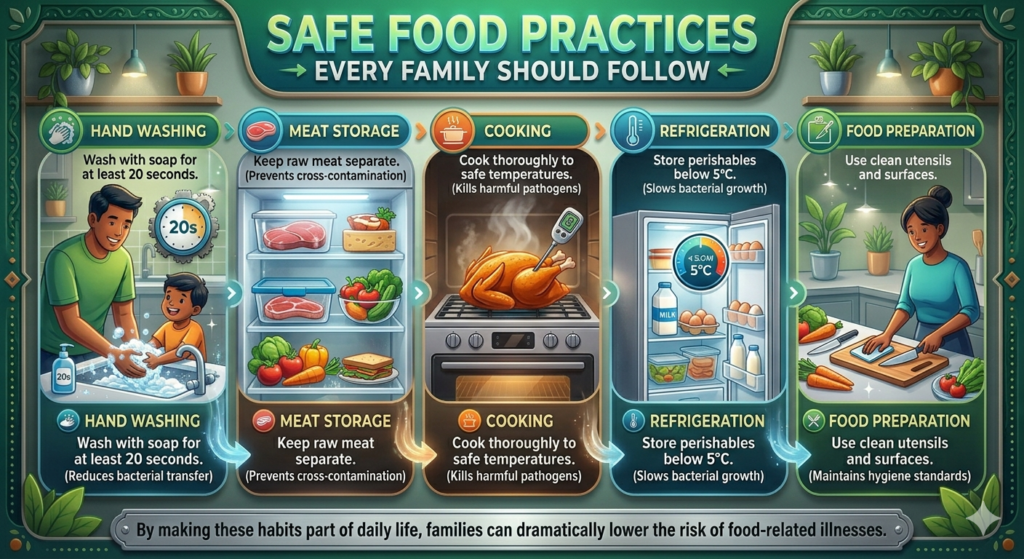
Adopting proper safe food practices does not require expensive equipment or professional training. Small daily habits can significantly reduce the risk of contamination. The WHO’s food safety recommendations emphasize keeping clean, separating raw and cooked foods, cooking thoroughly, maintaining safe temperatures, and using safe water and raw materials.
One of the most important aspects of safe food handling is proper hand hygiene. Washing hands thoroughly before preparing meals and after handling raw meat, seafood, or eggs helps prevent harmful microorganisms from spreading. Kitchen surfaces, utensils, and cutting boards should also be cleaned regularly to remove bacteria that may linger after food preparation.
Clean food preparation begins with selecting fresh ingredients from trusted suppliers. Fruits and vegetables should be washed carefully under running water, while perishable foods should never be left at room temperature for extended periods. Raw and cooked foods should always be stored separately to prevent juices from contaminating ready-to-eat meals.
The following table highlights a few simple but highly effective safety habits:
| Activity | Safe Practice | Benefit |
| Hand Washing | Wash with soap for at least 20 seconds | Reduces bacterial transfer |
| Meat Storage | Keep raw meat separate | Prevents cross-contamination |
| Cooking | Cook thoroughly to safe temperatures | Kills harmful pathogens |
| Refrigeration | Store perishables below 5°C | Slows bacterial growth |
| Food Preparation | Use clean utensils and surfaces | Maintains hygiene standards |
By making these habits part of daily life, families can dramatically lower the risk of food-related illnesses.
Food Hygiene Tips and Food Contamination Prevention
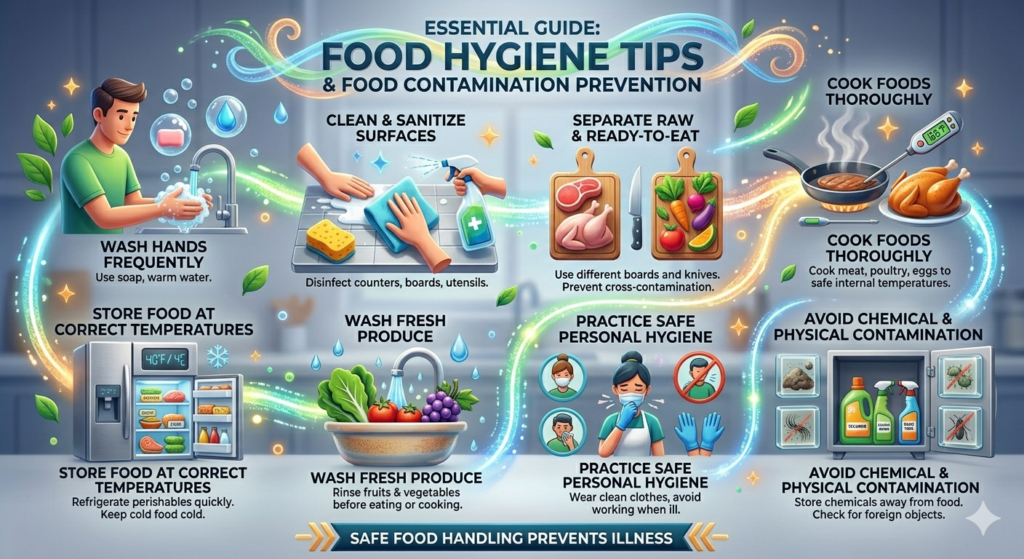
Good food hygiene tips are often simple, but their impact can be enormous. Maintaining a clean kitchen environment helps protect everyone in the household. Regularly disinfecting countertops, sinks, and food preparation areas reduces the chance of bacteria multiplying and spreading.
Kitchen hygiene and sanitation also involve proper waste disposal. Garbage bins should be emptied regularly and kept covered to discourage pests such as flies and rodents, which can carry dangerous microorganisms. Dishcloths, sponges, and towels should be replaced or sanitized frequently because they can quickly become breeding grounds for bacteria.
Effective food contamination prevention depends on controlling temperature. Refrigerators should be maintained at safe levels, and leftovers should be refrigerated within two hours after cooking. Frozen foods should be thawed safely inside the refrigerator rather than on kitchen counters where bacteria can multiply rapidly.
Cross-contamination remains one of the biggest threats in home kitchens. Separate cutting boards for vegetables and raw meat help minimize risk, while dedicated utensils for cooked foods add another layer of protection. Even simple actions like washing reusable grocery bags can contribute to a safer food environment.
Developing these habits may seem small individually, but together they create a strong defense against contamination and food poisoning.
Healthy Eating Habits, Food Safety Guidelines, and Global Food Safety Awareness
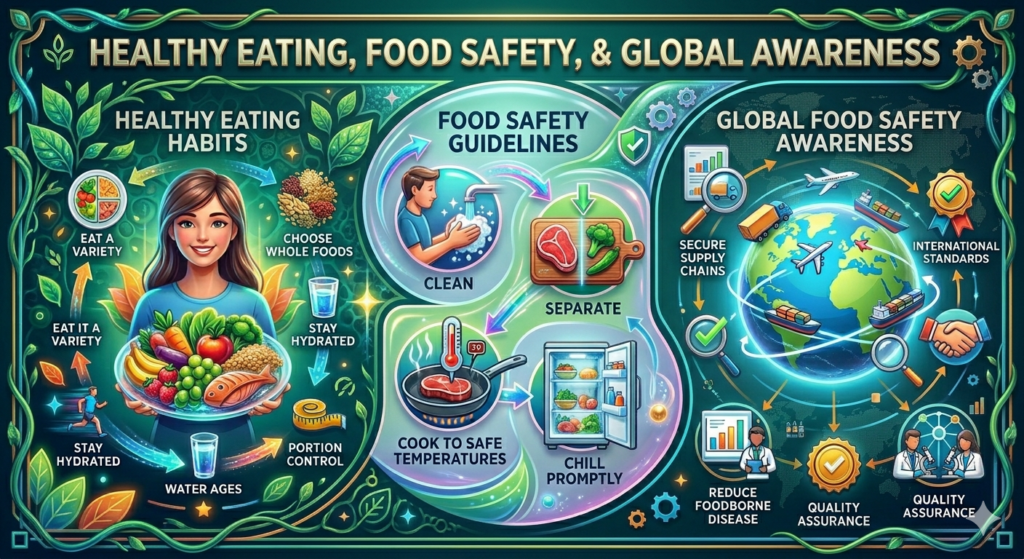
Safe food and nutrition go hand in hand. Developing healthy eating habits means not only choosing nutritious foods but also ensuring they are handled and prepared safely. Fresh fruits, vegetables, lean proteins, and whole grains provide health benefits only when contamination risks are properly managed.
Following established food safety guidelines helps consumers make informed decisions. Reading expiration dates, checking food packaging for damage, purchasing from reputable vendors, and storing groceries correctly are all essential parts of responsible food consumption. Restaurants and food businesses also play a major role by maintaining hygiene standards and complying with local food safety regulations.
Strong consumer food safety education empowers people to protect themselves and their families. Schools, healthcare organizations, and government campaigns can teach children and adults about proper hygiene, safe cooking temperatures, and contamination risks. The more people understand these principles, the easier it becomes to prevent avoidable illnesses.
Building global food safety awareness is increasingly important because today’s food systems are interconnected. Products move across borders every day, meaning that one safety failure can affect multiple countries. WHO and FAO continue to emphasize international cooperation, scientific research, and stronger surveillance systems to identify and control risks before they become widespread problems.
As food systems evolve, the message behind World Food Safety Day becomes even more relevant: safe food protects health, supports economic growth, strengthens communities, and contributes to a more sustainable future for everyone.
Conclusion
World Food Safety Day 2026 reminds us that safe food is not a luxury—it is a necessity. The 2026 theme, “From burden to solutions – safe food everywhere,” encourages governments, businesses, and individuals to transform knowledge into action. Every meal prepared safely contributes to healthier families and stronger communities.
Practicing safe food handling, following food hygiene tips, maintaining kitchen hygiene and sanitation, and focusing on food contamination prevention can significantly reduce the risk of illness. Combined with healthy eating habits and ongoing consumer food safety education, these actions create a safer future for everyone.
The message is simple yet powerful: food safety starts with each one of us. By making informed choices every day, we help ensure that the food on our tables nourishes rather than harms, making the world a healthier and safer place.
Frequently Asked Questions
1. What is World Food Safety Day 2026?
World Food Safety Day 2026 is an international awareness campaign celebrated on 7 June to promote safe food practices and reduce foodborne diseases worldwide.
2. What is the theme of World Food Safety Day 2026?
The official theme is “From burden to solutions – safe food everywhere.”
3. Why is food safety awareness important?
Food safety awareness helps prevent contamination, reduces foodborne illnesses, and protects public health.
4. What are the five basic safe food practices?
Keep clean, separate raw and cooked foods, cook thoroughly, maintain safe temperatures, and use safe water and quality ingredients.
5. How can families prevent food poisoning at home?
Families can prevent food poisoning by following proper hygiene, storing food correctly, cooking thoroughly, and avoiding cross-contamination.
Leave a Reply