
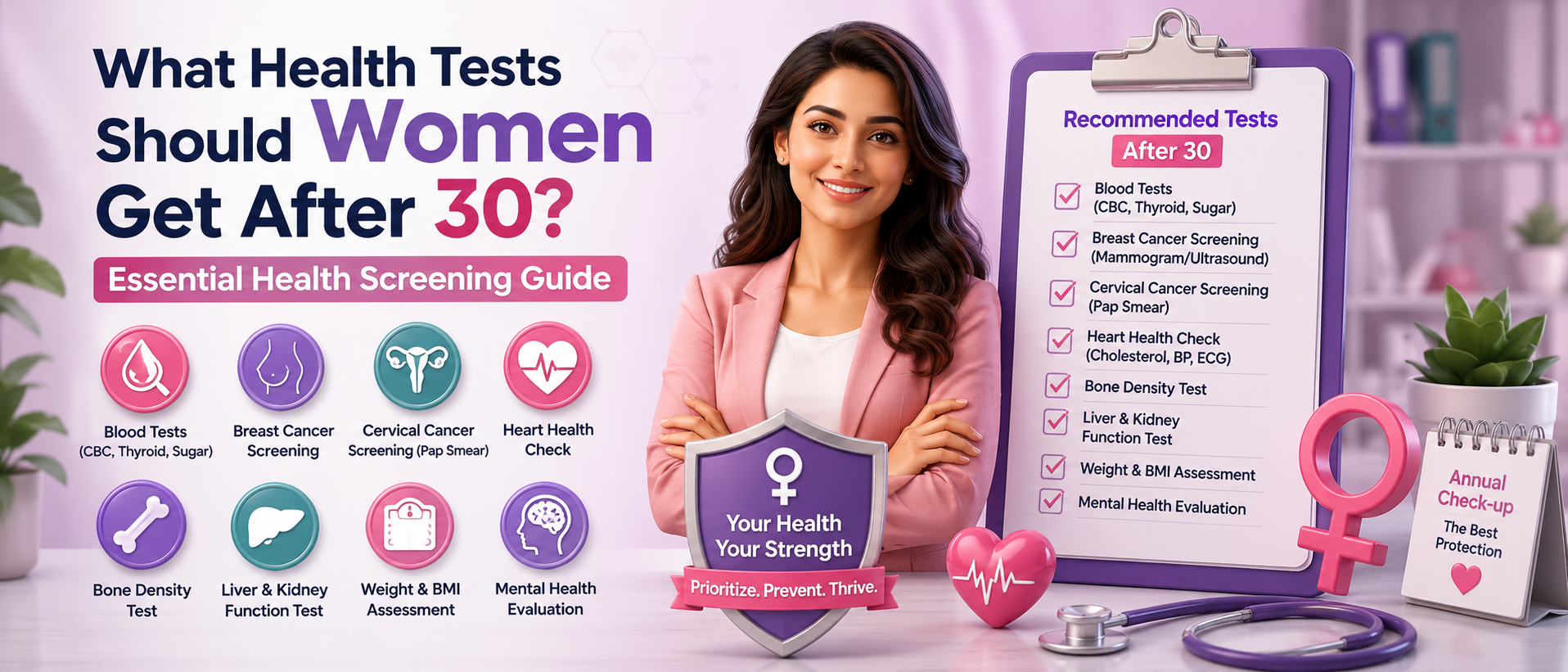

Turning 30 does not mean that every woman suddenly needs a long list of medical tests. It does mean, however, that preventive healthcare deserves a more deliberate place in your routine. Your 30s are often the years when career pressure, pregnancy or family planning, changing activity levels, sleep disruption, stress, and dietary habits can start influencing long-term health. This is why health tests for women after 30 should be viewed as an early-warning system rather than something you schedule only when you feel sick. A routine checkup can identify changes in blood pressure, blood sugar, cholesterol, thyroid function, blood counts, or other health markers before they become obvious symptoms. The exact tests you need depend on your age, medical history, family history, pregnancy status, medications, lifestyle, and risk factors, so a doctor should personalize your screening plan. For example, current preventive guidance recommends cervical cancer screening for women aged 30–65 using appropriate Pap and/or HPV-based strategies, while routine mammography for average-risk women generally begins at age 40 under current U.S. Preventive Services Task Force guidance.
Why Health Screening Becomes Important After 30
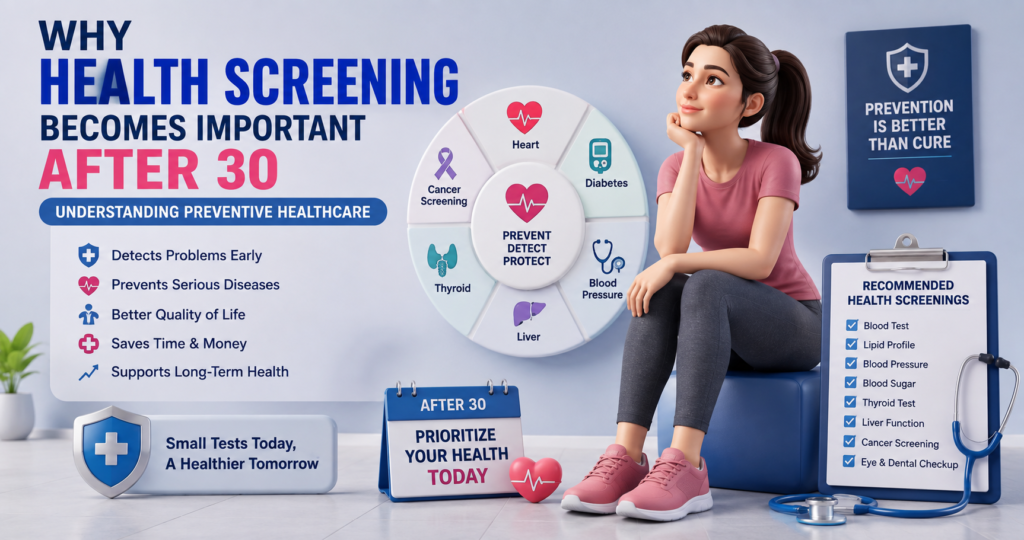
Your 30s are an excellent time to stop thinking about healthcare as something that begins when a problem appears. Preventive testing works more like servicing a car: you do not wait for the engine to fail before checking the oil, brakes, or warning lights. A routine health checkup for women over 30 gives healthcare professionals an opportunity to establish baseline measurements and identify trends over time. A single slightly abnormal result may not mean disease, but repeated changes can provide valuable clues. Blood pressure, weight, waist circumference, glucose levels, cholesterol, menstrual patterns, mental wellbeing, and reproductive health can all contribute to a more complete picture of your health. Screening decisions should also be based on evidence rather than simply ordering every available laboratory test, because unnecessary testing can create false alarms, anxiety, and avoidable follow-up procedures.
Understanding Preventive Healthcare
Preventive healthcare includes screening, vaccination, lifestyle counseling, risk assessment, and early detection. The goal is not to search for something wrong with every woman; it is to identify important risks at a stage when intervention can be more effective. For women, prevention can include cardiovascular risk assessment, diabetes screening when appropriate, cervical cancer screening, breast cancer risk assessment, mental health screening, sexual health testing based on risk, and evaluation of nutritional or hormonal concerns when symptoms suggest them. The right schedule is therefore not identical for everyone. A healthy 31-year-old with no risk factors may need a very different testing plan from a 35-year-old with obesity, a strong family history of diabetes, irregular periods, or previous abnormal cervical screening.
Routine Health Checkup for Women Over 30
A routine health checkup for women over 30 should generally begin with a conversation rather than a blood draw. Your healthcare provider may ask about your menstrual cycle, contraception, pregnancy plans, diet, physical activity, sleep, alcohol and tobacco use, medications, family history, mental health, and any new symptoms. Measurements such as blood pressure, weight, height, and BMI can help identify cardiovascular and metabolic risk. Depending on your circumstances, your clinician may recommend blood glucose testing, a lipid profile, complete blood count, thyroid testing, or other investigations. Preventive visits are also useful for discussing vaccines, reproductive health, cervical screening, breast symptoms, and mental wellbeing.
One important point is that “annual checkup” does not automatically mean “annual blood test for everything.” Some screenings are repeated at different intervals, while others are performed only when symptoms or risk factors justify them. A good screening plan is therefore a calendar rather than a single package. Your healthcare provider can help decide which tests should be performed now, which can wait, and which are unnecessary for you.
Essential Medical Tests for Women in Their 30s
The essential medical tests for women in their 30s are best selected according to individual risk. Common areas of assessment include blood pressure, blood sugar, cholesterol, blood counts, thyroid function when clinically indicated, and reproductive health. Cervical cancer screening is particularly important because screening is recommended throughout much of adulthood, including ages 30–65 under current USPSTF guidance. Breast cancer screening is different: for average-risk women, routine mammography generally begins at age 40 under current USPSTF recommendations, meaning women in their 30s should focus on breast health awareness and individualized risk assessment rather than assuming everyone needs routine mammography immediately.
Blood Pressure, Weight and BMI Assessment
Blood pressure is one of the simplest measurements in preventive medicine, yet it can reveal an important cardiovascular risk. High blood pressure may remain silent for years, which is why relying on symptoms is not a reliable strategy. Weight and BMI can provide additional context, although BMI alone does not measure overall health or body composition. Your clinician may also consider waist circumference, physical activity, diet, sleep, family history, and metabolic markers. Together, these measurements can help determine whether additional testing is appropriate.
Blood Tests Women Should Get After 30
The blood tests women should get after 30 depend heavily on symptoms and personal risk. A complete blood count may be useful when there are concerns such as fatigue, heavy menstrual bleeding, or suspected anemia. A lipid profile can help evaluate cholesterol and cardiovascular risk, while glucose or HbA1c testing may be appropriate when diabetes risk is elevated. Liver and kidney function tests may also be recommended when there are symptoms, medication considerations, existing conditions, or other clinical reasons. Vitamin B12, vitamin D, ferritin, iron studies, or folate testing can be useful when symptoms or dietary factors raise concern about deficiency, but routine testing of every vitamin in every healthy adult is not necessarily appropriate.
This distinction matters because laboratory testing is not a competition to see how many markers can fit on one report. The value comes from choosing tests that answer useful clinical questions. If you experience persistent fatigue, hair loss, dizziness, unusually heavy periods, unexplained weight changes, weakness, or other symptoms, tell your healthcare provider rather than simply purchasing a large “women’s package” without medical guidance.
Thyroid Test for Women After 30

A thyroid test for women after 30 may be considered when symptoms or risk factors suggest thyroid dysfunction. The thyroid influences metabolism, energy, temperature regulation, heart rate, and many other body functions, so thyroid disorders can sometimes resemble everyday problems such as stress or lack of sleep. Symptoms that may prompt evaluation can include unexplained weight change, persistent fatigue, sensitivity to cold or heat, menstrual changes, constipation, palpitations, or changes in mood and concentration. A clinician commonly begins with a thyroid-stimulating hormone test and may add free T4 or other tests depending on the result and clinical picture.
Women who are pregnant, trying to conceive, recently postpartum, or experiencing significant menstrual changes may require particular attention to thyroid health. However, a thyroid panel containing numerous hormones is not automatically necessary for every woman after 30. Testing should be interpreted alongside symptoms, examination findings, medications, pregnancy status, and medical history.
Cholesterol Test for Women Over 30

A cholesterol test for women over 30 can help identify cardiovascular risk and establish a baseline lipid profile. The test commonly evaluates total cholesterol, LDL cholesterol, HDL cholesterol, and triglycerides. Cholesterol numbers do not exist in isolation: blood pressure, diabetes test, smoking, family history, age, and other factors influence overall cardiovascular risk. A woman with a strong family history of premature heart disease may need earlier or more frequent evaluation than another woman of the same age.
The bigger lesson is that heart health should not be treated as an issue that begins after menopause. Cardiovascular risk accumulates over time, and your 30s offer an opportunity to address diet, physical activity, blood pressure, cholesterol, smoking, sleep, and other modifiable factors. Your doctor can determine how often your lipid profile should be repeated based on your results and risk profile.
Diabetes Screening for Women After 30
Diabetes screening for women after 30 is not necessarily required at the same age or frequency for everyone. Current USPSTF guidance recommends screening asymptomatic adults aged 35–70 who have overweight or obesity for prediabetes and type 2 diabetes, using tests such as fasting plasma glucose, HbA1c, or an oral glucose tolerance test. The recommendation also recognizes that earlier screening can be considered for people with certain higher-risk backgrounds or circumstances.
For women, pregnancy history can add another important consideration. A history of gestational diabetes can increase future diabetes risk, so women with that history should discuss an individualized screening schedule with their healthcare professional. Family history, weight changes, high blood pressure, polycystic ovary syndrome, physical inactivity, and other factors may also influence testing decisions. The practical approach is simple: do not wait for excessive thirst, frequent urination, or unexplained weight changes before discussing metabolic health.
When Earlier Diabetes Testing May Be Appropriate
Earlier testing may be appropriate when a woman has significant risk factors. A healthcare professional may recommend fasting glucose or HbA1c testing based on family history, weight, previous gestational diabetes, PCOS, medications, or other clinical circumstances. Screening is particularly valuable when the person has no obvious symptoms because prediabetes and early diabetes can remain unnoticed. If a result is abnormal, lifestyle changes and medical management can sometimes reduce the risk of progression or complications.
Vitamin Deficiency Tests for Women
Vitamin deficiency tests for women should be based on symptoms, diet, risk factors, and clinical judgment. Iron deficiency is especially relevant for women with heavy menstrual bleeding, and ferritin or iron studies may be considered when anemia or iron deficiency is suspected. Vitamin B12 testing may be relevant for people following restrictive diets, those with absorption problems, or individuals taking certain medications. Vitamin D testing may be considered in selected situations, but routinely measuring vitamin D in every healthy woman is not automatically necessary.
This is another area where personalized testing matters. Fatigue, brittle nails, hair changes, weakness, dizziness, mouth ulcers, numbness, or other symptoms can have many possible causes. Instead of assuming that every symptom is a vitamin deficiency, discuss the complete picture with a clinician. Sometimes the most useful investigation is not the test you initially expected.
Hormone Tests for Women After 30
Hormone tests for women after 30 are not routine requirements simply because a woman has reached a particular birthday. Hormonal testing can be useful when there are specific clinical questions involving irregular periods, infertility, excessive hair growth, acne, unexpected breast discharge, suspected ovarian disorders, thyroid dysfunction, or other symptoms. Depending on the concern, a doctor may consider tests involving reproductive hormones, thyroid hormones, prolactin, or other markers. The timing of some reproductive hormone tests can also affect interpretation because hormone levels naturally fluctuate during the menstrual cycle.
Women considering pregnancy may benefit from a preconception consultation rather than ordering a random collection of hormone tests. Similarly, irregular periods should not automatically be labeled as a “hormonal imbalance” without evaluation. The menstrual cycle itself provides useful information, and your clinician may combine your symptoms, cycle pattern, examination, and targeted laboratory tests to determine what is happening.
Breast Cancer Screening After 30
Breast cancer screening after 30 should be based on age and risk rather than assuming that every woman needs the same imaging schedule. Current USPSTF guidance recommends mammography every two years for women aged 40–74 at average risk. For women in their 30s, the important step is to understand personal risk, including family history, genetic risk, previous chest radiation, and other relevant factors.
A new breast lump, unusual nipple discharge, skin changes, nipple changes, or another persistent breast abnormality should be medically evaluated rather than waiting for a routine screening appointment. Women with substantially increased risk may be offered a different screening strategy by their healthcare team. Screening recommendations can also differ between countries and professional organizations, so women should follow the guidance appropriate to their healthcare system and individual risk profile.
Cervical Cancer Screening for Women After 30
Cervical cancer screening for women after 30 is one of the most important preventive screenings to keep on your healthcare calendar. Current USPSTF guidance recommends that women aged 30–65 be screened using one of several evidence-based approaches: cervical cytology alone every three years, primary high-risk HPV testing every five years, or HPV testing combined with cytology every five years. A 2024 draft update from the USPSTF places primary HPV testing at five-year intervals as the preferred strategy while retaining other acceptable approaches, demonstrating that guidelines can evolve as evidence develops.
The correct test and interval may differ for women with previous abnormal results, a history of cervical cancer or high-grade precancer, immune suppression, or other risk factors. This is why copying another person’s screening schedule is not a good idea. Keep records of previous Pap and HPV results and discuss them with your gynecologist or healthcare provider.
Bone Health Tests for Women Over 30
Bone health tests for women over 30 are not routinely necessary for every healthy woman in her 30s. Bone density testing is generally targeted toward people at increased risk of osteoporosis or fractures, with age, menopause status, certain medications, low body weight, previous fractures, and medical conditions influencing the decision. Women who have risk factors for low bone density should discuss whether bone mineral density testing is appropriate.
Your 30s are still an excellent period to build strong bones through adequate nutrition, resistance and weight-bearing exercise, and healthy lifestyle habits. Calcium and vitamin D intake should be appropriate for individual needs, but supplements should not automatically replace a balanced diet or be taken in excessive amounts. Bone health is a long-term investment: the habits developed now can influence skeletal health later in life.
Important Health Screenings for Women in Their 30s
The important health screenings for women in their 30s go beyond laboratory tests. A preventive appointment may also address blood pressure, cardiovascular risk, mental health, reproductive health, sexual health, vaccination status, lifestyle factors, and family history. Screening for sexually transmitted infections may be recommended depending on age, sexual activity, pregnancy, and risk factors. Mental health screening is also important because anxiety, depression, chronic stress, and burnout can affect sleep, relationships, productivity, and physical wellbeing.
Family history deserves special attention. If close relatives developed breast, ovarian, colorectal, cardiovascular, or other diseases at unusually young ages, your screening plan may need to be different. The goal is not to become anxious about every disease in your family tree; it is to give your healthcare provider enough information to recognize meaningful patterns.
Annual Health Checkup Tests for Women
Annual health checkup tests for women should be individualized rather than treated as a universal laboratory checklist. A yearly preventive appointment can be useful for reviewing symptoms, medications, lifestyle, blood pressure, reproductive health, vaccinations, and age-appropriate screening. Some blood tests may be repeated annually if clinically indicated, while others may only need to be checked periodically. The frequency should reflect your previous results and risk profile.
If your diagnostic center offers a women’s health package, ask what parameters are included and whether the package is designed for your age and risk level. A comprehensive report can be helpful, but the interpretation matters just as much as the numbers. Abnormal results should be reviewed with an appropriately qualified healthcare professional rather than interpreted in isolation.
How Often Should Women Get Health Tests After 30?
There is no single answer to how often women should undergo every health test after 30. Some measurements, such as blood pressure, may be checked regularly, while cervical cancer screening follows specific intervals depending on the method used. Diabetes and cholesterol testing may be repeated according to individual risk and previous results. Breast cancer screening generally becomes more relevant as women approach 40, with current USPSTF guidance recommending biennial mammography from 40 through 74 for average-risk women.
Think of your screening schedule as a personalized maintenance plan. A woman with normal results and low risk may require fewer tests than someone with a strong family history or previous abnormal findings. Your healthcare provider can determine when to repeat each test and whether a new symptom changes the schedule.
Preventive Health Screening for Women After 30
Preventive health screening for women after 30 is ultimately about making informed decisions before problems become harder to manage. The strongest preventive approach combines appropriate testing with everyday habits such as regular exercise, nutritious food, sufficient sleep, avoiding tobacco, maintaining a healthy weight, managing stress, and keeping vaccinations current. Tests provide information, but lifestyle and follow-up actions determine what happens next.
It is also important not to panic when a screening test is abnormal. Screening tests are designed to identify people who may need further evaluation; an abnormal result does not automatically mean a serious disease is present. Your doctor may repeat the test, order a more specific investigation, or simply monitor the result depending on the circumstances.
Which Tests Depend on Family History and Lifestyle?
Family history can significantly influence when and how often certain tests are appropriate. For example, a strong family history of premature heart disease may prompt earlier cardiovascular risk assessment, while a strong family history of certain cancers may lead to genetic counseling or earlier specialist evaluation. Lifestyle factors such as smoking, alcohol consumption, physical inactivity, diet, sleep patterns, and occupational exposures can also influence screening decisions.
Pregnancy history is another important factor for women. Previous gestational diabetes, pregnancy-related hypertension, complications during pregnancy, or repeated miscarriages may change future healthcare priorities. A woman’s health history is therefore like a map: the more accurately it reflects her previous experiences and risks, the more precisely a healthcare professional can plan future screening.
Preparing for a Women’s Health Checkup
Before a women’s health checkup, write down your medications, supplements, allergies, previous diagnoses, menstrual history, and any symptoms that have recently changed. Bring information about previous Pap tests, HPV results, mammograms, blood tests, or other relevant investigations when available. It can also help to write down your family’s history of major illnesses, especially cancer, diabetes, heart disease, osteoporosis, and other conditions that occurred at relatively young ages.
Ask practical questions rather than leaving the appointment with uncertainty. You might ask which tests you actually need, when each test should be repeated, whether you need fasting, what an abnormal result could mean, and which symptoms should prompt an earlier visit. Good preventive healthcare is a conversation, not simply a laboratory report.
Conclusion
The best health tests for women after 30 are not necessarily the largest number of tests available. They are the tests that answer meaningful health questions based on age, symptoms, medical history, family history, lifestyle, pregnancy plans, and personal risk. A sensible preventive plan may include regular blood pressure assessment, appropriate cholesterol and diabetes screening, targeted blood tests, thyroid evaluation when indicated, nutritional investigations when justified, cervical cancer screening, breast health assessment, and bone health evaluation when risk factors are present. Current evidence-based recommendations show why screening schedules should be personalized: cervical cancer screening has defined age-based intervals, while routine mammography for average-risk women is currently recommended beginning at 40 under USPSTF guidance.
Your 30s are not a deadline for finding every possible disease. They are an opportunity to establish healthy baselines and build a relationship with preventive healthcare. If something changes—persistent fatigue, unusual bleeding, unexplained weight change, breast changes, menstrual irregularity, or another concerning symptom—do not wait for your next annual appointment. A timely conversation with a qualified healthcare professional can be far more valuable than simply ordering a large collection of tests.
Frequently Asked Questions
1. What are the most important health tests for women after 30?
The most appropriate tests vary by individual, but commonly considered areas include blood pressure, cardiovascular risk assessment, cholesterol, diabetes screening when indicated, cervical cancer screening, and targeted blood tests based on symptoms or risk factors. Thyroid, iron, vitamin B12, vitamin D, and hormone testing may be appropriate in selected situations rather than automatically for every woman.
2. Should women get a thyroid test every year after 30?
Not necessarily. A thyroid test for women after 30 may be appropriate when symptoms, pregnancy-related considerations, previous thyroid disease, or other risk factors are present. Your healthcare professional can determine whether TSH and additional thyroid testing are appropriate.
3. Do women need mammograms in their 30s?
Not every average-risk woman needs routine mammography in her 30s. Current USPSTF guidance recommends mammography every two years for average-risk women aged 40–74. Women with higher breast cancer risk may require individualized screening earlier or additional imaging.
4. How often should women get cervical cancer screening after 30?
Under current USPSTF guidance, women aged 30–65 can be screened with cervical cytology every three years, primary high-risk HPV testing every five years, or cotesting every five years. Individual circumstances, including previous abnormal results, can change the recommended schedule.
5. Are vitamin and hormone tests necessary for every woman after 30?
No. Vitamin deficiency tests for women and hormone tests for women after 30 should generally be selected according to symptoms, diet, medical history, reproductive concerns, or other risk factors. Testing everything routinely can produce results that are difficult to interpret and may lead to unnecessary follow-up.
Leave a Reply