
Why World Mental Health Day 2026 Matters

Mental health is an essential part of overall health, influencing how people think, feel, behave, make decisions, and respond to everyday challenges. However, the demands of modern life, including work responsibilities, financial concerns, family expectations, academic pressure, and constant digital connectivity, can affect emotional well-being.
World Mental Health Day 2026 is an important opportunity to raise awareness about mental health, encourage open conversations, and help people understand how to manage stress, anxiety, and emotional pressure. It also reminds individuals, families, workplaces, and communities that mental health deserves the same attention as physical health.
Stress is a normal response to challenging situations, but prolonged or overwhelming stress can affect sleep, concentration, relationships, and daily functioning. Anxiety can also become difficult to manage when worry persists or interferes with everyday activities.
Learning healthy ways to respond to these challenges can make a meaningful difference. Although self-care cannot replace professional treatment when it is needed, practical daily habits can support emotional well-being and help people develop healthier responses to life’s pressures.
Mental Health Awareness 2026: Understanding Emotional Well-Being
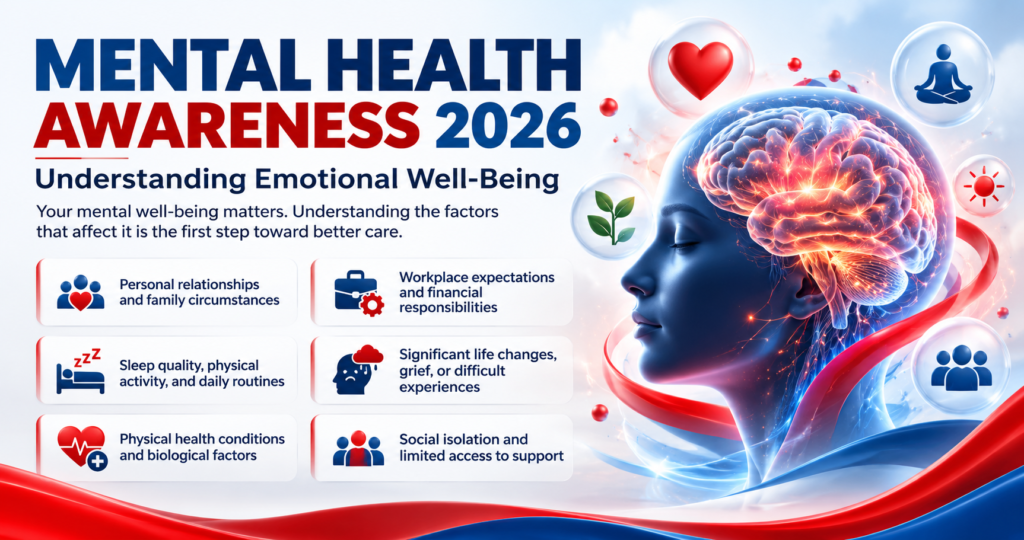
Mental health awareness 2026 focuses on recognizing emotional difficulties, reducing stigma, and encouraging people to seek appropriate support without feeling ashamed.
Good mental health does not mean feeling happy all the time or never experiencing stress. It involves being able to manage everyday challenges, maintain relationships, adapt to changes, and seek help when necessary.
Mental health can be influenced by several factors, including:
- Personal relationships and family circumstances
- Workplace expectations and financial responsibilities
- Sleep quality, physical activity, and daily routines
- Significant life changes, grief, or difficult experiences
- Physical health conditions and biological factors
- Social isolation and limited access to support
Recognizing these influences can help people understand their emotional responses rather than blaming themselves for experiencing difficulties.
Symptoms of Stress and Anxiety: Recognizing the Warning Signs
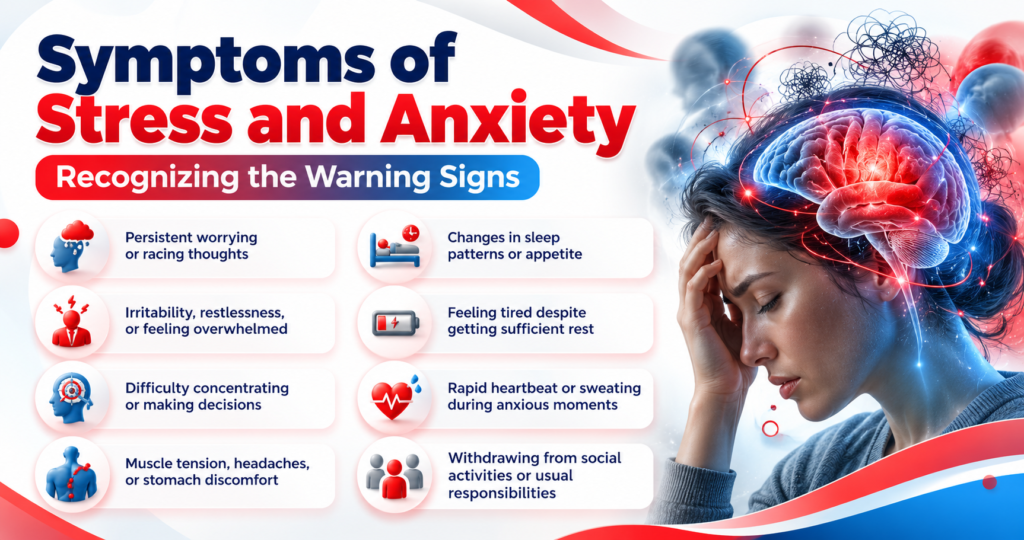
Understanding the symptoms of stress and anxiety is an important step towards managing emotional health. Although stress and anxiety can overlap, they are not exactly the same.
Stress is often associated with an identifiable challenge, such as a deadline, examination, financial problem, or family responsibility. Anxiety may involve persistent worry, fear, or apprehension, sometimes even when there is no immediate threat.
Common symptoms may include:
- Persistent worrying or racing thoughts
- Irritability, restlessness, or feeling overwhelmed
- Difficulty concentrating or making decisions
- Muscle tension, headaches, or stomach discomfort
- Changes in sleep patterns or appetite
- Feeling tired despite getting sufficient rest
- Rapid heartbeat or sweating during anxious moments
- Withdrawing from social activities or usual responsibilities
These symptoms can have several causes and do not automatically indicate a mental health disorder. However, if they persist, worsen, or interfere with daily life, consulting a qualified healthcare professional is advisable.
Practical Ways to Manage Stress in Everyday Life
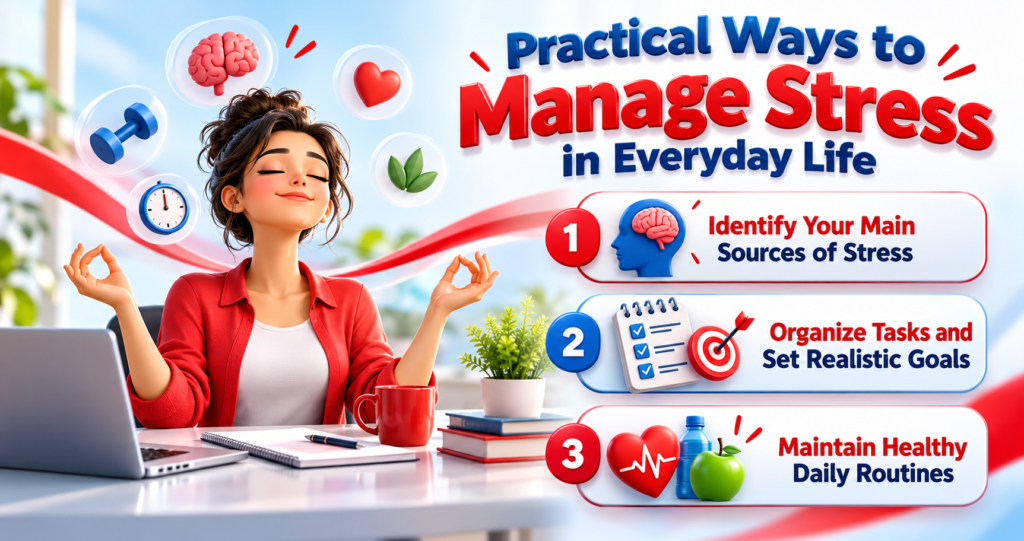
Finding practical ways to manage stress can help people respond more effectively to everyday responsibilities. The goal is not to eliminate every stressful situation but to develop manageable routines and healthier responses.
1. Identify Your Main Sources of Stress
Start by identifying the situations, responsibilities, or thoughts that create the most pressure. Keeping a simple journal can help reveal patterns in your mood, energy, and reactions.
For example, you may notice that stress increases after poor sleep, excessive screen time, demanding meetings, or unresolved personal concerns.
Once you understand your triggers, you can explore realistic changes, such as adjusting your schedule, setting boundaries, asking for assistance, or breaking a large task into smaller steps.
2. Organize Tasks and Set Realistic Goals
An overloaded schedule can make even manageable responsibilities feel overwhelming. Prioritize essential tasks, establish realistic deadlines, and avoid expecting yourself to complete everything at once.
Try dividing a large assignment into smaller activities and taking short breaks between focused work periods. If your responsibilities exceed the available time, discuss priorities rather than silently accepting an unsustainable workload.
3. Maintain Healthy Daily Routines
Regular sleep, balanced meals, movement, and time for relaxation provide a foundation for managing stress. Consistent routines can also make everyday responsibilities feel more predictable.
Small, sustainable changes are often easier to maintain than dramatic lifestyle changes.
Stress Management Tips for a Healthier Mind
Effective stress management tips focus on habits that can be practised consistently. Different approaches work for different people, so experiment with safe, realistic options and notice which ones help you feel more balanced.
Consider these strategies:
- Take short breaks during demanding activities.
- Spend time outdoors when possible.
- Talk with someone you trust about your concerns.
- Set boundaries around work and personal commitments.
- Reduce unnecessary notifications and digital distractions.
- Make time for hobbies, music, reading, or other enjoyable activities.
- Avoid relying on alcohol or other substances to cope with stress.
Remember that managing stress is not a competition. Progress may be gradual, and difficult days do not mean you have failed.
Anxiety Management Techniques That Can Help You Feel More in Control
Anxiety management techniques can help people respond to worry without allowing it to control every decision or activity.
One helpful approach is to distinguish between a problem that requires action and a worry that cannot be resolved immediately. If the concern is practical, identify one small step you can take. If it is uncertain or outside your control, practise acknowledging the thought without repeatedly trying to solve it.
Other useful approaches include:
- Grounding: Notice your surroundings and identify things you can see, hear, and feel.
- Thought awareness: Recognize anxious thoughts without automatically treating them as facts.
- Gradual problem-solving: Approach manageable challenges one step at a time.
- Routine building: Maintain consistent sleep, meals, movement, and relaxation.
- Support seeking: Discuss persistent worries with a trusted person or qualified professional.
These techniques can support daily coping, but persistent or severe anxiety may require professional assessment and treatment.
Coping Strategies for Anxiety During Difficult Situations
Coping strategies for anxiety can be especially useful before an examination, important meeting, medical appointment, difficult conversation, or other challenging event.
Begin by noticing what you are experiencing. You might feel tense, breathe more quickly, or imagine an unfavorable outcome. Instead of criticizing yourself, acknowledge the response and focus on what you can do next.
Prepare for the situation by gathering necessary information, practising beforehand, and setting a realistic goal. During the event, direct your attention towards the immediate task rather than repeatedly predicting what might go wrong.
Afterward, reflect on what helped and what you could adjust next time. This process can gradually improve confidence and help you approach future challenges more calmly.
If anxiety regularly leads you to avoid important activities or significantly disrupts daily life, seek advice from a qualified mental health professional.
Emotional Pressure Management: How to Handle Expectations and Responsibilities
Emotional pressure management involves responding to expectations, personal responsibilities, and difficult feelings without neglecting your own needs.
Pressure can come from many sources, including family expectations, financial obligations, career goals, relationships, academic performance, and social comparisons. When several demands occur together, people may feel that they must always remain productive or meet everyone else’s expectations.
To manage emotional pressure more effectively:
Set healthy boundaries. Explain what you can reasonably manage and communicate when you need more time or assistance.
Accept that perfection is unrealistic. Focus on doing tasks well rather than expecting flawless performance in every area of life.
Make space for emotions. Feeling sad, frustrated, disappointed, or uncertain does not mean you are weak.
Separate expectations from priorities. Consider which responsibilities genuinely matter and which demands can be postponed, delegated, or reconsidered.
Ask for help early. Discussing difficulties before they become overwhelming may make it easier to identify solutions.
Healthy emotional pressure management starts with recognizing that personal well-being matters alongside professional achievements and family responsibilities.
Emotional Well-Being Tips for Building a More Balanced Life
Simple emotional well-being tips can help people maintain stronger connections with themselves and others.
Make time for activities that provide meaning, enjoyment, or a sense of accomplishment. Maintain supportive relationships and communicate honestly with people you trust. Recognize small achievements instead of focusing exclusively on unfinished tasks.
It can also help to limit social comparisons. Online content often presents carefully selected moments rather than the full reality of someone’s life. Comparing your everyday experiences with another person’s edited highlights may increase dissatisfaction and unnecessary pressure.
Practise self-compassion by speaking to yourself with the same patience you would offer a friend. If something does not go according to plan, consider what you can learn rather than defining yourself by one difficult experience.
Emotional well-being is not about avoiding every negative feeling. It is about developing a healthier relationship with emotions and finding constructive ways to respond to them.
Mental Health Self-Care Practices to Include in Your Routine
Mental health self-care practices are everyday activities that support emotional, psychological, and social well-being. They do not need to be expensive or time-consuming.
Useful self-care practices include:
- Maintaining a consistent sleep schedule.
- Eating regular, balanced meals.
- Participating in enjoyable physical activities.
- Staying connected with friends and family.
- Making time for hobbies and creative interests.
- Taking breaks from digital devices.
- Writing down thoughts and feelings when helpful.
- Seeking professional support when self-care is not enough.
Create a routine that reflects your circumstances rather than following a rigid checklist. Someone with demanding work hours may benefit from a short evening walk, while another person may find journaling or a quiet conversation more helpful.
Self-care should support your life, not become another source of pressure or guilt.
Relaxation Techniques for Stress Relief
Relaxation techniques for stress relief can help reduce tension and create opportunities to pause during a demanding day.
Progressive muscle relaxation: Gently tense and then release different muscle groups, moving through the body. Avoid tensing areas affected by pain or injury.
Gentle stretching: Stretching your neck, shoulders, back, and legs may help relieve muscular tension associated with prolonged sitting.
Calming activities: Listening to soothing music, reading, gardening, or spending time in nature can provide a restorative break.
Guided relaxation: Audio recordings or guided sessions can help you focus your attention and relax at a comfortable pace.
Quiet breaks: Step away from a stressful task for a few minutes, if possible, and return when you feel more settled.
These activities may help you manage everyday tension, although their effects vary from person to person. They should complement, rather than replace, professional care when needed.
Mindfulness Exercises for Mental Health
Mindfulness exercises for mental health encourage you to pay attention to the present moment with openness and without unnecessary judgment.
Mindfulness does not require you to stop thinking. Instead, it involves noticing thoughts, emotions, and physical sensations without becoming completely absorbed in them.
You can try a simple exercise:
- Sit comfortably and notice the feeling of your feet against the floor.
- Pay attention to your natural breathing without forcing it.
- Notice sounds, sensations, and thoughts as they arise.
- When your attention wanders, gently bring it back to the present moment.
- Continue for a few minutes, stopping if the exercise makes you feel uncomfortable.
Some people find mindfulness helpful for everyday stress, while others may prefer movement, conversation, or other approaches. If focusing inward intensifies distress, choose an alternative grounding activity and seek professional guidance if necessary.
Ways to Reduce Daily Stress Without Major Lifestyle Changes
The most sustainable ways to reduce daily stress often involve small adjustments rather than completely changing your lifestyle.
Prepare for the next day by organizing essential tasks in advance. Leave reasonable gaps between appointments instead of scheduling every minute. Reduce unnecessary notifications and create specific periods for checking messages.
If commuting or household responsibilities are stressful, identify one practical improvement, such as preparing items the night before or sharing responsibilities where possible.
Take brief movement breaks during long periods of sitting. Maintain contact with supportive people, and avoid postponing rest until every task is complete.
You can also establish a transition between work and personal time. A short walk, changing clothes, listening to music, or putting work notifications aside may help mark the end of the working day.
These small steps cannot remove every challenge, but they may reduce avoidable pressure and make daily routines more manageable.
Healthy Coping Mechanisms for Difficult Emotions
Healthy coping mechanisms help people respond to difficult experiences without creating additional harm.
Examples include talking to a trusted person, engaging in physical activity, using creative outlets, practising relaxation, writing about concerns, and breaking problems into manageable steps.
Some coping responses may provide temporary relief while making difficulties worse over time. Examples include regularly avoiding important responsibilities, isolating yourself completely, or relying on alcohol or other substances to manage emotions.
If you notice an unhelpful pattern, approach yourself with curiosity rather than shame. Consider what need the behavior may be meeting and identify a safer alternative.
For example, if you scroll through your phone whenever you feel overwhelmed, you might try a short walk, a brief conversation, or a structured break instead.
Healthy coping is not about handling every problem alone. It includes knowing when to seek help and accepting support from others.
Breathing Exercises for Anxiety and Everyday Tension
Breathing exercises for anxiety may help some people feel calmer during stressful moments. Gentle, comfortable breathing is generally preferable to forcing deep breaths or trying to control every breath.
Try this simple method:
- Sit or stand in a comfortable position.
- Relax your shoulders and jaw.
- Breathe in gently through your nose if comfortable.
- Breathe out slowly without forcing the air out.
- Continue for a short period while keeping your breathing comfortable.
You do not need to follow a strict counting pattern. If you feel dizzy, breathless, or more anxious, stop and return to your normal breathing.
Breathing exercises are not a substitute for medical assessment. New, severe, or unexplained breathing difficulties, chest pain, or fainting require appropriate medical attention rather than being automatically attributed to anxiety.
Work-Related Stress Management: Creating a Healthier Workplace
Work-related stress management is important because excessive workloads, unclear expectations, poor communication, limited control, and insufficient support can affect employees’ well-being.
Individuals can take practical steps by prioritizing tasks, clarifying expectations, taking appropriate breaks, and discussing unrealistic deadlines with managers. Maintaining boundaries between work and personal life can also help reduce ongoing pressure.
Employers have an equally important responsibility to create psychologically healthier workplaces. Useful measures include:
- Setting clear and realistic workloads.
- Encouraging respectful communication.
- Providing appropriate resources and employee support.
- Addressing bullying, discrimination, and unsafe working conditions.
- Offering reasonable flexibility where possible.
- Making mental health information and support accessible.
- Encouraging employees to seek help without fear of stigma.
Mental health should not be treated solely as an individual’s responsibility. Workplace culture, management practices, and organizational policies can influence whether employees are able to maintain their well-being.
Improving Emotional Resilience Through Everyday Habits
Improving emotional resilience means developing the ability to adapt to challenges, recover from setbacks, and seek support when circumstances become difficult.
Resilience does not mean remaining unaffected by hardship or pretending to be strong all the time. People can be resilient while experiencing sadness, uncertainty, or the need for assistance.
You can support resilience by building reliable routines, developing problem-solving skills, maintaining supportive relationships, and learning from manageable challenges.
Set realistic expectations for yourself and recognize that progress may involve setbacks. When a problem feels too large to address at once, identify one action that is within your control.
It is also important to acknowledge factors beyond individual control. Financial hardship, unsafe environments, discrimination, and inadequate access to services can create significant emotional burdens. Supportive communities and appropriate professional or social resources are essential parts of resilience.
Mental Health Support and Counseling: When to Seek Professional Help
Mental health support and counseling can provide valuable assistance when stress, anxiety, or emotional pressure becomes difficult to manage independently.
Consider speaking with a qualified healthcare or mental health professional if you experience persistent worry, prolonged low mood, significant sleep changes, difficulty concentrating, withdrawal from relationships, or problems managing daily responsibilities.
Professional support may include psychological assessment, counseling, psychotherapy, medical evaluation, or medication when clinically appropriate. The right approach depends on an individual’s symptoms, circumstances, preferences, and professional assessment.
You do not need to wait until a situation becomes severe before asking for help. Early support may help you understand your experiences, develop coping skills, and identify suitable treatment options.
If you are supporting someone else, listen without judgment, acknowledge their feelings, and encourage appropriate care. Avoid dismissive statements such as telling them to simply stop worrying.
If someone is at immediate risk of harming themselves or another person, seek urgent assistance through local emergency services or an appropriate crisis service. Stay with the person if it is safe to do so and help them access immediate support.
Importance of Mental Health Care in Overall Health
The importance of mental health care extends beyond emotional comfort. Mental well-being can influence sleep, relationships, decision-making, concentration, work performance, and the ability to manage physical health needs.
Mental and physical health are closely connected, but symptoms should not automatically be attributed to stress. Persistent fatigue, headaches, sleep problems, or changes in appetite may have several possible causes and deserve appropriate assessment when ongoing or concerning.
Routine healthcare appointments provide opportunities to discuss symptoms, lifestyle concerns, and emotional difficulties with qualified professionals. Mental health screening or assessment may be appropriate depending on individual circumstances.
Reducing stigma, improving access to care, and encouraging honest conversations can help people seek support earlier.
Healthy Lifestyle for Mental Well-Being
A healthy lifestyle for mental well-being includes habits that support both the body and mind. Although lifestyle changes cannot prevent or treat every mental health condition on their own, they can complement appropriate care.
Prioritize sleep: Maintain a regular sleep schedule and create a relaxing bedtime routine.
Stay physically active: Choose activities suited to your ability and circumstances, such as walking, cycling, dancing, or gentle exercise.
Eat balanced meals: Include a variety of nutritious foods and maintain regular eating patterns where possible.
Stay socially connected: Make time for supportive relationships and meaningful interactions.
Limit harmful coping habits: Avoid relying on alcohol or other substances to manage stress and emotional discomfort.
Make time for enjoyment: Include hobbies, rest, and activities that provide meaning in your daily routine.
Avoid expecting lifestyle habits to solve every emotional challenge. If symptoms persist or interfere with daily functioning, professional assessment remains important.
World Mental Health Day Awareness Campaign: Turning Awareness into Action
A World Mental Health Day awareness campaign can help communities move beyond simply discussing mental health and towards practical, supportive action.
Healthcare organizations, schools, employers, and community groups can use this occasion to share reliable information, encourage respectful conversations, and explain how people can access appropriate support.
Effective awareness activities may include educational sessions, mental health information campaigns, employee well-being initiatives, discussions with qualified professionals, and clear signposting to support services.
Organizations should use respectful, non-stigmatizing language and protect the privacy of people sharing personal experiences. Participation in awareness activities should not require anyone to disclose private health information.
Families and individuals can contribute by listening without judgment, checking in with people who may be struggling, and challenging harmful misconceptions about mental health.
The purpose of awareness is not simply to increase knowledge. It is to help create environments where people feel respected, supported, and able to seek care.
Make Mental Well-Being a Daily Priority in 2026
World Mental Health Day 2026 is a valuable reminder that mental health deserves attention throughout the year, not only on a designated awareness day.
Practical steps such as maintaining healthy routines, recognizing stress triggers, using relaxation techniques, setting boundaries, and staying connected with supportive people can help individuals manage everyday challenges.
At the same time, persistent anxiety, emotional distress, or difficulty functioning should not be ignored or treated as a personal failure. Qualified healthcare professionals can help identify concerns and recommend appropriate support.
Individuals, families, employers, healthcare providers, and communities all have a role in promoting mental well-being. By encouraging open conversations, reducing stigma, and improving access to care, we can help build a society where mental health is treated with understanding and respect.
This World Mental Health Day 2026, take one practical step towards better mental well-being: check in with yourself, reach out to someone you trust, or seek professional support if you need it.
Leave a Reply