



Every newborn deserves specialized, compassionate, and attentive healthcare, especially during the first days and weeks of life. Neonatal Nurses Week 2026 provides an opportunity to recognize the dedicated healthcare professionals who care for newborn babies requiring specialized medical attention.
Neonatal nurses work in highly specialized environments, including neonatal intensive care units (NICUs), maternity units, newborn nurseries, and other healthcare settings. Their work can involve caring for premature babies, newborns with medical complications, and critically ill infants who require continuous monitoring and specialized treatment.
This week also helps increase awareness about the importance of neonatal nursing and the essential contribution these professionals make to newborn healthcare. From monitoring vital signs to supporting families, neonatal nurses play an important role in providing safe and compassionate care.
What Is Neonatal Nurses Week 2026?
Neonatal Nurses Week 2026 is an opportunity to recognize and appreciate nurses who specialize in caring for newborn babies, particularly those who require additional medical support.
Neonatal nursing requires specialized knowledge, clinical skills, patience, and attention to detail. Newborns can experience rapid changes in their health condition, which means nurses must carefully monitor them and communicate changes to doctors and other members of the healthcare team.
The observance also provides an opportunity for healthcare organizations, hospitals, medical institutions, and communities to highlight the contribution of neonatal nurses and promote greater understanding of specialized newborn healthcare.
Why Neonatal Nurses Are Essential to Newborn Healthcare

Neonatal nurses are an important part of the multidisciplinary healthcare team caring for newborns. They may provide care to healthy newborns as well as babies who need specialized medical attention.
Newborns have unique physiological needs compared with older children and adults. Their body systems are still developing, and premature or medically fragile babies may require continuous monitoring.
Neonatal nurses help provide individualized care based on each baby’s condition. Their responsibilities can include monitoring vital signs, administering medications, supporting feeding, observing developmental progress, maintaining hygiene, and communicating with families.
Their contribution goes beyond clinical care. Neonatal nurses can also provide emotional support and education to parents during what can be a challenging period.
Understanding Neonatal Nursing and Its Specialized Role
Neonatal nursing is a specialized area of nursing focused on the care of newborn babies. It is particularly important for infants who are premature, have low birth weight, have congenital conditions, experience infections, or require intensive medical support.
Neonatal nurses work closely with neonatologists, pediatricians, respiratory therapists, pharmacists, nutrition specialists, and other healthcare professionals.
Depending on the healthcare setting, neonatal nursing may involve caring for babies in different levels of neonatal care. Some newborns may need routine observation, while others may require advanced monitoring and intensive treatment.
Because newborns can be particularly vulnerable to changes in temperature, oxygen levels, blood glucose, feeding, and other physiological factors, neonatal nurses require specialized training and clinical knowledge.
Neonatal Care: Supporting Babies During Their Earliest Days
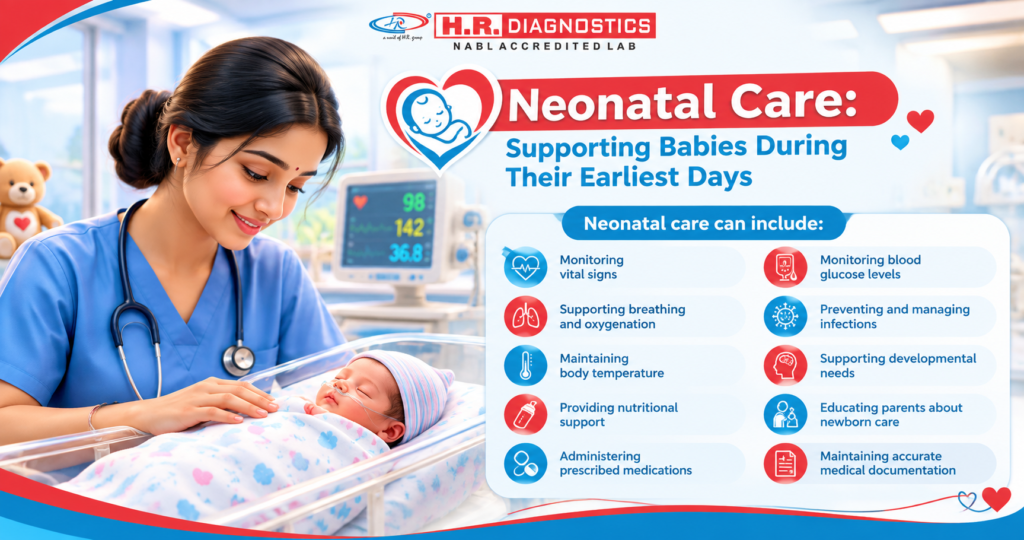
Neonatal care focuses on meeting the medical, developmental, nutritional, and emotional needs of newborn babies.
The level of care required depends on the baby’s gestational age, birth weight, medical condition, and overall health. Some babies need only routine newborn care, while others may require specialized treatment and monitoring.
Neonatal care can include:
- Monitoring vital signs
- Supporting breathing and oxygenation
- Maintaining body temperature
- Providing nutritional support
- Administering prescribed medications
- Monitoring blood glucose levels
- Preventing and managing infections
- Supporting developmental needs
- Educating parents about newborn care
- Maintaining accurate medical documentation
Neonatal nurses contribute to many of these areas as part of a coordinated healthcare team.
The Role of NICU Nurses in Neonatal Intensive Care
NICU nurses work with newborns who require a higher level of medical attention. A Neonatal Intensive Care Unit is designed to provide specialized care for babies who may have serious medical conditions or require close monitoring.
NICU nurses continuously observe newborns and use specialized equipment to monitor their condition. They may care for infants receiving respiratory support, intravenous medications, nutritional support, or other medical interventions.
Working in neonatal intensive care requires nurses to remain attentive to subtle changes in a baby’s condition. Accurate documentation, effective communication, and teamwork are particularly important in this environment.
Neonatal Intensive Care and the Importance of Continuous Monitoring
Neonatal intensive care provides specialized medical support for newborns with complex healthcare needs.
In a NICU, healthcare professionals may use advanced equipment to monitor heart rate, respiratory rate, oxygen saturation, temperature, and other important parameters.
Neonatal nurses are often responsible for observing these measurements and identifying changes that may require immediate attention. They also help ensure that equipment is functioning properly and that newborns receive care according to their individualized treatment plans.
The NICU environment can be unfamiliar and stressful for parents. Nurses can help families understand what is happening, explain routine procedures, and provide appropriate updates within their professional responsibilities.
Understanding Newborn Nurse Responsibilities
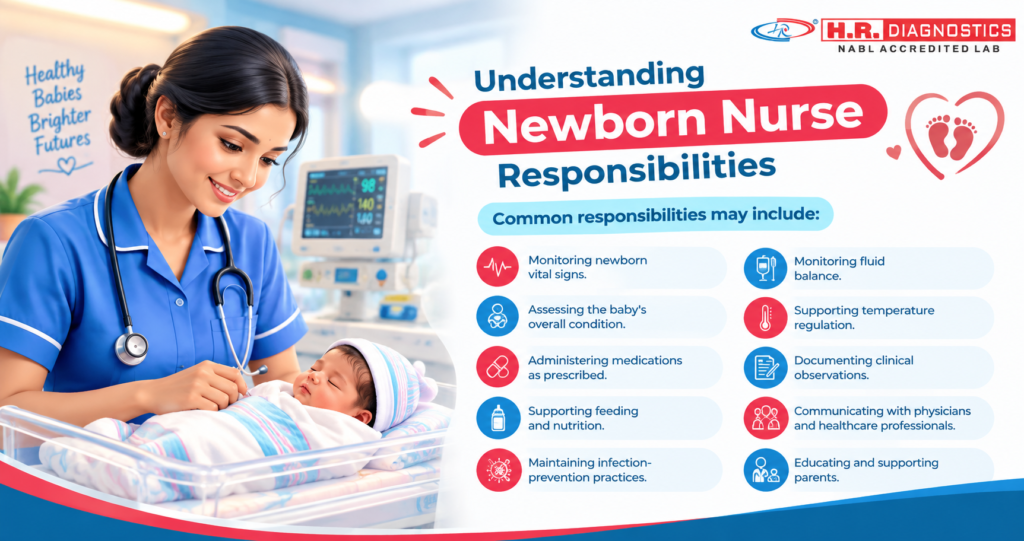
Newborn nurse responsibilities can vary depending on the healthcare setting and the baby’s condition.
Common responsibilities may include:
- Monitoring newborn vital signs.
- Assessing the baby’s overall condition.
- Administering medications as prescribed.
- Supporting feeding and nutrition.
- Maintaining infection-prevention practices.
- Monitoring fluid balance.
- Supporting temperature regulation.
- Documenting clinical observations.
- Communicating with physicians and healthcare professionals.
- Educating and supporting parents.
In specialized neonatal settings, nurses may also assist with advanced procedures and support newborns receiving respiratory or other intensive therapies.
Premature Baby Care Requires Specialized Attention
Premature baby care requires specialized knowledge because babies born before full term may have developing organs and systems that require additional support.
Premature infants can have challenges related to breathing, feeding, temperature regulation, infection prevention, and other aspects of development.
Neonatal nurses help provide individualized care based on the baby’s gestational age and medical needs. This may involve carefully monitoring vital signs, supporting nutritional requirements, maintaining an appropriate environment, and observing developmental progress.
Family involvement can also be an important part of premature baby care. Healthcare teams may guide parents on appropriate ways to participate in their baby’s care while following medical recommendations.
Caring for Babies Requiring Critically Ill Newborn Care
Critically ill newborn care involves providing specialized treatment and monitoring to babies with serious or complex medical conditions.
These infants may require intensive monitoring and advanced medical interventions. Nurses working with critically ill newborns need to respond carefully to changes in their condition and work closely with other healthcare professionals.
The environment requires accuracy, concentration, teamwork, and effective communication. Even small changes in a newborn’s condition can be clinically important, which makes continuous observation an essential component of neonatal nursing.
Essential Neonatal Nurse Skills for Quality Care

Neonatal nurse skills combine clinical knowledge with communication, observation, technical ability, and compassionate care.
Some important skills include:
- Clinical assessment
- Attention to detail
- Knowledge of newborn physiology
- Medication administration
- Monitoring vital signs
- Infection prevention
- Communication
- Teamwork
- Emergency response
- Family education
- Documentation
- Use of neonatal medical equipment
Emotional resilience and the ability to communicate sensitively with families are also valuable qualities in neonatal nursing.
The Importance of Specialized Newborn Care
Specialized newborn care is particularly important for babies who have medical conditions or require additional monitoring after birth.
Specialized care can help healthcare teams identify potential complications and provide appropriate treatment based on the baby’s needs.
Neonatal healthcare involves collaboration among several professionals. Nurses are often closely involved in the baby’s day-to-day care, making their observations and communication an important part of the overall care process.
The goal is to provide safe, individualized care while supporting the baby’s health and development.
NICU Nursing Professionals and Their Contribution to Healthcare
NICU nursing professionals work in one of the most specialized areas of nursing. Their role combines technical knowledge, continuous observation, teamwork, and compassionate family support.
These professionals may care for babies with different levels of medical complexity. They must understand neonatal equipment, medications, monitoring systems, infection-control procedures, and specialized treatment plans.
Their work also requires close coordination with doctors and other healthcare professionals. Effective communication helps ensure that important changes in a baby’s condition are communicated promptly.
Raising Neonatal Healthcare Awareness
Neonatal healthcare awareness helps families and communities understand the importance of specialized newborn care.
Awareness can help people learn about premature birth, neonatal health challenges, NICU care, newborn screening, infection prevention, and the importance of timely medical attention.
Healthcare organizations can contribute to awareness through educational campaigns, professional training, community programs, and informational resources.
Neonatal Nurses Week 2026 can also serve as a platform for recognizing the professionals who work every day to provide specialized newborn care.
Newborn Health and Safety: A Shared Responsibility
Newborn health and safety require attention from healthcare professionals, parents, caregivers, and healthcare institutions.
Important aspects of newborn safety include appropriate infection-control practices, safe feeding, temperature management, careful medication administration, proper monitoring, and timely recognition of concerning changes.
In hospital settings, neonatal nurses contribute to safety by following clinical protocols, maintaining accurate documentation, monitoring newborns, and communicating effectively with the healthcare team.
Parents can also receive guidance from healthcare professionals about safe newborn care after discharge.
Neonatal Nursing Careers and Professional Opportunities
Neonatal nursing careers can provide opportunities for nurses interested in specialized newborn healthcare.
Depending on local regulations and healthcare systems, nurses may work in NICUs, newborn nurseries, maternity departments, pediatric healthcare settings, or specialized neonatal facilities.
Career development may involve nursing education, clinical experience, professional certifications, continuing education, and specialized neonatal training.
As healthcare systems continue to develop specialized services for mothers and newborns, skilled neonatal healthcare professionals remain an important part of healthcare delivery.
Why Neonatal Nurse Appreciation Matters
Neonatal nurse appreciation recognizes the dedication, knowledge, and compassion required to work with newborn patients.
Neonatal nursing can involve demanding clinical environments, complex medical situations, and emotionally challenging circumstances. Nurses must provide professional care while also supporting families during uncertain moments.
Recognition can take many forms, including appreciation campaigns, educational events, professional development opportunities, staff recognition programs, and public awareness initiatives.
Neonatal Nurses Week 2026 offers healthcare organizations an opportunity to acknowledge the contributions of these professionals and highlight the importance of their work.
The Role of Neonatal Nurses in Newborn Medical Care
Newborn medical care requires a coordinated approach involving doctors, nurses, therapists, pharmacists, nutrition specialists, and other healthcare professionals.
Neonatal nurses are often involved in the day-to-day implementation of a baby’s care plan. They monitor changes, provide nursing interventions, maintain documentation, and communicate with other members of the healthcare team.
Their continuous presence allows them to develop a detailed understanding of each baby’s routine and condition. This can support timely communication when changes occur.
Neonatal Healthcare Professionals Working Together
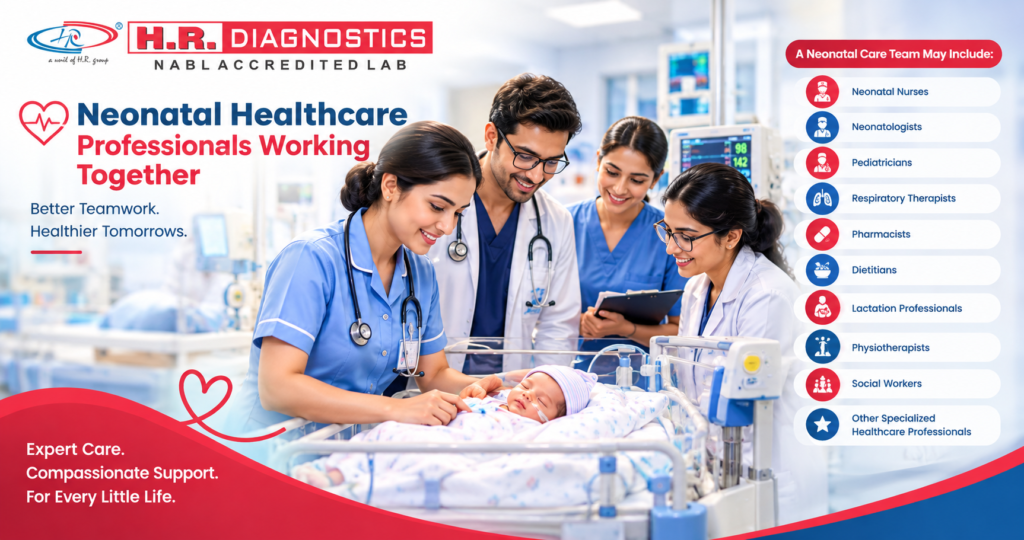
Neonatal healthcare professionals work as a multidisciplinary team to provide comprehensive care for newborns.
A neonatal healthcare team may include:
- Neonatal nurses
- Neonatologists
- Pediatricians
- Respiratory therapists
- Pharmacists
- Dietitians
- Lactation professionals
- Physiotherapists
- Social workers
- Other specialized healthcare professionals
Each professional contributes specific expertise. Collaboration helps ensure that medical, nutritional, developmental, and family-support needs are addressed.
How Technology Is Supporting Neonatal Care
Modern neonatal units use a variety of technologies to support newborn monitoring and treatment.
Monitoring systems can provide information about vital signs, oxygen levels, temperature, and other clinical parameters. Specialized equipment can also support respiratory care and nutritional management.
However, technology does not replace the role of trained healthcare professionals. Nurses remain essential for interpreting clinical information within their scope of practice, observing the baby’s overall condition, providing hands-on care, and communicating with the healthcare team.
Supporting Families During the NICU Journey
Having a newborn admitted to a NICU can be an emotional experience for parents and families. Neonatal nurses can play an important role in helping families understand the hospital environment and their baby’s care.
Depending on the clinical situation and hospital policies, nurses may educate parents about feeding, hygiene, developmental care, and ways they can safely participate in their baby’s care.
Clear and compassionate communication can help families better understand medical information and participate appropriately in the care process.
Building the Future of Neonatal Nursing
The future of neonatal nursing will depend on continued education, professional development, research, technology, and investment in specialized healthcare services.
Healthcare organizations can support neonatal nurses through appropriate staffing, training opportunities, access to modern equipment, professional development, and supportive workplace environments.
For aspiring nurses, neonatal nursing can offer a specialized professional pathway combining clinical expertise with meaningful patient and family care.
Neonatal Nurses Week 2026: A Time to Recognize Dedicated Professionals
Neonatal Nurses Week 2026 is more than an opportunity to say thank you. It is a chance to educate communities about neonatal healthcare, recognize specialized nursing expertise, and highlight the importance of quality care for newborns.
From premature babies requiring specialized support to critically ill newborns receiving intensive treatment, neonatal nurses contribute to care at every stage of a newborn’s healthcare journey.
Their responsibilities require knowledge, precision, teamwork, compassion, and continuous learning. By recognizing neonatal nurses, healthcare organizations and communities can also raise awareness about the importance of specialized newborn healthcare.
Honoring the Nurses Behind Newborn Care
Neonatal nurses play an important role in supporting some of the most vulnerable patients in healthcare. Their work involves specialized clinical knowledge, careful monitoring, compassionate communication, and collaboration with multidisciplinary healthcare teams.
Neonatal Nurses Week 2026 provides an opportunity to recognize these professionals and increase awareness about neonatal nursing and newborn healthcare.
Whether caring for premature babies, supporting critically ill newborns, assisting families in the NICU, or providing routine newborn medical care, neonatal nurses contribute significantly to the delivery of safe and specialized healthcare.
Recognizing their work is also a reminder of the importance of investing in skilled neonatal healthcare professionals and strengthening specialized services for newborns and their families.
Leave a Reply