

Understanding Sexual Health Week 2026


Sexual health is an important part of overall health and wellbeing. It involves much more than the absence of sexually transmitted infections or reproductive problems. Sexual health also includes physical wellbeing, emotional comfort, informed decision-making, healthy relationships, personal boundaries, and access to appropriate healthcare.
Sexual Health Week 2026 provides an opportunity to encourage people of different ages to learn more about their sexual and reproductive health, understand preventive care, and seek professional advice when necessary.
Many people avoid discussing sexual health because of embarrassment, misinformation, cultural barriers, or concerns about privacy. However, avoiding conversations and checkups can make it harder to recognize health concerns or access timely support.
The idea of sexual wellness at every age emphasizes that sexual health needs can change throughout life. Young adults may need information about contraception and sexually transmitted infections. Adults may have questions about fertility, hormonal changes, or relationship wellbeing. Older adults may need guidance about changing sexual function, medication effects, or continuing intimacy safely.
This article explores the importance of sexual health awareness, education, prevention, screening, and respectful healthcare for people at different stages of life.
Sexual Health Awareness: Why It Matters in Everyday Life
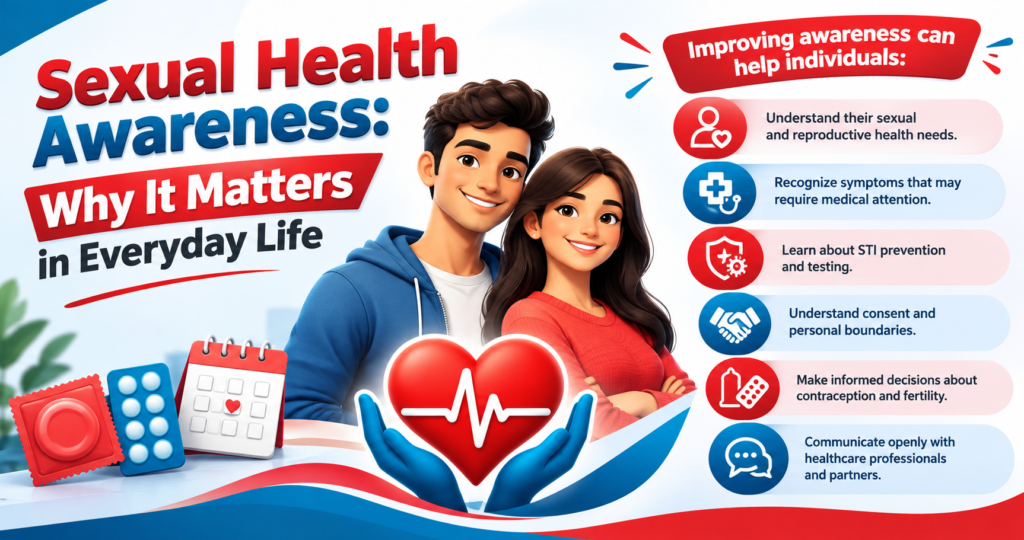
Sexual health awareness helps people understand their bodies, recognize potential health concerns, and make informed decisions about relationships and healthcare. It also encourages people to seek professional advice without fear, shame, or discrimination.
Sexual health includes physical, emotional, mental, and social wellbeing in relation to sexuality. The World Health Organization emphasizes that good sexual health involves respectful relationships, safety, consent, and freedom from coercion, discrimination, and violence.
Improving awareness can help individuals:
- Understand their sexual and reproductive health needs.
- Recognize symptoms that may require medical attention.
- Learn about STI prevention and testing.
- Understand consent and personal boundaries.
- Make informed decisions about contraception and fertility.
- Communicate openly with healthcare professionals and partners.
Awareness is not limited to people who are sexually active. Age-appropriate education can help children and young people understand body changes, privacy, consent, and personal safety, while adults can benefit from information about prevention, reproductive health, and changing health needs.
Sexual and Reproductive Health: A Lifelong Priority
Sexual and reproductive health covers a broad range of health needs, including fertility, contraception, pregnancy care, sexually transmitted infections, reproductive-system conditions, and sexual wellbeing.
These needs can change over time. A teenager may need reliable information about puberty and consent. A young adult may have questions about contraception or STI testing. Someone planning a family may need fertility guidance, while a person approaching menopause may experience hormonal and sexual health changes.
Access to appropriate healthcare helps people understand these changes and make informed choices.
Reproductive health awareness is also important for couples and families. Understanding fertility, pregnancy planning, reproductive infections, and available medical services can support better decision-making.
People should remember that reproductive health concerns are not always visible. Some conditions may have few or no symptoms, which is why professional advice and appropriate screening can be valuable.
Importance of Sexual Health: Why Everyone Should Pay Attention
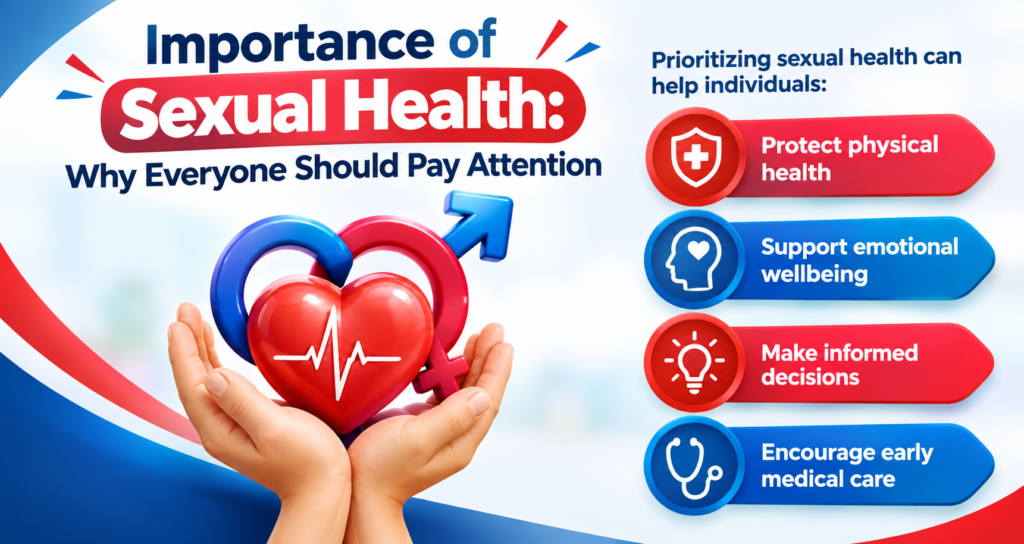
The importance of sexual health extends beyond preventing infections. Sexual wellbeing can influence confidence, relationships, emotional health, reproductive choices, and quality of life.
Ignoring sexual health concerns may delay diagnosis or treatment. For example, certain sexually transmitted infections can occur without noticeable symptoms. If an infection is not identified, it may be passed to others or lead to complications.
Prioritizing sexual health can help individuals:
Protect physical health
Preventive practices and appropriate testing can reduce the risk of infections and help identify health concerns.
Support emotional wellbeing
Open communication and access to professional guidance can reduce anxiety and uncertainty surrounding sexual health.
Make informed decisions
Reliable information allows people to understand their options regarding contraception, relationships, fertility, and testing.
Encourage early medical care
Recognizing unusual symptoms and seeking advice early can support timely assessment and treatment.
Sexual health should be treated as a normal part of healthcare rather than a subject that people discuss only when a serious problem occurs.
Sexual Health Education: Knowledge for Every Age Group
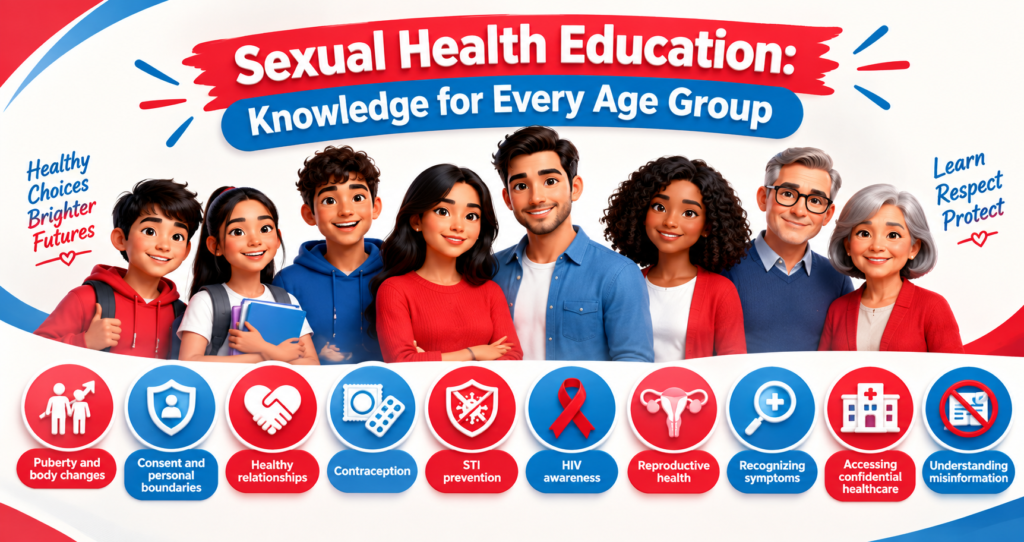
Sexual health education provides accurate, age-appropriate information about the body, relationships, prevention, and healthcare.
Effective education should be respectful, inclusive, and based on reliable medical information. It should avoid fear-based messaging and unnecessary stigma.
Important subjects can include:
- Puberty and body changes
- Consent and personal boundaries
- Healthy relationships
- Contraception
- STI prevention
- HIV awareness
- Reproductive health
- Recognizing symptoms
- Accessing confidential healthcare
- Understanding misinformation
For young people, education should be appropriate to their age and developmental stage. For adults, it can address contraception, fertility, sexual function, relationships, and preventive screening.
Healthcare professionals, parents, schools, and community organizations all have roles to play in creating safe environments for learning.
Healthy Sexual Relationships: Communication, Consent, and Respect
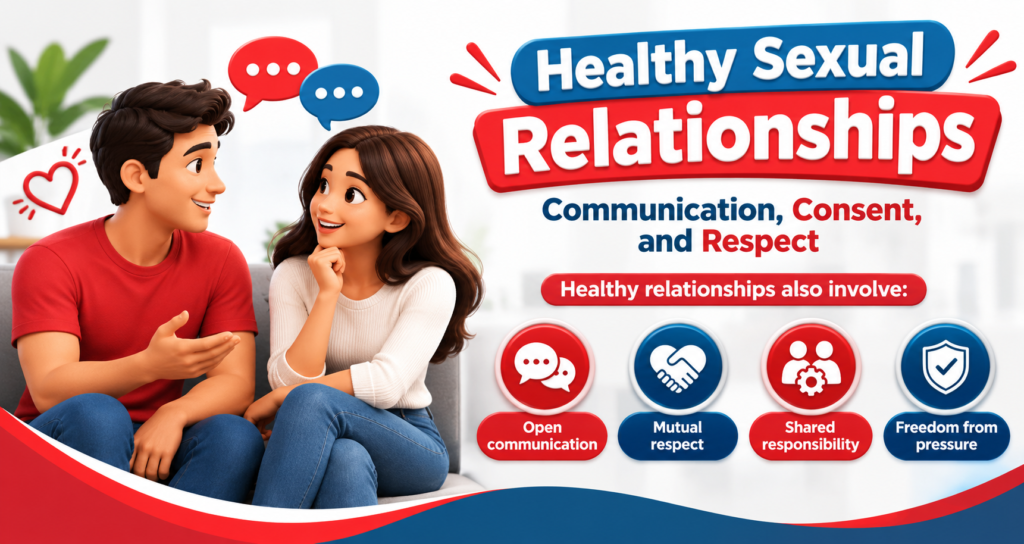
Healthy sexual relationships are based on mutual respect, trust, communication, and freely given consent.
Consent means that everyone involved agrees to sexual activity. It should be voluntary, informed, and ongoing. A person must be able to change their mind, and consent cannot be assumed from a previous relationship, previous activity, or silence.
Healthy relationships also involve:
Open communication
Partners should feel able to discuss boundaries, expectations, contraception, STI testing, and concerns.
Mutual respect
Each person’s choices, comfort, privacy, and personal boundaries should be respected.
Shared responsibility
Sexual health is not the responsibility of only one partner. Both people can participate in prevention, testing, and informed decision-making.
Freedom from pressure
No one should be pressured, threatened, or manipulated into sexual activity.
Healthy relationships can contribute to emotional wellbeing and help people feel more comfortable seeking support when concerns arise.
Sexual Health Screening: Understanding When Testing May Be Needed
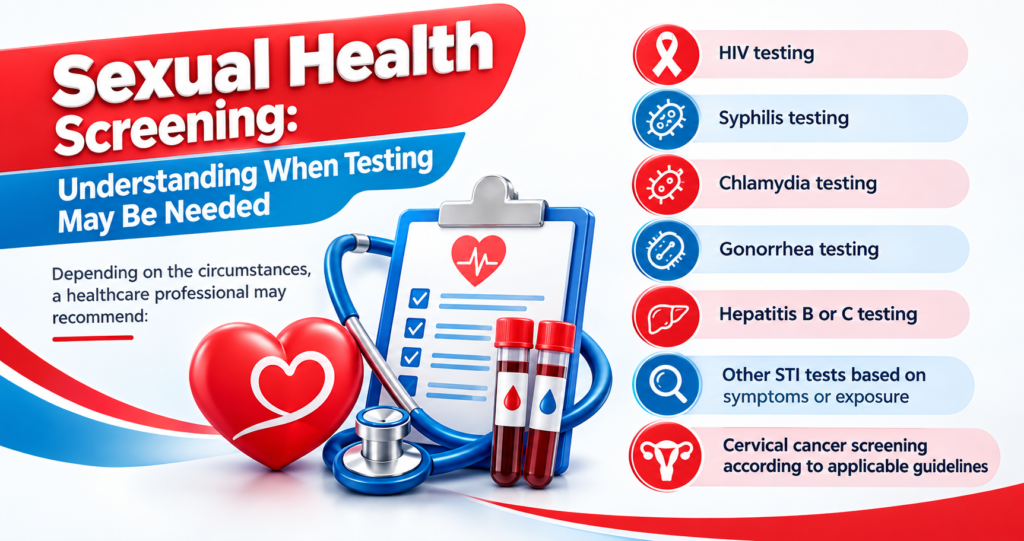
Sexual health screening involves tests or assessments used to identify infections or other health concerns. The tests recommended for an individual depend on factors such as age, symptoms, sexual history, exposure, pregnancy status, and relevant medical guidance.
Some sexually transmitted infections may not cause symptoms. Therefore, a person can have an infection without realizing it.
Depending on the circumstances, a healthcare professional may recommend:
- Syphilis testing
- Chlamydia testing
- Gonorrhea testing
- Hepatitis B or C testing
- Other STI tests based on symptoms or exposure
- Cervical cancer screening according to applicable guidelines
Testing may involve blood test, urine test, or swab samples. The appropriate method depends on the infection being assessed and the type of exposure.
It is important not to assume that one test checks for every STI. People should discuss their concerns and relevant exposure with a qualified healthcare provider.
Sexually Transmitted Infections Prevention: Steps to Reduce Risk
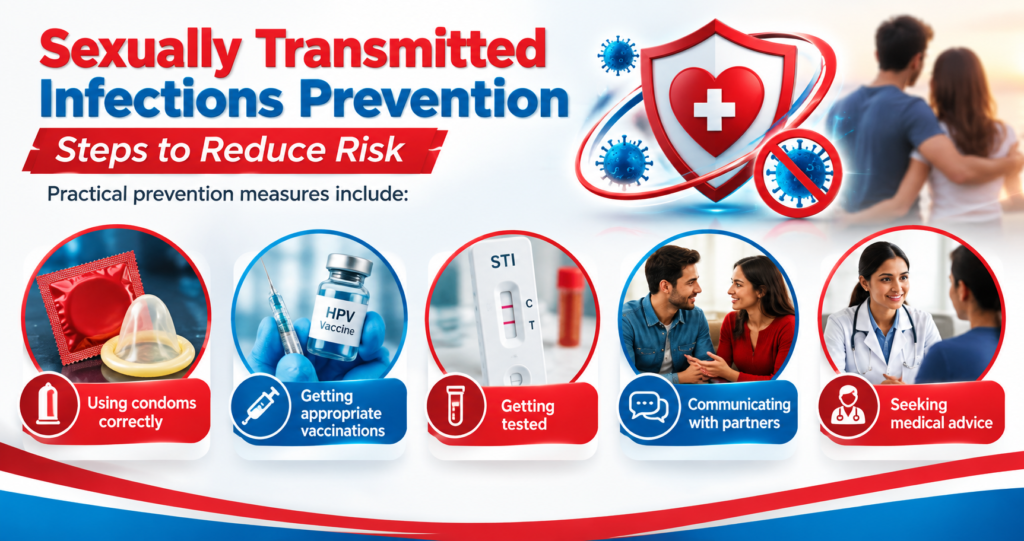
Sexually transmitted infections prevention is an important part of sexual healthcare. STIs can be caused by bacteria, viruses, or parasites and may spread through vaginal, anal, or oral sexual contact, as well as certain forms of genital skin-to-skin contact.
Practical prevention measures include:
Using condoms correctly
External and internal condoms can reduce the risk of many STIs when used correctly and consistently. They do not eliminate every risk, particularly for infections transmitted through uncovered skin.
Getting appropriate vaccinations
Vaccines can help prevent certain infections, including HPV and hepatitis B. Eligibility and vaccination schedules should be discussed with a healthcare professional.
Getting tested
Testing can help people identify infections that may otherwise go unnoticed.
Communicating with partners
Discussing testing, prevention, and sexual health expectations can support informed decisions.
Seeking medical advice
Anyone who may have been exposed to an STI or develops symptoms should seek professional guidance.
No single prevention method is suitable for every person. A healthcare professional can help identify appropriate options.
STI Testing and Awareness: Why Early Knowledge Matters
STI testing and awareness can help individuals understand their health status and take appropriate action.
Many STIs can be asymptomatic, meaning they may not produce noticeable signs. This makes testing important for people who may have been exposed, even when they feel healthy.
Symptoms that may warrant medical evaluation include:
- Unusual genital discharge
- Burning or pain during urination
- Genital sores or blisters
- Unusual rashes
- Pelvic pain
- Testicular pain
- Bleeding between periods
- Pain during sexual activity
These symptoms do not necessarily mean a person has an STI. They may have several possible causes, so professional assessment is important.
People who receive a positive STI result should follow medical advice regarding treatment, partner notification, and follow-up testing. Many bacterial STIs can be treated effectively, while some viral infections can be managed with appropriate care.
HIV Prevention and Testing: Know Your Status
HIV prevention and testing are essential components of sexual health awareness.
HIV is a virus that affects the immune system. It can be transmitted through certain bodily fluids, including during unprotected sexual contact, sharing contaminated needles, and from mother to child in certain circumstances.
People can reduce HIV risk through appropriate preventive measures, including:
- Using condoms correctly.
- Testing for HIV and other relevant infections.
- Discussing prevention with healthcare professionals.
- Considering pre-exposure prophylaxis, or PrEP, when medically appropriate.
- Seeking urgent medical advice about post-exposure prophylaxis, or PEP, after a possible exposure.
- Avoiding the sharing of injection equipment.
HIV testing can help people understand their status and access care when needed. The timing of a test after exposure matters because tests have different window periods.
Anyone concerned about a recent possible exposure should contact a healthcare professional promptly. PEP is time-sensitive and should be started as soon as possible when indicated.
Safe Sex Practices: Protecting Physical and Emotional Wellbeing
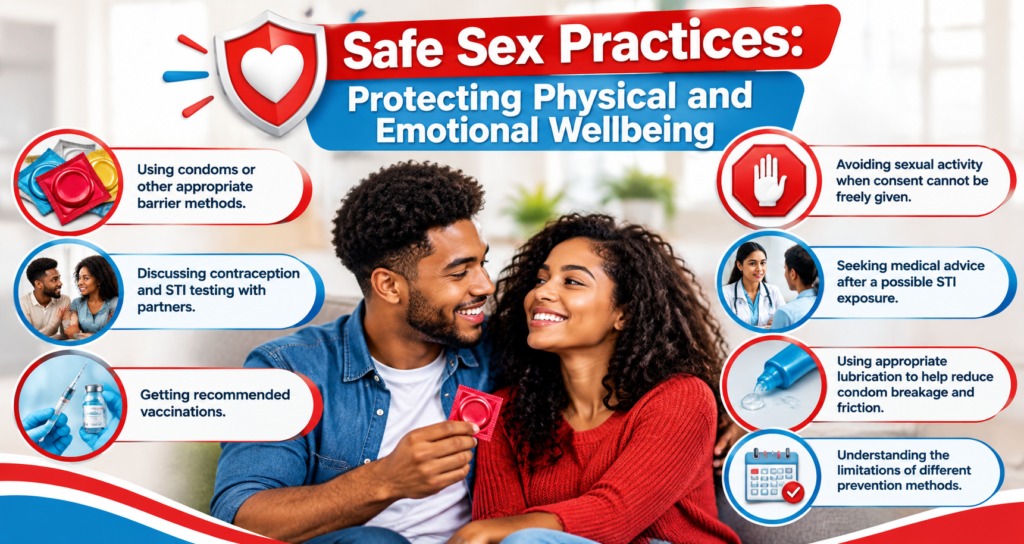
Safe sex practices help reduce the risk of infections, unintended pregnancy, and unwanted pressure in relationships.
Depending on individual circumstances, safer sexual practices may include:
- Using condoms or other appropriate barrier methods.
- Discussing contraception and STI testing with partners.
- Getting recommended vaccinations.
- Avoiding sexual activity when consent cannot be freely given.
- Seeking medical advice after a possible STI exposure.
- Using appropriate lubrication to help reduce condom breakage and friction.
- Understanding the limitations of different prevention methods.
For people who want to prevent pregnancy, contraception options may include condoms, oral contraceptives, intrauterine devices, implants, and other methods. A healthcare professional can explain their effectiveness, suitability, and possible side effects.
Safe sex is not just about physical protection. It also includes communication, mutual respect, privacy, and emotional comfort.
Men’s Sexual Health: Common Concerns and Preventive Care
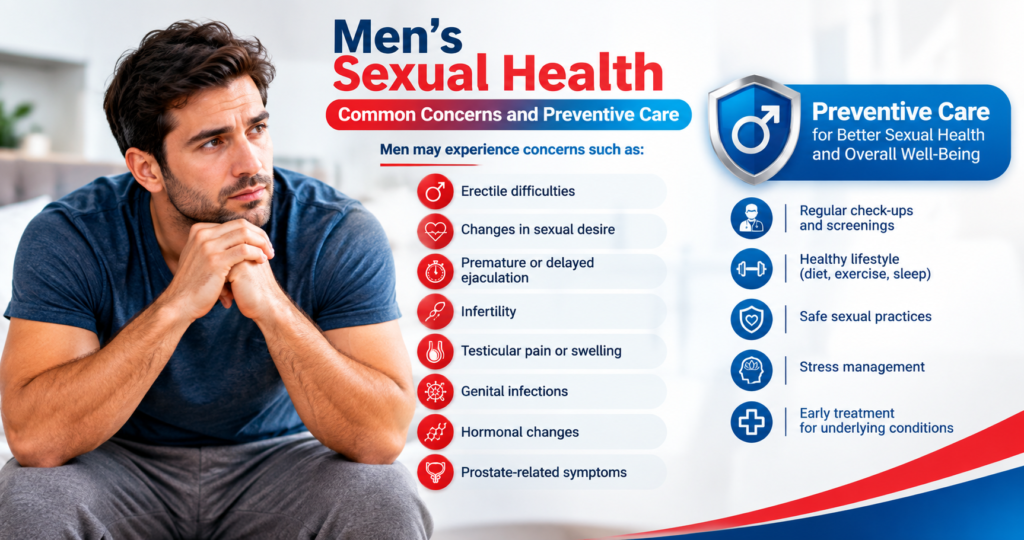
Men’s sexual health includes reproductive health, sexual function, STI prevention, fertility, and general wellbeing.
Men may experience concerns such as:
- Erectile difficulties
- Changes in sexual desire
- Premature or delayed ejaculation
- Infertility
- Testicular pain or swelling
- Genital infections
- Hormonal changes
- Prostate-related symptoms
Some sexual health concerns may be associated with stress, medication, diabetes, cardiovascular disease, hormonal conditions, or other medical issues.
Men should seek professional advice if they experience persistent changes in sexual function, unexplained pain, unusual discharge, sores, or other concerning symptoms.
Preventive care can include appropriate STI testing, vaccination, general health assessments, and discussions with a healthcare professional about reproductive or sexual concerns.
Sexual health issues are common medical concerns and should not be a source of shame.
Women’s Sexual Health: Understanding Changing Health Needs
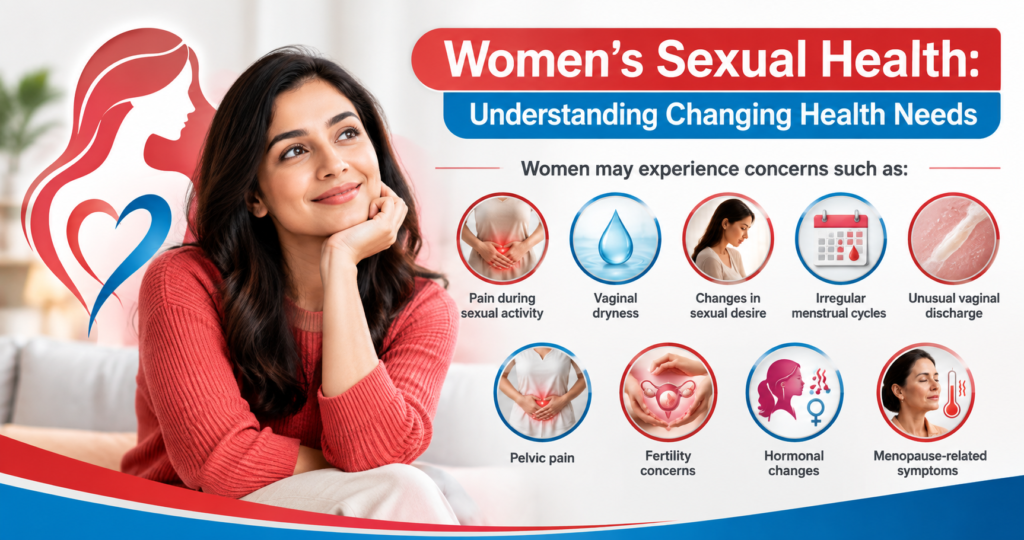
Women’s sexual health includes reproductive health, menstrual health, contraception, fertility, pregnancy-related care, menopause, and sexual wellbeing.
Women may experience concerns such as:
- Pain during sexual activity
- Vaginal dryness
- Changes in sexual desire
- Irregular menstrual cycles
- Unusual vaginal discharge
- Pelvic pain
- Fertility concerns
- Hormonal changes
- Menopause-related symptoms
These concerns can have several causes, including hormonal changes, infections, medication effects, stress, and other medical conditions.
Women should seek medical advice for persistent pelvic pain, unusual bleeding, new genital symptoms, or changes in sexual function that cause concern.
Preventive care may include appropriate STI screening, cervical cancer screening according to local guidelines, reproductive health consultations, and discussions about contraception or fertility.
Healthcare needs vary from person to person, so screening and treatment should be individualized.
Reproductive Health Awareness: Supporting Informed Choices
Reproductive health awareness helps people understand fertility, contraception, pregnancy, and conditions affecting the reproductive system.
Reproductive health education can help individuals and couples make informed decisions about:
- Family planning
- Pregnancy preparation
- Contraception
- Fertility evaluation
- Menstrual health
- Pregnancy-related healthcare
- STI prevention
- Reproductive-system conditions
Some infections, including untreated chlamydia and gonorrhea, can contribute to complications such as pelvic inflammatory disease and infertility. Early assessment and treatment can help reduce these risks.
People planning a pregnancy should consider discussing their health, medications, vaccinations, and relevant screening needs with a qualified healthcare professional.
Reproductive health is not only a concern during pregnancy. It is a lifelong area of healthcare that deserves attention at different stages of life.
Sexual Health Checkups: When Should You Seek Medical Advice?
Sexual health checkups can help people discuss concerns, assess risks, and receive appropriate testing or preventive care.
There is no universal testing schedule that applies to every person. Healthcare providers consider individual circumstances when recommending screening.
A person may benefit from a sexual health consultation when:
- They have symptoms of a possible STI.
- They have had a possible exposure.
- They are starting a new sexual relationship.
- They want advice about contraception.
- They are planning a pregnancy.
- They have concerns about fertility.
- They experience persistent pain or changes in sexual function.
- They need guidance about HIV prevention.
- They have questions about menopause or hormonal changes.
A checkup may involve a discussion of medical history, sexual history, symptoms, and prevention needs. Tests are recommended based on the person’s circumstances.
Privacy and confidentiality are important elements of respectful sexual healthcare, although specific confidentiality rules vary by location and age.
Sexual Wellness and Mental Health: Understanding the Connection
Sexual wellness and mental health are closely connected. Stress, anxiety, depression, relationship difficulties, trauma, and concerns about body image may affect sexual wellbeing.
Similarly, persistent sexual health symptoms, fertility challenges, or concerns about infections can create emotional distress.
A supportive approach includes:
Managing stress
Adequate sleep, physical activity, relaxation, and professional support can help people manage stress that may affect wellbeing.
Communicating openly
Discussing concerns with a trusted partner or healthcare professional can reduce isolation and misunderstanding.
Seeking professional support
A doctor, psychologist, counselor, or qualified sexual health professional may help address emotional or relationship concerns.
Avoiding self-blame
Sexual health problems can have many causes. They are not necessarily a reflection of personal character or relationship quality.
Mental wellbeing should be considered alongside physical health when discussing sexual wellness.
Sexual Health Myths and Facts: Separating Information from Misinformation
Understanding sexual health myths and facts can help people make safer and more informed choices.
Myth: STIs always cause noticeable symptoms.
Fact: Many STIs can occur without symptoms. Testing may be necessary to identify an infection.
Myth: One STI test checks for every infection.
Fact: Different infections require different tests. A healthcare professional can recommend the appropriate tests based on individual circumstances.
Myth: Sexual health is only important for young adults.
Fact: Sexual and reproductive health needs can change throughout life, and people of all ages can benefit from appropriate information and healthcare.
Myth: Condoms eliminate every STI risk.
Fact: Condoms substantially reduce the risk of many STIs when used correctly, but they do not protect against every infection transmitted through uncovered skin.
World Health Organization
Myth: Sexual health concerns should be discussed only when symptoms become severe.
Fact: Preventive advice, appropriate screening, and early medical assessment can be valuable even when symptoms are absent.
Preventive Healthcare for Sexual Health: Making Wellness a Routine
Preventive healthcare for sexual health focuses on reducing health risks, promoting informed decisions, and identifying concerns before they become more serious.
Important preventive measures may include:
- Age- and risk-appropriate STI testing
- HIV testing and prevention counseling
- HPV and hepatitis B vaccination when indicated
- Cervical cancer screening according to local guidelines
- Contraception counseling
- Preconception health advice
- Regular medical consultations
- Mental health support
- Education about consent and healthy relationships
Preventive care should be personalized. A healthcare professional can recommend screening based on medical history, age, symptoms, exposure, and other relevant factors.
People should also be cautious about relying on unverified online advice or self-diagnosis. Reliable information and qualified medical guidance are important parts of effective sexual healthcare.
Sexual Health Awareness Campaign: Promoting Knowledge Without Stigma
A sexual health awareness campaign during Sexual Health Week 2026 can help communities learn about prevention, testing, and respectful healthcare.
An effective campaign may focus on:
Educational content
Share accurate information about STIs, HIV, contraception, reproductive health, and common concerns.
Testing awareness
Explain why appropriate testing matters and encourage people to seek professional guidance.
Myth-busting
Address common misconceptions using reliable medical sources.
Inclusive communication
Use respectful, nonjudgmental language that recognizes different ages, backgrounds, and healthcare needs.
Professional guidance
Encourage people to consult qualified doctors, gynecologists, urologists, sexual health specialists, or other appropriate healthcare professionals.
Privacy and confidentiality
Remind audiences that sexual health discussions deserve sensitivity and respect.
Healthcare organizations can use posters, blogs, educational videos, social media posts, and community sessions to share these messages.
A successful awareness campaign should focus on empowerment rather than fear.
Sexual Wellness at Every Age: A Lifelong Approach
The concept of sexual wellness at every age recognizes that health needs evolve throughout life.
Children and adolescents
Age-appropriate education about body changes, privacy, consent, personal safety, and trusted sources of support.
Young adults
Information about healthy relationships, contraception, STI prevention, testing, and reproductive choices.
Adults
Support for fertility, sexual function, reproductive health, preventive screening, and emotional wellbeing.
Older adults
Guidance about hormonal changes, menopause, erectile or sexual-function concerns, medication effects, intimacy, and ongoing STI prevention when relevant.
Sexual health is not defined by age, relationship status, or whether someone is sexually active. Everyone deserves access to accurate information and appropriate healthcare.
Make Sexual Health a Priority During Sexual Health Week 2026
Sexual Health Week 2026 is an opportunity to encourage informed conversations about sexual wellness, preventive healthcare, healthy relationships, and access to medical support.
From sexual health education and STI testing to reproductive health awareness and mental wellbeing, every part of sexual health deserves attention. People should feel comfortable asking questions, discussing concerns with qualified professionals, and seeking appropriate care without shame.
Understanding the importance of sexual health can help individuals make informed decisions and recognize when medical guidance may be necessary. Regular, personalized preventive care can support wellbeing throughout life.
This Sexual Health Week, let us promote knowledge, respect, consent, prevention, and accessible healthcare. A healthier community begins with accurate information and conversations that encourage people to take care of themselves and one another.
Leave a Reply