
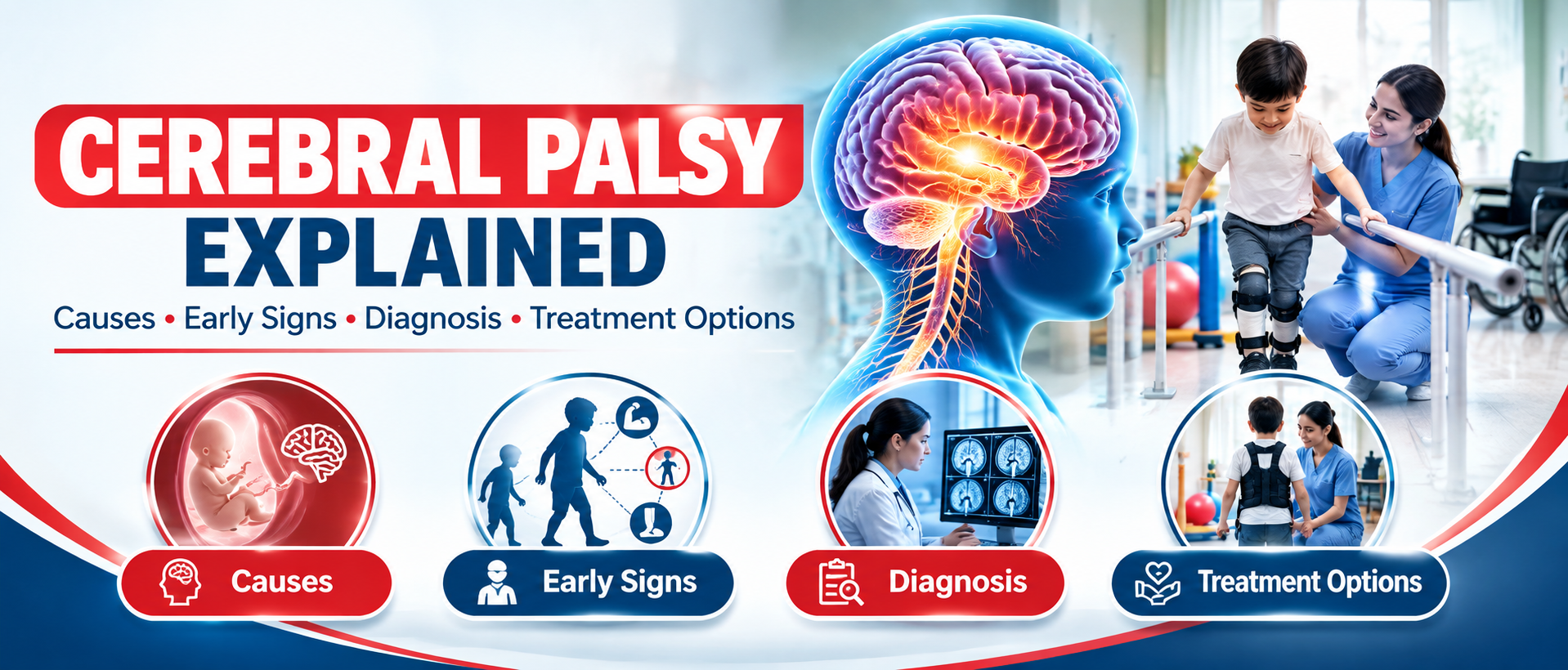

Cerebral palsy is a group of neurological conditions that affect movement, muscle coordination, posture and balance. It is one of the most common childhood movement disorders and can affect each person differently. Some individuals may experience mild difficulties with movement, while others may require lifelong assistance with mobility, communication or daily activities.
Understanding cerebral palsy causes, recognising cerebral palsy early signs, obtaining an appropriate cerebral palsy diagnosis, and starting timely care can help improve function and quality of life. Although there is currently no cure that completely reverses cerebral palsy, a combination of therapies, medicines, assistive devices and supportive care can help manage symptoms and complications.
What Is Cerebral Palsy Day?
Cerebral palsy Day refers to a group of permanent disorders affecting movement and posture that result from disturbances in the developing brain. These disturbances can occur before birth, around the time of delivery, or during early childhood.
Cerebral palsy is primarily a cerebral palsy neurological condition involving the brain areas responsible for movement and coordination. The condition itself does not generally worsen because the original brain injury is not progressive. However, physical difficulties and secondary complications may change as a child grows.
The effects can vary significantly. One child may have difficulty walking or maintaining balance, while another may experience muscle stiffness, involuntary movements or challenges with speech and swallowing.
Cerebral Palsy Causes: What Can Lead to Cerebral Palsy?
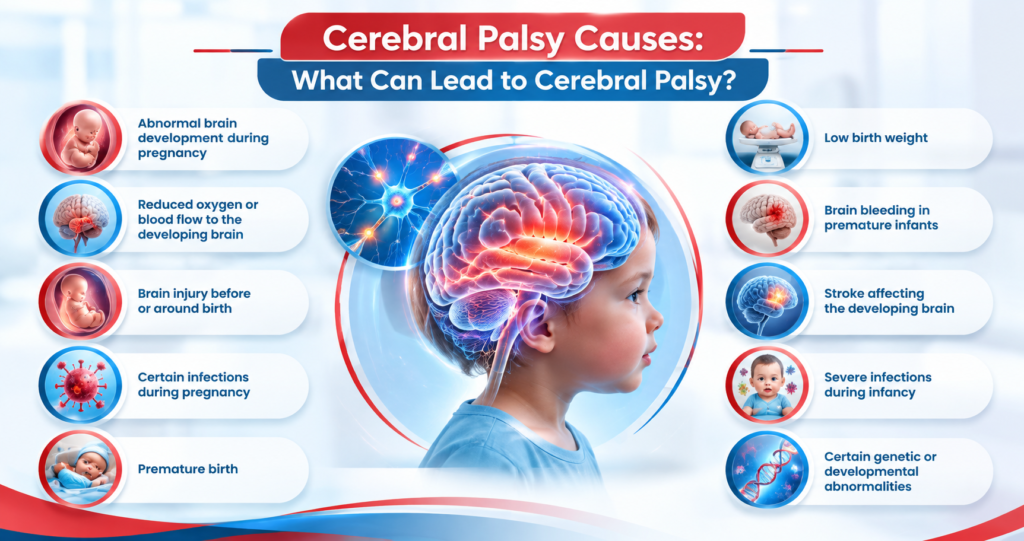
There are several possible cerebral palsy causes, and in some cases the exact cause cannot be identified. Cerebral palsy may develop because of an injury to or abnormal development of the brain before, during or shortly after birth.
Possible causes and contributing factors include:
- Abnormal brain development during pregnancy
- Reduced oxygen or blood flow to the developing brain
- Brain injury before or around birth
- Certain infections during pregnancy
- Premature birth
- Low birth weight
- Brain bleeding in premature infants
- Stroke affecting the developing brain
- Severe infections during infancy
- Certain genetic or developmental abnormalities
It is important to understand that cerebral palsy is not always caused by complications during childbirth. In many cases, the underlying cause occurs before labour or delivery.
Cerebral Palsy Risk Factors: Who May Be More Vulnerable?
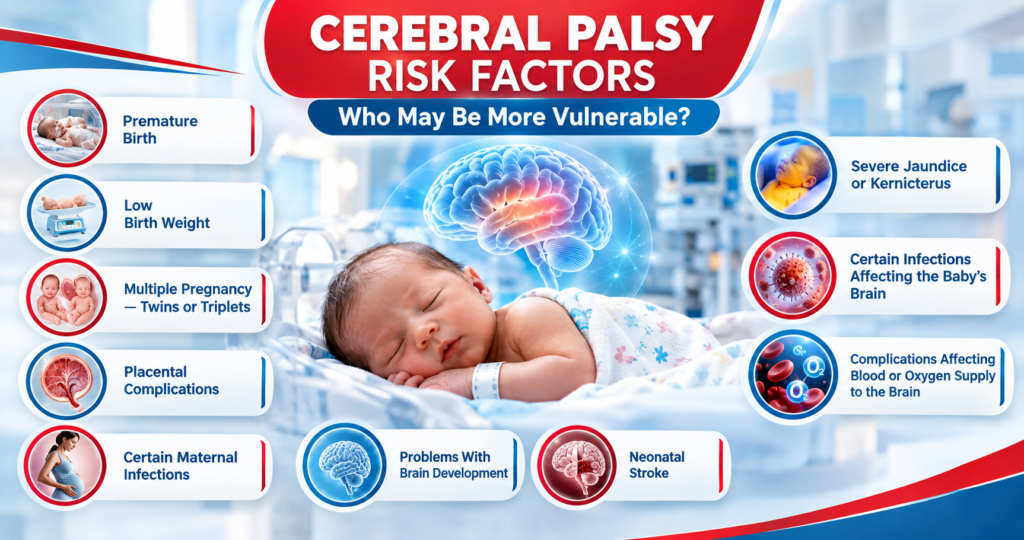
Several cerebral palsy risk factors may increase the likelihood of developing the condition, although having a risk factor does not necessarily mean that a child will develop cerebral palsy.
Important risk factors may include:
- Premature birth
- Low birth weight
- Multiple pregnancy, such as twins or triplets
- Complications affecting the placenta
- Certain maternal infections
- Problems with brain development
- Neonatal stroke
- Severe jaundice or kernicterus
- Certain infections affecting the baby’s brain
- Complications affecting blood or oxygen supply to the brain
Healthcare professionals may monitor babies with significant risk factors more closely for developmental problems.
Types of Cerebral Palsy: Understanding the Different Forms
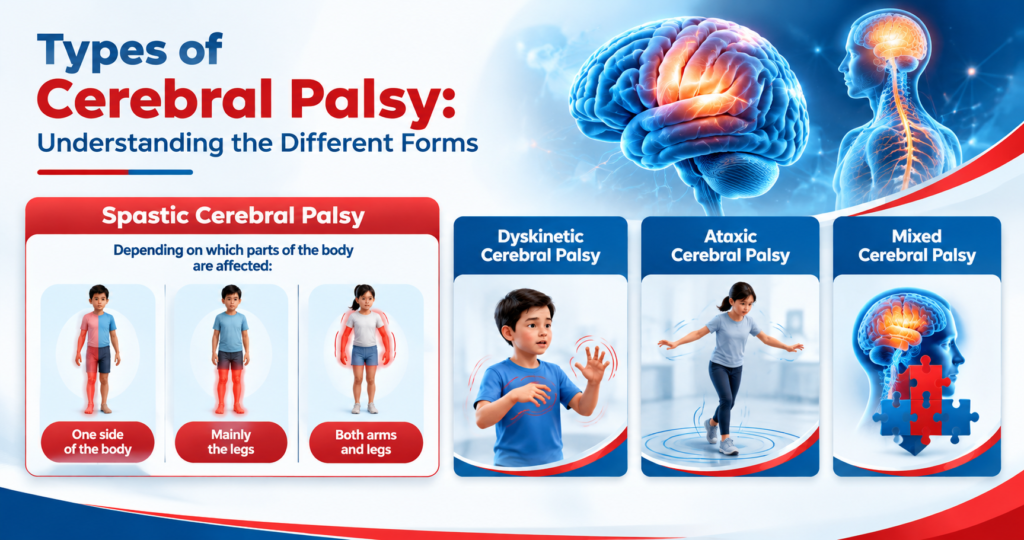
The types of cerebral palsy are generally classified according to the primary movement and muscle-control problems experienced by an individual.
Spastic Cerebral Palsy
Spastic cerebral palsy is the most common type. It is characterised by increased muscle tone or stiffness, which can make movement difficult.
Depending on which parts of the body are affected, spastic cerebral palsy may involve:
- One side of the body
- Mainly the legs
- Both arms and legs
Dyskinetic Cerebral Palsy
Dyskinetic cerebral palsy can cause involuntary movements. Movements may be slow, twisting, jerky or uncontrolled and can affect the face, arms, legs and trunk.
Ataxic Cerebral Palsy
Ataxic cerebral palsy primarily affects balance, coordination and depth perception. People with this type may have difficulty performing precise movements.
Mixed Cerebral Palsy
Some individuals have features of more than one type of cerebral palsy. This is known as mixed cerebral palsy.
Cerebral Palsy Symptoms: What Are the Common Symptoms?
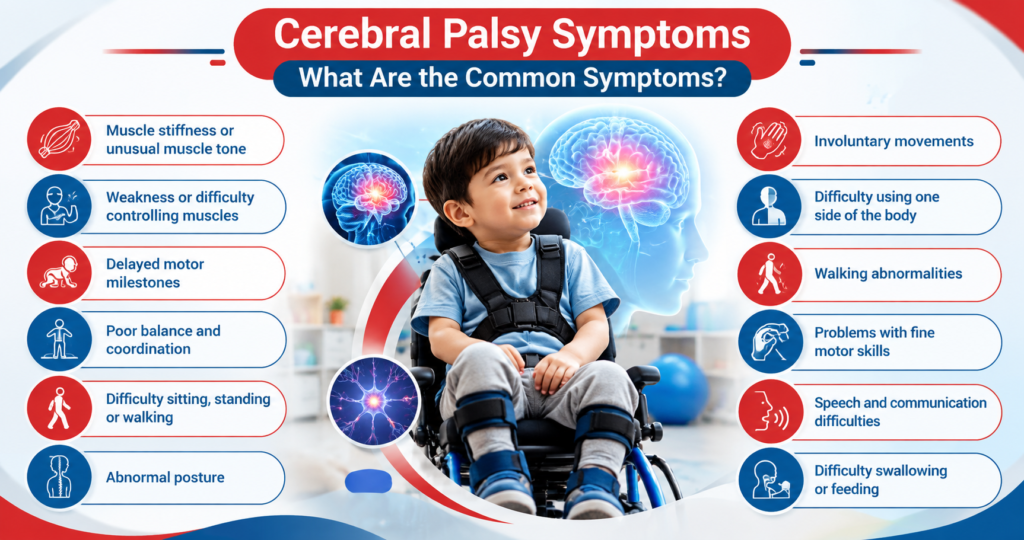
Cerebral palsy symptoms vary depending on the type and severity of the condition. They commonly involve movement, muscle tone, posture, coordination and balance.
Possible symptoms include:
- Muscle stiffness or unusual muscle tone
- Weakness or difficulty controlling muscles
- Delayed motor milestones
- Poor balance and coordination
- Difficulty sitting, standing or walking
- Abnormal posture
- Involuntary movements
- Difficulty using one side of the body
- Walking abnormalities
- Problems with fine motor skills
- Speech and communication difficulties
- Difficulty swallowing or feeding
Some children may also experience associated problems involving vision, hearing, seizures, learning or communication.
Cerebral Palsy Early Signs: What Should Parents Look For?
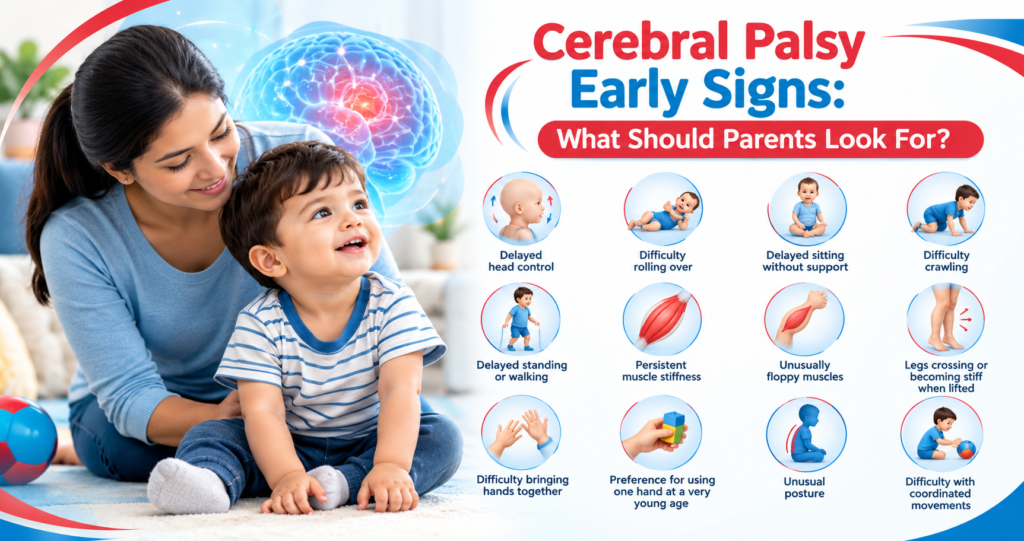
Recognising cerebral palsy early signs can help families seek an assessment at the right time. However, developmental differences do not automatically mean that a child has cerebral palsy.
Potential signs can include:
- Delayed head control
- Difficulty rolling over
- Delayed sitting without support
- Difficulty crawling
- Delayed standing or walking
- Persistent muscle stiffness
- Unusually floppy muscles
- Legs crossing or becoming stiff when lifted
- Difficulty bringing hands together
- Preference for using one hand at a very young age
- Unusual posture
- Difficulty with coordinated movements
Parents may also notice cerebral palsy developmental delays, particularly in gross motor skills.
If a child is consistently missing developmental milestones or showing unusual movements or muscle tone, parents should discuss these concerns with a paediatrician.
Cerebral Palsy Developmental Delays and Milestones
Children develop at different rates, but significant or persistent delays in movement can warrant professional evaluation.
Cerebral palsy developmental delays may involve skills such as head control, sitting, crawling, standing and walking. Some children may also experience delays in speech, communication or fine motor skills.
Importantly, developmental delay alone does not establish a cerebral palsy diagnosis. Other neurological, genetic, muscular and developmental conditions can produce similar symptoms.
A healthcare professional evaluates the child’s overall development and medical history before determining the next steps.
Cerebral Palsy Movement Disorders and Motor Difficulties
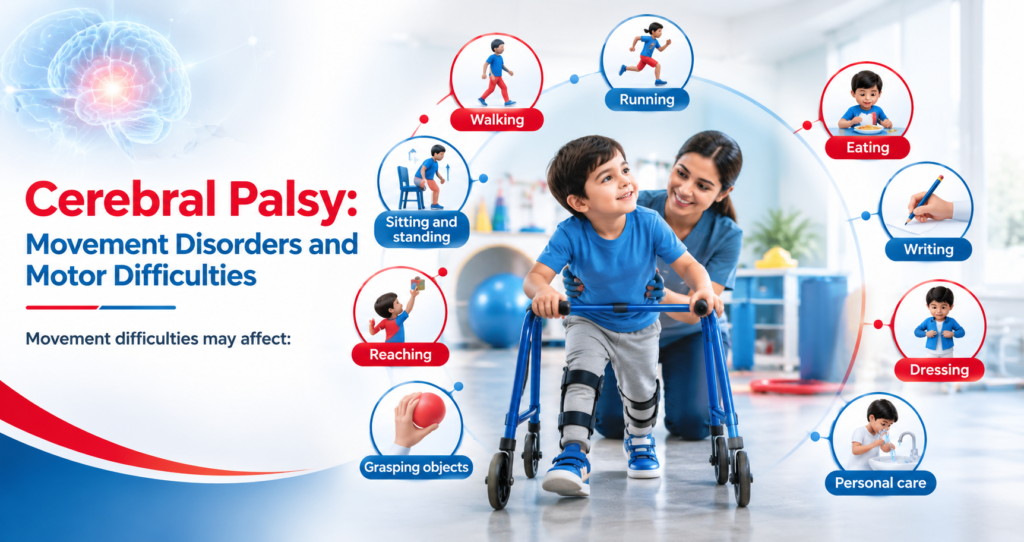
Cerebral palsy movement disorders can affect the way a person controls voluntary movements. Depending on the type of cerebral palsy, movement may be stiff, weak, poorly coordinated or involuntary.
Movement difficulties may affect:
- Walking
- Running
- Sitting and standing
- Reaching
- Grasping objects
- Eating
- Writing
- Dressing
- Personal care
The severity of movement impairment varies widely. Some people with cerebral palsy can walk independently, while others may use walkers, wheelchairs or other mobility aids.
Cerebral Palsy Diagnosis: How Is It Diagnosed?
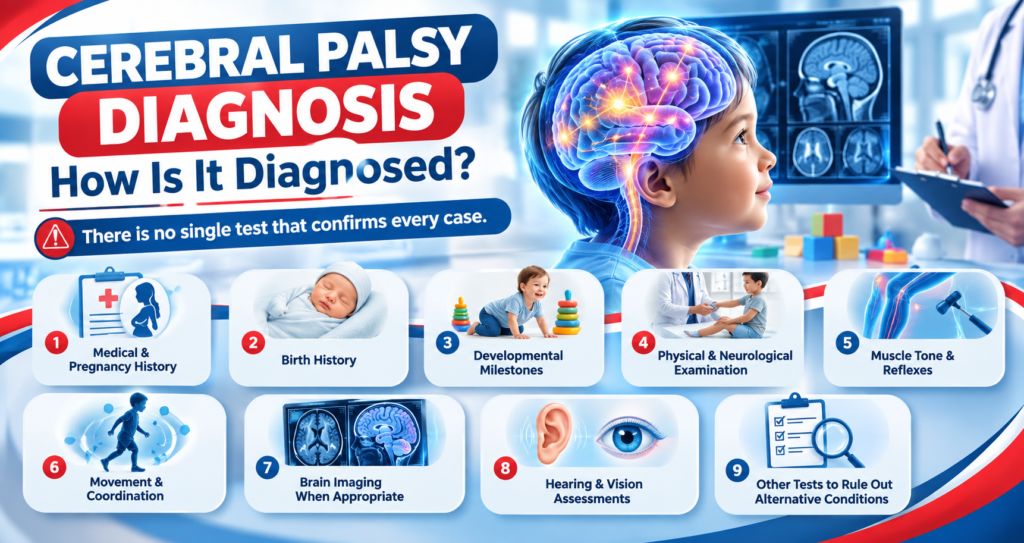
Cerebral palsy diagnosis generally involves a detailed assessment of the child’s development, movement patterns, muscle tone and neurological function.
There is no single test that confirms every case of cerebral palsy. Doctors may consider:
- Medical and pregnancy history
- Birth history
- Developmental milestones
- Physical and neurological examination
- Muscle tone and reflexes
- Movement and coordination
- Brain imaging when appropriate
- Hearing and vision assessments
- Other tests to rule out alternative conditions
Magnetic resonance imaging (MRI) may provide information about structural changes or previous injury in the brain.
In some children, a definitive diagnosis may take time because movement patterns and developmental differences become clearer as the child grows.
Why Early Diagnosis Matters
An early assessment can help healthcare professionals identify a child’s specific needs and begin appropriate support.
Cerebral palsy early intervention may include physical therapy, occupational therapy, speech and language therapy, developmental support and appropriate assistive equipment.
Early intervention does not mean that every child will have the same treatment plan. Care is tailored according to the child’s abilities, symptoms, developmental needs and family goals.
Cerebral Palsy Treatment: Can Cerebral Palsy Be Cured?
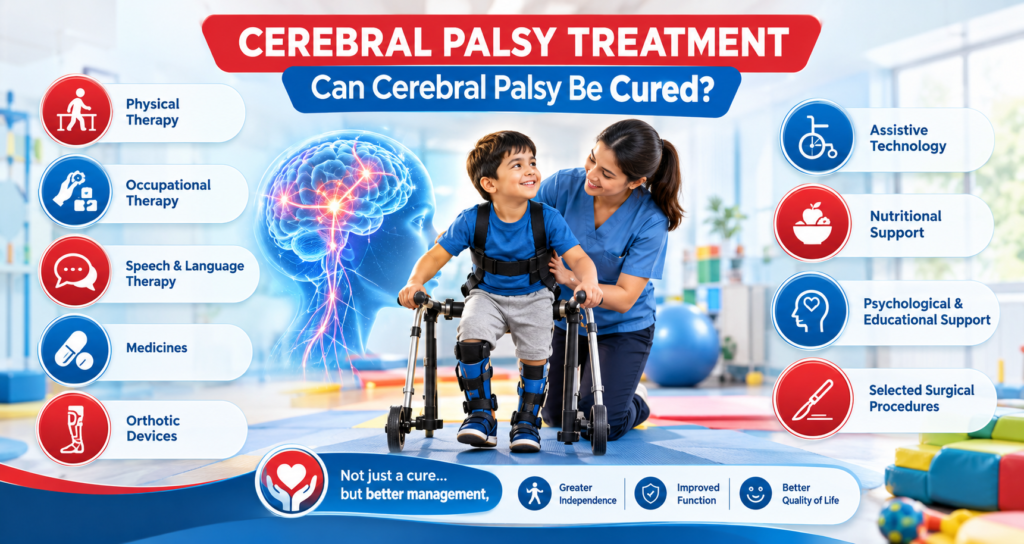
There is currently no treatment that completely eliminates cerebral palsy. However, cerebral palsy treatment focuses on improving function, independence, comfort and participation in everyday life.
Treatment is usually multidisciplinary and may involve:
- Physical therapy
- Occupational therapy
- Speech and language therapy
- Medicines
- Orthotic devices
- Assistive technology
- Nutritional support
- Psychological and educational support
- Selected surgical procedures
The treatment plan may change as the child develops.
Cerebral Palsy Treatment Options for Improving Mobility
Cerebral palsy treatment options depend on the individual’s symptoms and functional goals.
Medicines may sometimes be used to reduce muscle stiffness or manage specific symptoms. In selected cases, injections that temporarily reduce muscle overactivity may be recommended.
Orthoses, braces, walkers and other assistive devices can support mobility and positioning.
For some people with severe movement problems, surgery may be considered to address specific musculoskeletal problems or reduce functional limitations.
Treatment decisions should always be made by an appropriately qualified healthcare team after an individual assessment.
Cerebral Palsy Physiotherapy: Improving Strength and Movement
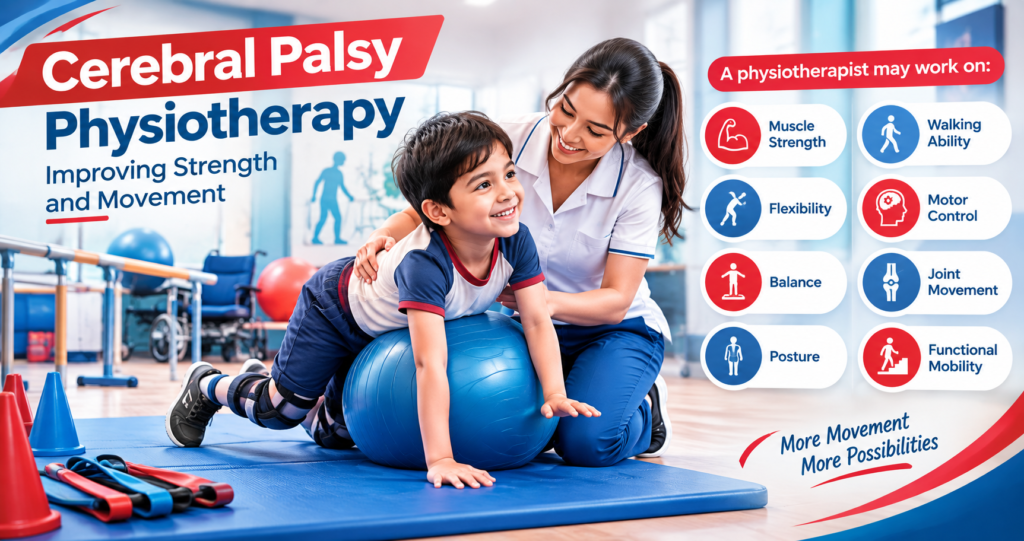
Cerebral palsy physiotherapy plays an important role in improving mobility and physical function.
A physiotherapist may work on:
- Muscle strength
- Flexibility
- Balance
- Posture
- Walking ability
- Motor control
- Joint movement
- Functional mobility
Therapy is often tailored to the child’s developmental stage and individual goals. Regular exercises and activities may help maintain mobility and reduce the effects of muscle tightness and weakness.
Cerebral Palsy Occupational Therapy: Supporting Daily Activities
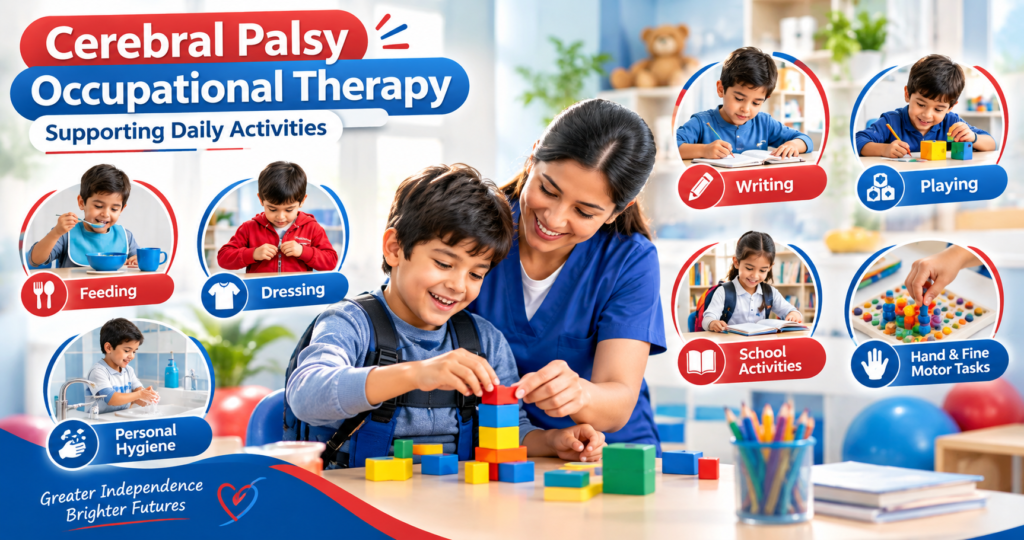
Cerebral palsy occupational therapy focuses on helping individuals perform everyday activities as independently as possible.
Occupational therapists may help children develop skills for:
- Feeding
- Dressing
- Writing
- Playing
- Personal hygiene
- School activities
- Hand and fine motor tasks
They may also recommend adaptations or assistive devices that make everyday activities easier and safer.
Cerebral Palsy Speech Therapy: Communication and Feeding Support
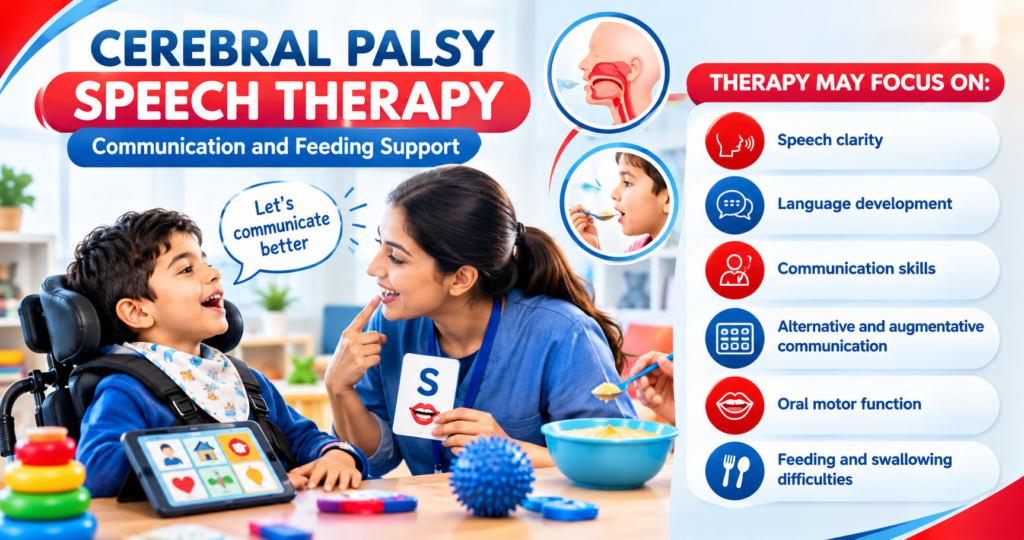
Cerebral palsy speech therapy can help children and adults who experience difficulties with speech, language or communication.
Therapy may focus on:
- Speech clarity
- Language development
- Communication skills
- Alternative and augmentative communication
- Oral motor function
- Feeding and swallowing difficulties
Speech and language therapists can also help families identify appropriate communication strategies based on the person’s individual abilities.
Cerebral Palsy Rehabilitation: A Multidisciplinary Approach
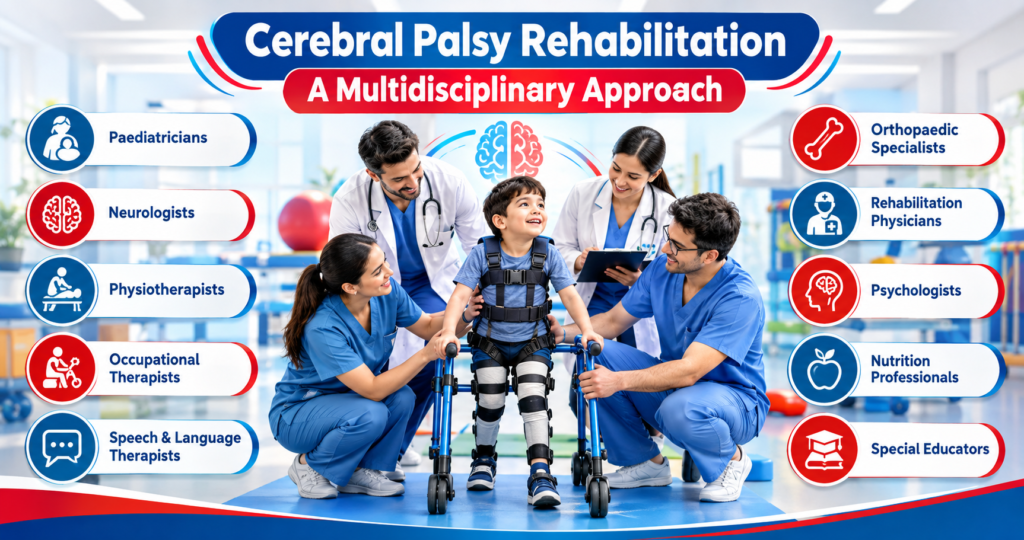
Cerebral palsy rehabilitation aims to maximise independence and participation throughout life.
A rehabilitation team may include:
- Paediatricians
- Neurologists
- Physiotherapists
- Occupational therapists
- Speech and language therapists
- Orthopaedic specialists
- Rehabilitation physicians
- Psychologists
- Nutrition professionals
- Special educators
A coordinated approach allows different aspects of the condition to be addressed together.
Cerebral Palsy Management: Long-Term Care and Support
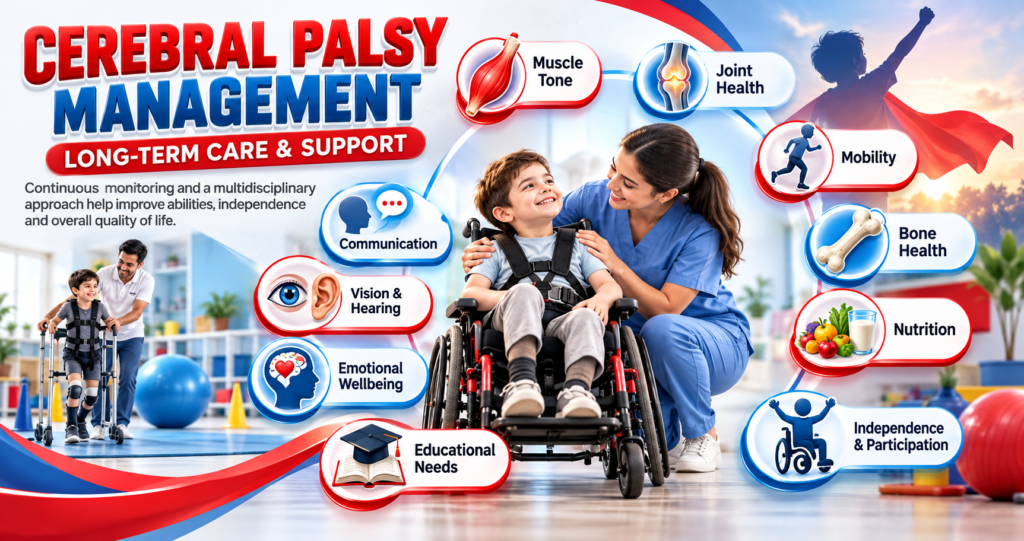
Cerebral palsy management is a long-term process. As a child grows, their physical abilities, educational requirements, social needs and independence goals may change.
Regular assessments can help identify emerging problems and modify the treatment plan.
Long-term management may include monitoring:
- Muscle tone
- Joint health
- Mobility
- Bone health
- Nutrition
- Communication
- Vision and hearing
- Emotional wellbeing
- Educational needs
- Independence and participation
Family involvement is also an important part of effective management.
Cerebral Palsy Complications: What Problems Can Occur?
Although cerebral palsy itself results from a non-progressive brain disturbance, associated physical problems can develop or change over time. Cerebral palsy complications may include:
- Joint stiffness
- Contractures
- Hip problems
- Scoliosis
- Pain
- Difficulty swallowing
- Nutritional problems
- Speech difficulties
- Seizures
- Vision problems
- Sleep difficulties
- Dental problems
- Reduced mobility
Regular medical and rehabilitation follow-up can help identify and address these issues early.
Living With Cerebral Palsy
Living with cerebral palsy is different for every person. The condition can affect movement, communication, education, employment and participation, but appropriate support can help individuals achieve greater independence.
Families can support children by encouraging participation in age-appropriate activities, following therapy recommendations and maintaining regular medical follow-up.
Schools and communities also have an important role in providing accessibility, inclusive education and opportunities for participation.
When Should Parents Seek Medical Advice?
Parents should speak with a healthcare professional if they notice persistent developmental delays, unusual muscle tone, abnormal movement patterns, difficulty controlling movements or loss of previously acquired skills.
Early evaluation is particularly important when a child shows multiple developmental concerns.
A medical professional can determine whether further developmental, neurological or rehabilitation assessment is needed.
Early Support Can Make a Difference
Cerebral palsy is a lifelong neurological condition that can affect movement, posture, coordination and other functions. Its presentation varies considerably from one person to another.
Understanding cerebral palsy causes, recognising cerebral palsy symptoms and cerebral palsy early signs, and obtaining an appropriate cerebral palsy diagnosis can help families access timely support.
While there is no universal cure, modern cerebral palsy treatment, cerebral palsy rehabilitation, physiotherapy, occupational therapy, speech therapy, medicines, assistive technology and selected surgical interventions can help improve function and quality of life.
Most importantly, cerebral palsy care should be individualised. With early intervention, appropriate rehabilitation and continued support, many people with cerebral palsy can develop greater independence and actively participate in family, education, work and community life.
Leave a Reply