
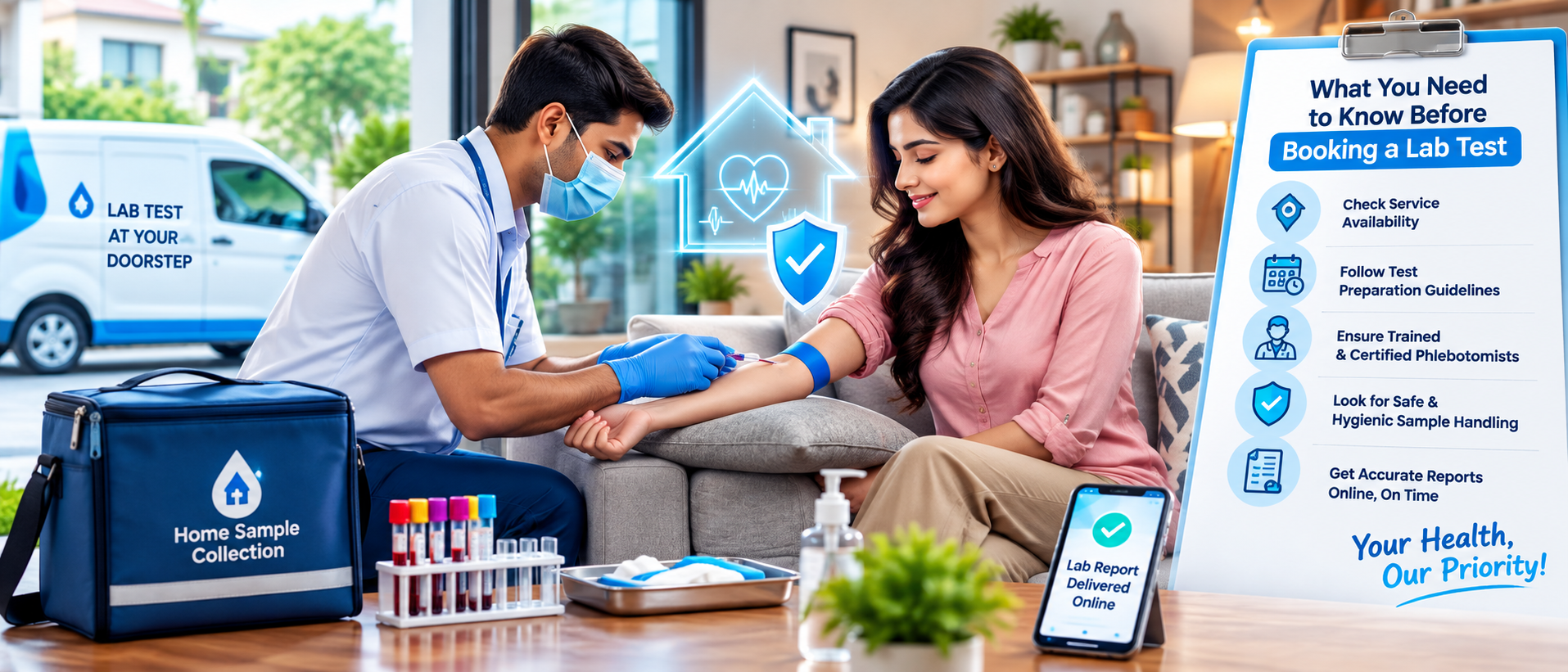
What Is Doorstep Blood Sample Collection?

Doorstep blood sample collection is a diagnostic service in which a trained phlebotomist visits your home at a scheduled time to collect a blood specimen for laboratory testing. Instead of travelling to a diagnostic centre, waiting in a queue and arranging transportation back home, you can complete the collection step from the comfort of your own surroundings. The collected specimen is then transported to the appropriate laboratory under conditions designed to preserve sample quality before testing. The convenience is particularly useful for people with busy schedules, older adults, children, people with mobility difficulties and individuals who simply prefer a more comfortable testing experience.
The convenience of home collection does not mean that laboratory standards become less important. The quality of a blood test depends on several stages, including patient identification, appropriate collection, correct tube selection, specimen labelling, handling, transportation and processing. The Clinical and Laboratory Standards Institute (CLSI) highlights that factors in the pre-examination phase can influence specimen quality and, ultimately, laboratory results. That is why selecting a professional home blood collection service matters just as much as selecting the right test.
How Blood Tests at Home Work
The basic process is straightforward. You select the required test, provide your details, choose a suitable appointment slot and prepare according to the laboratory’s instructions. A trained professional arrives at the specified address, verifies your identity and collects the required sample using appropriate equipment. The specimen is labelled and prepared for transportation to the laboratory, where it undergoes testing and quality checks before the report is released.
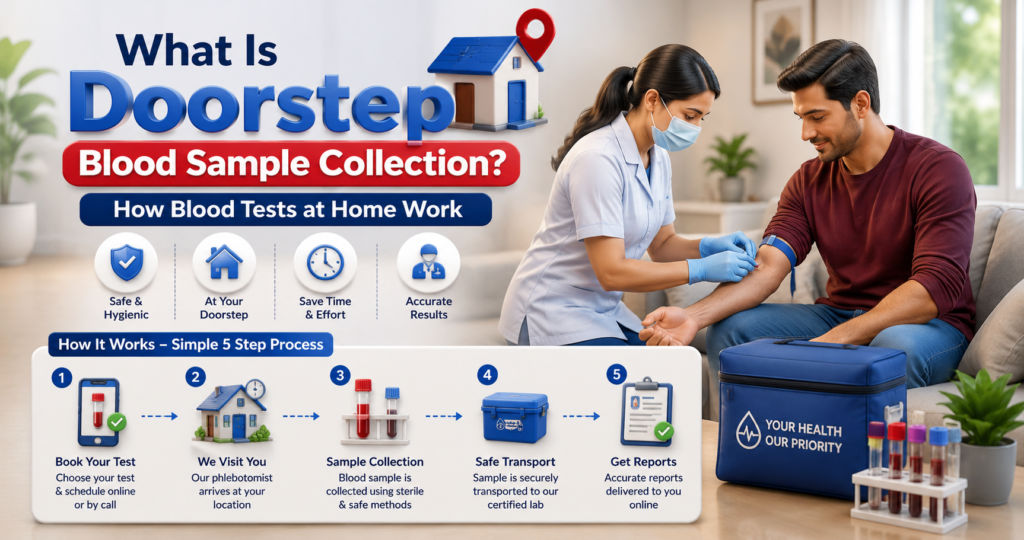
Why Choose a Blood Test at Home?
A blood test at home can remove several practical barriers associated with conventional laboratory visits. Consider a person who needs several routine tests but has an early work meeting, an elderly parent who finds travelling difficult, or a patient who feels uncomfortable sitting in a crowded waiting area. Home collection allows the appointment to happen in a familiar environment while reducing unnecessary travel. It can also make regular monitoring easier because convenience may encourage people to follow through with tests that they might otherwise postpone.
The benefits of doorstep blood collection also include scheduling flexibility and reduced disruption to everyday routines. However, convenience should never be confused with a guarantee of better medical results. Accuracy depends on proper preparation, appropriate collection and correct specimen handling. CLSI guidance specifically addresses specimen handling, transport, processing and storage because these stages can affect specimen integrity. A dependable service therefore combines convenience with trained personnel and a controlled laboratory workflow.
Benefits of Doorstep Blood Collection
Some of the major advantages include:
- Convenient collection without travelling to a laboratory.
- Flexible appointment scheduling.
- Useful for elderly or mobility-limited individuals.
- Less time spent waiting at a diagnostic centre.
- Easier access to routine health monitoring.
- Convenient option for multiple family members.
- Helpful for people with demanding work or household schedules.
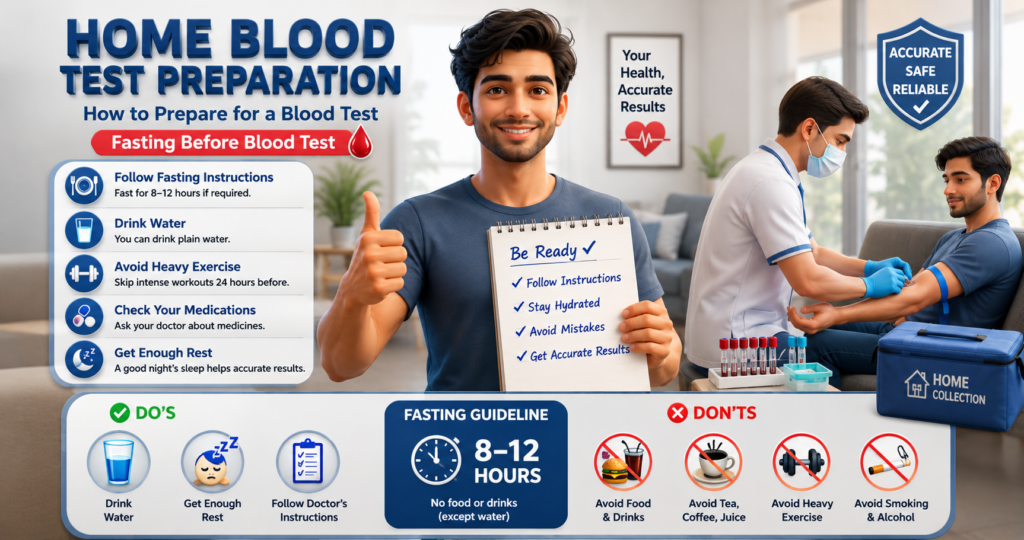
How to Book a Lab Test Online

Lab test booking online has made the process considerably easier. Before selecting a test, read the test description carefully and confirm whether it requires fasting, a specific collection time, medication-related instructions or any other preparation. You should also check whether the service covers your location, whether home collection charges apply and how reports will be delivered.
Avoid choosing a test solely because it appears inexpensive. Look at the laboratory’s credentials, collection procedures, availability of trained professionals, estimated reporting time and customer support. If a doctor has prescribed a specific test or panel, use the exact prescription rather than substituting a different package simply because it is marketed as a broader option. Diagnostic testing should support medical decision-making, not replace it.
What to Check Before Booking
Before confirming your appointment, verify the test name, preparation requirements, appointment time, home collection availability and report delivery method. Ask whether the phlebotomist is trained for the required collection and whether special handling is needed for your particular specimen. A professional service should also have a clear process for identifying the patient and labelling the specimen. These details may appear small, but they form an important part of laboratory quality.
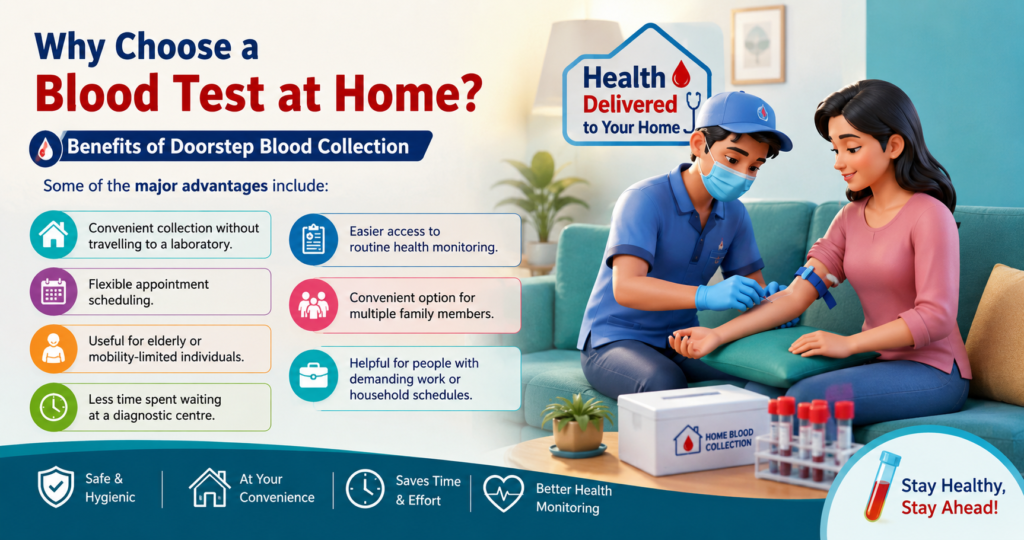
Home Blood Test Preparation
Good home blood test preparation starts before the phlebotomist arrives. First, read the laboratory’s preparation instructions rather than assuming every blood test requires the same preparation. Some tests may require fasting, while others do not. Certain tests can also be influenced by the time of day, recent food intake, exercise, hydration or medications, depending on what is being measured.
Try to schedule the appointment at a time when you can remain relaxed and avoid unnecessary rushing. Keep your identification documents, prescription and booking information available if required. Drink water if the laboratory permits it and unless your healthcare professional has instructed you otherwise. Being adequately hydrated can make venous access easier for some people, but individual medical instructions should always take priority.
How to Prepare for a Blood Test
A practical preparation routine is to confirm the instructions the evening before your appointment. If fasting is required, follow the exact fasting duration specified by the laboratory or healthcare professional instead of choosing a fasting period yourself. Do not stop prescribed medicines unless your doctor specifically tells you to do so. Wear clothing that allows easy access to the arm, and tell the phlebotomist about any previous difficulty with blood collection, fainting or discomfort.
Fasting Before Blood Test
Fasting before blood test is not automatically required for every investigation. Whether you need to fast depends on the particular test and the instructions provided by your healthcare professional or laboratory. Some investigations are affected by food intake, while others can be performed without fasting. Because requirements vary, the safest approach is to follow the instructions associated with your specific test rather than relying on general advice.
If fasting is required, clarify what is permitted during the fasting period, including whether plain water is allowed. Do not assume that coffee, tea, juice or other beverages are acceptable simply because they do not feel like a meal. If you have diabetes, are pregnant, take regular medication or have another reason that makes fasting difficult, discuss the requirement with your healthcare professional before the appointment.
Laboratory Test Preparation for Different Tests
Laboratory test preparation varies significantly depending on the investigation. A routine complete blood count may have different preparation requirements from a lipid-related test, glucose investigation, hormone test or therapeutic drug measurement. The time of collection can also matter for certain measurements because some substances vary naturally during the day. CLSI specifically identifies factors such as fasting status and collection timing as patient-related considerations that can influence examination results.
This is why a generic “prepare the same way for every blood test” approach is unreliable. If multiple tests are booked together, ask whether the preparation requirements overlap or whether a particular test changes the recommended appointment time. A professional diagnostic provider should be able to explain the preparation requirements in clear language.
Home Sample Collection Process
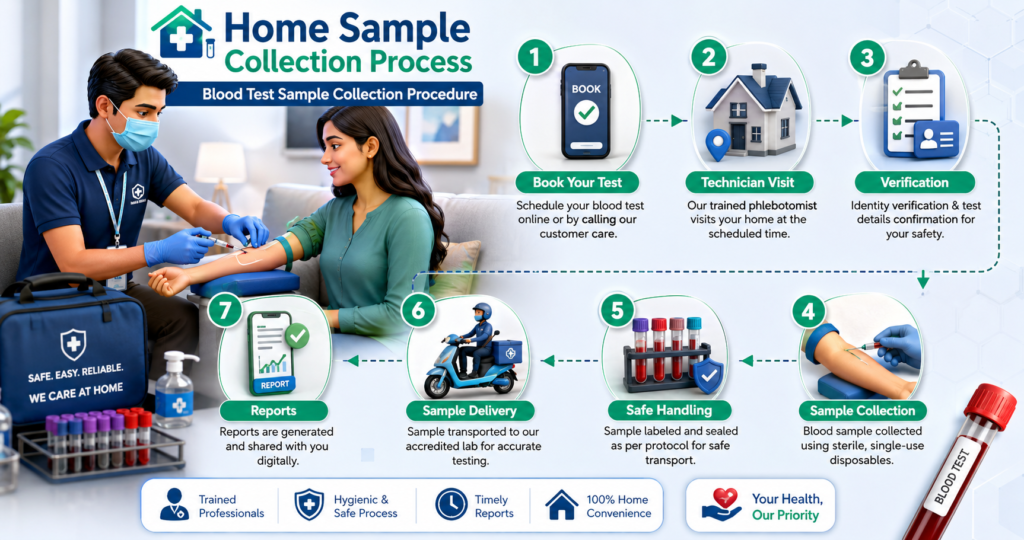
The home sample collection process generally begins with appointment confirmation and patient verification. The collection professional prepares the required equipment, confirms the patient’s identity and checks the requested investigations. The appropriate collection site is selected, the skin is prepared and the blood specimen is collected using suitable equipment. After collection, the tubes are labelled and prepared for transportation.
A reliable process continues after the needle is removed. The sample must be handled and transported appropriately so that its condition remains suitable for analysis. CLSI’s PRE04 guideline covers handling, transport, processing and storage of blood specimens and emphasizes controlling factors that can affect specimen quality. This demonstrates why doorstep testing should be viewed as a complete laboratory workflow rather than simply “someone coming to draw blood.”
Blood Test Sample Collection Procedure
The blood test sample collection procedure should be performed by appropriately trained personnel using suitable, sterile and single-use collection equipment. Depending on the test, blood may be collected into different tubes containing specific additives. Correct tube selection and collection order matter because additives can potentially interfere with subsequent specimens if they are transferred between tubes. CLSI provides a standardized order of draw for commonly used blood collection tubes.
For capillary collections, appropriate puncture sites, devices, patient positioning and specimen handling are also important. CLSI’s capillary blood collection guidance emphasizes standardized procedures to support both patient safety and result accuracy. These technical details are normally managed by the collection professional, but understanding them helps patients recognize why professional collection matters.
Blood Sample Collection Precautions
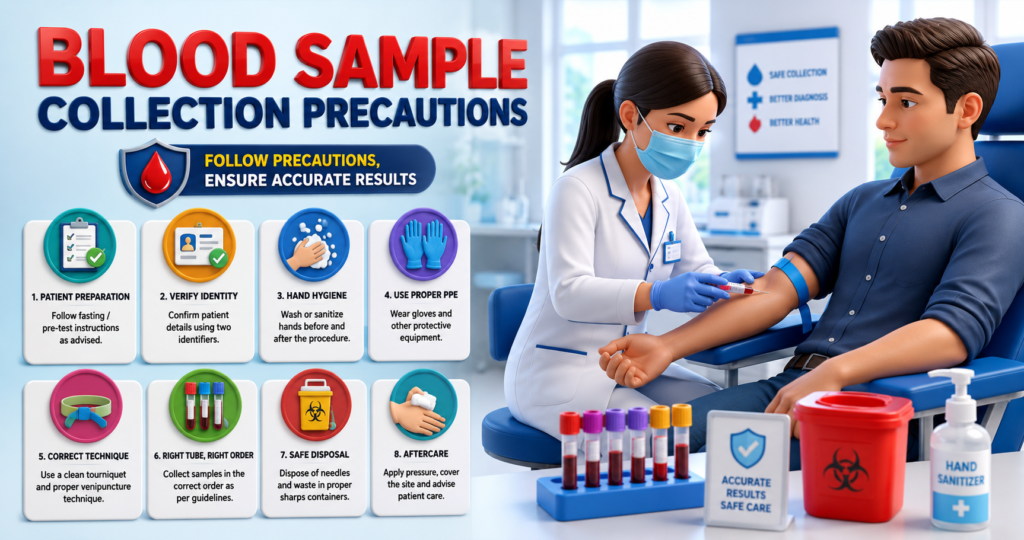
Blood sample collection precautions begin with proper patient identification and extend through transportation to the laboratory. The collection professional should use appropriate hygiene practices, sterile equipment and correct specimen labelling. Patients should provide accurate information about their identity, requested tests and relevant preparation instructions. If something about the booking appears incorrect, clarify it before the sample is collected.
You should also tell the professional if you feel dizzy, have previously fainted during blood collection or have a history of difficult venous access. After collection, keep pressure on the puncture site as advised. If you experience unusual or persistent symptoms, seek appropriate medical advice. Proper collection is a shared process: trained professionals manage the technical procedure, while patients help by providing accurate information and following preparation instructions.
Choosing a Reliable Home Blood Collection Service
Choosing a reliable home blood collection service requires more than checking whether the provider offers low-cost home visits. Look for transparent test information, clear preparation instructions, trained collection staff, appropriate specimen handling and dependable customer support. It is also useful to understand how samples are transported and how reports are delivered.
If you are booking a health package, review the individual tests included rather than focusing only on the package name. A “full body” label does not mean that every possible health condition is assessed. The right tests depend on age, symptoms, medical history, risk factors and clinical advice. When in doubt, ask your doctor or qualified healthcare professional which investigations are appropriate.
Full Body Health Checkup at Home
A full body health checkup at home can be a convenient way to complete multiple laboratory investigations during one scheduled visit. Such packages may combine tests covering areas such as blood counts, glucose metabolism, lipids, liver function, kidney function or thyroid-related measurements. However, package contents differ between providers, so always read the parameter list carefully.
A health package should be considered a screening or monitoring tool rather than a complete substitute for medical evaluation. Abnormal results may require repeat testing, physical examination, imaging or consultation with a specialist. Likewise, normal results do not necessarily rule out every health problem. The value of home testing comes from making appropriate diagnostic investigations easier to access and complete.
Home Diagnostic Testing for Regular Health Monitoring
Home diagnostic testing can support regular monitoring when tests have been recommended by a healthcare professional. People managing long-term health concerns may need repeated laboratory investigations, and avoiding unnecessary travel can make this process more convenient. Families may also find home collection useful when several people need routine screening.
The key is consistency. If a particular test needs comparable preparation or timing from one measurement to another, follow the instructions provided by your healthcare team. This helps make results easier to interpret over time. Never use laboratory reports alone to diagnose yourself or change medication without professional guidance.
What Happens After Blood Collection?
Once the sample is collected, it should be correctly identified and transported to the laboratory. Different specimens may have different requirements regarding temperature, timing, processing and storage. CLSI notes that specimen integrity can be affected throughout the pre-examination workflow, making appropriate handling important before analysis even begins.
At the laboratory, samples undergo the appropriate analytical process and quality checks before results are reported. The final report may be delivered digitally, through an app or portal, by email or through another method offered by the provider. If a result is outside the reference range, discuss its significance with your healthcare professional rather than interpreting a single value in isolation.
Common Mistakes to Avoid Before a Home Blood Test
One common mistake is assuming that every test requires fasting. Another is fasting for longer than instructed because someone believes “more fasting means better results.” People may also forget to mention medicines, recent illness or other factors that could be relevant to interpretation.
Another avoidable mistake is booking a test without reading its preparation instructions. A little preparation before booking can prevent delays, repeat collections or unnecessary confusion. If the laboratory’s instructions conflict with advice previously provided by your doctor, clarify the difference before proceeding.
When Should You Consider Doorstep Diagnostic Services?
Doorstep diagnostic services can be particularly useful when convenience, mobility or scheduling is a concern. They can help people complete routine investigations without spending additional time travelling to a laboratory. Families may also find them practical when coordinating multiple appointments.
That said, home collection is not appropriate for every medical situation. If you have severe symptoms or require urgent medical assessment, a blood test appointment should not delay emergency or clinical care. Diagnostic testing is one component of healthcare, and urgent symptoms should be evaluated through the appropriate medical channel.
Questions to Ask Before Booking a Home Test
Before booking, ask whether the test requires fasting, when the sample should be collected, whether any medication instructions apply and whether the requested test is available through home collection. Confirm the expected report delivery method and whether additional charges apply. You can also ask how the sample will be handled and transported after collection.
These questions are especially useful when booking multiple tests. A few minutes of clarification can prevent an unsuitable appointment and help ensure that you arrive prepared. Good diagnostic services should make these instructions easy to understand rather than leaving patients to guess.
Are Blood Tests at Home Safe and Accurate?
When performed by trained personnel using appropriate collection and handling procedures, blood tests at home can be conducted as part of a professional laboratory workflow. The physical location of collection does not automatically determine accuracy; specimen collection, identification, handling, transportation, processing and analysis all contribute to the final result. CLSI guidance specifically emphasizes the importance of controlling pre-examination factors that can affect specimen quality.
Patients should therefore focus on the quality of the entire service rather than assuming that “home” or “lab” alone determines reliability. Ask about the collection professional, specimen handling and laboratory process when evaluating a provider.
Doorstep Blood Collection vs Visiting a Laboratory
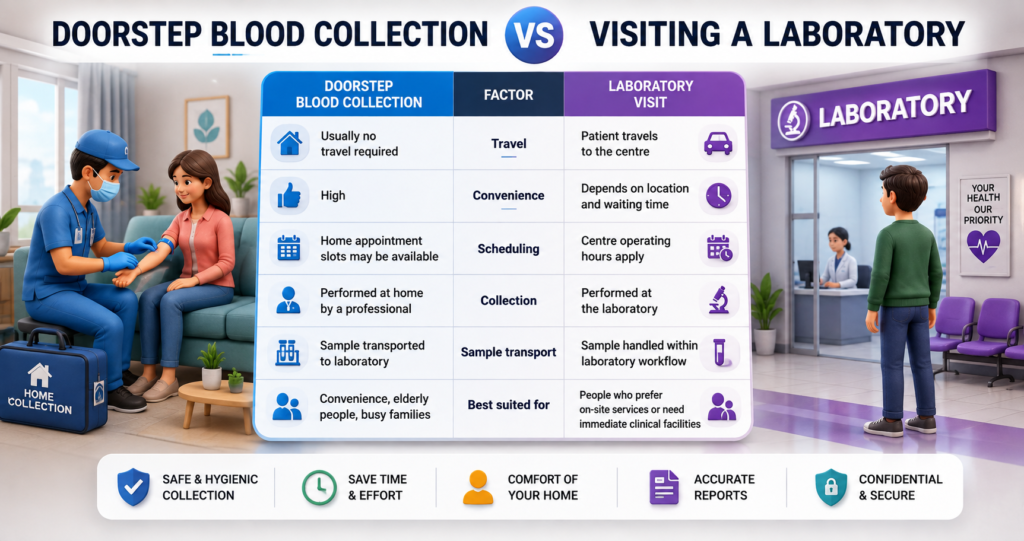
| Factor | Doorstep Blood Collection | Laboratory Visit |
| Travel | Usually no travel required | Patient travels to the centre |
| Convenience | High | Depends on location and waiting time |
| Scheduling | Home appointment slots may be available | Centre operating hours apply |
| Collection | Performed at home by a professional | Performed at the laboratory |
| Sample transport | Sample transported to laboratory | Sample handled within laboratory workflow |
| Best suited for | Convenience, elderly people, busy families | People who prefer on-site services or need immediate clinical facilities |
Both options can be appropriate. The better choice depends on the patient’s circumstances, test requirements and the quality of the provider.
Tips for a Smooth Home Sample Collection Appointment
Keep your booking details and prescription accessible before the collection professional arrives. Follow the test-specific preparation instructions and avoid changing medication schedules without medical advice. Wear comfortable clothing that allows easy access to the collection area and inform the phlebotomist about previous difficulties with blood draws.
After collection, follow the professional’s instructions regarding pressure on the puncture site and normal post-collection care. If the laboratory contacts you about a sample issue or repeat collection, ask why the repeat is required rather than ignoring the request. A repeat sample can sometimes be necessary when specimen quality is inadequate for reliable analysis.
Conclusion
Doorstep blood sample collection offers a practical way to complete many laboratory investigations without travelling to a diagnostic centre. From lab test booking online and home blood test preparation to the actual blood test sample collection procedure, every stage contributes to a dependable testing experience. Understanding fasting requirements, preparation instructions, patient identification, specimen handling and transportation can help you make better decisions before booking.
The biggest advantage of home collection is convenience, but convenience should always be combined with professional standards. Choose a reliable home blood collection service, follow the laboratory’s instructions and discuss medical concerns or abnormal results with a qualified healthcare professional. Whether you need a single investigation, routine monitoring or a full body health checkup at home, informed preparation can make the entire process smoother.
FAQs About Doorstep Blood Sample Collection
1. Is fasting required for every blood test at home?
No. Fasting before blood test collection depends on the specific investigation. Always follow the instructions given by your healthcare professional or diagnostic laboratory.
2. How should I prepare for a blood test at home?
Read the test-specific preparation instructions, confirm whether fasting is required, follow medication guidance from your doctor, stay appropriately hydrated if permitted and keep your identification and prescription available if needed.
3. Is blood sample collection at home safe?
When performed by trained collection personnel using appropriate equipment and specimen-handling procedures, home collection can be a safe and convenient option. Proper identification, collection, labelling and transportation are important parts of the process.
4. Can I book a full body health checkup at home?
Yes, many diagnostic providers offer packages that can be collected at home. However, package contents vary, so review the included tests and discuss whether the package is appropriate for your healthcare needs.
5. What should I check before booking doorstep diagnostic services?
Check the exact tests included, preparation requirements, fasting instructions, collection availability, service charges, collection professional, specimen handling process and report delivery method. Most importantly, choose a provider that clearly explains the complete testing process.
Leave a Reply