


Gynecologic Cancer Awareness Month is an important opportunity to increase awareness about cancers that affect the female reproductive system. These cancers can develop in different organs, including the cervix, ovaries, uterus, vagina and vulva. Understanding the different types, recognizing possible symptoms, knowing the risk factors and following appropriate screening recommendations can help women make informed decisions about their health.
Although some gynecologic cancers can be detected through routine screening, others may not have a specific screening test for women without symptoms. This makes awareness of changes in the body particularly important.
This article explores the major types of gynecologic cancer, common Cancer Symptoms, Risk Factors, the importance of Early Detection and Cancer Screening, and practical approaches to Preventive Care and overall Women’s Health.
Gynecologic Cancer Awareness: Why It Matters

Gynecologic Cancer Awareness is not only about understanding cancer—it is about encouraging women to recognize potential warning signs and seek appropriate medical advice.
Gynecologic cancers are not one single disease. Each type can have different causes, risk factors, symptoms and treatment approaches. Some are strongly associated with HPV Infection, while others may be influenced by age, genetics, hormonal factors, lifestyle and family history.
Awareness can help women understand when a symptom may require medical evaluation. For example, persistent Abnormal Bleeding, unexplained Pelvic Pain, unusual vaginal discharge or changes involving the vulva should not automatically be assumed to be harmless.
It is important to remember that many symptoms associated with gynecologic cancer can also occur because of non-cancerous conditions. Experiencing a symptom does not mean that a woman has cancer. However, persistent, unusual or unexplained symptoms should be discussed with a qualified healthcare professional.
Types of Gynecologic Cancer
There are five major types of gynecologic cancer:
- Cervical Cancer
- Ovarian Cancer
- Uterine Cancer
- Vaginal Cancer
- Vulvar Cancer
Each cancer begins in a different part of the reproductive system and may present differently.
Cervical Cancer: Causes, Symptoms & Prevention

Cervical Cancer develops in the cervix, which is the lower portion of the uterus that connects to the vagina.
One of the most important causes associated with cervical cancer is persistent infection with certain high-risk types of human papillomavirus, commonly known as HPV. HPV is a very common infection, and most infections clear naturally. However, persistent infection with high-risk HPV types can cause cellular changes that may eventually develop into cancer.
Possible symptoms of cervical cancer can include Abnormal Bleeding, particularly bleeding after sexual intercourse, bleeding between menstrual periods or bleeding after menopause. Unusual vaginal discharge and pelvic discomfort may also occur.
Cervical cancer is particularly important from a prevention perspective because screening can identify precancerous changes before they develop into invasive cancer. Depending on a woman’s age, health history and local medical guidelines, screening may involve HPV testing, cervical cytology or a combination of tests.
HPV vaccination is another important preventive measure. Vaccination can reduce the risk of infection with HPV types associated with several cancers, including cervical cancer.
Ovarian Cancer: Symptoms & Risk Factors
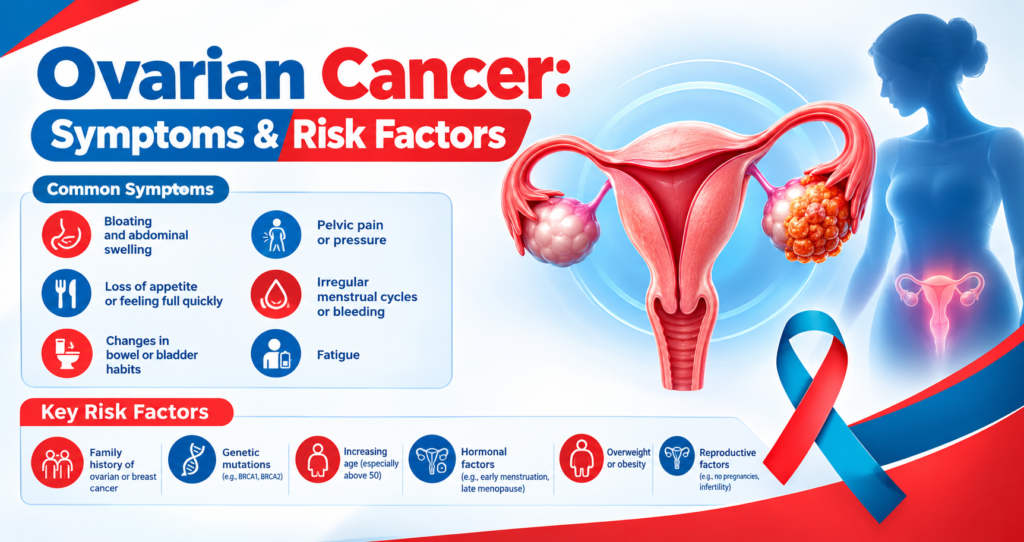
Ovarian Cancer begins in the ovaries, the reproductive organs responsible for producing eggs and hormones.
Ovarian cancer can be challenging to recognize because its early symptoms may be subtle or resemble common digestive or menstrual problems. Possible symptoms include persistent bloating, abdominal discomfort, Pelvic Pain, feeling full quickly when eating, urinary changes or changes in bowel habits.
These symptoms can have many causes other than ovarian cancer. However, when they are persistent, unusual or represent a significant change from a woman’s normal health, medical evaluation is important.
Risk factors for ovarian cancer can include increasing age, certain inherited genetic changes, a family history of ovarian or related cancers and some reproductive or hormonal factors. Not every woman with a risk factor will develop ovarian cancer, and ovarian cancer can also occur in women without obvious risk factors.
At present, there is no routine screening test proven to reliably detect ovarian cancer early in average-risk women without symptoms. Women with a strong family history or known inherited genetic risk may benefit from discussing individualized risk assessment with a healthcare professional.
Uterine Cancer: Understanding Endometrial Cancer

Uterine Cancer refers to cancer that develops in the uterus. The most common type begins in the lining of the uterus and is known as endometrial cancer.
One of the most common warning signs is Abnormal Bleeding. This may include unusually heavy or irregular menstrual bleeding or bleeding after menopause.
Other possible symptoms can include pelvic discomfort, unusual vaginal discharge or pain during intercourse. Again, these symptoms do not necessarily indicate cancer, but persistent or unexplained changes should be evaluated.
Risk factors for endometrial cancer can include increasing age, obesity, prolonged exposure to estrogen without sufficient progesterone, certain hormonal conditions, diabetes and some inherited genetic syndromes.
Unlike cervical cancer, there is no routine screening test recommended for average-risk women who have no symptoms. However, abnormal bleeding—particularly bleeding after menopause—should be medically evaluated.
Vaginal Cancer: Signs & Risk Factors
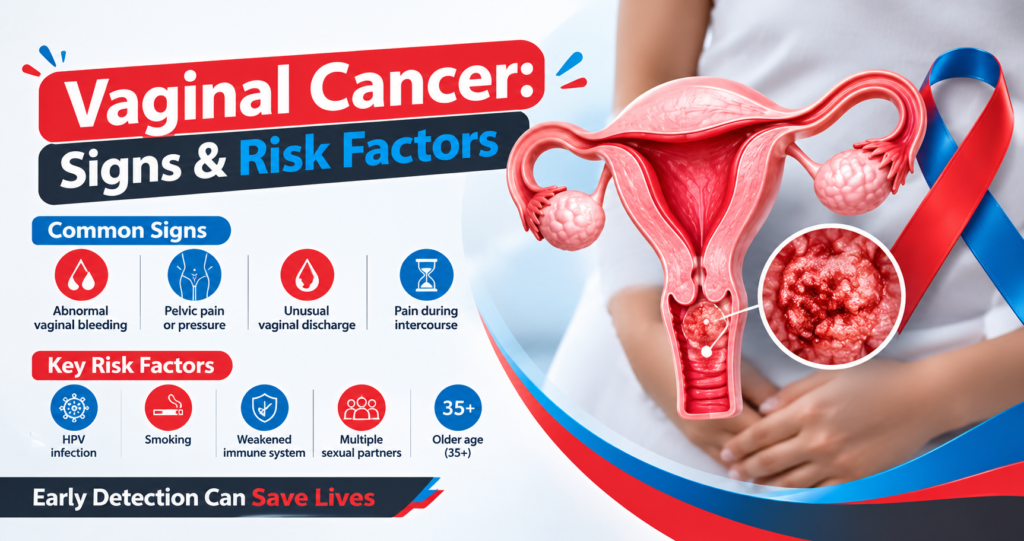
Vaginal Cancer develops in the vagina, the muscular canal connecting the cervix to the external genital area.
Vaginal cancer is relatively uncommon compared with some other gynecologic cancers. Possible symptoms may include unusual vaginal bleeding, especially after sexual intercourse or menopause, abnormal vaginal discharge, a mass or lump in the vagina, or pelvic discomfort.
Certain types of HPV Infection are associated with an increased risk of vaginal cancer. Other possible Risk Factors include increasing age, a history of cervical precancer or cancer and certain previous treatments or medical conditions.
Because vaginal cancer is uncommon and symptoms may overlap with other gynecologic conditions, any persistent or unexplained vaginal changes should be assessed by a healthcare professional.
Vulvar Cancer: Symptoms & Risk Factors

Vulvar Cancer develops in the vulva, the external female genital area.
Potential symptoms can include persistent itching, burning, irritation, changes in skin color or texture, a lump, sore or ulcer, unusual bleeding, or a skin lesion that does not heal.
Some vulvar cancers are associated with HPV Infection, while others can develop through different pathways. Risk factors may include increasing age, certain chronic vulvar skin conditions, smoking, HPV infection and a weakened immune system.
A persistent change in the vulvar skin should not be ignored. Early medical assessment can help determine whether the change is caused by an infection, inflammation, precancerous condition or cancer.
Cancer Symptoms: Warning Signs Women Should Know

Recognizing Cancer Symptoms is an important part of gynecologic health awareness.
Possible warning signs can include:
- Abnormal Bleeding or bleeding after menopause
- Unusual vaginal discharge
- Persistent Pelvic Pain
- Persistent abdominal discomfort
- Bloating that does not go away
- Pain during sexual intercourse
- Persistent itching or burning of the vulva
- A lump, sore or skin change around the vulva
- Changes in urinary or bowel habits
- Feeling full unusually quickly
- Unexplained changes that persist or worsen
It is important to understand that these symptoms are not specific to cancer. Conditions such as infections, hormonal changes, fibroids, endometriosis and other non-cancerous disorders can cause similar symptoms.
The key concern is a symptom that is new, persistent, unusual or different from your normal pattern.
Risk Factors: What Can Increase the Risk?
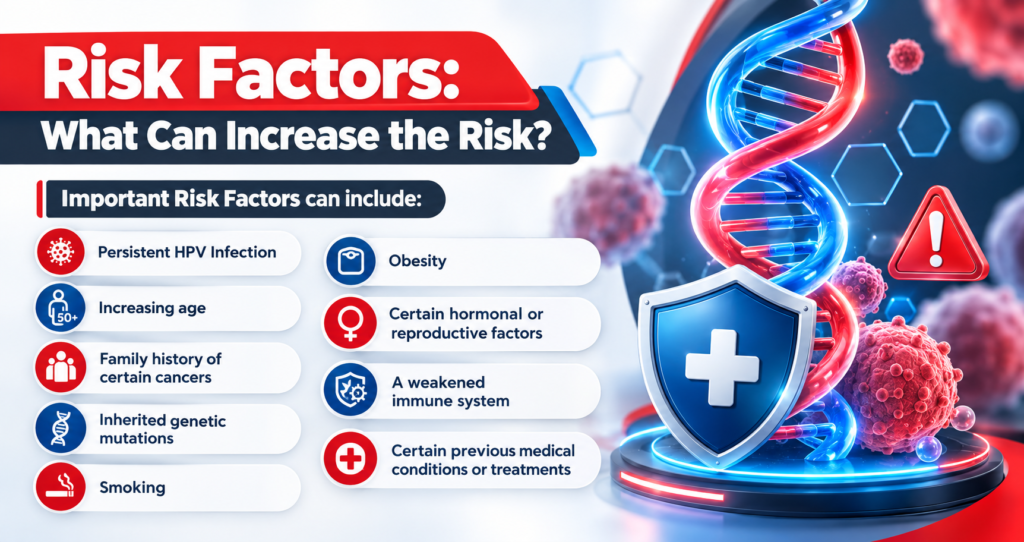
Risk Factors vary depending on the type of gynecologic cancer.
Some risk factors cannot be changed. These can include age, inherited genetic changes and family history.
Other factors may be modifiable or manageable. Depending on the cancer type, these may include smoking, certain infections, obesity, hormonal factors and other health conditions.
Important Risk Factors can include:
- Persistent HPV Infection
- Increasing age
- Family history of certain cancers
- Inherited genetic mutations
- Smoking
- Obesity
- Certain hormonal or reproductive factors
- A weakened immune system
- Certain previous medical conditions or treatments
Having a risk factor does not mean that cancer will develop. Similarly, women without known risk factors can still develop gynecologic cancer.
Women who have a strong family history of ovarian, uterine, breast or related cancers should consider discussing their personal and family history with a healthcare professional.
HPV Infection and Gynecologic Cancer
HPV Infection deserves special attention during Gynecologic Cancer Awareness Month.
Human papillomavirus is a common viral infection transmitted through intimate skin-to-skin contact. Many HPV infections resolve without causing long-term problems. However, certain high-risk HPV types can persist and cause abnormal cellular changes.
Persistent high-risk HPV infection is strongly associated with cervical cancer and can also contribute to some vaginal and vulvar cancers.
HPV vaccination and recommended cervical Cancer Screening are important tools for reducing cervical cancer risk.
Vaccination does not eliminate the need for recommended screening because it does not protect against every HPV type that can cause cancer.
Early Detection: Why Recognizing Changes Matters
Early Detection can make an important difference in the management of many cancers.
When cancer or precancerous changes are identified earlier, healthcare professionals may have more opportunities to provide effective treatment. This is particularly relevant to cervical cancer, where screening can identify precancerous changes before cancer develops.
For cancers without a routine screening test, awareness of symptoms becomes especially important.
Women should consider speaking with a healthcare professional if they experience unexplained Abnormal Bleeding, persistent Pelvic Pain, unusual discharge, persistent bloating, or new changes involving the vulva or vagina.
Early evaluation does not necessarily mean a cancer diagnosis. In many cases, symptoms are caused by non-cancerous conditions. The purpose of evaluation is to identify the cause and provide appropriate care.
Cancer Screening: What Women Should Know
Cancer Screening is an important component of preventive healthcare, but screening recommendations vary according to the type of gynecologic cancer.
Cervical cancer is the major gynecologic cancer for which routine screening is widely established. Depending on age, previous test results, vaccination status, medical history and local guidelines, screening may involve HPV testing, cervical cytology or both.
There is currently no routine screening test recommended for average-risk women without symptoms that has been proven to reliably detect ovarian, vaginal or vulvar cancer early enough to reduce mortality. Uterine cancer also does not have a routine screening test for average-risk women without symptoms.
This is why women should not rely solely on routine tests to detect every type of gynecologic cancer.
Any persistent or concerning symptom should be discussed with a healthcare professional, even if a woman has recently had a normal screening test.
Preventive Care for Better Women’s Health
Preventive Care plays a major role in maintaining long-term Women’s Health.
Important preventive measures can include following recommended cervical screening schedules, considering HPV vaccination when appropriate, avoiding tobacco use, maintaining a healthy lifestyle and discussing family cancer history with a healthcare professional.
Women should also become familiar with their normal menstrual and reproductive health patterns. Recognizing changes can make it easier to identify symptoms that require medical attention.
Preventive Care is not limited to cancer. Regular healthcare visits provide an opportunity to discuss reproductive health, sexual health, hormonal concerns, menstrual changes, nutrition, mental well-being and other aspects of Women’s Health.
Women’s Health and Regular Medical Check-Ups

Women’s Health involves more than treating illness after symptoms appear. Regular healthcare can help identify risk factors and provide personalized recommendations for screening and prevention.
A healthcare professional may consider a woman’s:
- Age
- Medical history
- Family history
- Menstrual and reproductive history
- HPV vaccination status
- Previous screening results
- Lifestyle factors
- Existing health conditions
Based on these factors, screening or further evaluation may be recommended.
Women with a personal or family history of cancer may require a different approach from women at average risk. Personalized medical advice is particularly important when inherited cancer risk may be involved.
When Should You Speak to a Doctor?
Women should consider seeking medical advice when they notice symptoms that are persistent, unusual or unexplained.
Particular attention should be given to:
Abnormal Bleeding: Bleeding between periods, unusually heavy bleeding, bleeding after sexual intercourse or any bleeding after menopause should be evaluated.
Pelvic Pain: Persistent or unexplained Pelvic Pain may have many causes and should be discussed with a healthcare professional when it continues or interferes with daily activities.
Unusual Vulvar Changes: A persistent sore, lump, itching, burning or change in skin appearance should be assessed.
Persistent Abdominal Symptoms: Ongoing bloating, abdominal discomfort, changes in bowel habits or feeling full quickly should be discussed if they persist.
Seeking medical advice does not mean that cancer is suspected. It simply ensures that the underlying cause can be identified appropriately.
Gynecologic Cancer Awareness: Taking Action
Gynecologic Cancer Awareness Month provides an opportunity for women to become more informed about their health and take practical steps toward prevention and early detection.
Knowing the differences between Cervical Cancer, Ovarian Cancer, Uterine Cancer, Vaginal Cancer and Vulvar Cancer can help women better understand potential symptoms and risk factors.
The most important steps include staying informed, following recommended Cancer Screening guidelines, considering HPV vaccination where appropriate, maintaining healthy lifestyle habits and discussing concerning symptoms with a qualified healthcare professional.
Awareness, Screening and Early Detection Matter
Gynecologic cancers affect different parts of the female reproductive system and can present in different ways. Understanding Cancer Symptoms and Risk Factors is an important part of Women’s Health.
Cervical cancer screening and HPV vaccination provide important opportunities for prevention and Early Detection. For other gynecologic cancers, awareness of persistent or unusual symptoms is particularly important because routine screening is not available or recommended for average-risk women without symptoms.
During Gynecologic Cancer Awareness Month, use the opportunity to learn about your personal risk, understand recommended screening, pay attention to changes in your body and seek professional medical advice when something does not seem normal.
Awareness is the first step toward informed healthcare decisions. Regular Preventive Care, appropriate Cancer Screening and timely medical evaluation can all play an important role in protecting Women’s Health.
Leave a Reply