
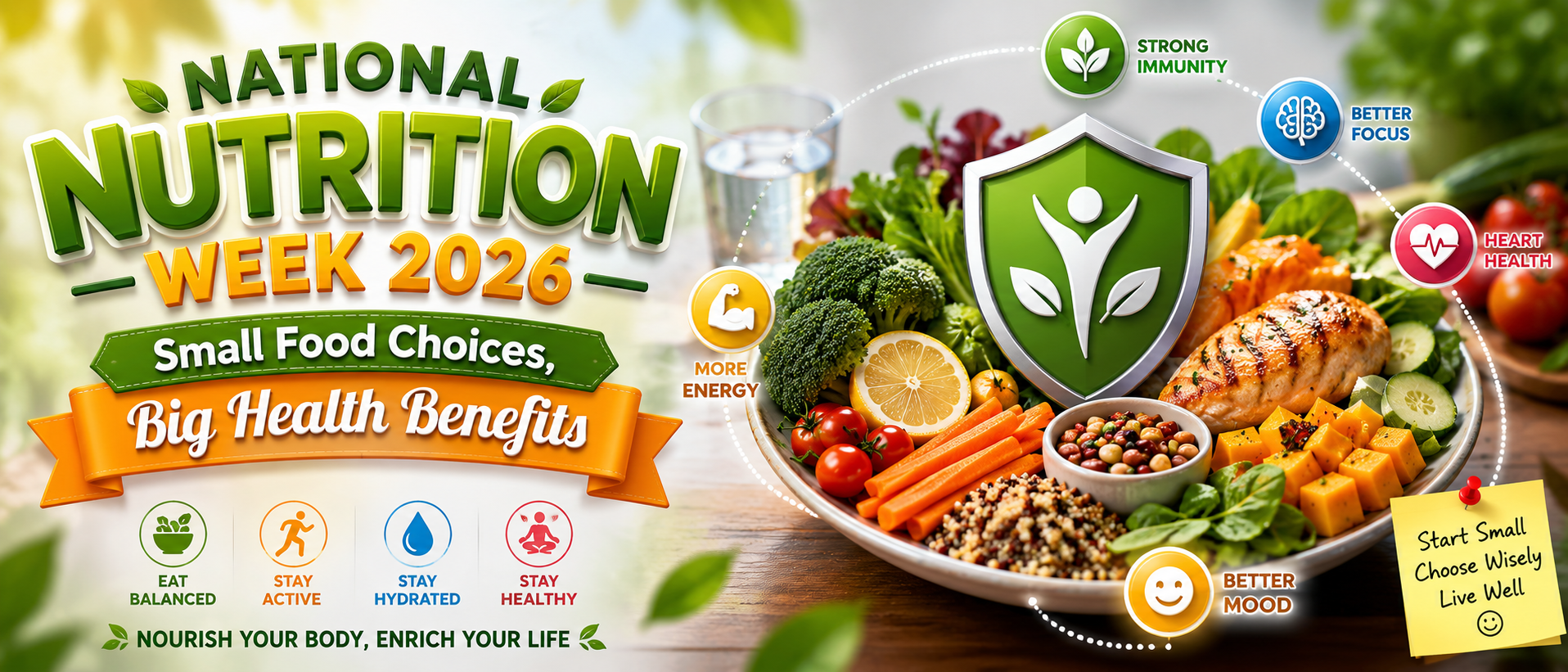

Food is one of the most powerful influences on human health, yet many of our eating decisions happen almost automatically. We decide whether to eat breakfast, choose fruit or a packaged snack, drink water or a sugary beverage, add an extra serving of vegetables, or continue eating after we are already satisfied. Each decision may seem small, but repeated choices gradually shape our health. That is the central message behind National Nutrition Week 2026: Small Food Choices, Big Health Benefits. Good nutrition is not about following a perfect diet, avoiding every favourite food, or living with constant restrictions. It is about creating practical healthy eating habits that can be sustained through everyday life.
Current global guidance continues to emphasize the importance of adequacy, balance, moderation and dietary diversity. A healthy diet generally includes a variety of minimally processed foods such as vegetables, fruits, pulses, whole grains, nuts and other nutrient-rich foods while limiting excessive amounts of free sugars, unhealthy fats and sodium. The World Health Organization also recommends at least 400 grams of fruit and vegetables daily for everyone older than 10 years and advises adults to limit salt intake to less than 5 grams per day.
For people across India, this message is especially relevant because traditional Indian diets already offer tremendous variety. Lentils, beans, millets, whole grains, leafy vegetables, seasonal fruits, nuts and seeds can all contribute to better nutrition when consumed as part of a varied eating pattern. National Nutrition Week 2026 is therefore an opportunity to look closely at the plate in front of us and ask a simple question: could one small change today support better health tomorrow?
National Nutrition Week India and the Importance of Nutritional Awareness
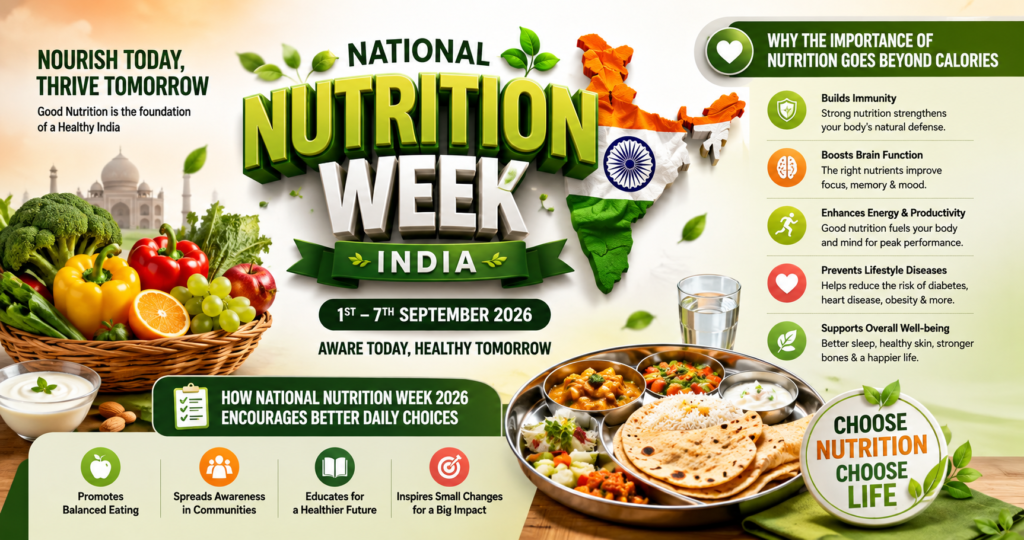
Why the Importance of Nutrition Goes Beyond Calories
When people think about food, they often think first about calories or body weight. While energy balance matters, the importance of nutrition is far broader. Food provides the body with the materials required for growth, repair, movement, immunity, brain function and countless internal processes. A meal can contain plenty of calories while still providing inadequate vitamins, minerals, fibre or protein. This is why focusing only on whether a food is “high calorie” or “low calorie” can sometimes distract from the bigger picture of nutritional quality.
The latest guidance from the World Health Organization explains that a healthy diet should protect against malnutrition in all its forms and reduce the risk of diet-related diseases. WHO identifies four central principles: adequacy, balance, moderation and diversity. Adequacy means meeting nutritional needs without excess or deficiency. Balance means maintaining an appropriate relationship between energy intake and expenditure as well as among major nutrients. Moderation involves limiting foods and ingredients that can harm health when consumed excessively, while diversity means eating a wide range of nutritious foods.
This is why nutritional awareness should be part of daily decision-making. It helps people look beyond advertising claims, packaging and temporary diet trends. A person with nutritional awareness may ask whether a food provides fibre, protein or important micronutrients instead of simply asking whether it tastes good or appears convenient. That awareness does not require complicated calculations. Often, it begins with recognizing the difference between frequently choosing whole, nutrient-rich foods and frequently relying on heavily processed products high in sugar, salt or unhealthy fats.
How National Nutrition Week 2026 Encourages Better Daily Choices
National Nutrition Week India can be viewed as a reminder rather than a one-week challenge. The objective should not be to eat perfectly for several days and then return to old habits. Instead, the week can inspire people to identify realistic improvements that fit their household, budget, culture and lifestyle. One family may decide to increase vegetables at lunch. Another may reduce sugary drinks, while a busy professional might start carrying a healthier snack to work. These are modest changes, but habits grow through repetition.
Public nutrition awareness is particularly valuable because food choices are influenced by more than personal knowledge. Convenience, food availability, cost, advertising, work schedules and family routines all shape what ends up on the plate. This is why practical guidance is more useful than unrealistic instructions. Telling people to eat an expensive or unfamiliar diet is unlikely to create lasting change. Showing them how to make local foods more balanced and varied can be far more effective.
A balanced diet also does not mean every meal needs to contain every nutrient in exactly calculated proportions. Nutrition works across patterns of eating. ICMR-NIN dietary guidance emphasizes dietary diversity because no single food provides all essential nutrients, and it encourages the inclusion of vegetables, green leafy vegetables, fruits, whole grains, pulses, nuts and other wholesome foods as part of healthy eating patterns. The lesson is simple: small food choices become meaningful when they are repeated consistently.
Healthy Eating Habits That Can Transform Daily Life
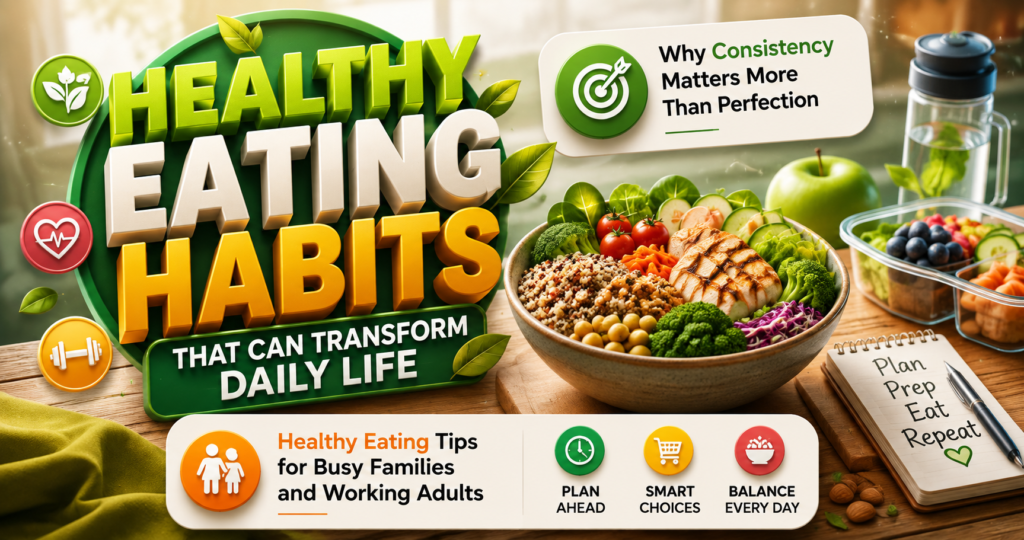
Why Consistency Matters More Than Perfection
One of the biggest obstacles to building healthy eating habits is the belief that healthy eating requires perfection. People may follow a strict eating plan for a few days, feel deprived, and then abandon it completely after eating something they consider unhealthy. A more realistic approach is to understand that one meal rarely determines long-term health. Patterns matter far more than isolated occasions.
Think of nutrition like saving money. Depositing a small amount regularly can create a meaningful result over time. The same principle applies to food. Choosing fruit more often, including pulses in meals, drinking more water, reducing excessive packaged snacks or making vegetables a regular part of the plate may not feel dramatic on a single day. Over months and years, however, those choices become part of a broader healthy lifestyle.
Consistency also allows flexibility. A healthy eating pattern can include cultural foods, family celebrations and favourite dishes. The goal is not to turn food into a source of fear. Instead, people can focus on the quality and frequency of everyday choices. A nutritious breakfast most mornings is more important than obsessing over one festive dessert. Eating a variety of foods during the week matters more than making one lunch perfectly balanced.
This mindset can make nutrition for good health easier to sustain. Rather than asking, “Did I follow my diet perfectly today?” a better question may be, “What is one useful choice I can make at my next meal?” This shift removes unnecessary pressure and encourages long-term behaviour change.
Healthy Eating Tips for Busy Families and Working Adults
Modern life can make nutrition feel difficult. Long workdays, commuting, school schedules and limited time often push people toward convenience foods. The solution is not always to spend hours cooking. Planning simple healthy eating tips into everyday routines can make a major difference.
Keeping basic ingredients available is one practical strategy. Seasonal fruits, roasted chana, nuts, yogurt, boiled eggs, sprouts or other suitable protein-rich foods can offer convenient alternatives to frequent packaged snacks. Preparing extra vegetables or pulses can also reduce the effort required for the next meal. A simple meal does not have to be nutritionally poor.
Another useful habit is to pay attention to what is consumed between meals. Many people focus on breakfast, lunch and dinner while forgetting that sugary beverages and repeated snacking can significantly affect the overall dietary pattern. Water can often be the simplest default drink, while fresh fruit and other minimally processed foods can support a more nutrient-rich snack routine.
The environment matters too. If healthier foods are visible and convenient, people are more likely to choose them. If every available option is highly processed, even a motivated person may struggle. Creating a supportive home and workplace food environment is therefore an important part of diet and wellness.
Balanced Diet Benefits: The Foundation of Nutrition for Good Health
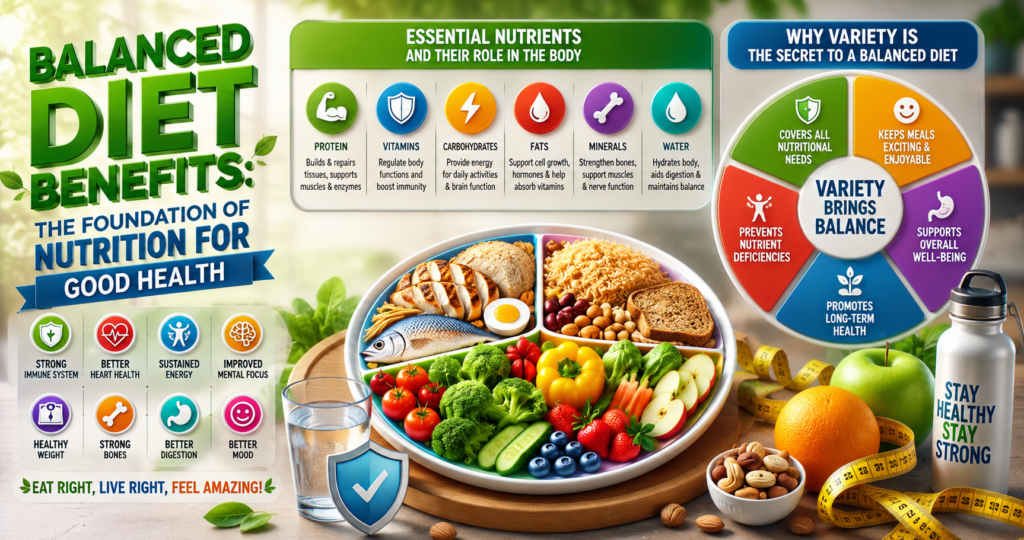
Essential Nutrients and Their Role in the Body
The phrase essential nutrients refers to nutrients that the body needs for normal growth, development and function. These include carbohydrates, proteins, fats, vitamins, minerals and water. Each performs different tasks, which is why a truly healthy diet cannot depend on only one food group. Protein supports the building and repair of tissues, carbohydrates provide energy, and fats contribute to cellular function and help the body absorb certain vitamins.
Micronutrients are equally important. Vitamins and minerals are required in smaller quantities, but deficiencies can have serious consequences. WHO notes that approximately 30 micronutrients, including 13 vitamins and 16 minerals, are essential for proper growth and health. Current WHO guidance also highlights the widespread global burden of micronutrient deficiencies.
This helps explain why dietary diversity is so valuable. A diet based only on refined grains may provide energy but lack sufficient nutritional variety. Adding pulses, vegetables, fruits, nuts, seeds and other nutritious foods can improve the nutrient profile of the overall diet. In Indian meals, combining cereals with pulses is one practical example of using everyday foods more effectively.
The body works like a complex orchestra. Every instrument has a role, and the music suffers when important sections are missing. Essential nutrients work in a similar way. One nutrient cannot replace the role of another, which is why variety remains central to nutrition for good health.
Why Variety Is the Secret to a Balanced Diet
The balanced diet benefits of a diverse eating pattern are easy to understand. Different foods contribute different nutrients, and no single “superfood” can provide everything the body requires. A plate that regularly includes only one type of grain, one vegetable or one protein source may become nutritionally repetitive. Variety creates a broader nutritional safety net.
The World Health Organization recommends diverse diets containing fruits, vegetables, pulses, whole grains and other nutritious foods while limiting foods high in unhealthy fats, free sugars and sodium. A healthy diet can take many forms because food availability, culture and individual needs differ. This is important because there is no single universal menu for every person.
For Indian households, variety can come from rotating seasonal vegetables, trying different dals and beans, including different fruits and choosing whole or minimally refined grains where practical. Millets can add variety alongside other cereals, while nuts and seeds can contribute useful nutrients in appropriate portions. The key is not to chase exotic foods. Nutritious foods can be simple, familiar and locally available.
Healthy Food Choices for Better Food and Health
Nutritious Foods to Include in Everyday Indian Meals
The connection between food and health becomes clearer when people focus on the overall quality of their everyday meals. Vegetables, fruits, legumes, whole grains, nuts and other nutrient-rich foods can provide a wide range of vitamins, minerals, fibre and other important dietary components. The World Health Organization recommends a variety of these foods as part of healthy dietary patterns.
An everyday Indian meal can become more balanced without losing its identity. A meal based around roti or rice can include a pulse preparation, vegetables and other suitable food groups. Seasonal fruit can become a practical snack. A person who eats non-vegetarian foods may include appropriate sources such as eggs, fish or lean meats depending on preference and dietary requirements.
The best healthy food choices are usually those that can be repeated. A complicated meal plan that depends on rare ingredients may look impressive but can be difficult to maintain. Simple foods prepared regularly often create more lasting benefits. The aim is to improve the quality of the ordinary meals eaten most often.
Smart Swaps That Support Long-Term Wellness
Healthy eating often becomes easier when people focus on substitutions instead of elimination. A smart swap may mean choosing water more often instead of sweetened drinks, adding vegetables to a meal that previously had none, or selecting a less processed snack when convenient. These changes do not require a complete lifestyle transformation.
WHO advises limiting free sugars, excessive sodium and unhealthy fats while prioritizing nutritious foods. Adults should generally keep free sugars below 10% of total energy intake, with a lower intake of 5% potentially providing additional benefits. WHO also recommends less than 5 grams of salt daily for adults.
Reading labels can support better decisions, especially for packaged foods. Products that appear healthy may still contain substantial amounts of added sugar, sodium or unhealthy fats. This does not mean every label needs to be analyzed obsessively. It simply means consumers can become more aware of what frequent purchases contain.
Diet and Wellness: How Food Influences Body and Mind
The Connection Between Nutrition and Energy
The relationship between diet and wellness is not limited to weight. The body requires energy and nutrients to perform everyday functions, from movement and concentration to tissue repair and immune processes. The type and timing of food can also influence how satisfied and energized a person feels.
Meals built around a variety of nutrient-rich foods can support a more stable and sustainable dietary pattern than frequent reliance on highly processed foods. WHO’s current guidance emphasizes minimally processed and unprocessed foods low in unhealthy fats, free sugars and sodium as the foundation of a healthy diet.
Food also has a social and emotional role. Sharing meals with family, enjoying cultural dishes and preparing food together can all contribute to a positive relationship with eating. Wellness should not be interpreted as a joyless list of restrictions. A healthy relationship with food can include pleasure while still recognizing the importance of balance and moderation.
Food and Health Across Different Stages of Life
Nutrition needs change throughout life. Infants, children, adolescents, adults, pregnant women and older adults have different nutritional requirements. WHO emphasizes that healthy dietary practices should begin early and notes the importance of appropriate nutrition throughout the life course.
For children, nutritious foods support growth and development. Young people need good nutrition during periods of rapid physical and cognitive change. Adults benefit from eating patterns that support overall health and help reduce diet-related risk factors. Older adults may need particular attention to nutritional adequacy, food quality and changing appetite or activity levels.
This is why generic advice cannot replace individual needs. People with medical conditions, special dietary requirements or pregnancy-related nutritional concerns should seek guidance from qualified healthcare professionals. Food and health are closely connected, but personalized nutrition must account for the individual.
Preventive Healthcare and the Power of Everyday Nutrition
How Healthy Eating Supports Long-Term Disease Prevention
Preventive healthcare is often associated with medical checkups and screenings, but everyday food choices are also part of prevention. According to WHO, unhealthy diets are a major risk factor for disease and disability, while healthy dietary patterns can help protect against malnutrition and diet-related noncommunicable diseases.
A healthy diet cannot guarantee that a person will never develop a disease. Health is influenced by genetics, physical activity, sleep, environmental conditions, access to healthcare and many other factors. Nutrition should therefore not be presented as a miracle cure. It is better understood as one powerful part of a broader healthy lifestyle.
The prevention-focused approach is simple: support health before problems become more difficult to manage. Eating a varied diet, limiting excess salt and free sugars, choosing more nutritious foods and maintaining appropriate physical activity can contribute to better long-term health patterns. These behaviours work best when they become part of ordinary life rather than temporary campaigns.
Why Nutritional Awareness Is a Form of Self-Care
Many people think of self-care as taking breaks, exercising or spending time on relaxing activities. Food choices should also be included in that conversation. Nutritional awareness is a practical form of self-care because it involves paying attention to what the body needs without becoming overly restrictive.
A useful starting point is curiosity. Which foods do you eat most often? How many meals regularly contain vegetables or pulses? How frequently do sugary drinks or packaged snacks appear in your routine? Small observations can reveal opportunities for improvement without creating guilt.
National awareness campaigns can help people start these conversations. Families can discuss how to make traditional meals more diverse. Schools can teach children about nutritious foods. Workplaces can improve access to healthier options. The message behind National Nutrition Week India becomes stronger when awareness moves from posters and campaigns into kitchens and dining tables.
Building a Healthy Lifestyle Through Sustainable Food Choices
Practical Steps for Making Nutrition a Daily Habit
A sustainable healthy lifestyle does not require changing everything at once. In fact, trying to transform an entire diet overnight can be overwhelming. It is usually more effective to choose a few practical goals and build from there.
Start by identifying the smallest realistic change. Add one extra serving of vegetables. Keep seasonal fruit available at home. Choose water more frequently. Include a greater variety of pulses during the week. Reduce how often heavily processed foods become the default choice. Once one habit feels normal, another can be added.
The WHO continues to recommend dietary patterns rich in vegetables, fruits, legumes, whole grains and other nutritious foods, while advising moderation of salt, free sugars and unhealthy fats. The beauty of this approach is that it can be adapted to different regions and food cultures.
The goal of National Nutrition Week 2026 should not be a temporary “perfect diet.” It should be progress. When healthier choices become easier, familiar and enjoyable, they have a better chance of lasting.
Conclusion: National Nutrition Week 2026 and the Power of Small Changes
National Nutrition Week 2026 carries an important message: major health benefits do not always begin with dramatic changes. Often, they begin with ordinary decisions repeated over time. One extra vegetable, a more varied meal, fewer sugary drinks, greater awareness of salt intake or a more consistent meal routine can all become part of meaningful change.
The importance of nutrition extends beyond appearance and weight. Food supplies the energy and nutrients needed for growth, repair and everyday functioning, while healthy dietary patterns can support long-term health and help reduce the risks associated with unhealthy diets. Current WHO guidance continues to place adequacy, balance, moderation and diversity at the heart of healthy eating.
The most powerful approach is not perfection but consistency. Build healthy eating habits that suit your lifestyle. Choose a wider variety of nutritious foods. Pay attention to essential nutrients and focus on the overall quality of your diet. When these small decisions become routine, the benefits can extend far beyond a single week.
Frequently Asked Questions About National Nutrition Week 2026
1. What is National Nutrition Week 2026 about?
National Nutrition Week 2026 focuses on increasing awareness about the importance of nutrition and encouraging practical healthy eating habits. The central idea behind “Small Food Choices, Big Health Benefits” is that everyday decisions can influence long-term wellness. Choosing more varied and nutritious foods does not require a complete dietary overhaul. Consistent improvements can gradually support better health. The campaign can also encourage families and communities to think more carefully about food and health.
2. What are the main benefits of a balanced diet?
The key balanced diet benefits include helping the body obtain energy and essential nutrients required for normal growth, development and function. A varied diet can provide carbohydrates, proteins, fats, vitamins and minerals from different food sources. WHO identifies adequacy, balance, moderation and diversity as core principles of healthy dietary patterns. A balanced diet should be adapted to individual needs, food availability and cultural preferences.
3. What are some simple healthy eating tips for everyday life?
Practical healthy eating tips include increasing dietary variety, including vegetables and fruits regularly, consuming pulses and whole grains, choosing water more often and reducing frequent intake of foods high in free sugars, sodium and unhealthy fats. Planning simple meals and keeping nutritious snacks accessible can also help. WHO recommends at least 400 grams of fruits and vegetables daily for people older than 10 years, while advising adults to limit salt to less than 5 grams per day. Small changes are often easier to maintain than extreme diets.
4. Why are essential nutrients important for good health?
Essential nutrients are necessary for the body to grow, function and maintain health. Macronutrients provide energy and support important bodily functions, while vitamins and minerals help regulate numerous biological processes. No single food can supply every nutrient required by the body, which is why dietary diversity is so important. ICMR-NIN guidance emphasizes that a balanced diet can be achieved through a variety of foods because different food groups contribute different nutrients.
5. How can National Nutrition Week India promote preventive healthcare?
National Nutrition Week India can support preventive healthcare by encouraging people to recognize the relationship between everyday food choices and long-term health. Awareness can motivate individuals to develop sustainable eating patterns, improve dietary diversity and limit excessive consumption of unhealthy ingredients. Schools, workplaces, healthcare organizations and families can all contribute to stronger nutritional awareness. A healthy diet is only one part of preventive health, but it is a powerful daily factor that individuals can influence.
Leave a Reply