
Blood Cancer Awareness Month: Why Blood Cancer Awareness Matters

Blood Cancer Awareness Month is an important opportunity to educate people about blood cancers, their warning signs, risk factors, diagnosis, and available treatment options. Increasing blood cancer awareness can help individuals recognize changes in their health and seek medical advice when something does not feel right.
Blood cancer is not a single disease. It is a group of cancers that affect blood cells, bone marrow, lymphatic tissues, and related systems. Some blood cancers develop slowly, while others can progress rapidly. Because symptoms may initially appear similar to common infections, fatigue, or other health conditions, knowing the potential warning signs is important.
Awareness does not mean assuming every symptom indicates cancer. Instead, it means understanding when persistent or unusual symptoms deserve professional medical evaluation.
Types of Blood Cancer: Understanding the Major Categories
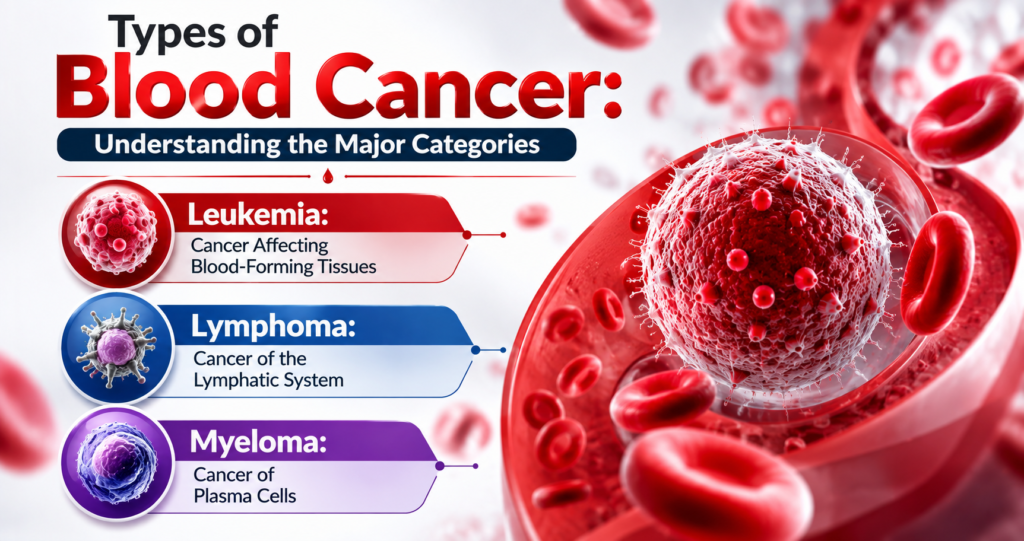
There are several types of blood cancer, but the three major categories are leukemia, lymphoma, and myeloma.
Leukemia: Cancer Affecting Blood-Forming Tissues
Leukemia develops in blood-forming tissues, particularly the bone marrow. It causes abnormal blood cells to grow and interfere with the production and function of healthy blood cells.
Leukemia can be classified according to how quickly it develops and the type of blood cell affected. Major categories include acute lymphoblastic leukemia, acute myeloid leukemia, chronic lymphocytic leukemia, and chronic myeloid leukemia.
Lymphoma: Cancer of the Lymphatic System
Lymphoma develops in lymphocytes, a type of white blood cell involved in the immune system. The two major categories are Hodgkin lymphoma and non-Hodgkin lymphoma.
Lymphoma can affect lymph nodes and other parts of the lymphatic system and may also involve organs outside the lymphatic system.
Myeloma: Cancer of Plasma Cells
Myeloma, particularly multiple myeloma, develops in plasma cells. These cells normally produce antibodies that help the immune system fight infections.
Abnormal plasma cells can accumulate in the bone marrow and interfere with healthy blood-cell production. Myeloma may also affect bones and kidney function.
Blood Cancer Symptoms: What Should You Know?
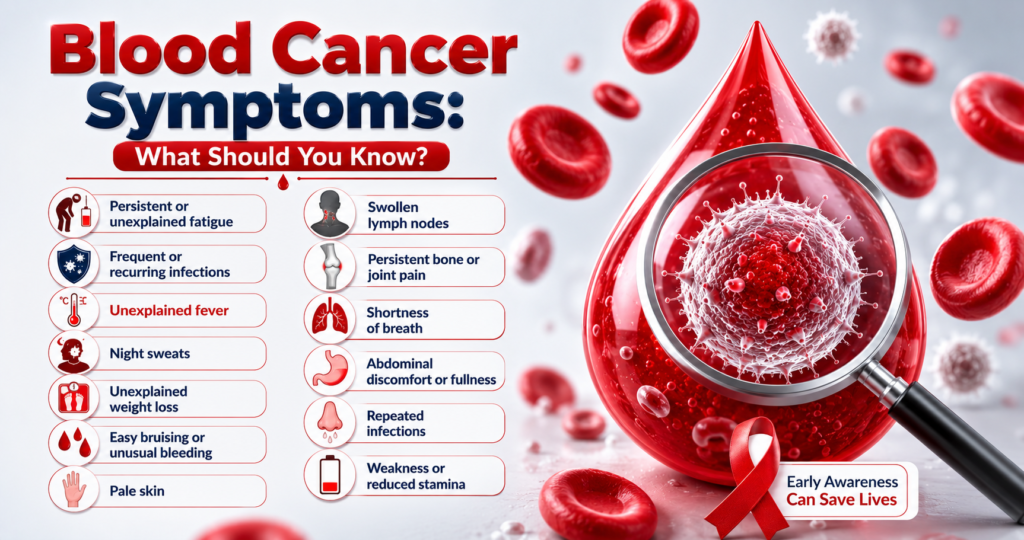
Blood cancer symptoms can vary depending on the type and stage of cancer. Some people may have no obvious symptoms in the early stages, while others may experience several changes.
Possible symptoms include:
-
- Persistent or unexplained fatigue
- Frequent or recurring infections
- Night sweats
- Unexplained weight loss
- Easy bruising or unusual bleeding
- Pale skin
- Swollen lymph nodes
- Persistent bone or joint pain
- Shortness of breath
- Abdominal discomfort or fullness
- Repeated infections
- Weakness or reduced stamina
These symptoms can occur because abnormal blood cells interfere with normal blood-cell production and immune function.
It is important to remember that these symptoms do not automatically mean someone has blood cancer. Many common conditions can cause similar symptoms. A healthcare professional can determine the appropriate evaluation.
Blood Cancer Signs: Recognizing Warning Signals Early
Understanding blood cancer signs can encourage people to seek medical advice at the appropriate time.
Persistent Fatigue and Weakness
Unusual tiredness that does not improve with adequate rest may be associated with anemia or other changes in blood-cell production.
Frequent Infections
Abnormal white blood cells may affect the body’s ability to fight infections, potentially leading to recurrent infections.
Unexplained Bruising or Bleeding
Low platelet levels can sometimes result in easy bruising, nosebleeds, bleeding gums, or unusually heavy bleeding.
Swollen Lymph Nodes
Painless swelling in the neck, armpit, or groin can occur with lymphoma and several other conditions. Persistent swelling should be evaluated by a healthcare professional.
Unexplained Weight Loss
Unexpected weight loss without changes in diet or exercise can have many causes and should be discussed with a doctor if it persists.
Fever and Night Sweats
Persistent fever or unexplained night sweats can occur with some blood cancers, although infections and other conditions are much more common causes.
Early Detection of Blood Cancer: Why It Matters
Early detection of blood cancer can provide important advantages because it may allow healthcare professionals to identify the disease before it progresses further and determine an appropriate treatment strategy.
However, not all blood cancers have routine screening tests for people without symptoms. Some are discovered through blood tests performed for other reasons, while others are investigated after symptoms appear.
People should not wait for symptoms to become severe before seeking medical advice. Persistent, unexplained changes in health should be evaluated, especially when multiple symptoms occur together.
Early evaluation may involve a physical examination, medical history, blood tests, imaging, or other diagnostic procedures depending on the suspected condition.
Blood Cancer Diagnosis: How Is It Detected?
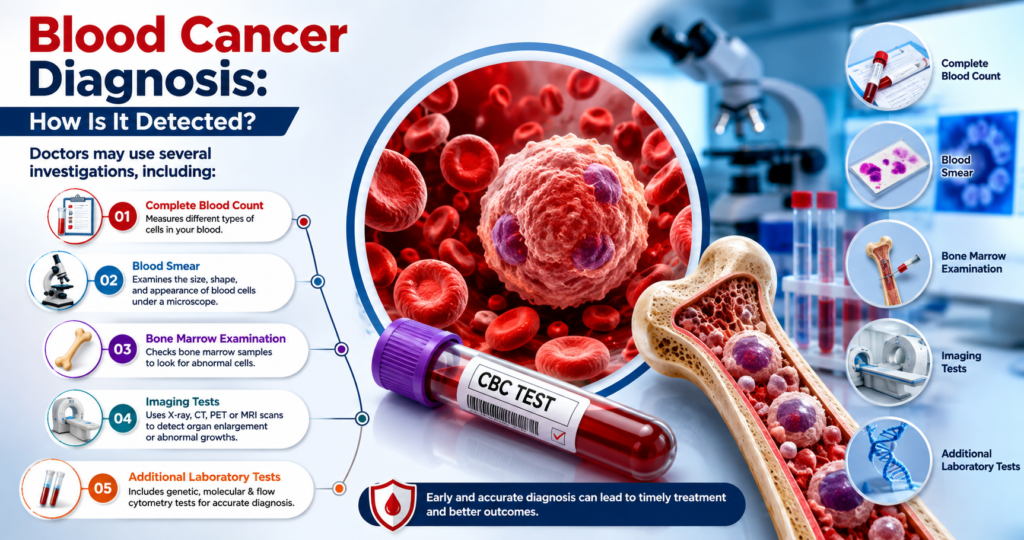
Blood cancer diagnosis depends on the suspected type of cancer and the individual’s symptoms and medical history.
Doctors may use several investigations, including:
Complete Blood Count
A complete blood count (CBC) measures different types of blood cells. Abnormal levels of red blood cells, white blood cells, or platelets may indicate that additional testing is needed.
Blood Smear
A peripheral blood smear allows healthcare professionals to examine blood cells under a microscope and assess their size, shape, and appearance.
Bone Marrow Examination
A bone marrow aspiration or biopsy may be recommended when leukemia, myeloma, or another blood-related disorder is suspected.
Imaging Tests
CT scans, PET scans, MRI scans, or other imaging tests may be used in certain lymphoma or myeloma evaluations to understand whether particular tissues or organs are affected.
Additional Laboratory Tests
Depending on the suspected cancer, doctors may recommend specialized tests, including immunophenotyping, cytogenetic testing, molecular testing, or protein studies.
A diagnosis should always be made by qualified healthcare professionals based on appropriate clinical and laboratory evidence.
Leukemia Symptoms: Common Warning Signs
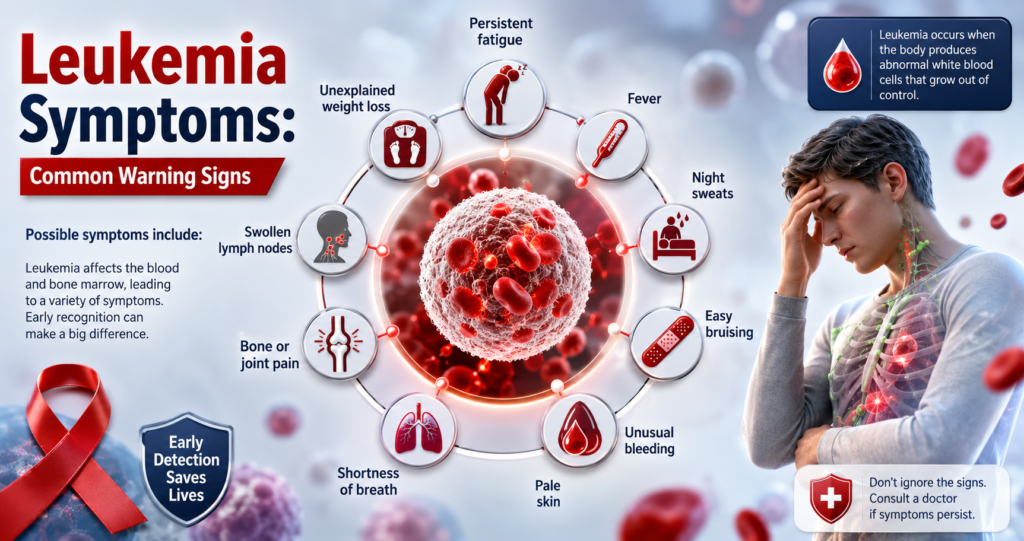
Leukemia symptoms can differ between acute and chronic forms.
Possible symptoms include:
- Persistent fatigue
- Frequent infections
- Fever
- Night sweats
- Easy bruising
- Unusual bleeding
- Pale skin
- Shortness of breath
- Bone or joint pain
- Swollen lymph nodes
- Unexplained weight loss
Acute leukemia can develop relatively quickly and may cause symptoms over a short period. Chronic forms can sometimes develop more gradually and may initially produce few noticeable symptoms.
Anyone experiencing persistent or unexplained symptoms should consult a healthcare professional rather than attempting to diagnose the condition independently.
Lymphoma Symptoms: Signs That Should Not Be Ignored
Lymphoma symptoms may include:
- Painless swollen lymph nodes
- Fever without an obvious cause
- Drenching night sweats
- Unexplained weight loss
- Persistent fatigue
- Itching
- Shortness of breath or chest discomfort in some cases
- Abdominal discomfort or swelling
Swollen lymph nodes are commonly caused by infections and do not necessarily indicate lymphoma. However, persistent, unexplained, or progressively enlarging lymph nodes should be medically evaluated.
Myeloma Symptoms: Understanding Possible Warning Signs
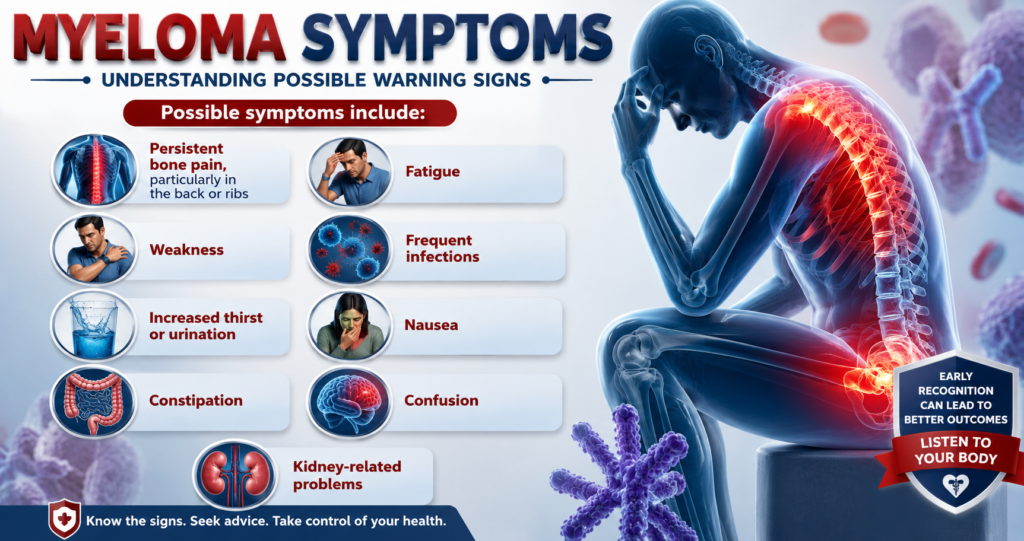
Myeloma symptoms may occur because abnormal plasma cells accumulate in the bone marrow and affect bones, blood production, and other organs.
Possible symptoms include:
- Persistent bone pain, particularly in the back or ribs
- Fatigue
- Weakness
- Frequent infections
- Increased thirst or urination
- Nausea
- Constipation
- Confusion
- Kidney-related problems
Not everyone with myeloma experiences the same symptoms. Some cases are discovered during blood tests performed for another reason.
Blood Cancer Risk Factors: Who May Be at Higher Risk?
Understanding blood cancer risk factors is an important part of awareness. Risk factors vary significantly between different blood cancers.
Potential factors may include:
- Increasing age for many blood cancers
- Certain genetic or inherited conditions
- Family history of particular blood cancers
- Previous chemotherapy or radiation treatment
- Exposure to certain chemicals, including benzene
- Certain infections associated with specific cancers
- Some immune-system conditions or treatments
- Certain occupational or environmental exposures
Having a risk factor does not mean a person will develop blood cancer. Likewise, many people diagnosed with blood cancer have no obvious risk factor.
Blood Cancer Screening: Can Blood Cancer Be Screened For?
Blood cancer screening is different from screening programs for cancers such as breast, cervical, or colorectal cancer.
There is currently no single routine screening test that detects every blood cancer in healthy people without symptoms.
However, blood tests such as a CBC test can sometimes identify abnormalities that require further investigation. Doctors may recommend specific testing for people with symptoms, abnormal laboratory results, a relevant medical history, or particular risk factors.
Regular health checkups can help identify unexplained abnormalities, but a normal blood test does not necessarily rule out every type of blood cancer.
Blood Cancer Treatment: What Options Are Available?
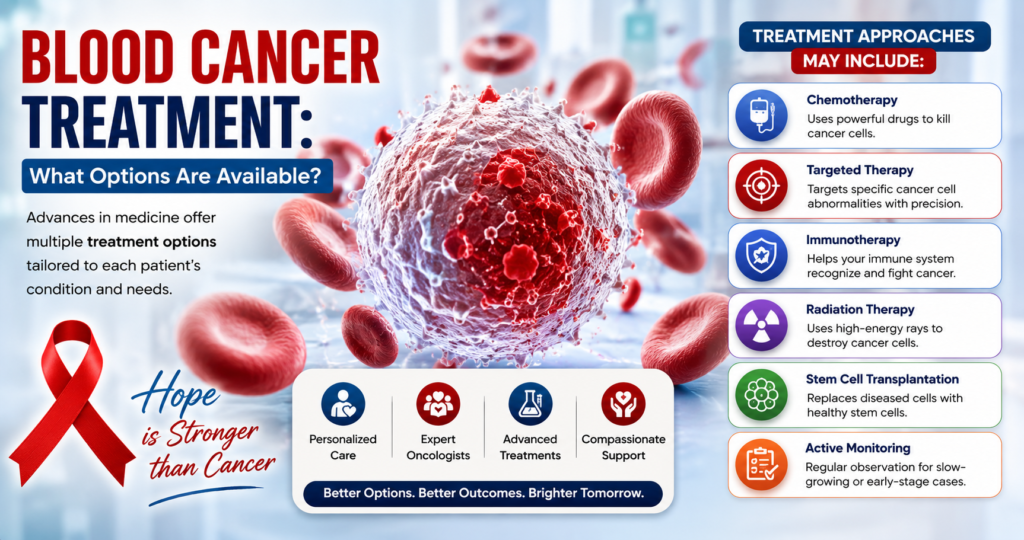
Blood cancer treatment depends on the specific cancer, its characteristics, stage or risk category, the person’s overall health, and other individual factors.
Treatment approaches may include:
Chemotherapy
Chemotherapy uses medicines designed to destroy cancer cells or prevent them from multiplying.
Targeted Therapy
Targeted medicines act on specific molecules or biological pathways involved in cancer-cell growth.
Immunotherapy
Immunotherapy helps the immune system recognize or attack cancer cells. Different forms of immunotherapy are used for different blood cancers.
Radiation Therapy
Radiation uses high-energy radiation to damage cancer cells and may be used for selected blood cancers or particular disease-related problems.
Stem Cell Transplantation
Some patients may be candidates for autologous or allogeneic stem cell transplantation. The suitability depends on the cancer type, disease status, overall health, and other factors.
Active Monitoring
For some slow-growing blood cancers that are not causing problems, doctors may recommend careful monitoring rather than immediate treatment.
Treatment decisions should always be made with a qualified hematologist or oncologist.
Blood Cancer Prevention: What Can You Do?
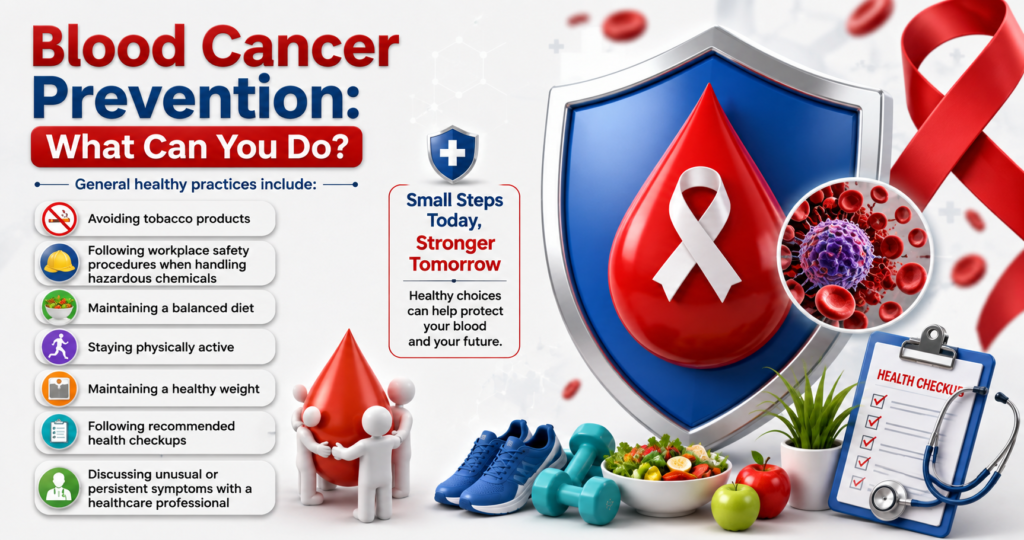
Blood cancer prevention can be challenging because many blood cancers do not have clearly preventable causes.
There is no guaranteed way to prevent blood cancer. However, maintaining overall health and reducing avoidable exposure to known carcinogens can be beneficial.
General healthy practices include:
- Avoiding tobacco products
- Following workplace safety procedures when handling hazardous chemicals
- Maintaining a balanced diet
- Staying physically active
- Maintaining a healthy weight
- Following recommended health checkups
- Discussing unusual or persistent symptoms with a healthcare professional
It is equally important to avoid misinformation. A healthy lifestyle can support general well-being, but it cannot guarantee protection against blood cancer.
Blood Cancer Awareness Campaign: Turning Knowledge Into Action
A successful blood cancer awareness campaign should focus on education rather than fear.
Awareness initiatives can encourage communities to:
- Learn about different blood cancers.
- Recognize potential warning signs.
- Understand when medical advice is appropriate.
- Encourage eligible individuals to participate in blood donation programs where appropriate.
- Support patients and caregivers.
- Share reliable health information.
- Reduce misconceptions and stigma surrounding cancer.
- Encourage conversations between patients and healthcare professionals.
Schools, workplaces, healthcare organizations, diagnostic centers, community groups, and social media platforms can all contribute to awareness efforts.
Why Regular Health Checkups Matter
Regular health checkups provide an opportunity to discuss persistent symptoms and identify certain health abnormalities.
A healthcare professional may recommend blood tests when clinically appropriate. Tests such as a CBC can provide valuable information about red blood cells, white blood cells, and platelets.
However, health checkups should not create unnecessary fear. An abnormal result does not automatically indicate cancer. It may be caused by infection, nutritional deficiencies, medication effects, inflammation, or other medical conditions.
The important message is follow-up. If a test is abnormal, speak with a healthcare professional about what it means and whether additional evaluation is required.
Blood Cancer Awareness Month: Supporting Patients and Families
A blood cancer diagnosis can affect more than the patient. Family members and caregivers may also experience emotional, financial, and practical challenges.
Support can include:
- Listening without judgment
- Helping with appointments
- Providing practical assistance
- Supporting treatment schedules
- Encouraging healthy communication
- Connecting families with reputable patient-support organizations
- Avoiding unverified treatment claims
- Respecting the patient’s decisions and privacy
Emotional support can be an important part of the overall cancer journey.
Common Myths About Blood Cancer
Myth 1: Blood cancer is one disease.
Fact: Blood cancer includes several different diseases, including leukemia, lymphoma, and myeloma.
Myth 2: Every swollen lymph node means cancer.
Fact: Infections are a much more common cause of swollen lymph nodes. Persistent or unexplained swelling should be evaluated.
Myth 3: Blood cancer always causes obvious symptoms.
Fact: Some blood cancers may cause few or no symptoms during their early stages.
Myth 4: A healthy lifestyle guarantees prevention.
Fact: Healthy habits support overall health but cannot completely eliminate the possibility of blood cancer.
Myth 5: Blood cancer cannot be treated.
Fact: Many blood cancers have established treatments, and treatment options continue to evolve. Outcomes vary considerably according to cancer type and individual circumstances.
When Should You Speak to a Doctor?
Consider seeking medical advice if you experience persistent or unexplained symptoms such as:
- Significant and ongoing fatigue
- Unexplained weight loss
- Persistent fever
- Recurrent infections
- Unusual bleeding or bruising
- Persistent bone pain
- Unexplained swollen lymph nodes
- Repeated night sweats
- Ongoing weakness or breathlessness
These symptoms can have many causes, so they should not automatically be interpreted as cancer. A doctor can determine whether further investigation is appropriate.
Frequently Asked Questions About Blood Cancer Awareness Month
What is Blood Cancer Awareness Month?
Blood Cancer Awareness Month is an opportunity to increase public understanding of blood cancers, their symptoms, risk factors, diagnosis, treatment, and the importance of seeking appropriate medical advice.
What are the three main types of blood cancer?
The three major categories are leukemia, lymphoma, and myeloma. Each includes different subtypes with distinct characteristics and treatment approaches.
What are common blood cancer symptoms?
Common symptoms may include persistent fatigue, unexplained fever, recurrent infections, night sweats, unexplained weight loss, unusual bruising or bleeding, swollen lymph nodes, and bone pain.
Can blood cancer be detected through a blood test?
Some blood cancers can cause abnormalities detectable through blood tests, but blood tests alone do not diagnose every blood cancer. Additional tests may be required.
Is blood cancer preventable?
There is no guaranteed method to prevent all blood cancers because their causes vary. Avoiding tobacco and unnecessary exposure to known carcinogens and maintaining overall health can reduce some health risks.
Final Thoughts: Know the Facts, Recognize the Signs
Blood Cancer Awareness Month reminds us that knowledge can play an important role in better health decisions. Understanding blood cancer symptoms, recognizing potential blood cancer signs, learning about types of blood cancer, and knowing how blood cancer diagnosis works can help people approach concerning health changes with greater awareness.
The goal of awareness is not to create fear. It is to encourage informed action.
If you or someone you know experiences persistent, unexplained symptoms, speak with a qualified healthcare professional. Early medical evaluation can help determine the cause and, when necessary, support timely diagnosis and treatment.
Know the facts. Recognize the signs. Ask questions. Seek professional advice. Support those affected by blood cancer.
Medical disclaimer: This article is intended for general educational and awareness purposes only. It does not replace professional medical advice, diagnosis, or treatment. Always consult a qualified healthcare professional regarding individual symptoms or medical concerns.
Leave a Reply