
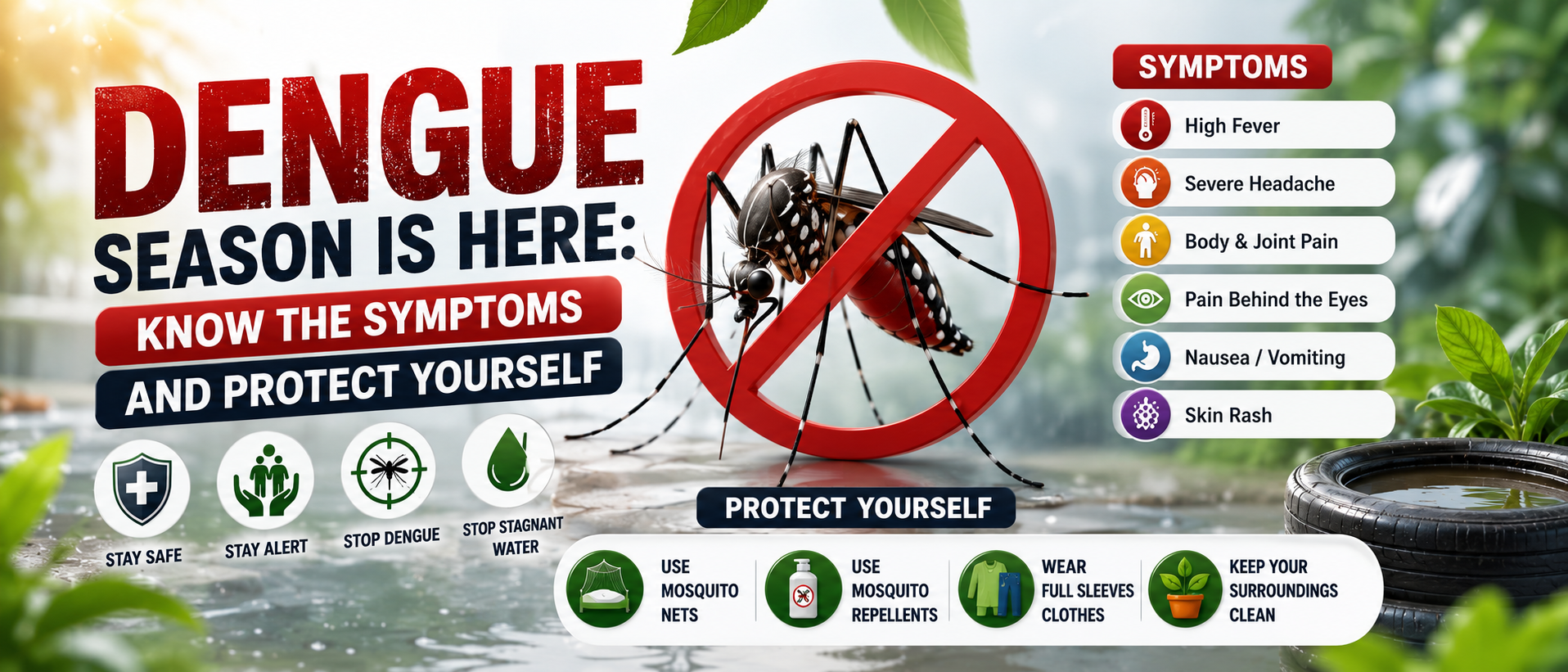


1. Dengue Season Is Here: Why You Should Be Alert
The dengue season is a time when families, schools, workplaces and communities need to pay closer attention to mosquito control and unexplained fever. Dengue is a viral infection transmitted primarily through the bite of infected Aedes mosquitoes, particularly Aedes aegypti. These mosquitoes are commonly associated with tropical and subtropical environments and can live close to human homes, making everyday surroundings an important part of dengue prevention. According to the World Health Organization, approximately half of the world’s population is now at risk of dengue, with an estimated 100–400 million infections occurring every year.
Dengue transmission often increases around rainy periods because water can accumulate in containers, drains, discarded items, plant trays and other locations where mosquitoes may lay eggs. That does not mean every fever during the rainy season is dengue, but it does mean persistent or characteristic symptoms deserve attention. Knowing the dengue symptoms early can help you decide when to contact a healthcare professional and whether diagnostic testing may be appropriate. Think of symptom awareness as an early-warning system: the sooner you recognize that something may be wrong, the sooner you can seek appropriate medical advice. Dengue is often manageable with proper care, but severe dengue can become dangerous, particularly when warning signs appear.
2. What Is Dengue Fever and How Does It Spread?
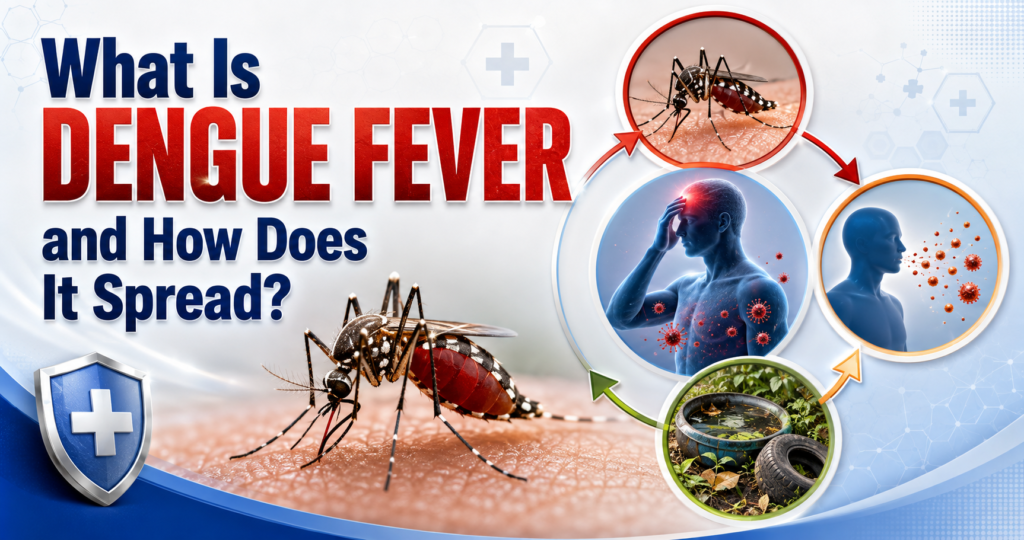
Dengue fever is caused by dengue virus, which has four major serotypes. The infection spreads when an infected female Aedes mosquito bites a person and subsequently transmits the virus through another bite. Importantly, dengue is not normally spread simply by sitting next to, touching or talking to someone who has dengue. However, a person infected with dengue can carry enough virus in their blood for mosquitoes to acquire the virus, which means mosquito-bite protection is especially important when someone in a household is sick.
The mosquitoes responsible for dengue are particularly important because they can bite during the daytime, including morning and later afternoon periods. This is why dengue protection should not be treated as something needed only at night. Windows and doors can be screened, exposed skin can be covered, and an appropriate mosquito repellent can be used according to its label instructions. Around the home, the most powerful prevention strategy is to reduce places where mosquitoes can reproduce. WHO recommends eliminating water-holding habitats, properly disposing of solid waste, and regularly emptying and cleaning water containers.
3. Dengue Symptoms: What Should You Look For?
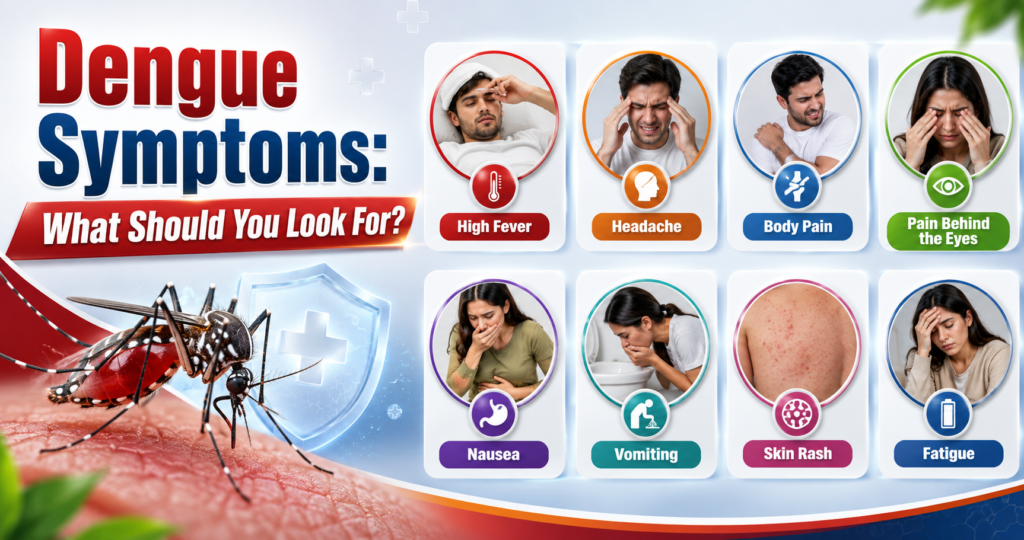
The dengue symptoms can resemble other viral illnesses, which is one reason people sometimes underestimate them. Symptoms generally appear around four to ten days after infection, although the exact course can vary. WHO identifies high fever, headache, pain behind the eyes, muscle and joint pain, nausea, vomiting and rash among the common symptoms associated with dengue. Some people may have mild symptoms or no noticeable symptoms at all, while others can become significantly ill.
A fever accompanied by several of these symptoms should not automatically be labelled dengue without appropriate medical assessment or testing. Instead, consider the combination, duration and severity of symptoms, as well as whether you live in or recently travelled to an area where dengue occurs. If someone develops a sudden high fever together with intense headache, body aches, pain behind the eyes, nausea or rash, contacting a healthcare professional can help determine the next step. Remember that symptoms alone cannot reliably confirm dengue. A doctor may consider the clinical picture and recommend blood testing when appropriate. Early recognition is particularly important because the more serious phase of dengue can develop around the time the fever starts to decrease.
4. High Fever Dengue: Recognising a Common Warning Symptom
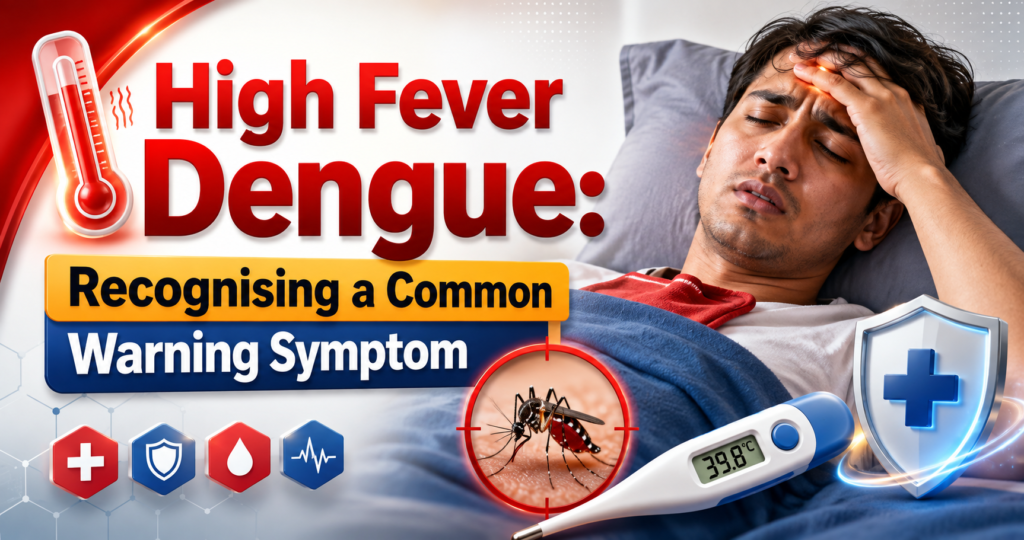
High fever dengue is one of the symptoms people commonly associate with dengue fever. WHO reports that dengue fever can involve a high temperature of approximately 40°C/104°F, often accompanied by at least two other symptoms such as headache, pain behind the eyes, nausea or vomiting, muscle or joint pain, swollen glands or rash. A high temperature, however, is not exclusive to dengue. Influenza, COVID-19, malaria, typhoid and other infections can also cause fever, so temperature alone cannot establish the diagnosis.
When fever is high or persistent, monitoring the person’s condition becomes important. Keep track of when the fever started, how high it becomes, associated symptoms and any recent travel or known mosquito exposure. Adequate hydration and medical advice are important parts of managing suspected dengue. WHO advises that paracetamol/acetaminophen may be used for fever and pain, while aspirin and ibuprofen should be avoided in dengue because they may increase bleeding risk. Never rely on self-medication alone when symptoms are severe, worsening or unusual. A healthcare professional can determine whether testing, observation or further treatment is needed.
5. Severe Headache Dengue: When Head Pain Should Get Attention
Severe headache dengue is another commonly reported symptom and may occur alongside fever and pain behind the eyes. A headache that appears suddenly with a high fever can leave someone feeling extremely weak and uncomfortable. It may be accompanied by muscle aches, joint pain, nausea or vomiting, making the overall illness feel considerably more intense than an ordinary mild fever. WHO lists severe headache among the common clinical symptoms of dengue fever.
If a headache is severe, persistent or associated with other concerning symptoms, it should not simply be dismissed as dehydration or tiredness. Pay attention to the overall pattern rather than one symptom in isolation. A person experiencing high fever plus severe headache and other typical dengue symptoms may need medical evaluation, particularly during a period of active dengue transmission. Hydration, rest and appropriate medical guidance can support recovery, but suspected dengue should be managed carefully. If severe abdominal pain, persistent vomiting, bleeding, rapid breathing, extreme weakness or other warning signs develop, urgent medical attention is required rather than waiting for the illness to improve at home.
6. Body and Joint Pain: Why Dengue Can Feel So Exhausting
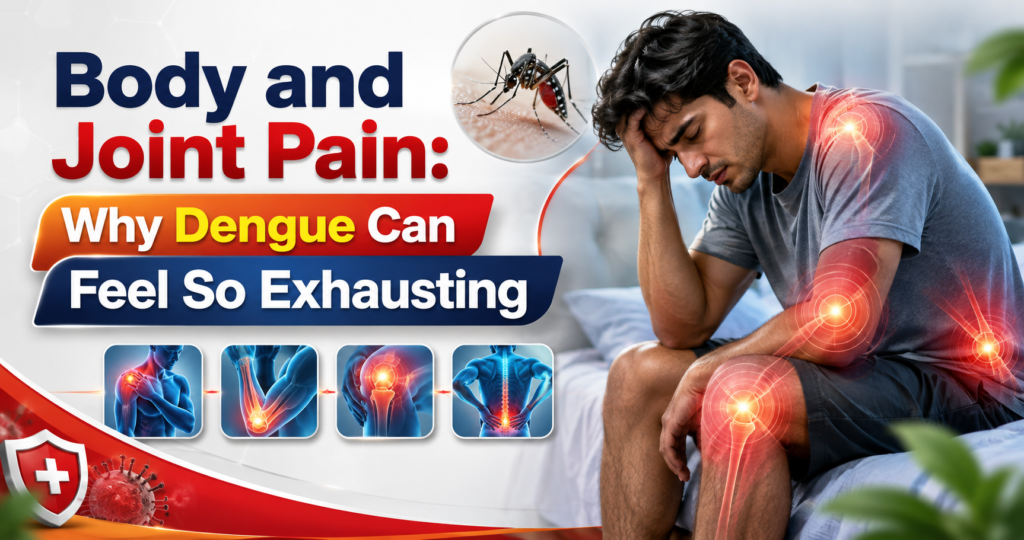
Body and joint pain can be one of the most uncomfortable parts of dengue fever. People may experience aches in muscles, bones or joints along with fever and headache. This is why dengue has historically been associated with the term “break-bone fever.” WHO identifies muscle, bone and joint pains among the common symptoms that can accompany dengue fever.
When body aches occur with fever, it is tempting to take an over-the-counter painkiller without thinking about whether dengue could be involved. That approach can be risky because some medications are unsuitable when bleeding is a concern. WHO specifically advises against aspirin and ibuprofen for people with dengue and identifies paracetamol/acetaminophen as an option for managing fever and pain. The safest approach is to seek professional medical guidance, particularly if dengue is suspected. Rest and adequate fluid intake are also important, while worsening symptoms should prompt further medical assessment. Remember, body pain by itself does not prove dengue; the complete clinical picture matters.
7. Pain Behind Eyes: A Recognisable Dengue Fever Symptom
Pain behind eyes is one of the symptoms frequently associated with dengue fever and can occur alongside severe headache and high fever. The discomfort may become more noticeable when moving the eyes, although individual experiences differ. WHO includes pain behind the eyes among the common symptoms of dengue. Because several viral and other medical conditions can produce headaches or eye discomfort, this symptom should be considered as part of the broader pattern rather than used as a stand-alone diagnostic test.
If someone develops fever together with headache, pain behind the eyes, body aches, nausea or rash, it is sensible to speak with a healthcare professional. A clinician can assess symptoms, examine the patient and determine whether laboratory testing is appropriate. Keeping hydrated and resting may help with general discomfort, but medical evaluation is particularly important if the person’s condition deteriorates. Dengue can move from an initial febrile phase into a more critical period, and a reduction in fever does not necessarily mean that all risk has disappeared. WHO specifically warns that severe dengue warning signs can appear around the time the fever decreases.
8. Dengue Nausea Vomiting: Watch Hydration Carefully
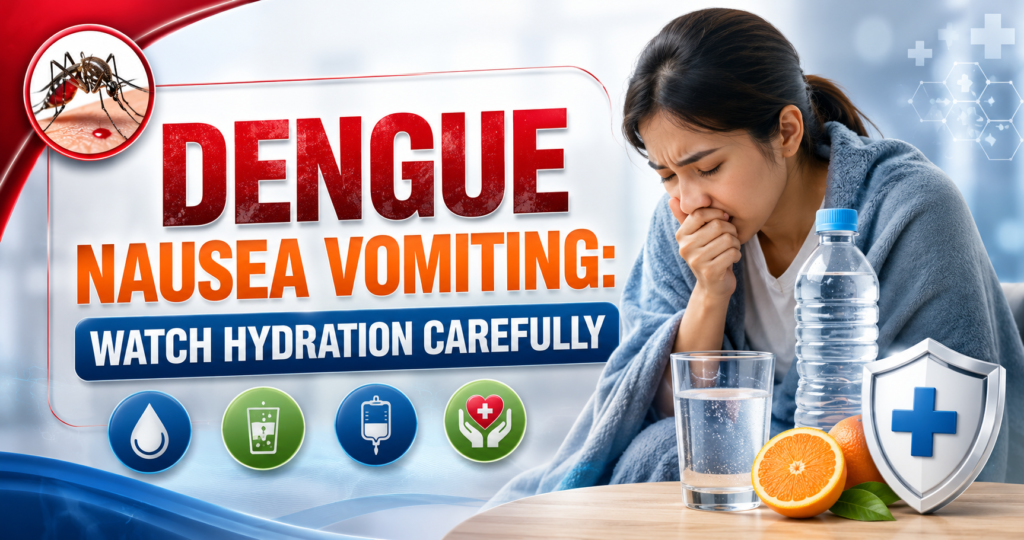
Dengue nausea vomiting can make an already uncomfortable illness harder to manage because repeated vomiting may interfere with fluid intake. Nausea and vomiting are recognised symptoms of dengue, and they may occur alongside high fever, headache, body aches and rash. For someone with suspected dengue, maintaining adequate fluid intake is important because dehydration can add to weakness and discomfort.
Occasional nausea does not necessarily indicate severe dengue, but persistent vomiting is a dengue warning sign that requires prompt medical attention. WHO identifies persistent vomiting among the symptoms that can accompany severe dengue and advises immediate medical care when severe symptoms appear. If a person cannot keep fluids down, becomes unusually weak, develops severe abdominal pain or shows other concerning symptoms, do not simply wait for the fever to disappear. Medical professionals may need to assess hydration, blood results and other indicators of illness severity. A practical rule is simple: when vomiting becomes persistent or the person cannot maintain fluids, professional medical assessment should take priority.
9. Dengue Skin Rash: Another Symptom to Know
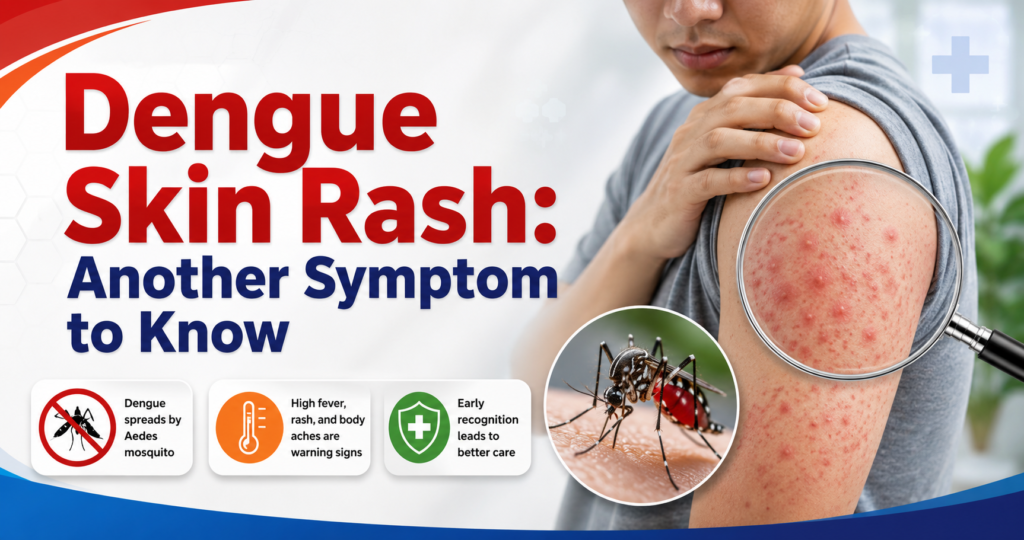
Dengue skin rash may appear during the course of dengue fever and is included among the common symptoms identified by WHO. A rash can vary in appearance and may not look identical in every patient. This is another reason not to diagnose dengue based on a single visual symptom. Fever combined with rash, headache, body aches, nausea or pain behind the eyes creates a more meaningful clinical picture that should be discussed with a healthcare professional.
If a rash appears alongside a high fever, record when it developed and mention it during medical consultation. Do not assume that every fever-related rash is dengue, because viral infections, allergic reactions and other conditions can also cause skin changes. Medical evaluation may include symptom assessment and, when appropriate, blood testing. Dengue diagnosis is not simply a matter of looking at the skin. Laboratory confirmation can be important, particularly when symptoms overlap with other infections. The key message during dengue season is to stay alert without becoming alarmed: recognise the pattern, seek appropriate advice and monitor for warning signs.
10. Dengue Warning Signs: Know When It Becomes Urgent
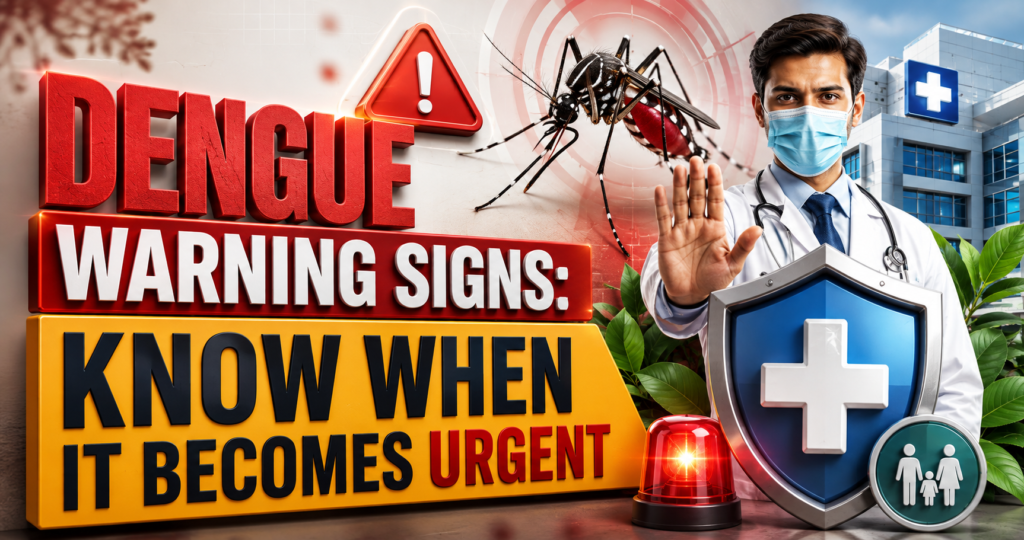
Understanding dengue warning signs can be more important than simply memorising the common symptoms. Severe dengue may develop after the initial fever, and WHO notes that the critical phase can occur around three to seven days after the first signs of illness. Warning signs can include severe abdominal pain, persistent vomiting, rapid breathing, bleeding gums or nose, extreme fatigue or restlessness, blood in vomit or stool, intense thirst, pale or cold skin and weakness.
One of the most important messages is that a falling temperature does not automatically mean the patient is recovering. In some cases, the transition from the febrile phase to the critical phase happens around the time fever decreases. That is why families should continue observing the patient rather than assuming the danger has passed. If any severe warning sign develops, seek medical attention immediately. Severe dengue can involve serious complications such as shock, severe bleeding or organ impairment, but timely medical care can substantially improve outcomes.
11. Dengue Prevention Starts With Mosquito Bite Prevention
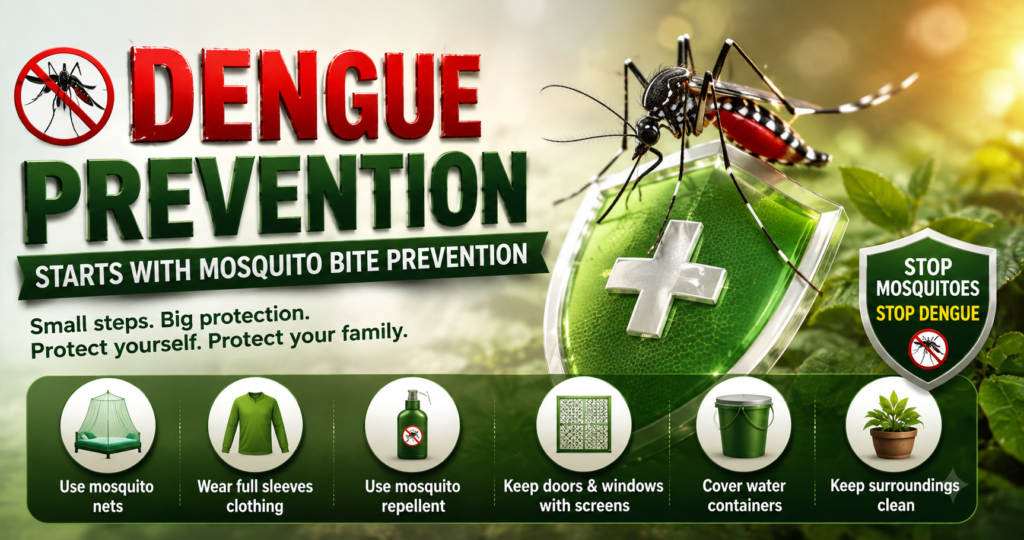
Mosquito bite prevention is one of the most effective ways to reduce the risk of dengue infection. Since dengue-transmitting Aedes mosquitoes can bite during the daytime, protection needs to continue beyond nighttime sleeping hours. Wearing clothing that covers exposed skin, using an appropriate mosquito repellent and keeping mosquitoes outside through window and door screens can all contribute to protection. WHO recommends repellents containing ingredients such as DEET, picaridin/icaridin or IR3535 when used according to product instructions.
Protection becomes even more important when someone in the household has suspected or confirmed dengue. An infected person can potentially infect mosquitoes that bite them, allowing those mosquitoes to transmit the virus to other people. Using repellents, screens and other measures around the patient can therefore help reduce household transmission. Dengue prevention is not one magic trick; it is more like building a wall from several small bricks. Each measure—repellent, clothing, screens, water management and community cleanup—reduces opportunities for mosquitoes to bite and reproduce.
12. Stagnant Water Removal Can Stop Mosquito Breeding
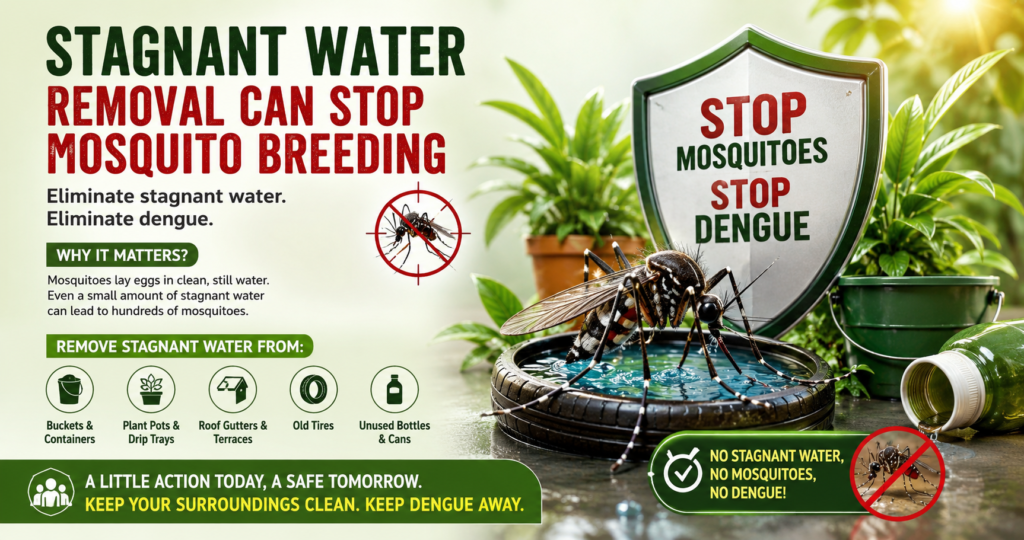
Stagnant water removal is a crucial part of dengue prevention because Aedes mosquitoes lay eggs in water-holding environments. Flowerpot saucers, discarded containers, tyres, bottles, buckets, drums, construction materials and other objects can collect water and create breeding habitats. WHO recommends eliminating artificial habitats that can hold water and regularly emptying and cleaning domestic water-storage containers.
A household dengue-prevention check should therefore extend beyond the obvious areas. Look around balconies, terraces, gardens, rooftops, parking spaces and storage areas after rain. Empty unnecessary containers, cover water-storage vessels properly and clean containers regularly. Simply pouring out visible water may not always be enough if mosquito eggs remain attached to container surfaces, which is why WHO recommends cleaning and scrubbing essential water containers regularly. When entire communities follow these habits, the number of potential breeding sites can decrease substantially. Dengue prevention is not only an individual responsibility; it works best when neighbours, housing societies, schools and local authorities participate together.
13. Mosquito Repellent: A Simple Layer of Daily Protection
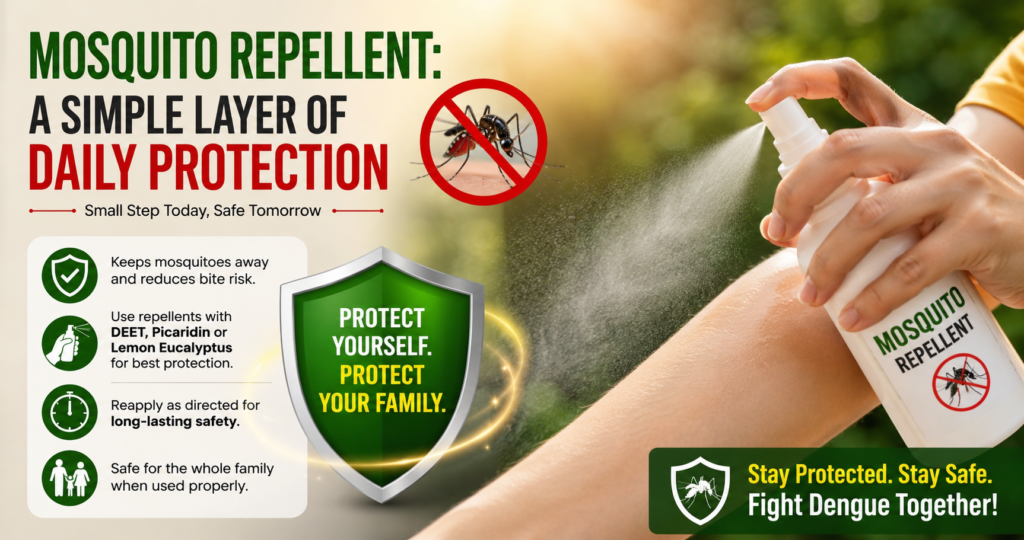
Using an appropriate mosquito repellent can add another layer of protection, especially when spending time outdoors or in areas with mosquito activity. Repellents should be selected and applied according to the manufacturer’s instructions, including age restrictions and precautions. WHO identifies DEET, picaridin/icaridin and IR3535 among effective repellent ingredients. If sunscreen is also required, WHO guidance recommends applying sunscreen first and mosquito repellent afterward, while following the product instructions.
Repellent should not be treated as a replacement for environmental control. Imagine trying to keep rain out of a house while leaving the roof full of holes; one solution alone cannot solve the entire problem. Repellent protects the person, while stagnant-water control targets mosquito breeding. Combining personal protection with household mosquito control is therefore a stronger approach. Families should also consider screens, appropriate clothing and other practical measures, especially during periods when dengue transmission is high.
14. Full Sleeve Clothing Can Reduce Exposed Skin
Full sleeve clothing and long trousers can reduce the amount of exposed skin available for mosquito bites. WHO recommends clothing that covers as much of the body as possible as part of dengue prevention. During warm weather, breathable and comfortable full-length clothing can make this preventive measure easier to follow throughout the day. This is particularly relevant because dengue-transmitting mosquitoes may be active during daylight hours.
Clothing is especially useful when combined with mosquito repellent and environmental control. If you spend time in gardens, construction areas, outdoor workplaces or places where mosquitoes are common, reducing exposed skin can be a practical everyday habit. Parents can also teach children simple mosquito-protection routines, such as wearing suitable clothing and avoiding areas with standing water. No preventive measure offers absolute protection, but consistent habits can reduce exposure. Dengue prevention is ultimately about reducing opportunities for an infected mosquito to bite you.
15. Dengue Testing: When Should You Consider It?
Recognising dengue fever symptoms is only the first step; determining whether someone actually has dengue may require medical evaluation and laboratory testing. WHO states that dengue diagnosis involves considering signs and symptoms and testing blood for evidence of dengue virus infection. The type and timing of a dengue test can depend on how long the person has been ill, which is why a healthcare professional or laboratory should guide the testing process.
If you have a high fever accompanied by several typical symptoms, particularly during an active dengue period, discuss testing with a healthcare provider rather than relying on guesswork. A blood test can help distinguish dengue from other conditions that may present with fever and body aches. Testing should be interpreted alongside symptoms and clinical findings rather than viewed as an isolated number. People who develop warning signs require medical attention regardless of whether they are waiting for a laboratory result.
16. Free Home Sample Collection in 60 Minutes: A Convenient Testing Option

For people who have difficulty travelling to a diagnostic centre while experiencing fever, free home sample collection in 60 minutes can be a convenient service option when offered by a diagnostic provider in their area. Home collection can make testing more accessible for older adults, working professionals, families with children and patients who feel too weak to travel. Instead of spending time arranging transport and waiting at a centre, an eligible provider may send a trained collection professional to the patient’s home according to its service terms and coverage area.
However, a home sample collection service should complement—not replace—medical care. If someone has severe abdominal pain, persistent vomiting, bleeding, rapid breathing, extreme weakness, cold or pale skin or other serious warning signs, they should seek urgent medical attention rather than waiting for a routine home collection appointment. WHO emphasises that people with symptoms of severe dengue should receive immediate medical care. For routine suspected dengue testing, convenient home collection can help people access laboratory services while continuing to follow professional medical advice.
17. What to Do If You Suspect Dengue Fever
If you develop symptoms that could indicate dengue, start by taking the illness seriously without assuming the diagnosis. Record the fever, note when symptoms began and make a list of associated symptoms such as headache, body pain, pain behind the eyes, nausea, vomiting or rash. Contact a healthcare professional for advice about examination and appropriate testing. WHO recommends rest, adequate fluid intake and medical guidance for people with dengue, while advising against aspirin and ibuprofen because of their potential to increase bleeding risk.
The next step is careful observation. Dengue can change over several days, and the period when fever falls can sometimes coincide with the critical phase. Watch for severe abdominal pain, persistent vomiting, bleeding, breathing difficulties, unusual tiredness, restlessness, extreme thirst, weakness or cold and pale skin. These symptoms require urgent medical attention. At the same time, protect the patient from further mosquito bites so that mosquitoes do not acquire the virus from the infected person and spread it to others. Early attention, responsible monitoring and mosquito control can work together to reduce risk.
18. Dengue Prevention Is a Family and Community Responsibility
Effective dengue prevention cannot stop at the front door of one house. Mosquitoes can breed in shared spaces, neighbouring properties, construction sites, drains, discarded containers and other water-holding areas. WHO describes community participation as important to reducing mosquito breeding and dengue transmission. That means residents, schools, offices, housing societies, local organisations and municipal authorities all have a role to play.
A weekly household inspection can become a simple routine during dengue season. Check water-storage containers, plant trays, rooftops, balconies, gardens and outdoor storage areas. Dispose of items that can collect rainwater and make sure essential water containers remain covered and properly maintained. Encourage neighbours to do the same, because a clean home surrounded by unmanaged breeding sites is still exposed to mosquitoes. Dengue prevention works best when it becomes a community habit rather than a reaction after cases have already appeared.
19. Dengue Season Checklist: Protect Yourself Every Day
During dengue season, prevention should become part of your normal daily routine rather than something you remember only after a mosquito bite. Start with your surroundings: remove standing water, empty unnecessary containers and keep water-storage vessels covered. Next, protect your body by using a suitable mosquito repellent and wearing full sleeve clothing when practical. Since dengue mosquitoes can bite during the day, daytime protection matters just as much as nighttime precautions.
At the same time, know your symptoms. High fever, severe headache, body and joint pain, pain behind the eyes, dengue nausea vomiting and dengue skin rash are symptoms that can occur with dengue, but they can also occur with other illnesses. Seek professional medical advice when dengue is suspected, particularly if symptoms are significant or persistent. Most people with dengue recover, but severe dengue can become life-threatening, so warning signs should never be ignored.
20. Conclusion: Know Dengue Symptoms, Act Early and Protect Yourself
Dengue season is not a reason to panic, but it is a reason to become more aware. Knowing the major dengue symptoms—including high fever, severe headache, body and joint pain, pain behind the eyes, nausea, vomiting and skin rash—can help people recognise when medical advice may be necessary. Understanding dengue warning signs is equally important because severe dengue can develop around the time the fever decreases. WHO recommends prompt medical care when serious warning signs appear, and early recognition can make a significant difference in managing severe illness.
Prevention begins with simple actions repeated consistently. Practise mosquito bite prevention, use an appropriate mosquito repellent, choose full sleeve clothing, and make stagnant water removal part of your weekly household routine. If you develop symptoms that could indicate dengue, speak with a healthcare professional and ask whether diagnostic testing is appropriate. If your local diagnostic provider offers free home sample collection in 60 minutes, it can provide a convenient way to access testing without travelling while unwell, subject to the provider’s service availability and terms. Most importantly, do not ignore severe symptoms. A mosquito may be tiny, but the right prevention habits can make a big difference.
Frequently Asked Questions
1. What are the most common dengue symptoms?
Common dengue symptoms include high fever, severe headache, pain behind the eyes, muscle or joint pain, nausea, vomiting and rash. Symptoms usually develop several days after infection, but not everyone develops noticeable symptoms.
2. Is high fever always a sign of dengue?
No. High fever dengue is a common presentation, but many other infections can also cause high fever. Dengue should be considered alongside other symptoms, exposure risk and medical evaluation rather than diagnosed from temperature alone.
3. What are the important dengue warning signs?
Important dengue warning signs include severe abdominal pain, persistent vomiting, rapid breathing, bleeding, extreme weakness, restlessness, blood in vomit or stool, intense thirst and pale or cold skin. These symptoms require immediate medical attention.
4. How can I prevent dengue at home?
Practise stagnant water removal, keep water containers covered, clean potential breeding sites regularly, use mosquito repellent, wear full sleeve clothing, and use screens on doors and windows. Since dengue mosquitoes can be active during the daytime, protection should not be limited to nighttime.
5. Can dengue testing be done through home sample collection?
Yes, some diagnostic providers offer home sample collection services. If a provider advertises free home sample collection in 60 minutes, confirm the service area, eligibility, test availability and applicable terms before booking. If severe dengue warning signs are present, seek urgent medical care rather than waiting for routine home collection.
Leave a Reply