

Every year, Cord Blood Awareness Month encourages families, healthcare professionals, and medical organizations to learn about the life-saving potential of umbilical cord blood. For many expecting parents, pregnancy involves countless important decisions, from choosing a hospital to preparing a nursery. One decision that often receives less attention is whether to preserve or donate a baby’s cord blood after birth. Yet, this small amount of blood remaining in the umbilical cord contains valuable cord blood stem cells that have transformed modern medicine.
As stem cell therapy and regenerative medicine continue to advance, awareness about cord blood banking has become increasingly important. During Cord Blood Awareness Month, experts emphasize the importance of understanding the collection process, available banking options, and potential medical applications. This expecting parents guide explores everything families should know before delivery, helping them make an informed choice that aligns with their medical, financial, and personal values.
What Is Cord Blood Awareness Month?
Cord Blood Awareness Month is dedicated to educating families about the medical value of umbilical cord blood, highlighting how it can support current treatments and future medical innovations. The campaign focuses on increasing public knowledge about newborn stem cell preservation, encouraging informed discussions between parents and healthcare providers. Awareness initiatives also promote the importance of public cord blood donation, which helps expand stem cell registries for patients in need of life-saving transplants.
Healthcare organizations around the world use this month to share educational resources, host seminars, and encourage conversations about pregnancy health education. The goal is not to persuade every family to choose one option but rather to ensure they understand the science, benefits, limitations, and available choices. By learning early during pregnancy, parents have sufficient time to discuss options with their obstetrician or hospital before delivery.
Understanding Umbilical Cord Blood and Cord Blood Stem Cells
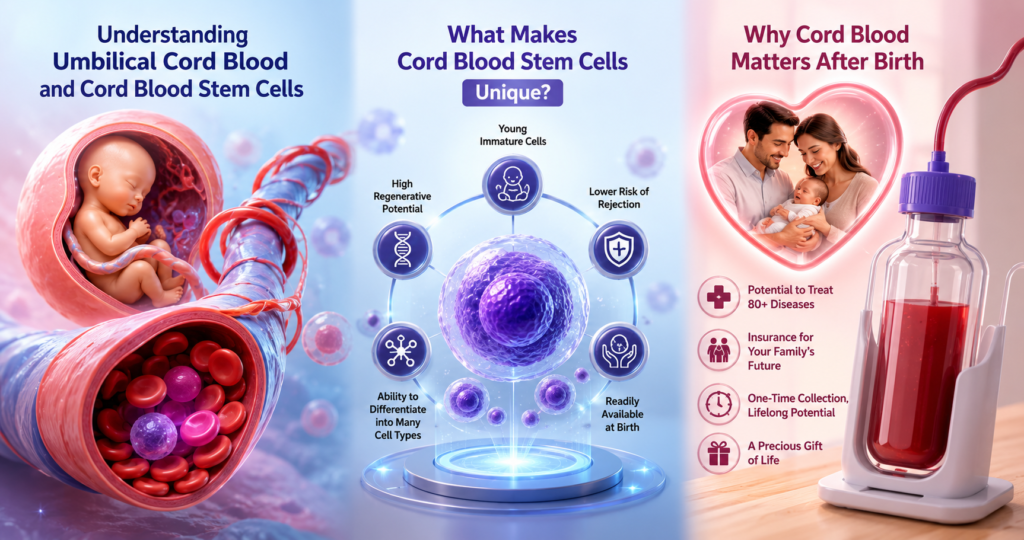
After a baby is born, a small amount of blood remains inside the umbilical cord and placenta. This umbilical cord blood contains a rich supply of cord blood stem cells, specifically hematopoietic stem cells responsible for producing healthy blood and immune cells. These cells differ from embryonic stem cells because they are collected without harming the baby or mother and without ethical concerns associated with embryonic sources.
What Makes Cord Blood Stem Cells Unique?
Unlike many adult stem cells, cord blood stem cells are younger and more adaptable. They have a lower risk of transmitting certain infections and often require less stringent donor matching than bone marrow transplants. Researchers continue exploring their role in treating various diseases while investigating new applications in regenerative medicine.
Why Cord Blood Matters After Birth
Traditionally, the umbilical cord and placenta were discarded after delivery. Today, medical science recognizes them as valuable biological resources. Instead of becoming medical waste, cord blood can be preserved for future therapeutic use or donated to help patients worldwide.
Benefits of Cord Blood Banking
The benefits of cord blood banking extend beyond preserving biological material. Stored cord blood may provide treatment opportunities for various blood disorders, immune deficiencies, inherited metabolic conditions, and certain cancers. In some situations, it may offer an alternative when a compatible bone marrow donor cannot be found.
Researchers continue studying stem cell therapy applications for neurological disorders, autoimmune diseases, and regenerative treatments. While many emerging therapies remain under clinical investigation, ongoing research demonstrates growing interest in expanding the use of cord blood stem cells. Families choosing newborn stem cell preservation may value both the currently established medical uses and the possibility of future therapeutic developments.
Cord Blood Collection Process Explained
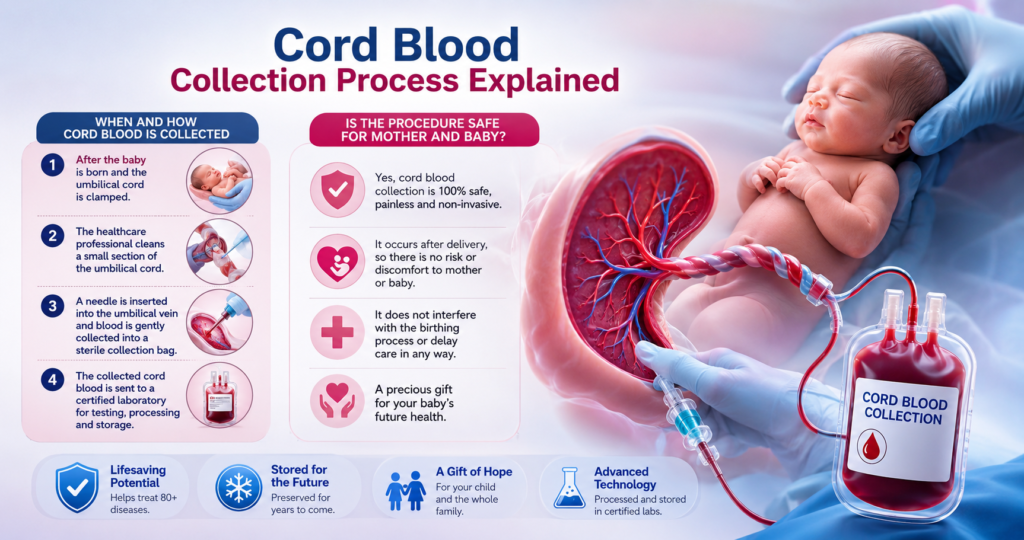
The cord blood collection process is straightforward, painless, and performed immediately after childbirth. Once the baby is safely delivered and the umbilical cord has been clamped and cut, trained medical professionals collect the remaining blood from the cord using a sterile collection kit. The procedure typically takes only a few minutes and does not interfere with routine childbirth practices.
When and How Cord Blood Is Collected
Collection occurs after delivery, whether through vaginal birth or cesarean section. Since the blood is collected from the detached cord, neither the mother nor the newborn experiences pain during the procedure. The sample is then carefully labeled, transported under controlled conditions, tested, and processed before long-term cryogenic storage if banking is chosen.
Is the Procedure Safe for Mother and Baby?
Yes. The cord blood collection process is considered safe because it takes place only after the baby has been delivered and the umbilical cord has been cut. It does not affect labor, delivery, or postpartum recovery.
Private Cord Blood Banking vs Public Cord Blood Donation
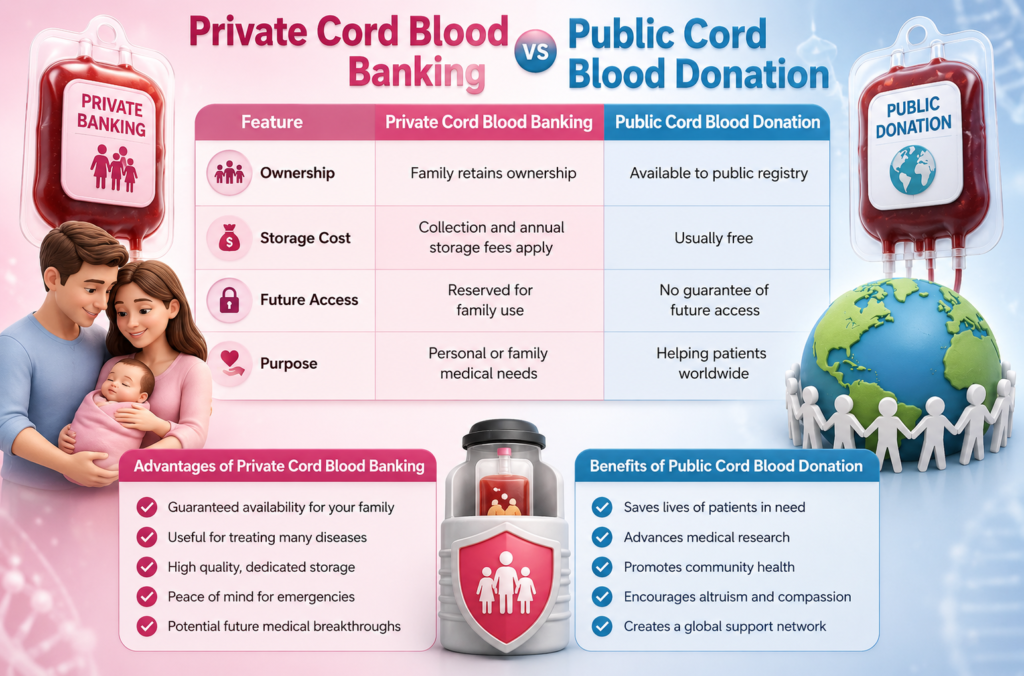
Choosing between private cord blood banking and public cord blood donation is one of the most important decisions expecting parents may face.
| Feature | Private Cord Blood Banking | Public Cord Blood Donation |
| Ownership | Family retains ownership | Available to public registry |
| Storage Cost | Collection and annual storage fees apply | Usually free |
| Future Access | Reserved for family use | No guarantee of future access |
| Purpose | Personal or family medical needs | Helping patients worldwide |
Advantages of Private Cord Blood Banking
Families choosing private cord blood banking pay for long-term storage so the sample remains exclusively available to them. This option may be considered when there is a family history of certain blood disorders or when advised by a physician.
Benefits of Public Cord Blood Donation
Public cord blood donation allows collected stem cells to become part of national or international donor registries. These donations can save lives by providing compatible stem cells to patients requiring transplants.
Newborn Stem Cell Preservation for Future Healthcare
Newborn stem cell preservation is often viewed as an investment in future healthcare possibilities. Advances in biotechnology continue expanding scientific understanding of stem cells, making preservation increasingly relevant for families interested in future medical innovations.
Although no one can predict whether preserved cord blood will be needed, researchers continue investigating additional applications across numerous medical specialties. Parents should understand that preserved cord blood is not a guarantee of future treatment but rather a potential biological resource should medically approved therapies become available.
Stem Cell Therapy and Regenerative Medicine
Modern stem cell therapy has already transformed treatment for many blood-related diseases. Thousands of patients worldwide have benefited from stem cell transplants for leukemia, lymphoma, sickle cell disease, and inherited immune disorders.
The rapidly growing field of regenerative medicine aims to repair or replace damaged tissues using stem cells and advanced biological technologies. Scientists are actively researching treatments for diabetes, cerebral palsy, spinal cord injuries, stroke recovery, heart disease, and neurodegenerative disorders. While many therapies remain experimental, ongoing clinical trials continue to explore the remarkable potential of cord blood stem cells.
Pregnancy Health Education Helps Parents Make Informed Choices
Comprehensive pregnancy health education includes understanding prenatal nutrition, labor preparation, newborn care, breastfeeding, vaccinations, and increasingly, cord blood awareness for parents. Expecting families should begin discussing cord blood options during the second trimester, allowing enough time to research available banks, hospital policies, collection requirements, and costs.
Healthcare providers can explain eligibility criteria, storage standards, accreditation, and medical recommendations. Asking informed questions enables parents to compare services objectively while avoiding marketing claims unsupported by scientific evidence.
How Expecting Parents Can Choose the Right Cord Blood Banking Option

Every family’s situation is unique. Factors influencing the decision may include:
- Family medical history
- Hospital participation in donation programs
- Financial considerations
- Availability of accredited cord blood banks
- Physician recommendations
- Personal values regarding donation or storage
This expecting parents guide encourages discussing all available options well before the due date. Planning early reduces last-minute stress and ensures necessary paperwork and collection arrangements are completed in advance.
Common Myths About Cord Blood Banking
Many misconceptions surround cord blood banking, making Cord Blood Awareness Month an ideal time to separate facts from myths.
Some people believe cord blood collection is painful, but the procedure occurs after birth and causes no discomfort. Others think cord blood has no proven medical value, despite decades of successful use in treating numerous blood disorders. Another common myth is that only wealthy families can benefit from stem cell preservation. In reality, public cord blood donation provides a no-cost option for eligible families who wish to contribute to life-saving treatments.
Parents should rely on qualified healthcare professionals and scientifically supported information rather than social media rumors or misleading advertisements.
Conclusion
Cord Blood Awareness Month reminds us that one of the most valuable medical resources available at birth is often overlooked. Understanding cord blood banking, the cord blood collection process, cord blood stem cells, newborn stem cell preservation, and the differences between private cord blood banking and public cord blood donation empowers families to make informed decisions.
As research in stem cell therapy and regenerative medicine continues to evolve, preserved umbilical cord blood may play an even greater role in future healthcare. Through better pregnancy health education and increased cord blood awareness for parents, expecting families can approach childbirth with greater confidence, knowing they have carefully considered every available option for their baby’s future.
Frequently Asked Questions (FAQs)
1. What is Cord Blood Awareness Month?
It is an annual awareness campaign that educates families about the medical importance of cord blood, stem cell preservation, donation, and banking options.
2. Is the cord blood collection process safe?
Yes. The procedure is safe, painless, and performed only after the baby has been delivered and the umbilical cord has been cut.
3. What are the benefits of cord blood banking?
Cord blood banking preserves valuable stem cells that are currently used in treating many blood disorders and are being researched for additional regenerative medicine applications.
4. What is the difference between public cord blood donation and private cord blood banking?
Public donation makes stem cells available to patients through donor registries, while private banking stores them exclusively for the family’s potential future use.
5. When should expecting parents decide about cord blood banking?
Healthcare experts generally recommend making the decision during the second or early third trimester to allow sufficient time for enrollment, paperwork, and coordination with the healthcare provider.
Leave a Reply