
Every year on 28 July, people across the globe come together to observe World Hepatitis Day 2026, one of the most important international health awareness events recognized by the World Health Organization (WHO). The campaign is designed to educate individuals about hepatitis, encourage early testing, promote vaccination, and inspire governments to strengthen healthcare systems against viral hepatitis. The theme for World Hepatitis Day 2026, “Hepatitis: Let’s Break It Down,” focuses on removing barriers to awareness, diagnosis, and treatment while helping communities understand the true impact of liver disease.
Despite remarkable advances in medicine, viral hepatitis continues to affect millions of people worldwide. Many individuals live with hepatitis for years without experiencing noticeable symptoms, allowing the disease to silently damage the liver until severe complications develop. Liver cirrhosis, liver failure, and liver cancer are often the tragic outcomes of untreated hepatitis infections. The encouraging news is that many hepatitis infections are preventable through vaccination, proper hygiene, safe healthcare practices, and regular screening.
This guide explores World Hepatitis Day awareness, the importance of early detection, available treatment options, preventive measures, vaccination, and practical steps everyone can take to protect your liver health.
Understanding World Hepatitis Day 2026
World Hepatitis Day 2026 is observed annually on July 28, commemorating the birthday of Nobel Prize-winning scientist Dr. Baruch Blumberg, who discovered the hepatitis B virus and helped develop the first hepatitis B vaccine. His groundbreaking work transformed global public health and paved the way for millions of lives to be saved through vaccination and improved disease management.
The annual observance serves as a reminder that hepatitis remains a major public health concern. Governments, hospitals, NGOs, educational institutions, and healthcare professionals organize awareness campaigns, free screening camps, vaccination drives, seminars, webinars, and social media initiatives to educate the public. These campaigns encourage people to learn about hepatitis transmission, understand their personal risk factors, and seek timely medical advice.
The World Health Organization continues working toward its ambitious goal of eliminating viral hepatitis as a public health threat by 2030. Achieving this objective depends on increased public awareness, expanded vaccination coverage, wider access to affordable testing, and timely treatment for those diagnosed with hepatitis.
Why World Hepatitis Day Awareness Matters More Than Ever
Raising World Hepatitis Day awareness has become increasingly important because hepatitis often develops silently. Unlike many infectious diseases that produce immediate symptoms, chronic hepatitis B and hepatitis C can remain undetected for decades. During this time, the virus slowly damages liver tissue, increasing the risk of liver cirrhosis and liver cancer.
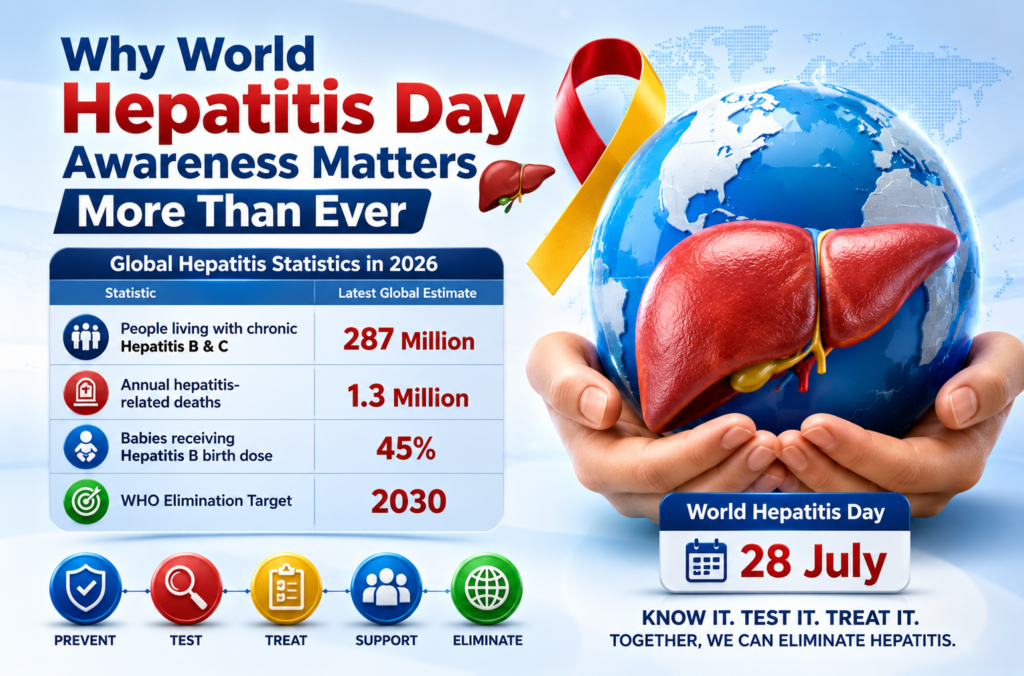
According to the World Health Organization (WHO), approximately 287 million people worldwide were living with chronic hepatitis B or C in 2024. Tragically, nearly 1.3 million deaths occurred from hepatitis-related liver diseases during the same period, making viral hepatitis one of the world’s leading infectious killers. Yet many of these deaths could be prevented through early diagnosis, vaccination, and access to effective treatment.
Public awareness campaigns play a vital role in breaking misconceptions surrounding hepatitis. Many people incorrectly assume hepatitis affects only certain groups or that it always causes severe illness immediately. In reality, anyone can become infected depending on exposure risks, and many individuals remain unaware of their infection for years.
Education empowers individuals to recognize symptoms, seek medical advice promptly, protect their loved ones through vaccination, and reduce the stigma often associated with hepatitis.
Global Hepatitis Statistics in 2026
| Statistic | Latest Global Estimate |
| People living with chronic Hepatitis B & C | 287 Million |
| Annual hepatitis-related deaths | 1.3 Million |
| Babies receiving Hepatitis B birth dose | 45% |
| WHO Elimination Target | 2030 |
| World Hepatitis Day | 28 July |
These numbers clearly demonstrate why continued investment in awareness campaigns, vaccination programs, and healthcare infrastructure remains essential.
WHO Theme for World Hepatitis Day 2026

The official WHO campaign theme for World Hepatitis Day 2026 is:
“Hepatitis: Let’s Break It Down.”
This message encourages communities to break down:
- Barriers to diagnosis
- Stigma surrounding hepatitis
- Lack of awareness
- Limited access to treatment
- Misunderstanding about prevention
The campaign reminds everyone that hepatitis elimination is achievable when governments, healthcare providers, communities, and individuals work together.
Hepatitis Facts and Prevention Everyone Should Know
Understanding hepatitis facts and prevention is the first step toward reducing infections worldwide. Hepatitis refers to inflammation of the liver, an organ responsible for filtering toxins, processing nutrients, producing essential proteins, and supporting digestion. When the liver becomes inflamed due to viral infection, alcohol misuse, autoimmune conditions, or toxins, its ability to perform these critical functions declines.
Among the different causes, viral hepatitis remains the most common infectious form and includes hepatitis A, B, C, D, and E. Each virus spreads differently, affects the body in unique ways, and requires specific prevention strategies. Hepatitis A and E are usually transmitted through contaminated food or water, while hepatitis B, C, and D spread through infected blood or bodily fluids.
Fortunately, many cases are preventable. Safe drinking water, proper sanitation, vaccination, sterile medical equipment, screened blood transfusions, safe injection practices, and responsible personal hygiene significantly reduce infection risks. Healthcare professionals also recommend avoiding the sharing of razors, toothbrushes, or needles, as these items may carry infected blood.
Public awareness is equally important because informed individuals are more likely to adopt preventive behaviors, seek vaccination, and encourage family members to undergo testing when appropriate.
What Is Viral Hepatitis?
Viral hepatitis awareness begins with understanding the viruses responsible for liver infection. Viral hepatitis refers to infections caused by five major hepatitis viruses—A, B, C, D, and E. Although all of them affect the liver, they differ in transmission methods, disease progression, available vaccines, and treatment options.
Some forms, such as hepatitis A, usually cause short-term illness from which most people recover completely. Others, particularly hepatitis B and C, may become chronic infections that silently damage the liver over many years. Chronic infection dramatically increases the risk of cirrhosis, liver failure, and hepatocellular carcinoma, one of the most common forms of liver cancer.
Medical advancements have significantly improved patient outcomes. Highly effective antiviral therapies can now cure most hepatitis C infections, while hepatitis B can often be successfully managed with long-term antiviral medication. Early diagnosis remains critical because treatment is most effective before extensive liver damage develops.
The continued expansion of testing programs and affordable treatment has brought the global health community closer to eliminating hepatitis as a public health threat. Yet success depends on greater participation from individuals willing to get screened, vaccinated, and educated about liver health.
Types of Hepatitis A, B, C Explained

Understanding hepatitis A B C explained helps individuals recognize the differences between these infections and adopt appropriate preventive measures.
Hepatitis A usually spreads through contaminated food or water. It causes acute illness but rarely leads to chronic liver disease. Vaccination provides excellent protection, especially for travelers and people at higher risk.
Hepatitis B spreads through infected blood, sexual contact, or from mother to baby during childbirth. Chronic hepatitis B remains one of the leading causes of liver cancer worldwide. Fortunately, safe and highly effective vaccines have dramatically reduced infections in countries with strong immunization programs.
Hepatitis C primarily spreads through blood exposure, including unsafe injections or contaminated medical equipment. Unlike hepatitis B, there is currently no vaccine for hepatitis C. However, modern antiviral medications can cure more than 95% of infections when diagnosed early.
Understanding these differences empowers individuals to make informed healthcare decisions, participate in vaccination programs, practice safe behaviors, and seek timely medical evaluation whenever risk factors or symptoms are present.
Hepatitis D and E Overview
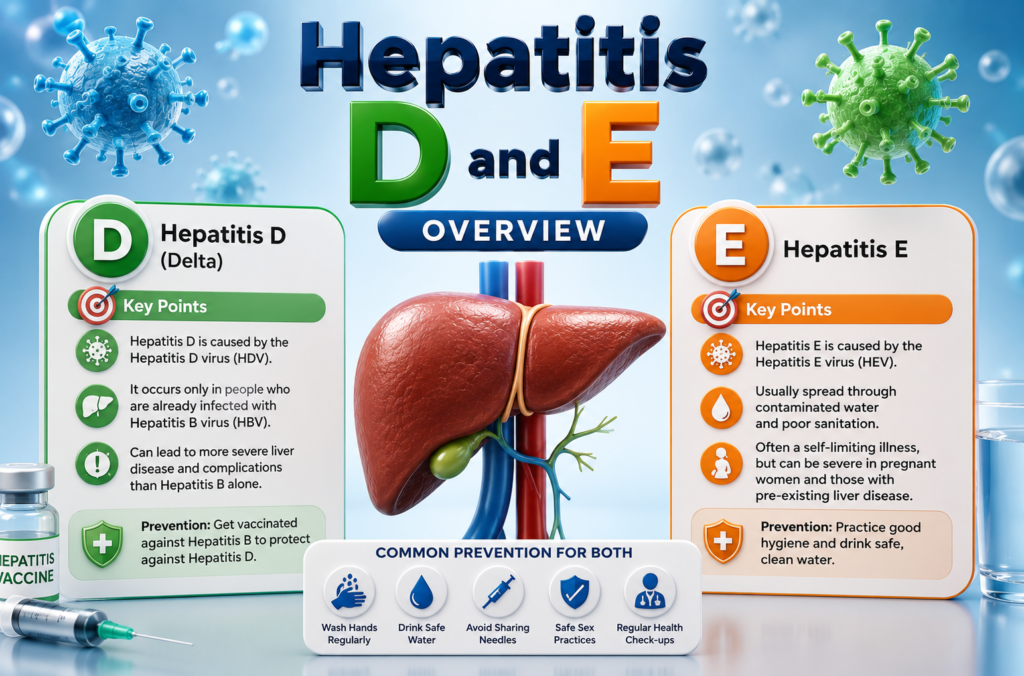
Although hepatitis A, B, and C receive the most public attention, hepatitis D and hepatitis E also deserve recognition because they contribute to the global burden of liver disease. Hepatitis D is unique because it can only infect individuals who already have hepatitis B. This co-infection or superinfection often causes more severe liver damage and increases the risk of cirrhosis and liver failure. Preventing hepatitis B through vaccination also prevents hepatitis D, making immunization one of the most effective public health interventions available. Hepatitis E, on the other hand, is primarily transmitted through contaminated water and is more common in areas with poor sanitation. While most healthy people recover completely, hepatitis E can be particularly dangerous for pregnant women and individuals with weakened immune systems. Understanding these lesser-known viruses highlights why improving sanitation, expanding vaccination programs, and strengthening healthcare infrastructure remain essential parts of global hepatitis prevention strategies.
Early Signs of Hepatitis You Should Never Ignore
Recognizing the early signs of hepatitis can make a significant difference in preventing severe liver damage. One of the biggest challenges with viral hepatitis is that many infected people experience no symptoms during the early stages. The virus may silently attack the liver for months or even years before noticeable health problems develop. This is especially true for chronic hepatitis B and hepatitis C, which are often discovered only during routine blood tests or medical examinations for unrelated conditions.
When symptoms do appear, they may initially resemble common viral illnesses, making them easy to overlook. Persistent fatigue is one of the earliest warning signs and often remains unexplained despite adequate rest. Some individuals experience a mild fever, nausea, vomiting, loss of appetite, muscle aches, or discomfort in the upper right side of the abdomen where the liver is located. As liver inflammation worsens, more distinctive symptoms such as jaundice (yellowing of the skin and eyes), dark-colored urine, pale stools, and itchy skin may develop. These symptoms indicate that the liver is struggling to process bilirubin effectively and require immediate medical evaluation.
Ignoring these warning signs can allow hepatitis to progress into chronic liver disease, cirrhosis, or even liver cancer. Early consultation with a healthcare professional allows for timely blood tests, imaging, and treatment planning if necessary. Even individuals who feel perfectly healthy should consider screening if they belong to high-risk groups or have been exposed to infected blood, unsafe injections, or unprotected sexual contact. Awareness of these early symptoms empowers people to seek help before irreversible liver damage occurs.
Hepatitis Symptoms and Treatment Options
Understanding hepatitis symptoms and treatment is essential because not all hepatitis infections behave the same way. Acute hepatitis, often caused by hepatitis A or E, usually develops quickly and resolves on its own with supportive care, adequate hydration, proper nutrition, and sufficient rest. Chronic hepatitis B and C, however, require careful medical monitoring because they can silently damage the liver for decades before serious complications become apparent.
Common symptoms include prolonged fatigue, abdominal pain, nausea, vomiting, poor appetite, unexplained weight loss, joint pain, fever, jaundice, dark urine, pale stools, and swelling in the abdomen or legs in advanced cases. Since these symptoms overlap with many other illnesses, laboratory testing is necessary to confirm the diagnosis. Modern medicine has transformed hepatitis treatment over the past decade. Direct-acting antiviral medications can cure more than 95% of hepatitis C infections when treatment begins early. Although hepatitis B currently has no complete cure, antiviral medications effectively suppress viral replication, reduce liver inflammation, and significantly lower the risk of cirrhosis and liver cancer.
Treatment also involves protecting the liver from additional harm. Patients are advised to avoid alcohol, maintain a healthy weight, eat a balanced diet, exercise regularly, and consult healthcare providers before taking herbal supplements or over-the-counter medications that may affect liver function. Regular monitoring through blood tests and imaging helps physicians evaluate treatment success and detect complications early. With proper medical care, many people living with chronic hepatitis can enjoy long, healthy, and productive lives.
Hepatitis Diagnosis Guide: How Doctors Detect the Disease
A reliable hepatitis diagnosis guide begins with understanding that hepatitis cannot be confirmed based solely on symptoms. Many individuals remain symptom-free for years, while others experience signs that resemble common viral infections. Healthcare providers therefore rely on laboratory investigations and imaging studies to identify the specific type of hepatitis, evaluate liver damage, and determine the most appropriate treatment plan.
The diagnostic process typically starts with a detailed medical history and physical examination. Doctors ask about recent travel, vaccination history, alcohol use, medication intake, family history of liver disease, occupational exposure, and possible contact with infected blood or bodily fluids. Blood tests are then performed to detect liver enzyme levels such as ALT and AST, which increase when liver cells become inflamed or damaged. Specific serological tests identify hepatitis A, B, C, D, or E viruses, while viral load testing measures the amount of virus present in the bloodstream.
In some cases, imaging techniques such as ultrasound, FibroScan, CT scans, or MRI help assess liver stiffness and identify signs of cirrhosis or liver tumors. A liver biopsy may occasionally be recommended to evaluate the extent of liver damage, although newer non-invasive technologies have reduced the need for this procedure. Accurate diagnosis allows physicians to develop personalized treatment plans and helps patients understand their prognosis. Early diagnosis also prevents unknowingly transmitting hepatitis to others and supports better long-term liver health.
Hepatitis Screening Importance for Early Detection
The hepatitis screening importance cannot be overstated because millions of people worldwide are unaware they carry hepatitis B or hepatitis C. Chronic hepatitis often progresses silently, causing gradual liver damage without producing noticeable symptoms until advanced stages. By the time complications such as cirrhosis or liver cancer develop, treatment options may become more complex. Screening bridges this gap by identifying infections before irreversible damage occurs.
Healthcare experts recommend screening for individuals with specific risk factors, including healthcare workers, people who received blood transfusions before modern screening practices were introduced, individuals undergoing dialysis, people living with HIV, those with multiple sexual partners, people who inject drugs, and anyone born to a hepatitis B-positive mother. Pregnant women are also routinely screened to reduce mother-to-child transmission through timely interventions and newborn vaccination.
Screening programs have become an important component of national public health strategies because they improve treatment outcomes and reduce community transmission. Early identification allows infected individuals to begin antiviral therapy, adopt liver-friendly lifestyle changes, and protect family members through vaccination and preventive measures. Increasing access to affordable screening services remains one of the most effective ways to achieve the World Health Organization’s goal of eliminating viral hepatitis as a public health threat by 2030.
Hepatitis Vaccination Benefits for Children and Adults
The hepatitis vaccination benefits are among the greatest achievements in modern public health. Vaccination has prevented millions of hepatitis infections worldwide and significantly reduced deaths caused by liver cirrhosis and liver cancer. The hepatitis B vaccine, introduced decades ago, has proven to be safe, highly effective, and capable of providing long-term protection. According to the World Health Organization (WHO), timely vaccination of newborns within 24 hours of birth plays a critical role in preventing mother-to-child transmission, one of the leading causes of chronic hepatitis B infection.
For children, vaccination provides protection before they are exposed to the virus, making routine immunization an essential part of childhood healthcare. Adults who missed childhood vaccination or belong to high-risk groups—including healthcare workers, laboratory personnel, travelers to high-prevalence regions, and individuals with chronic medical conditions—are also encouraged to receive the hepatitis B vaccine. Vaccination not only protects individuals but also contributes to herd immunity, reducing virus circulation within communities and safeguarding vulnerable populations.
It is important to understand that vaccines are available for hepatitis A and hepatitis B, but there is currently no approved vaccine for hepatitis C. This makes preventive practices such as safe injections, screened blood transfusions, and infection-control measures even more important. By combining vaccination with education and regular health checkups, countries can dramatically reduce the burden of hepatitis and move closer to eliminating the disease as a public health threat.
Liver Disease Prevention Through Healthy Lifestyle Choices
Effective liver disease prevention extends beyond vaccination and medical treatment. Everyday lifestyle choices have a direct impact on liver health and can either strengthen or weaken this vital organ. Since the liver performs hundreds of essential functions—including filtering toxins, producing proteins, regulating metabolism, and storing nutrients—it deserves consistent care throughout life.
A balanced diet rich in fruits, vegetables, whole grains, lean proteins, and healthy fats helps maintain normal liver function while reducing the risk of fatty liver disease. Regular physical activity supports healthy body weight and lowers the likelihood of metabolic conditions that contribute to liver damage. Excessive alcohol consumption remains one of the leading causes of liver disease globally, making moderation—or complete avoidance for individuals with hepatitis—a crucial preventive strategy.
People should also avoid self-medicating with unnecessary supplements or painkillers, as certain medications can be toxic to the liver when taken improperly. Safe workplace practices, proper disposal of medical waste, use of sterile equipment, and adherence to infection-control protocols in healthcare settings further reduce hepatitis transmission. Annual medical checkups, liver function tests when recommended, and awareness of personal risk factors allow individuals to identify problems early and receive timely intervention. Healthy lifestyle habits, combined with vaccination and screening, create a comprehensive approach to long-term liver protection.
Protect Your Liver Health Every Day
Learning how to protect your liver health begins with recognizing that the liver works continuously—even while you sleep—to keep your body functioning properly. Because many liver diseases develop silently, preventive care should become part of everyday life rather than a response to illness. Small daily habits can significantly reduce the risk of hepatitis, fatty liver disease, and other chronic liver conditions.
Maintaining a healthy weight is one of the most effective ways to protect the liver. Obesity increases the risk of non-alcoholic fatty liver disease (NAFLD), which can progress to inflammation and cirrhosis if left untreated. Staying physically active, drinking enough water, limiting processed foods and sugary beverages, and consuming foods rich in antioxidants all support optimal liver function. Individuals should also avoid sharing razors, toothbrushes, needles, or personal grooming items that may carry infected blood.
Safe sexual practices, vaccination, regular medical screening, and choosing licensed healthcare providers for injections, tattoos, or piercings further reduce infection risks. People living with chronic hepatitis should work closely with their healthcare providers, attend regular follow-up appointments, and adhere to prescribed medications. Protecting liver health is not a one-time effort—it is a lifelong commitment that benefits overall well-being, energy levels, and quality of life.
Hepatitis Prevention Tips for Families and Communities

Practical hepatitis prevention tips empower families and communities to reduce infections and create healthier environments. Prevention begins at home with simple habits such as frequent handwashing, drinking safe water, eating properly cooked food, and maintaining good personal hygiene. These measures are particularly effective in preventing hepatitis A and hepatitis E, which spread primarily through contaminated food and water.
Communities also play an essential role by supporting vaccination campaigns, encouraging regular health screenings, and promoting accurate health education. Schools, workplaces, healthcare institutions, and local organizations can organize awareness sessions that explain how hepatitis spreads and how it can be prevented. Dispelling myths and reducing stigma encourage more people to seek testing and treatment without fear or discrimination.
Simple Hepatitis Prevention Checklist
| Prevention Measure | Benefit |
| Hepatitis A & B Vaccination | Prevents infection |
| Wash hands regularly | Reduces virus transmission |
| Drink safe water | Prevents Hepatitis A & E |
| Never share needles | Prevents Hepatitis B & C |
| Practice safe sex | Reduces Hepatitis B transmission |
| Use sterile medical equipment | Prevents blood-borne infections |
| Get regular screening | Detects infection early |
| Avoid excessive alcohol | Protects liver health |
When individuals, families, healthcare professionals, and governments work together, communities become stronger and better equipped to prevent hepatitis transmission.
World Hepatitis Day Health Campaign Around the World
The World Hepatitis Day health campaign unites governments, healthcare organizations, non-profit institutions, and millions of individuals every year on 28 July. Hospitals organize free hepatitis screening camps, vaccination drives, educational seminars, and public awareness programs. Digital campaigns using social media platforms help spread reliable information about hepatitis symptoms, prevention, testing, and treatment to audiences across the globe.
Many countries illuminate iconic buildings in green, conduct health walks, distribute educational materials, and collaborate with community leaders to reach underserved populations. Educational institutions participate by organizing competitions, awareness talks, and health exhibitions that encourage young people to understand the importance of liver health. These initiatives are particularly valuable because young people become lifelong advocates for preventive healthcare within their families and communities.
The WHO’s 2026 theme, “Hepatitis: Let’s Break It Down,” emphasizes removing barriers that prevent people from accessing diagnosis, vaccination, and treatment. By simplifying complex medical information and making healthcare services more accessible, the campaign inspires millions to take action. Every conversation about hepatitis, every vaccination administered, and every screening performed contributes to the global mission of eliminating viral hepatitis by 2030.
Common Myths About Hepatitis
Misconceptions continue to hinder hepatitis prevention and treatment efforts. One common myth is that hepatitis affects only people with unhealthy lifestyles. In reality, anyone can become infected depending on exposure risks, including contaminated food, unsafe medical procedures, or mother-to-child transmission. Another misconception is that all hepatitis infections are lifelong. While hepatitis B may become chronic, hepatitis A usually resolves completely, and modern antiviral medications can cure most hepatitis C infections.
Some people mistakenly believe they do not need testing because they feel healthy. Chronic hepatitis often causes no symptoms for years, making screening essential even for individuals who appear perfectly well. Others fear casual contact with infected individuals, despite the fact that hepatitis B and C are not spread through hugging, sharing meals, shaking hands, or coughing.
Correcting these myths reduces stigma, encourages early diagnosis, and promotes better public health outcomes. Reliable information from healthcare professionals and organizations such as the WHO remains the best defense against misinformation.
The Road Toward Eliminating Hepatitis by 2030
The World Health Organization has established ambitious goals to eliminate viral hepatitis as a public health threat by 2030. Achieving this objective requires coordinated action from governments, healthcare providers, researchers, policymakers, and communities. Key priorities include expanding hepatitis B vaccination coverage, increasing access to affordable testing, ensuring timely treatment, improving infection-control practices, and strengthening public awareness campaigns.
Advances in medical research continue to improve diagnostic technologies and treatment options, making elimination more achievable than ever before. However, millions of people remain undiagnosed, highlighting the need for greater investment in screening programs and healthcare infrastructure. Public participation also remains essential. Individuals who get vaccinated, undergo testing, follow medical advice, and educate others become active partners in the fight against hepatitis.
Every step taken today contributes to a future where hepatitis-related liver disease becomes increasingly rare. Eliminating hepatitis is not solely the responsibility of healthcare systems—it requires collective commitment from society as a whole.
Conclusion
World Hepatitis Day 2026 reminds us that knowledge truly saves lives. Viral hepatitis remains a serious global health challenge, but it is also one of the most preventable and treatable infectious diseases when detected early. Raising World Hepatitis Day awareness, understanding hepatitis facts and prevention, recognizing the early signs of hepatitis, and seeking timely screening can dramatically reduce the risk of severe liver disease.
Vaccination, healthy lifestyle choices, safe medical practices, and public education remain the strongest tools in protecting individuals and communities. The message “Know the Facts, Save Lives” encourages everyone to take responsibility for their liver health and inspire others to do the same.
Together, through awareness, prevention, and action, we can build a healthier future and help achieve the global goal of eliminating viral hepatitis by 2030.
Frequently Asked Questions (FAQs)
1. Why is World Hepatitis Day celebrated on 28 July?
World Hepatitis Day is observed on 28 July to honor the birth anniversary of Dr. Baruch Blumberg, the Nobel Prize-winning scientist who discovered the hepatitis B virus and helped develop its vaccine.
2. Which hepatitis viruses have vaccines?
Vaccines are available for hepatitis A and hepatitis B. There is currently no approved vaccine for hepatitis C.
3. Can hepatitis be cured?
Most hepatitis C infections can now be cured with modern antiviral medications. Hepatitis B can be effectively managed with long-term treatment, while hepatitis A usually resolves without specific antiviral therapy.
4. Who should get screened for hepatitis?
People with risk factors such as healthcare workers, pregnant women, individuals exposed to infected blood, people who inject drugs, and those with a family history of hepatitis should consult their healthcare provider about screening.
5. What are the best ways to prevent hepatitis?
Vaccination, practicing good hygiene, using safe drinking water, avoiding shared needles, practicing safe sex, using sterile medical equipment, and getting regular health checkups are among the most effective ways to prevent hepatitis.
Leave a Reply