
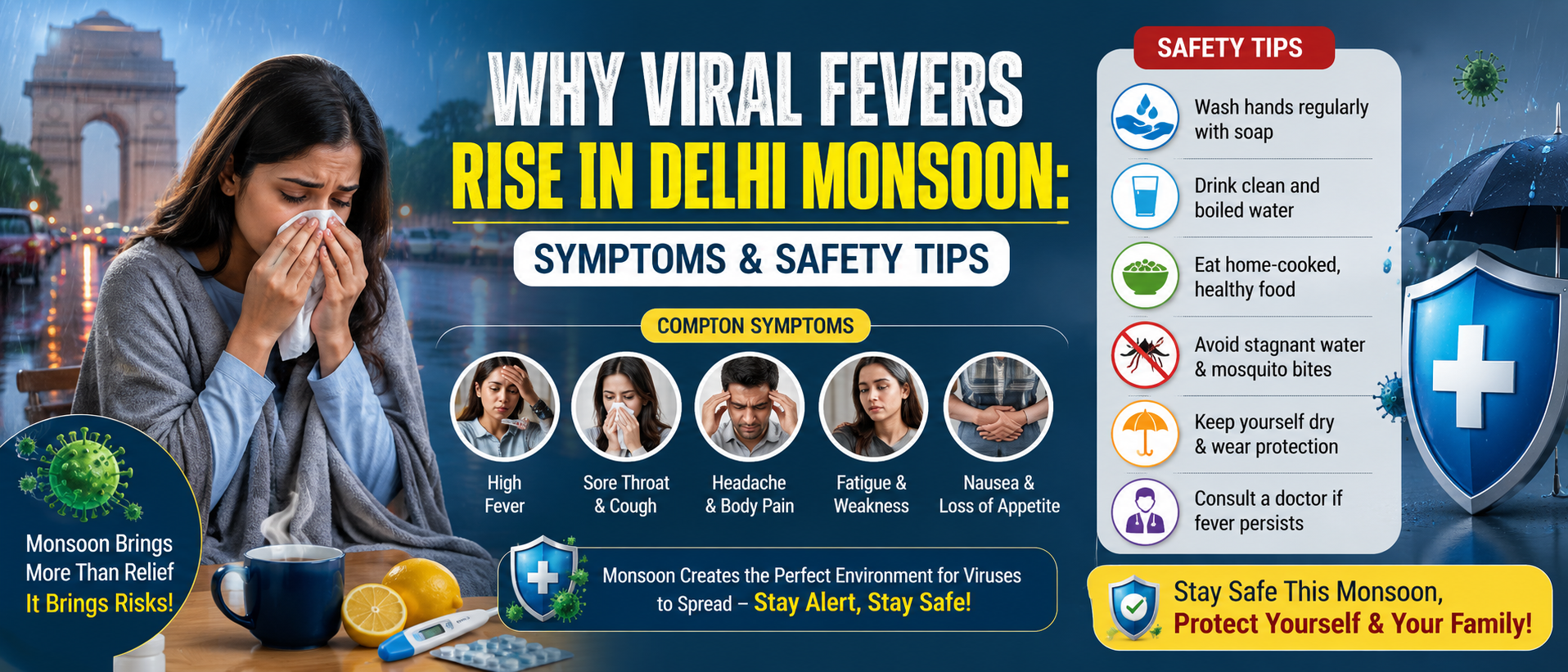

The monsoon season in Delhi brings much-needed relief from the scorching summer heat—but it also creates the perfect environment for viral infections to thrive. From sudden temperature fluctuations to waterlogging and increased humidity, several environmental and behavioral factors contribute to the rise of viral fevers during this time.
This comprehensive guide explains why viral fevers increase during the rainy season, highlights common symptoms, and provides practical safety tips to protect yourself and your family.
Viral Fever Causes Delhi Monsoon: Understanding the Root Factors
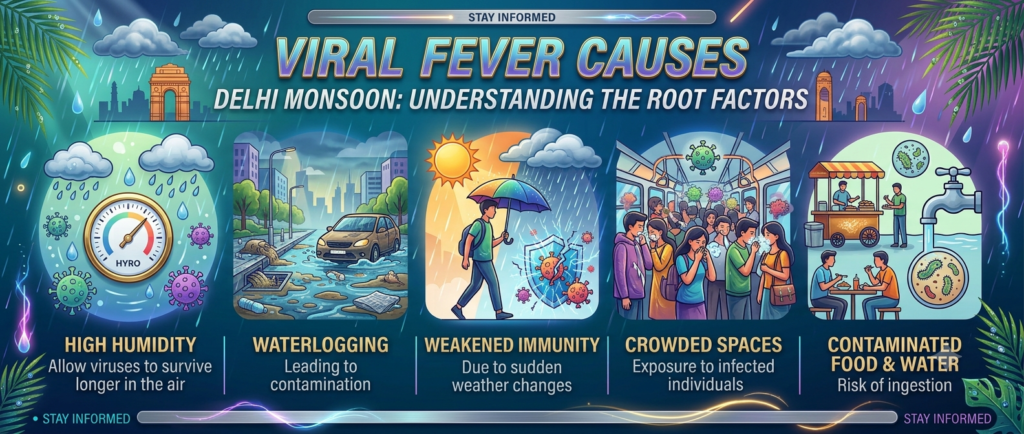
During the monsoon, Delhi experiences high humidity, stagnant water, and fluctuating temperatures—all of which create ideal breeding conditions for viruses and bacteria.
Key causes include:
- High humidity levels that allow viruses to survive longer in the air
- Waterlogging and poor drainage, leading to contamination
- Weakened immunity due to sudden weather changes
- Increased exposure to infected individuals in crowded spaces
- Consumption of contaminated food and water
These conditions collectively increase the risk of viral infections, especially among children, the elderly, and those with weak immune systems.
Why Viral Infections Increase in Rainy Season

The rainy season disrupts the natural balance of the environment, making it easier for viruses to spread.
Here’s why infections spike:
- Temperature fluctuations weaken the body’s defense system
- Closed indoor spaces increase person-to-person transmission
- Damp surroundings encourage microbial growth
- Reduced sunlight exposure lowers vitamin D levels, affecting immunity
Additionally, people tend to consume more street food during monsoon, which may not always be hygienic—further increasing infection risk.
Viral Fever Symptoms Monsoon India: What to Watch For
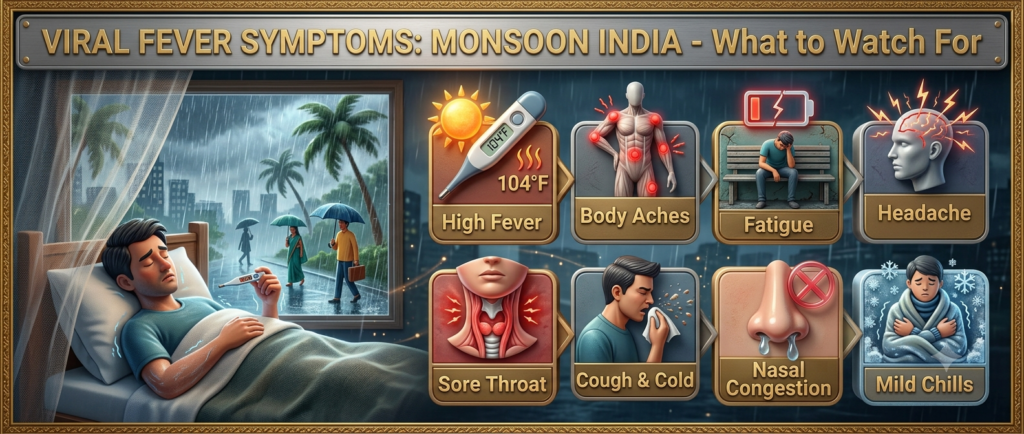
Recognizing symptoms early can help in timely treatment and prevent complications.
Common viral fever symptoms include:
- High fever (100°F–104°F)
- Body aches and muscle pain
- Fatigue and weakness
- Headache
- Sore throat
- Cough and cold
- Runny or blocked nose
- Mild chills
In some cases, patients may also experience nausea, vomiting, or diarrhea.
Seasonal Fever Delhi Symptoms Guide
In Delhi, seasonal fevers during monsoon may overlap with other infections like dengue, malaria, and typhoid. That’s why understanding symptom patterns is important.
Key indicators to monitor:
- Fever lasting more than 3 days
- Sudden drop in platelet count
- Skin rashes or red spots
- Severe joint pain
- Persistent vomiting
If any of these symptoms appear, immediate medical consultation is advised.
Monsoon Health Risks Viral Infections: Who Is Most Vulnerable?
Certain groups are more prone to viral infections during monsoon:
- Children with developing immunity
- Elderly individuals
- Pregnant women
- People with chronic illnesses (diabetes, asthma, etc.)
These groups should take extra precautions and avoid exposure to unhygienic environments.
Prevention of Viral Fever Rainy Season
Preventing viral fever is easier than treating it. Simple lifestyle adjustments can significantly reduce risk.
Preventive measures:
- Drink boiled or filtered water
- Avoid street food and raw salads
- Maintain clean surroundings
- Use mosquito repellents
- Wear full-sleeved clothing
Consistency in these habits is key to staying healthy during monsoon.
How to Avoid Viral Fever in Monsoon
Avoiding viral fever requires a combination of hygiene, diet, and immunity-boosting practices.
Effective strategies:
- Wash hands frequently with soap
- Carry hand sanitizer when outdoors
- Avoid touching face unnecessarily
- Stay hydrated with clean water
- Consume freshly cooked food
- Avoid crowded places when possible
Also, ensure proper ventilation in your home to reduce the spread of airborne infections.
Delhi Monsoon Diseases Viral Fever: Common Illnesses During Rainy Season
Apart from viral fever, Delhi residents may face several monsoon-related illnesses:
- Gastroenteritis
Many of these diseases start with fever-like symptoms, making early diagnosis crucial.
Fever and Flu Symptoms Rainy Season
Flu and viral fever often share similar symptoms, which can cause confusion.
Common overlapping symptoms:
- Fever and chills
- Cough and congestion
- Body aches
- Fatigue
However, flu may also include:
- Severe throat irritation
- Dry cough
- Sudden onset of symptoms
Monitoring symptom progression helps in identifying the condition correctly.
Safety Tips to Prevent Viral Infections Delhi
Taking preventive steps can help you stay safe during the monsoon season.
Essential safety tips:
- Keep your surroundings clean and dry
- Avoid water accumulation near your home
- Use mosquito nets and repellents
- Wash fruits and vegetables thoroughly
- Avoid sharing personal items
Workplaces and schools should also maintain hygiene standards to prevent outbreaks.
Immune System and Monsoon Illnesses
Your immune system plays a crucial role in protecting against infections.
During monsoon, immunity can weaken due to:
- Lack of sunlight
- Poor diet
- Irregular sleep patterns
Boost your immunity by:
- Eating vitamin-rich foods (fruits, vegetables)
- Drinking herbal teas and warm fluids
- Exercising regularly
- Getting adequate sleep
Strong immunity reduces the severity and frequency of infections.
Treatment for Viral Fever at Home India
Most viral fevers are self-limiting and can be managed at home with proper care.
Home treatment tips:
- Take adequate rest
- Stay hydrated with water, ORS, and soups
- Use paracetamol for fever (as advised by a doctor)
- Eat light and nutritious meals
- Avoid cold and oily foods
However, avoid self-medication with antibiotics unless prescribed.
Doctor Advice Viral Fever Delhi
Medical consultation is important if symptoms persist or worsen.
When to see a doctor:
- Fever lasts more than 3 days
- Severe weakness or dehydration
- Difficulty breathing
- Persistent vomiting
- Signs of dengue or malaria
Doctors may recommend blood tests to rule out serious infections.
Hygiene Tips to Prevent Viral Infections
Maintaining hygiene is one of the most effective ways to prevent viral spread.
Key hygiene practices:
- Wash hands before eating
- Use clean utensils
- Disinfect frequently touched surfaces
- Avoid close contact with sick individuals
- Cover mouth while coughing or sneezing
These simple habits can significantly reduce infection risk.
Early Signs of Viral Fever Monsoon
Identifying early signs helps in quick recovery and prevents complications.
Early symptoms include:
- Mild fever
- Tiredness
- Body aches
- Slight throat irritation
- Reduced appetite
At this stage, proper rest and hydration can prevent the condition from worsening.
Conclusion
The monsoon season in Delhi, while refreshing, brings a surge in viral infections due to environmental and lifestyle changes. Understanding the causes, symptoms, and preventive measures is essential to staying healthy.
By maintaining hygiene, boosting immunity, and seeking timely medical advice, you can effectively protect yourself and your loved ones from viral fevers during the rainy season.
Stay cautious, stay informed, and prioritize your health this monsoon.
Leave a Reply